

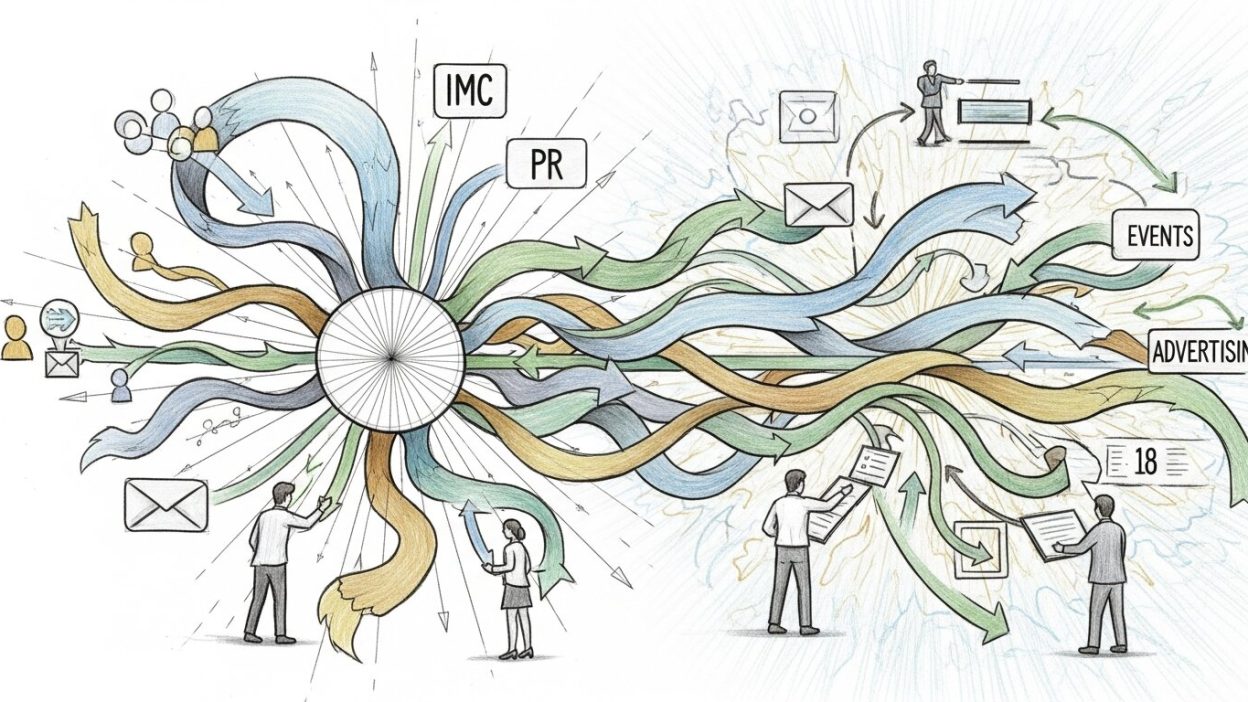
Integrated Marketing Communication (IMC) aligns all brand messaging across multiple channels for consistency and impact. Using IMC Implementation Tips, businesses enhance brand recognition, customer experience, and ROI. A well-executed IMC strategy creates a cohesive, trustworthy, and memorable brand presence.
Integrated Marketing Communication (IMC) ensures that all your marketing efforts—from social media and email campaigns to print and in-store promotions—work together harmoniously. By unifying your brand message across channels, IMC strengthens recognition, builds trust, and delivers a seamless customer experience. Using structured IMC Implementation Tips, businesses can turn scattered campaigns into a cohesive, results-driven strategy.
What Is Integrated Marketing Communication?
 Integrated Marketing Communication (IMC) is the strategic alignment and coordination of all a brand’s messages across multiple platforms. The main goal is to deliver a single, clear, and compelling message to your target audience, regardless of the channel. According to marketing expert Andrew Hune of Living Room, IMC is about making every touchpoint work together harmoniously.
Instead of having email campaigns that contradict social media messaging, or online ads that do not align with print promotions, IMC ensures that every platform reinforces the other. This alignment not only strengthens brand perception but also builds trust and loyalty with customers, creating a seamless experience at every touchpoint.
Practical IMC Implementation Tips
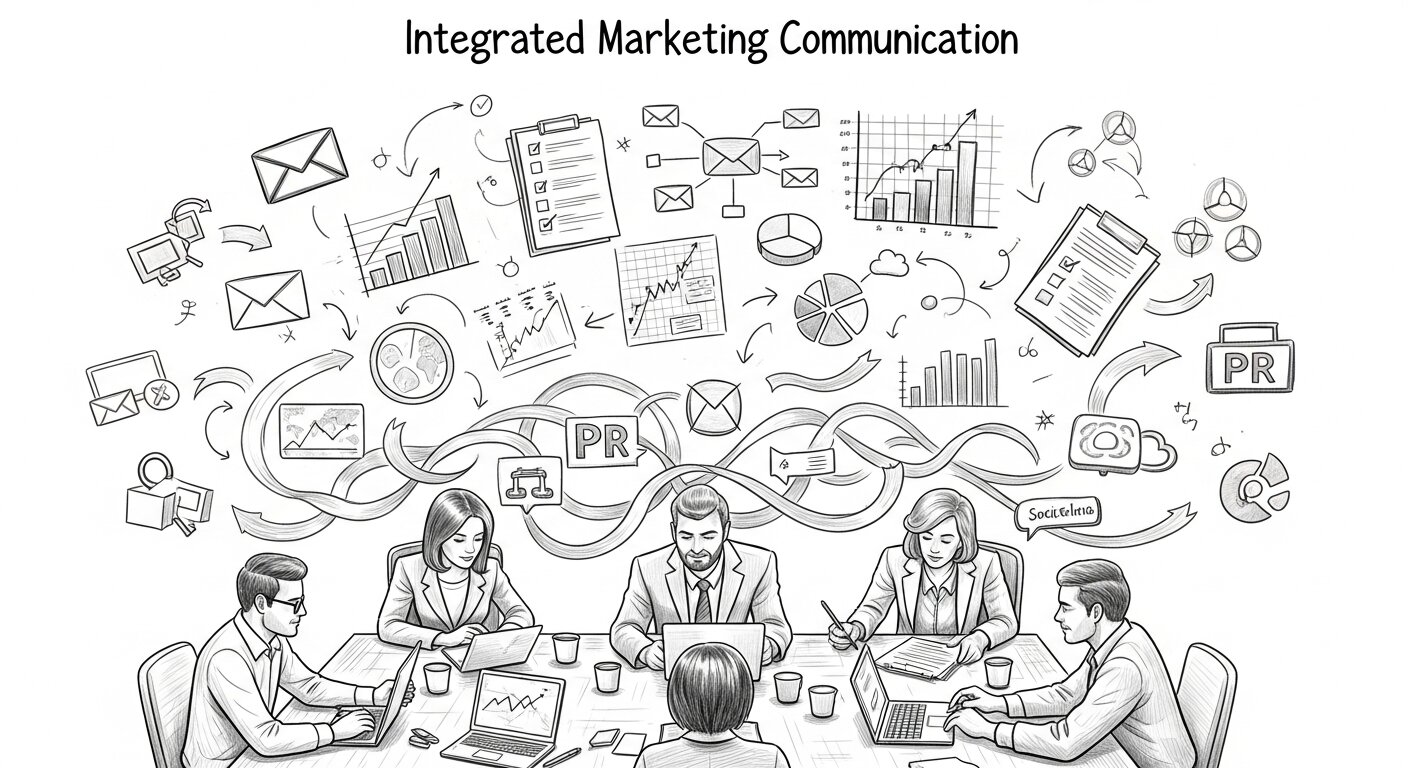
Implementing IMC effectively requires careful planning and execution. Here are some essential IMC Implementation Tips to get started:
- Audit All Campaigns: Review existing campaigns to identify inconsistencies across different platforms. A thorough audit ensures that every message aligns with the brand’s core values and objectives.
- Map Touchpoints: Create a detailed map of all marketing touchpoints, from social media posts and email newsletters to in-store experiences. This helps identify overlaps or gaps in communication.
- Team Alignment: Ensure that all team members, from marketing to design to PR, understand the brand message and its intended delivery. Consistency in internal understanding translates to consistency externally.
- Develop Consistent Content: Use standardized visuals, messaging, and tone across channels to reinforce the brand identity. Following these IMC Implementation Tips will ensure every campaign feels cohesive.
- Monitor and Adjust: Continuously track campaign performance and audience engagement to optimize messaging. Regular monitoring is one of the most important IMC Implementation Tips, as it allows you to adapt in real time.
- Document Best Practices: Keep a record of what works and what doesn’t, creating a reference guide for future campaigns. Incorporating these IMC Implementation Tips ensures your marketing strategies remain strong and replicable over time.
Key Features of IMC
A successful IMC strategy relies on several key features that guarantee consistency, clarity, and impact across all marketing channels:
- Consistency – Every communication, from social media posts to print ads, maintains the same tone, visual identity, and messaging. Consistency helps customers recognize and trust your brand no matter where they encounter it.
- Customer-Centric Messaging – Each piece of communication is crafted to meet your audience’s needs, expectations, and preferences. Personalized and relevant messaging ensures higher engagement and loyalty.
- Cross-Channel Integration – Marketing channels work together, complementing one another rather than functioning in isolation. Integrated channels reinforce each other’s messaging, creating a seamless customer experience.
IMC Implementation Tips
To achieve these key features, consider the following IMC Implementation Tips:
- Develop comprehensive brand guidelines that cover tone, visuals, and messaging for all channels.
- Train teams to apply these guidelines consistently, ensuring the brand’s voice is uniform.
- Utilize collaboration and project management tools to maintain alignment across departments.
- Regularly audit your marketing efforts to identify gaps or inconsistencies.
- Encourage feedback from teams to improve workflow and ensure all messages align with brand objectives.
- Document best practices to make future campaigns more efficient and easier to replicate.
Why IMC Is Critical for Your Business
Strengthen Brand Recognition
When your brand communicates consistently, it becomes instantly recognizable. A unified approach across platforms makes it easy for customers to identify your brand, enhancing credibility and trust.
Example:
Coca-Cola maintains a consistent brand voice and visual style in TV ads, social media posts, and print campaigns. The familiar red-and-white visuals and celebratory tone create an instantly recognizable experience that reinforces the brand identity.
IMC Implementation Tips:
- Regularly review campaigns for consistent messaging and visuals.
- Standardize templates and branding elements across all channels.
- Ensure any third-party collaborations or partnerships reflect your brand’s identity.
Enhance Customer Experience
A seamless experience across all touchpoints is crucial. IMC ensures that your audience encounters the same message whether they interact with your website, social media, or email campaigns. Consistent messaging reduces confusion, builds trust, and improves overall customer satisfaction.
Example:
A Facebook ad should direct customers to a landing page that reflects the same tone, visuals, and offers. Inconsistencies, such as conflicting discounts or branding, can frustrate customers and erode trust.
IMC Implementation Tips:
- Map out the entire customer journey to maintain messaging alignment.
- Collect feedback from users to detect gaps in communication.
- Synchronize promotions and campaigns across channels to reinforce brand identity.
Boost Efficiency
Without IMC, teams often work in silos, resulting in duplicated efforts, wasted resources, and inconsistent messaging. A shared, integrated strategy ensures that every activity complements the others, improving efficiency and reducing unnecessary effort.
IMC Implementation Tips:
- Set up a central project management system to coordinate campaigns.
- Hold regular inter-departmental meetings to align goals and messaging.
- Use shared templates and brand guidelines to streamline content creation and reduce errors.
Maximize ROI
A unified campaign allows every touchpoint to reinforce the others, resulting in increased engagement, better lead conversion, and higher Return on Investment. Focusing on integrated campaigns prevents resources from being scattered across uncoordinated initiatives.
IMC Implementation Tips:
- Establish clear, measurable goals for each campaign channel.
- Leverage analytics to track performance across channels.
- Continuously optimize campaigns based on data and audience insights.
Improve Internal Collaboration
IMC benefits internal stakeholders as well. Employees who understand and embrace the brand message are more likely to communicate it consistently, improving morale and creating a unified brand experience externally.
IMC Implementation Tips:
- Conduct brand workshops to train employees on messaging consistency.
- Share campaign objectives, updates, and progress with all relevant departments.
- Encourage collaboration between marketing, PR, and design teams to maintain a unified creative approach
The Core Elements of IMC
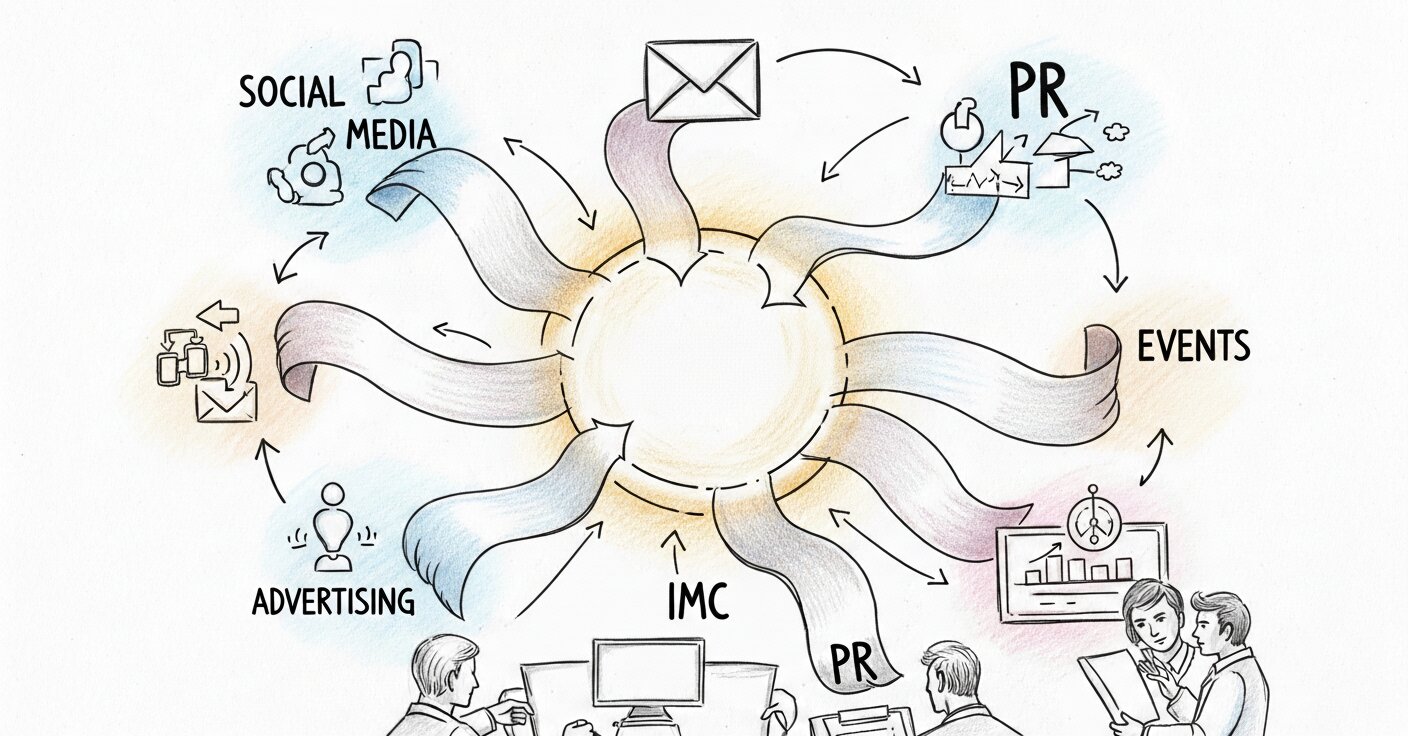
To implement Integrated Marketing Communication (IMC) effectively, businesses must focus on five core elements that serve as the foundation for a cohesive marketing strategy:
United Brand Message
Develop a clear, distinctive, and memorable brand message that reflects your company’s unique value proposition. A unified message ensures that your audience instantly recognizes your brand, whether they encounter it online, in print, or in person. Consistency in messaging strengthens brand identity and fosters trust.
IMC Implementation Tips:
- Document your brand’s voice, tone, and key messaging in a style guide.
- Ensure all campaign materials reflect the same brand story.
- Update messaging as your brand evolves to maintain relevance.
Client-Centric Focus
Understanding your audience thoroughly is essential for effective IMC. This includes analyzing demographics, preferences, purchasing behavior, and pain points. By putting your audience at the center of your strategy, campaigns become more engaging and resonate more strongly.
IMC Implementation Tips:
- Conduct surveys and collect customer feedback to refine messaging.
- Segment your audience for personalized communication.
- Create detailed customer personas to guide content and campaign decisions.
Cooperative Channels
Integrated campaigns require the seamless integration of multiple marketing channels. This includes traditional media (TV, radio, print), digital platforms (social media, display ads, search), owned media (website, email newsletters), and earned media (PR, influencer collaborations). Ensuring these channels complement each other creates a stronger, more cohesive brand presence.
IMC Implementation Tips:
- Map out all communication touchpoints to ensure alignment.
- Use cross-channel promotion to reinforce key messages.
- Ensure visuals, tone, and offers are consistent across channels.
Data-Driven Decisions
Analytics are critical for optimizing IMC strategies. By tracking campaign performance, engagement, and conversion metrics, marketers can identify what works, make improvements, and allocate resources effectively. Data-driven strategies minimize wasted effort and maximize ROI.
IMC Implementation Tips:
- Use analytics tools to measure performance across all channels.
- Regularly review campaign KPIs and make necessary adjustments.
- Leverage insights to plan future campaigns more effectively.
Collaborative Work Environment
IMC is not just about aligning external communications—it requires internal collaboration. Marketing, PR, design, and content teams must work together to ensure consistency and efficiency. A collaborative environment fosters creativity and ensures that campaigns are implemented seamlessly.
IMC Implementation Tips:
- Hold cross-departmental planning meetings for every campaign.
- Establish clear roles and responsibilities to prevent duplicated efforts.
- Encourage open communication and feedback between teams.
Step-by-Step Guide: IMC Implementation Tips
Putting IMC Implementation Tips into practice requires structured steps. Here’s a detailed roadmap:
Step 1: Perform a Brand Audit
Review all existing campaigns and messaging across platforms. Identify inconsistencies or gaps that could confuse your audience. This step helps establish a baseline for all future campaigns.
Step 2: Define Campaign Objectives
Clarify the purpose of each campaign. Are you building brand awareness, generating leads, or driving sales? Clear objectives ensure that all messages support the same goal.
Step 3: Understand Your Audience
Develop detailed customer personas, including demographics, interests, and behaviors. Mapping these personas helps prioritize communication channels and tailor messaging for maximum impact.
Step 4: Coordinate Teams and Tools
Provide teams with the right tools, such as CRM software, project management platforms, and shared content repositories. Coordination ensures campaigns are implemented smoothly and efficiently.
Step 5: Create Unified Campaign Assets
Design creatives, templates, and messaging frameworks that are consistent across all channels. This includes visuals, copy, tone, and branding elements. IMC Implementation Tips emphasize maintaining cohesion to reinforce brand identity.
Step 6: Launch, Monitor, and Optimize
Deploy the campaign and continuously monitor performance metrics. Use analytics to assess engagement, conversion, and ROI. Make data-driven adjustments in real time to optimize messaging and performance.
IMC Implementation Tips:
- Schedule regular campaign reviews to identify improvement areas.
- Collect audience feedback for insights on engagement and perception.
- Adjust messaging, visuals, and targeting strategies based on performance data.
- Document lessons learned for future campaigns to streamline implementation.
Why Following IMC Implementation Tips Matters
By systematically applying these IMC Implementation Tips, businesses can:
- Achieve consistent brand messaging across all channels.
- Enhance customer experience by providing clear, reliable communication.
- Improve internal efficiency and collaboration.
- Increase the effectiveness of campaigns, resulting in higher ROI.
A well-executed IMC strategy doesn’t just unify messaging—it creates a strong, memorable brand presence that resonates with audiences and drives results.
Examples of Successful IMC
Nike’s “Just Do It” Campaign
Nike is widely recognized for its mastery of Integrated Marketing Communication. Across digital ads, influencer partnerships, in-store experiences, and social media, the brand maintains an empowering and motivational tone. This consistent messaging reinforces its identity, inspires audiences, and creates a cohesive experience that strengthens brand loyalty.
IMC Implementation Tips:
- Analyze Nike’s campaigns to understand how consistent messaging creates a strong brand presence.
- Take note of how they coordinate digital, in-store, and influencer channels seamlessly.
- Use similar approaches to align your own brand’s voice and touchpoints.
Apple’s Product Launches
Apple demonstrates how IMC can elevate brand perception through careful control of messaging and visuals. From sleek keynote presentations to minimalist website designs, retail stores, and advertising, every touchpoint reflects the same brand promise. This creates anticipation, builds trust, and ensures that customers know exactly what to expect from the brand.
IMC Implementation Tips:
- Benchmark Apple’s approach for consistency across multiple platforms.
- Study how their minimalist design and messaging reinforce the same core brand promise.
- Apply lessons to your campaigns to ensure every touchpoint conveys a unified brand experience.
IMC Implementation Tips for Your Brand
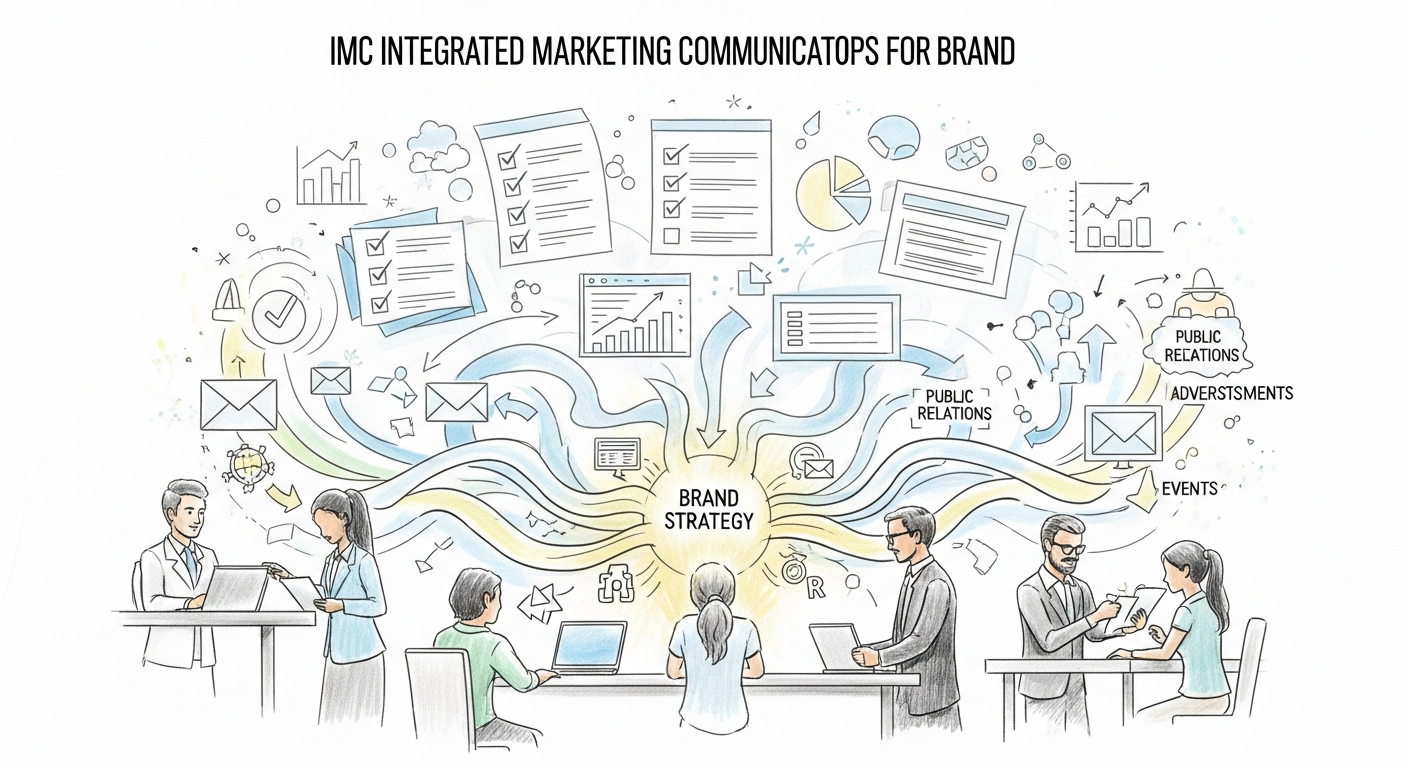
Taking inspiration from successful campaigns, businesses can leverage IMC Implementation Tips to replicate similar success:
- Observe competitor campaigns to identify strategies that work and those to avoid.
- Benchmark messaging and visuals to maintain consistency across all channels.
- Ensure partnerships and collaborations reflect and enhance your brand identity.
- Align every team—marketing, PR, and design—so campaigns are executed cohesively.
- Monitor performance regularly to refine and optimize campaigns based on data.
- Document best practices to guide future IMC efforts and create repeatable success.
Why You Should Invest in IMC Today
Integrated Marketing Communication is no longer optional—it’s a business necessity. Brands that implement IMC consistently can stay competitive, build credibility, and develop lasting relationships with customers.
Using IMC Implementation Tips, businesses of all sizes can:
- Streamline marketing efforts across multiple channels.
- Unify messaging to reinforce brand identity at every touchpoint.
- Enhance customer experience through clear, consistent communication.
- Maximize the effectiveness of campaigns, increasing ROI and engagement.
Done correctly, IMC ensures your marketing is more than a series of disconnected efforts. It becomes a strategic, cohesive system that strengthens your brand, builds trust with customers, and delivers measurable results.
IMC Implementation Tips are essential in achieving this level of consistency and effectiveness—helping you design campaigns that work in harmony and leave a lasting impression on your audience.
Frequently asked questions
Q1: What is Integrated Marketing Communication (IMC)?
A:Integrated Marketing Communications is the strategic coordination of all brand messaging across multiple channels to deliver a consistent, unified message. IMC ensures social media, email, print, and in-store efforts work together, strengthening brand recognition, building trust, and creating a seamless customer experience using actionable IMC Implementation Tips.
Q2: Why is IMC important for businesses?
A: IMC strengthens brand recognition, improves customer experience, increases campaign efficiency, and maximizes ROI by aligning all marketing efforts.
Q3: What are some examples of successful IMC campaigns?
A: Nike’s “Just Do It” and Apple’s product launches are classic examples, as both brands maintain consistent messaging and visuals across multiple channels.
Q4: How can I implement IMC effectively?
A: Follow structured IMC Implementation Tips such as auditing campaigns, creating unified messaging, aligning teams, monitoring performance, and optimizing continuously.
Q5: What are the key elements of IMC?
A: The core elements include a united brand message, client-centric focus, cooperative channels, data-driven decisions, and a collaborative work environment.