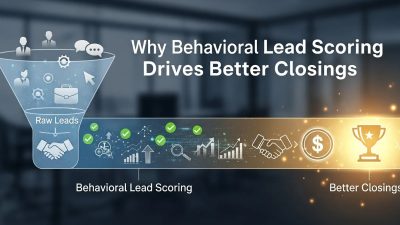


the scoring model helps sales and marketing agree on who deserves attention first, using behavior, fit, and timing to prioritize real buying intent over noisy activity.
the scoring model is one of the clearest ways to align marketing effort with sales outcomes. When teams treat every inquiry the same, the pipeline fills with activity but not always with opportunity. Strategic Lead Scoring changes that by ranking leads according to fit, behavior, and buying signals. It helps everyone focus on the people most likely to become real conversations.
The reason this matters is simple: sales teams do not need more names, they need better timing and better prioritization. Strategic Lead Scoring creates a shared language for that prioritization. It tells marketing what kind of engagement matters, tells sales where to focus first, and tells leadership how to interpret demand more accurately. Strategic Lead Scoring also reduces friction because it replaces opinions with a structured model.
From a human psychology standpoint, people respond better when they feel understood. A lead scoring system works best when it reflects what buyers actually do, not what internal teams wish they would do. Strategic Lead Scoring makes that possible by connecting content engagement, firmographic fit, and behavioral intent into one practical framework. That framework helps teams act with confidence instead of chasing every form fill.
In modern B2B environments, the value of Strategic Lead Scoring is even higher because buying cycles are longer and research is more fragmented. Buyers visit multiple pages, compare options quietly, and signal interest in ways that are easy to miss. Lead Scoring helps companies read those signals early and route the right people to the right follow-up path. When done well, it becomes a quiet advantage that improves revenue quality without making the process feel robotic.
Why Lead Prioritization Matters
Strategic Lead Scoring exists because not all leads are equal. Some are curious, some are evaluating, and some are ready to talk. Strategic Lead Scoring helps separate those groups so sales does not waste time on people who are not yet ready. That is not just efficient; it is respectful of the buyer’s journey and the team’s resources.
When prioritization is weak, the sales process becomes noisy. Reps chase low-fit leads, slow-response leads, and people who never intended to buy. Lead Scoring lowers that noise and gives reps a better starting point. It also helps managers coach more effectively because they can see which signals correlate with real opportunities. Over time, Strategic Lead Scoring improves both speed and quality.
There is also a trust element. Salespeople trust systems that consistently surface better leads. Marketers trust systems that recognize the value of their campaigns. Lead Scoring creates that trust loop because it rewards meaningful engagement rather than arbitrary activity. The better the alignment, the less energy is wasted arguing about lead quality.
Building the Right Scoring Logic
A useful scoring model should combine fit and intent. Strategic Lead Scoring works best when demographic and behavioral inputs are balanced instead of treated as interchangeable. A high-level title alone does not mean a buyer is serious, and a burst of clicks does not always mean the person is a good fit. Strategic Lead Scoring asks for both sides of the story.
Start with fit. Fit measures how well the account matches your ideal customer profile. Strategic Lead Scoring should consider industry, company size, region, job title, budget context, and buying authority. Not every variable deserves the same weight. The point is not to create complexity for its own sake; the point is to identify likely buyers quickly and consistently. Strategic Lead Scoring becomes much stronger when fit criteria are narrow enough to matter.
Then add behavior. A demo page visit means something different from a blog view. Strategic Lead Scoring should assign more value to actions that suggest readiness, such as pricing page visits, comparison content, product trial activity, and repeat engagement. But the model should stay realistic. Strategic Lead Scoring is not about punishing every small action or over-rewarding every click. It is about reading patterns of intent.
The Role of Marketing in Scoring Quality

Marketing owns much of the upstream signal, so Strategic Lead Scoring depends on thoughtful campaign design. If content attracts the wrong audience, even a perfect scoring model will produce weak outcomes. Strategic Lead Scoring becomes more accurate when campaigns are built to attract people with real need, not just casual curiosity.
This is where content structure matters. Educational assets should lead naturally into mid-funnel comparison pieces and later into decision-stage pages. Strategic Lead Scoring is stronger when the content journey mirrors the buyer journey. That way, the score reflects meaningful progression instead of random activity. Marketing teams should therefore think about scoring while creating content, not only after the leads arrive.
Lead nurturing also matters. Someone who downloads one guide may not be ready today, but their behavior across several touchpoints can be highly informative. Strategic Lead Scoring should capture that pattern and elevate the lead when the combination of signals becomes strong enough. That creates a system that respects timing rather than forcing a premature handoff.
Sales Ready Leads for SDR Teams
Sales Ready Leads for SDR Teams are the operational destination of good scoring. sales-ready leads are the leads with the highest probability of real conversation. SDRs do not need every lead; they need the leads with the highest probability of real conversation. Strategic Lead Scoring gives them that focus by separating meaningful action from passive browsing. When the score reflects readiness well, SDRs can spend more time on conversations and less time sorting.
This also changes morale. Reps feel better when the system consistently gives them better opportunities. Strategic Lead Scoring reduces the emotional fatigue that comes from chasing dead ends. It creates a sense that the team is working smarter, not just harder. That improvement in energy can be just as important as the improvement in metrics.
A strong sales-ready definition should include both timing and fit. A person might be a great fit, but not yet ready. Another may be very active, but not aligned with the ideal customer profile. Strategic Lead Scoring helps the team see both factors at once. That makes the follow-up more relevant, more timely, and more likely to convert.
Demographic Scoring Model
A profile scoring approach is useful because it helps quantify fit at the account and contact level. Strategic Lead Scoring often starts here because basic profile data is easy to collect and easy to compare. Company size, role seniority, department, and geographic location can all influence whether a lead deserves more attention. Still, the model should never rely on demographics alone.
The best use of a fit scoring framework is as a foundation, not a final decision maker. Strategic Lead Scoring needs behavior to reveal urgency. A chief revenue officer and a student researcher are not equally valuable just because both opened an email. At the same time, a junior employee may still be an important influencer inside a target account. Strategic Lead Scoring should leave room for nuance.
That nuance matters because modern buying groups are layered. One person may research, another may budget, and another may approve. A demographic fit model can help identify which contacts are strategically important, while behavioral data shows who is active right now. Strategic Lead Scoring becomes much more effective when both views are combined into one clean framework.
Behavioral Signals That Matter
Behavioral data is often the strongest indicator of interest. Strategic Lead Scoring should reward actions that show increasing commitment. Repeated website visits, pricing interest, comparison page engagement, webinar attendance, and product-specific content consumption usually matter more than a single open. Strategic Lead Scoring works best when those signals are mapped to real buying progress.
The challenge is to avoid over-scoring weak behavior. A click is not always intent. Strategic Lead Scoring should prefer actions that require more effort or reveal more context. For example, returning to the site multiple times in a short period can signal urgency. Downloading a document that helps a buyer solve a problem can also matter. Strategic Lead Scoring should reward the actions most connected to sales outcomes.
It also helps to consider recency. A strong signal last week may matter more than a weak signal today. Strategic Lead Scoring becomes more useful when recent high-value behavior increases the score faster than old, isolated activity. That keeps the system aligned with the actual pace of buyer decision-making.
Tables Help Teams Understand the Logic
| Signal Type | Example | Scoring Meaning |
|---|---|---|
| Fit signal | Decision-maker in target industry | Strong positive weight |
| Intent signal | Pricing page visit | High readiness indicator |
| Engagement signal | Repeat content visits | Moderate positive weight |
| Negative signal | Student email domain | Lower priority |
| Timing signal | Multiple actions in 48 hours | Urgency increase |
Strategic Lead Scoring should translate these signals into a system that is easy for sales and marketing to trust. If the rules are too complicated, people stop using them. If the rules are too vague, people stop believing them. Strategic Lead Scoring works when the logic is transparent and the team can explain why a lead received the score it did.
Aligning Sales and Marketing
Strategic Lead Scoring is most powerful when both teams agree on what good looks like. Without agreement, marketing may celebrate volume while sales complains about quality. Strategic Lead Scoring solves that conflict by creating shared definitions. Everyone can see what matters, what is weighted, and what outcome the score is meant to predict.
This shared language also improves feedback. Sales can tell marketing which leads are converting and which are not. Marketing can adjust campaigns and content accordingly. Strategic Lead Scoring turns those feedback loops into an improvement system rather than a blame cycle. That is a major cultural benefit, not just an operational one.
The psychological effect is important too. People support systems they helped shape. Strategic Lead Scoring should be co-built, reviewed, and refined by both sides. When sales and marketing co-own the model, adoption rises and the scoring becomes more accurate. That collaboration creates trust, and trust is what keeps the process healthy over time.
Human Psychology in Lead Qualification
People rarely make buying decisions in a straight line. Strategic Lead Scoring should reflect that reality. Buyers often revisit content, compare alternatives, talk to colleagues, and delay action until they feel safe. A good scoring model recognizes the emotional side of the journey, not just the mechanical one. Strategic Lead Scoring is stronger when it respects hesitation.
Fear is a big factor. Buyers worry about making the wrong choice, losing budget, or choosing a vendor that will disappoint them. Content and scoring should therefore work together to reduce risk. Strategic Lead Scoring can surface leads who are seeking reassurance, which is often the last step before a conversation. That makes follow-up more empathetic and more effective.
Confidence is another factor. When a lead consumes content that answers their objections, they are more likely to advance. Strategic Lead Scoring can capture that progression by increasing points for deeper, more decision-oriented behavior. That helps the team focus on leads who are not just curious but psychologically prepared to move forward.
Referral Systems and Trust

Referral Marketing Ethics matter because referral pipelines can either strengthen trust or damage it. Strategic Lead Scoring should not overvalue referral activity without considering the quality of the referred contact. A good referral often starts with trust already in place, but it still needs to be assessed honestly. Strategic Lead Scoring works best when the system rewards actual fit and intent, not just the source label.
Successful Customer Referral Programs are valuable because they often bring warmer leads into the funnel. Strategic Lead Scoring can give additional weight to referred contacts, especially when the referrer is a satisfied customer in a similar use case. But the score should still reflect the lead’s own behavior. Strategic Lead Scoring stays fair when referrals are seen as an advantage, not an automatic pass.
This is important for brand reputation too. People notice when referral programs are manipulative or overly aggressive. Strategic Lead Scoring should support a healthy process that respects both the referrer and the prospect. When the experience feels ethical, the pipeline tends to improve naturally.
The Value of Negative Scoring
Negative scoring is often overlooked, but it is one of the most useful parts of Strategic Lead Scoring. Not every signal should increase interest. Some indicators clearly reduce the chance of a sale, such as irrelevant industries, bad-fit geographies, temporary email domains, or student accounts. Strategic Lead Scoring should subtract points where appropriate.
This keeps the pipeline cleaner. Without negative scoring, many unqualified leads appear more promising than they really are. Strategic Lead Scoring helps avoid that problem by filtering out low-probability contacts earlier. That means SDRs spend less time on people who were never likely to buy.
Negative scoring also improves model fairness. If the system rewards only positive actions, it can create inflated results. Strategic Lead Scoring works better when the full picture is visible. That includes both signals that add confidence and signals that reduce confidence. The result is a more realistic prioritization model.
Scoring for Different Funnel Stages
Not every lead should be evaluated with the same expectations. Strategic Lead Scoring becomes stronger when the scoring logic changes by stage. Early-stage leads may only need a few educational interactions before they are considered warm. Mid-stage leads may need product comparisons and repeat visits. Late-stage leads should show strong buying intent.
This matters because some teams overgeneralize the same threshold across all audiences. Strategic Lead Scoring should instead reflect where the person is in their journey. A first-time visitor and a repeat evaluator are not the same, even if both downloaded content. When the model respects funnel stage, it becomes much more accurate.
One useful approach is to define milestones. Strategic Lead Scoring can increase when someone moves from awareness content to evaluation content and then to decision content. That progression gives sales a much better signal than any single action. It also helps marketing plan content with more precision.
Operational Best Practices
Strategic Lead Scoring should be documented clearly. Every point should have a reason. Every threshold should have a purpose. If the team cannot explain the model, it will not survive long-term. Strategic Lead Scoring only works when the process is simple enough to maintain and strict enough to matter.
Review the model regularly. Markets change, products change, and buyer behavior changes. Strategic Lead Scoring must be adjusted when those shifts happen. A score that worked last year may be too loose or too strict today. Regular review keeps the model aligned with reality.
It also helps to test the model against actual outcomes. Look at which leads became opportunities, which became closed deals, and which stalled. Strategic Lead Scoring should predict those outcomes with increasing accuracy. If it does not, then the weighting needs adjustment. Good scoring is never static.
Common Mistakes to Avoid
One common mistake is adding too many points for vanity actions. A social click or a casual page view should not dominate the score. Strategic Lead Scoring works best when the system rewards meaningful progress. Otherwise, the model becomes inflated and hard to trust.
Another mistake is ignoring sales feedback. The people closest to the conversation often know which signals matter most. Strategic Lead Scoring should be informed by that reality. If sales says a certain behavior predicts quality, the scoring model should listen. If it does not, the model will drift away from business truth.
A third mistake is treating the score as the decision itself. Strategic Lead Scoring should guide human judgment, not replace it. A strong model helps prioritize. It does not eliminate the need for context, conversation, and common sense. The best teams use the score as a signal, not a verdict.
Strategic Lead Scoring and Content
Content is the engine that produces most of the signals. Strategic Lead Scoring gets better when the content strategy is designed to reveal buyer intent clearly. Educational content, comparison pages, use-case articles, and case studies all help different stages of the journey. The more intentional the content structure, the more useful the scoring.
That means content teams and revenue teams should work together. Strategic Lead Scoring improves when writers know which behaviors matter most. A webinar may be useful, but maybe a pricing guide is more predictive. A general blog post may attract traffic, but a solution page may attract buyers. Strategic Lead Scoring helps teams distinguish between those outcomes.
The better the content, the better the signal. Strategic Lead Scoring is not isolated from marketing execution. It is shaped by the pages, offers, and journeys that the buyer experiences. That is why content quality and scoring quality rise together.
Measurement and Feedback
Good scoring should lead to better business decisions. Strategic Lead Scoring only matters if it improves conversion rates, response times, and pipeline quality. Measure the percentage of scored leads that become opportunities. Review how fast SDRs respond to top-ranked contacts. Look at whether the model improves win rates over time.
This is where feedback loops matter again. Strategic Lead Scoring should not be set once and forgotten. It should be reviewed against real outcomes and adjusted carefully. If the score is too broad, tighten it. If it misses important leads, expand it. The point is to let real data shape the system.
Teams that do this well usually see a calmer process. Strategic Lead Scoring reduces guesswork, improves collaboration, and helps people trust the funnel more. That is a powerful operational gain because less time is wasted debating lead quality and more time is spent moving real opportunities forward.
Closing the Loop with Sales

For sales alignment to work, follow-up must match the score. Strategic Lead Scoring should trigger different treatment based on readiness. A highly scored lead should get immediate attention, while a lower-scored lead may stay in nurture. That simple distinction protects the team’s time and improves the buyer’s experience.
It also helps to define handoff rules. Strategic Lead Scoring should be clear enough that marketing knows when to route and sales knows when to act. If the score is high but the follow-up is slow, trust erodes. If the score is low but the lead is passed too early, sales gets frustrated. Alignment depends on operational discipline.
When this loop works, everyone wins. Marketing sees that its efforts are being recognized. Sales sees stronger opportunities. Buyers receive more relevant outreach. Strategic Lead Scoring is the system that makes that alignment possible.
Future-Proofing the Model
The future of Strategic Lead Scoring will likely be more dynamic, not less. Buyer journeys are becoming more complex, and teams will need models that adapt in near real time. That means scoring will increasingly rely on integrated data, better content mapping, and stronger feedback systems.
It will also need more nuance. Static rules may not be enough in fast-changing markets. Strategic Lead Scoring should evolve toward models that can adjust weights as patterns change. The core idea will stay the same: prioritize the leads most likely to create value. But the methods will become more flexible and more intelligent.
That future favors teams that stay disciplined. Strategic Lead Scoring works best when it is treated as a living system, not a one-time setup. The companies that keep learning will build better pipelines and stronger sales alignment over time.
Conclusion
Strategic Lead Scoring gives sales and marketing a shared system for recognizing which leads deserve attention first. It improves alignment by turning fit, behavior, and timing into a practical framework that everyone can trust. When the scoring model is built carefully, reviewed regularly, and tied to real outcomes, it reduces wasted effort and increases pipeline quality. Strategic Lead Scoring also respects human psychology by acknowledging that buyers move at different speeds and need different kinds of reassurance. The best results come from combining clear rules with human judgment, ethical referral thinking, and content that attracts genuine interest. For teams that want better coordination and stronger revenue outcomes, Strategic Lead Scoring is not just a process. It is a long-term advantage.
Frequently Asked Questions (FAQ)
1. What is Strategic Lead Scoring?
Strategic Lead Scoring is a system for ranking leads based on fit, behavior, and buying intent so sales can focus on the best opportunities first.
2. Why does Strategic Lead Scoring matter for sales alignment?
It matters because it gives sales and marketing a shared definition of lead quality. That reduces conflict and improves follow-up.
3. What should be included in a scoring model?
A strong model usually includes demographic fit, behavioral activity, negative scoring, and recency weighting.
4. How do Sales Ready Leads for SDR Teams fit into scoring?
They are the leads that score high enough to deserve immediate SDR attention. Strategic Lead Scoring helps identify them reliably.
5. Why use a Demographic Scoring Model?
A Demographic Scoring Model helps measure how well a lead matches your ideal customer profile. It works best when combined with behavior.
6. Should referral leads always get high scores?
No. Referral sources can be valuable, but the lead still needs to show fit and intent. Strategic Lead Scoring should stay objective.
7. How often should scoring be reviewed?
It should be reviewed regularly, especially when campaigns, markets, or sales outcomes change.
8. Can negative scoring improve results?
Yes. Negative scoring helps remove low-quality leads and keeps the model more realistic.
9. What is the biggest mistake teams make?
They often overvalue small actions and ignore sales feedback. That creates inflated scores and weak prioritization.
10. Is Strategic Lead Scoring only for enterprise teams?
No. It helps any team that wants better lead quality, clearer sales prioritization, and stronger alignment between marketing and revenue.