


A brand marketing strategy provides the foundation for how a business presents itself, communicates with customers, creates recognition, and builds lasting value. In competitive markets, having a good product or service is not always enough. Customers are exposed to countless companies every day, and businesses need a clear identity and consistent message to stand out.
A strong brand helps people understand what a company represents and why it is different from alternatives. It can influence purchasing decisions, customer loyalty, reputation, and the overall perception of a business. However, successful branding does not happen simply because a company has a memorable logo or attractive advertising. It requires a coordinated approach that connects brand identity, positioning, communication, customer experience, and marketing activities.
A well-developed strategy gives businesses a clear direction while allowing them to adapt to changing customer expectations and market conditions. It also helps ensure that different marketing channels communicate a consistent message.
What Is a Brand Marketing Strategy?
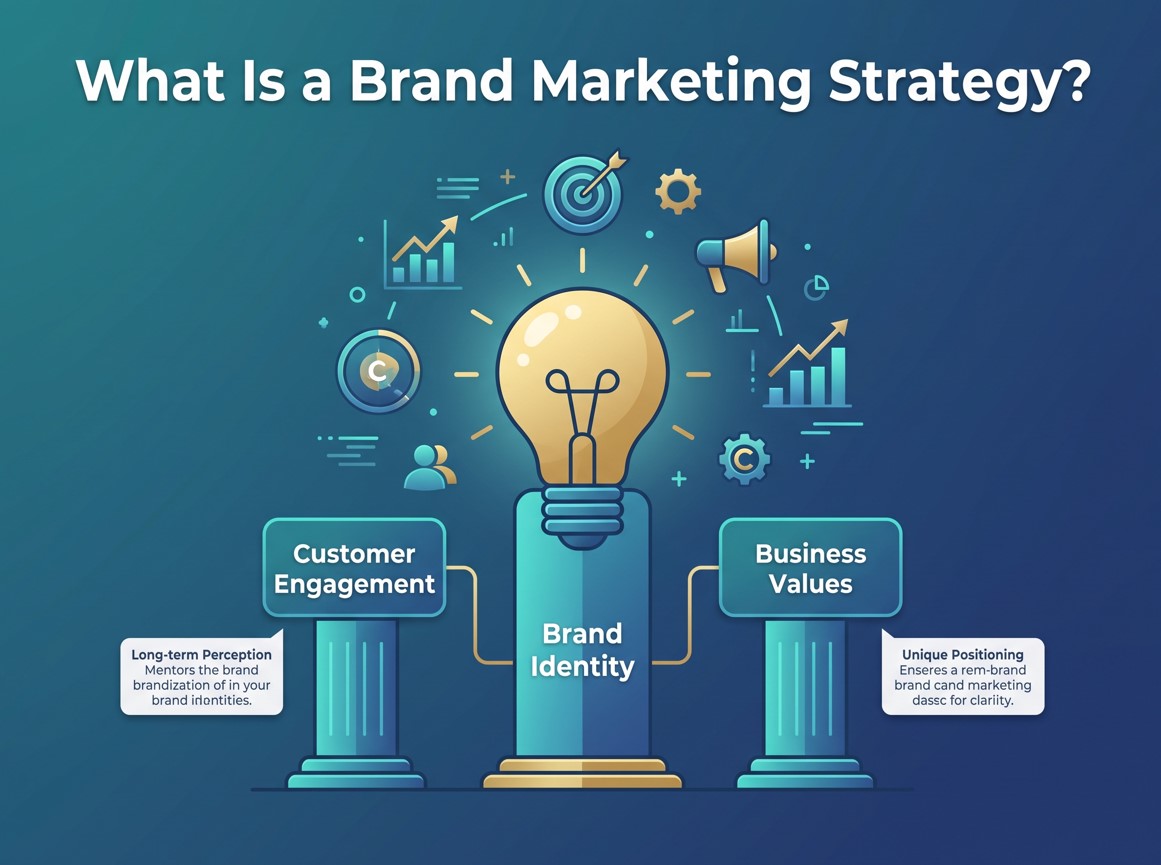
A brand marketing strategy is a long-term approach to building, positioning, communicating, and growing a company’s brand. It defines how the business wants to be perceived and how marketing activities will support that perception.
The strategy connects the company’s identity with the needs of its target audience. It considers the company’s values, personality, unique strengths, competitors, customer expectations, and overall business objectives.
Brand marketing is different from short-term promotional activity. A campaign may be designed to generate immediate sales, while branding focuses on creating recognition and preference that can continue to influence customers over time.
When these two areas work together, businesses can build both immediate demand and long-term brand equity.
The Importance of a Brand Marketing Plan
A brand marketing plan gives businesses a structured framework for communicating their identity and reaching their target audience. Without a clear plan, marketing activities can become fragmented.
One campaign may emphasize affordability while another focuses on premium quality. A social media account may use a casual tone while the website communicates in a highly formal style. Over time, these inconsistencies can make the brand difficult to understand.
A brand marketing plan creates alignment between different marketing activities.
It can also help businesses prioritize resources. Companies have access to countless marketing channels, but not every channel will be equally effective for every audience.
A clear plan helps determine where the brand should invest its time, content, advertising budget, and creative resources.
Brand Strategy Development
Brand strategy development involves defining the core direction of a brand and determining how it will create a meaningful position in the market.
This process begins with understanding the business itself. A company needs clarity about its mission, values, strengths, products, services, and long-term objectives.
Audience research is equally important. Customers do not all respond to the same messages or experiences. Understanding their needs, preferences, frustrations, motivations, and expectations can help businesses develop a more relevant brand.
Competitive analysis provides another important perspective. A business should understand what competitors offer and how they communicate their value.
Effective brand strategy development creates a connection between what the business can deliver and what customers actually value.
Brand Positioning Strategy
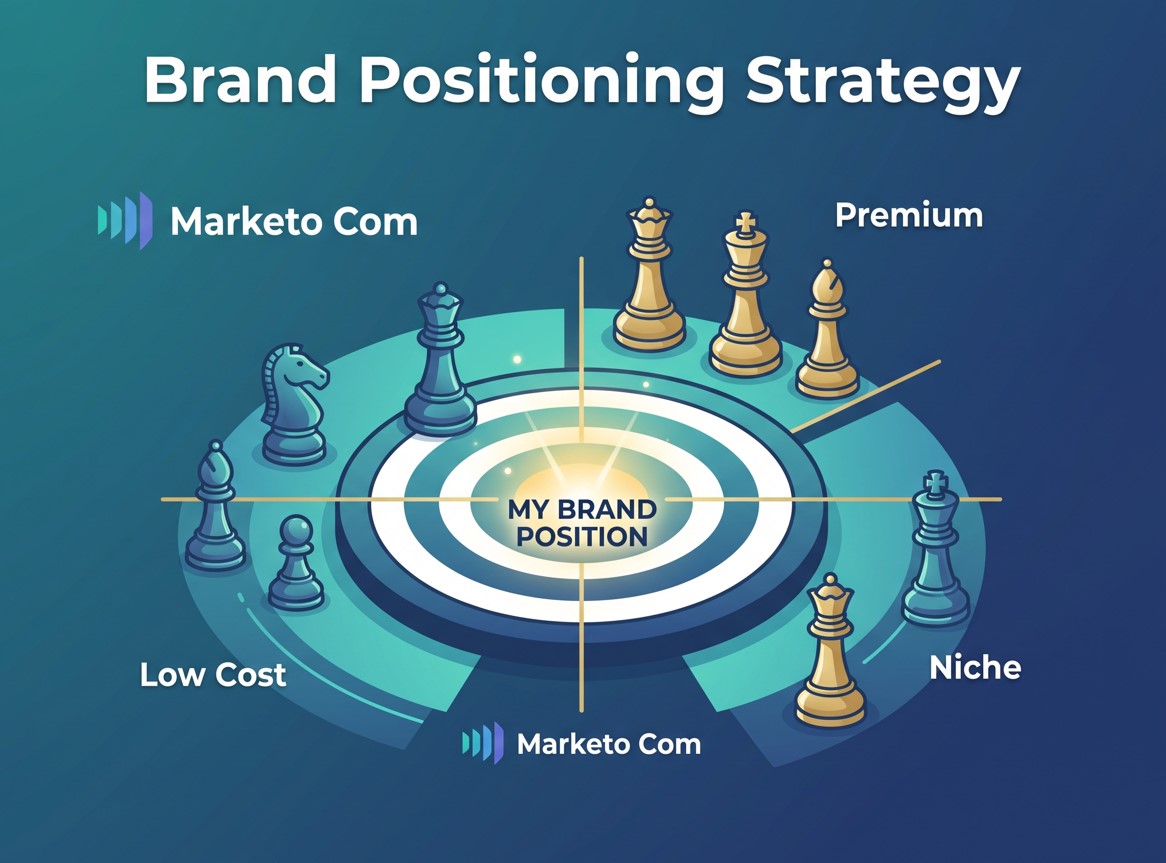
A brand positioning strategy defines the place a company wants to occupy in the minds of its target customers.
Positioning answers important questions about who the business serves, what it offers, how it differs from competitors, and why customers should choose it.
Clear positioning makes marketing communication more focused.
For example, two businesses may sell similar software but position themselves differently. One may focus on simplicity for small businesses, while another emphasizes advanced capabilities for enterprise organizations.
The positioning influences messaging, visual identity, content, advertising, product presentation, and customer experience.
Strong positioning does not require a company to appeal to everyone. In many cases, a clearly defined audience makes it easier to create meaningful connections.
Brand Awareness Strategy
A brand awareness strategy focuses on increasing recognition and familiarity among the target audience.
Customers cannot consider a brand they do not know exists. Awareness therefore creates an important foundation for future consideration and purchase.
Businesses can build awareness through content marketing, search visibility, social media, public relations, advertising, partnerships, events, video, and other communication channels.
However, awareness is more valuable when customers associate the brand with specific qualities.
Simply exposing people to a company name repeatedly may create recognition, but meaningful branding helps people understand what the company represents.
Consistency across channels can strengthen these associations.
Brand Growth Strategy
A brand growth strategy focuses on expanding the reach, relevance, and value of a brand over time.
Growth can come from reaching new customer segments, entering new markets, introducing new products, improving customer loyalty, or increasing the value of existing relationships.
A strong brand can make expansion easier because existing trust may carry into new offerings.
However, growth should not come at the expense of brand clarity.
If a company expands into unrelated markets without considering how those offerings fit its identity, customers may become confused about what the brand represents.
Sustainable growth requires balancing expansion with consistency.
Digital Brand Marketing
Digital brand marketing has become central to modern brand building because customers increasingly discover and evaluate businesses online.
Websites, search engines, social media, email, online advertising, video platforms, podcasts, and digital communities all provide opportunities to communicate brand identity.
Digital channels also allow businesses to interact directly with audiences.
Customers can comment on posts, ask questions, share experiences, write reviews, and communicate with companies in real time. A well-planned B2B email marketing strategy can support these efforts by helping businesses maintain consistent communication with prospects and customers throughout the buying journey.
This creates both opportunities and responsibilities. Businesses can build stronger relationships through direct communication, but inconsistent or poor responses can also damage brand perception.
Digital brand marketing works best when online communication reflects the same positioning and values found throughout the broader customer experience.
Brand Communication Strategy
A brand communication strategy determines how a company communicates its identity and value to different audiences.
Communication can include advertising, website copy, social media content, email marketing, public relations, sales materials, videos, presentations, and customer service interactions.
The tone of communication should reflect the personality of the brand.
A technology company focused on enterprise security may use a professional and authoritative tone, while a consumer lifestyle brand may use a more informal and inspirational style.
The communication strategy should also provide consistency without making every message identical. Tracking daily KPIs to boost ROI can help businesses evaluate whether their communication activities are contributing to meaningful marketing outcomes.
Different audiences may require different information, but the underlying brand identity should remain recognizable.
Customer-Focused Branding
Customer-focused branding places customer needs and experiences at the center of brand development.
Instead of asking only what the company wants to communicate, businesses should also consider what customers need to understand and experience.
Customer-focused branding can involve understanding customer pain points, preferences, questions, expectations, and feedback.
The approach also recognizes that customers judge brands through their experiences.
A company may claim to provide exceptional service, but if customers experience slow responses or confusing support, the brand promise loses credibility.
Strong branding therefore requires alignment between marketing messages and actual customer experiences.
Brand Identity Strategy
A brand identity strategy defines the elements that make a company recognizable and distinctive.
It includes visual elements such as logos, colors, typography, photography, graphic design, packaging, and website appearance. It can also include verbal elements such as tone of voice, messaging, slogans, and brand personality.
A strong identity helps create consistency across different touchpoints.
When customers see the same recognizable characteristics across a website, advertisement, social media profile, or physical location, they can more easily connect those experiences to the company.
Identity should also support positioning.
A brand that wants to communicate premium quality needs an identity that feels consistent with that expectation. A brand focused on accessibility may require a more approachable visual and verbal style.
Effective Brand Marketing Tactics
Effective brand marketing tactics depend on the audience, industry, business model, and objectives.
Content marketing can demonstrate expertise and answer customer questions. Social media can build communities and increase interaction. Search optimization can improve discoverability when people are actively researching relevant topics.
Advertising can increase reach quickly, while partnerships can introduce a brand to established audiences.
Customer advocacy can also be valuable. Satisfied customers who voluntarily recommend a business can provide credibility that traditional advertising cannot always replicate.
Influencer partnerships can also extend brand reach when the right creators are selected. Effective influencer marketing communication helps ensure that sponsored messages remain consistent with the brand’s identity, values, and audience expectations.
The strongest tactics are those that reinforce the brand rather than operating independently from it.
Brand Marketing and Content
Content is one of the most effective ways to communicate a brand’s expertise and personality.
Blog posts, videos, case studies, newsletters, podcasts, research reports, social media content, and other formats can help businesses remain visible while providing value.
The subject matter itself contributes to brand positioning.
For example, a company that consistently publishes useful research about a specific industry may become associated with expertise in that field.
Content should therefore be connected to both audience needs and brand objectives.
Publishing large volumes of low-value material may increase activity without strengthening the brand. High-quality content that answers genuine customer questions is more likely to create meaningful engagement.
Brand Marketing and Customer Experience
Brand marketing cannot be separated from customer experience.
Advertising may create an expectation, but the actual experience determines whether that expectation is reinforced.
If a business promotes simplicity but has a complicated purchasing process, customers may feel disappointed. If a company promises premium service but provides slow support, the inconsistency can weaken trust.
Every interaction can become part of the brand.
Website usability, product quality, packaging, customer service, emails, delivery, sales conversations, and post-purchase support all influence perception. For businesses serving specific geographic markets, mastering local marketing can also help create a more relevant customer experience by connecting brand messaging with local audience needs.
A strong brand marketing strategy therefore needs to consider the entire customer journey.
Building Brand Trust
Trust is one of the most valuable outcomes of effective branding.
Customers are more likely to choose businesses they believe are reliable, transparent, and capable of delivering what they promise.
Trust develops gradually through consistent experiences.
Businesses can support trust by communicating honestly, providing accurate information, responding responsibly to problems, and delivering products and services that meet expectations.
Transparency is particularly important in digital environments, where customers can easily compare information and share their experiences publicly.
Brand trust cannot be created through messaging alone. It must be supported by actual business behavior.
Brand Consistency Across Channels

Brand consistency helps customers recognize a business regardless of where they encounter it.
A company may appear through search results, social media, email, advertising, review platforms, events, or direct sales conversations.
If every channel communicates a completely different identity, customers may struggle to form a clear perception.
Consistency should apply to visual elements, tone, core messages, positioning, and customer experience.
At the same time, consistency does not mean copying the same content everywhere.
A social media post, website page, and email newsletter can have different formats while still communicating the same underlying brand personality.
Measuring Brand Marketing Performance
Brand marketing should be measured using both short-term and long-term indicators.
Brand awareness can be evaluated through branded searches, direct website traffic, surveys, social mentions, audience growth, and other recognition signals.
Engagement metrics can show how audiences interact with content and communication.
Business metrics such as customer acquisition, retention, conversion rates, repeat purchases, and revenue can help determine whether brand activity is contributing to commercial outcomes.
Qualitative feedback is also valuable. Customer reviews, interviews, surveys, sales feedback, and social conversations can reveal how people actually perceive the brand.
No single metric can fully represent brand performance.
Brand Marketing and Long-Term Business Growth
A strong brand can become a significant competitive advantage because it influences how customers perceive a business before they make a purchase.
Recognition can reduce uncertainty. Familiarity can make a company easier to remember. Trust can make customers more comfortable choosing the brand.
Strong brands may also benefit from customer loyalty and advocacy.
When customers have positive experiences, they may return and recommend the business to others.
Brand strength can also support expansion. A company with established credibility may find it easier to introduce related products or enter new markets.
This does not mean branding eliminates the need for product quality or competitive pricing. Instead, branding works alongside those factors to create a more complete value proposition.
Adapting a Brand Marketing Strategy
Markets change continuously. Customer expectations evolve, technologies develop, competitors introduce new offerings, and communication channels become more sophisticated.
A brand marketing strategy therefore needs room for adaptation.
Businesses should monitor customer behavior and market trends without changing their identity every time a new trend appears.
Frequent, unnecessary changes can weaken recognition.
The goal should be to preserve the core elements that make the brand distinctive while adapting campaigns, content formats, communication channels, and customer experiences when necessary.
This balance allows a brand to remain relevant without losing its identity.
Conclusion
A strong brand marketing strategy helps businesses create recognition, communicate their value, build trust, and support sustainable growth. It connects strategic positioning with practical marketing activities and ensures that customers receive a consistent experience across different touchpoints.
A well-developed brand marketing plan provides direction, while brand strategy development establishes the foundation for positioning and communication. A strong brand positioning strategy helps businesses differentiate themselves, and a focused brand awareness strategy increases recognition among relevant audiences.
Digital channels have made digital brand marketing increasingly important, while a clear brand communication strategy helps maintain consistency across different audiences and platforms. Customer-focused branding ensures that the brand is connected to real customer needs, while a strong brand identity strategy makes the organization recognizable.
Ultimately, effective branding is not simply about creating a memorable visual identity. It is about creating a clear promise and consistently delivering an experience that supports that promise.
When strategy, communication, identity, customer experience, and marketing work together, businesses can build brands that remain relevant and valuable long after individual campaigns have ended.
Frequently Asked Questions
A brand marketing strategy is a long-term approach to developing, positioning, communicating, and growing a company’s brand. It connects business objectives with audience needs, identity, messaging, marketing, and customer experience.
Why is a brand marketing strategy important?
A brand marketing strategy helps businesses create recognition, differentiate themselves from competitors, communicate their value clearly, build trust, and establish stronger long-term relationships with customers.
What is included in a brand marketing plan?
A brand marketing plan can include brand positioning, target audience research, identity, messaging, communication channels, content, awareness activities, customer experience, marketing campaigns, and performance measurement.
What is brand strategy development?
Brand strategy development is the process of defining how a company should position and communicate itself in the market. It connects business strengths and objectives with customer needs and competitive opportunities.
How does a brand positioning strategy work?
A brand positioning strategy establishes how a company wants its target audience to perceive it compared with competitors. It highlights the company’s value, differentiation, audience, and key brand associations.
What is a brand awareness strategy?
A brand awareness strategy focuses on increasing recognition and familiarity with a company among its target audience. It can involve content, advertising, social media, public relations, search visibility, events, and partnerships.
What is digital brand marketing?
Digital brand marketing uses online channels such as websites, search engines, social media, email, video, digital advertising, and online communities to communicate and strengthen a brand.
Why is customer-focused branding important?
Customer-focused branding ensures that a company’s identity, messaging, products, and experiences are connected to actual customer needs and expectations. It can help improve relevance, trust, and loyalty.
What is a brand identity strategy?
A brand identity strategy defines the visual and verbal elements that make a company recognizable. It can include logos, colors, typography, imagery, messaging, tone of voice, and brand personality.
What are effective brand marketing tactics?
Effective tactics can include content marketing, SEO, social media, advertising, public relations, partnerships, customer advocacy, email marketing, video, and community engagement. Their effectiveness depends on the audience and business objectives.