
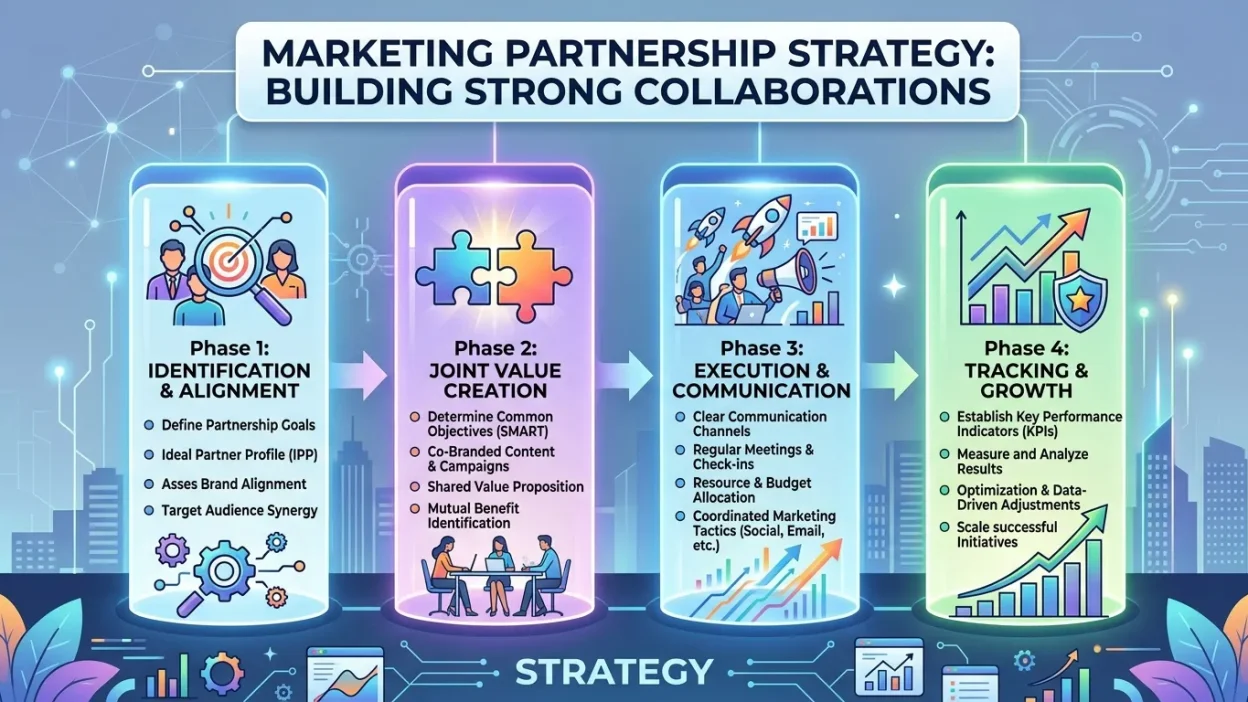
A strong Marketing Partnership Strategy helps businesses work with complementary brands, companies, and professionals to expand their reach, strengthen credibility, share resources, and create new growth opportunities. Strategic partnerships can support customer acquisition, brand awareness, content distribution, product promotion, and long-term business development. By combining clear objectives with effective communication and relationship management, businesses can create partnerships that deliver meaningful value to all parties involved.
What Is a Marketing Partnership Strategy?
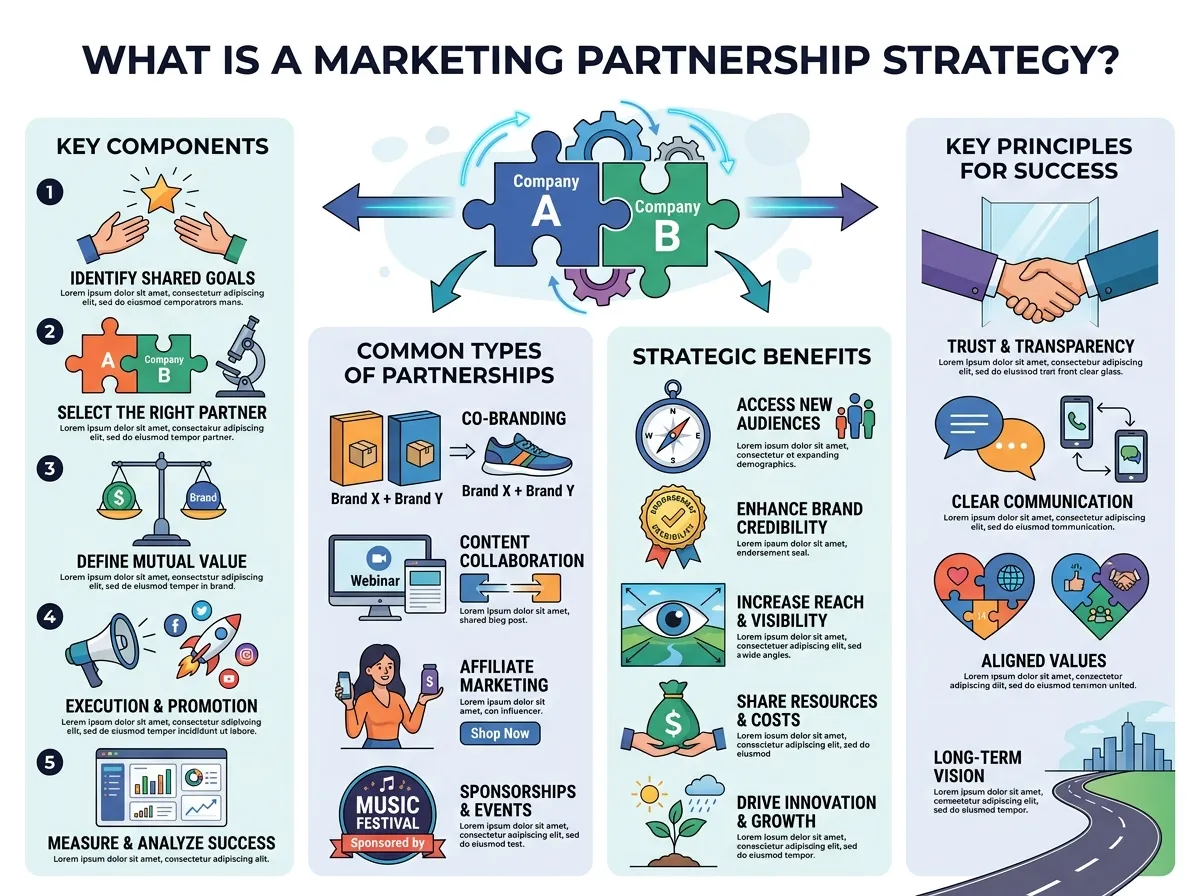
A Marketing Partnership Strategy is a structured approach to developing and managing business relationships that support marketing and growth objectives. Instead of relying entirely on internal marketing resources, a company collaborates with another organization that has complementary audiences, capabilities, products, services, or market access.
These partnerships can take many forms. Two businesses may create content together, promote each other’s services, organize an event, develop a joint campaign, exchange audiences, or introduce their customers to complementary products. The exact structure depends on the goals of the organizations involved.
The most effective partnerships are built around shared value. A company should not enter a partnership simply because another business has a large audience or recognizable name. The relationship should create a meaningful reason for both parties to participate. When the objectives, audiences, and expectations are aligned, partnership marketing can become a sustainable part of a broader marketing strategy.
Why Strategic Marketing Partnerships Matter
Strategic Marketing Partnerships allow businesses to access opportunities that may be difficult or expensive to achieve independently. A partner can provide access to a new customer segment, specialized knowledge, distribution channels, technology, industry relationships, or marketing resources.
Partnerships can also strengthen brand credibility. When two relevant businesses collaborate, each organization can benefit from the trust that already exists between the partner and its audience. This does not automatically guarantee customer conversion, but it can create an additional layer of familiarity and credibility around a campaign.
Another important advantage is shared marketing effort. Businesses can combine content creation, promotional activities, advertising resources, events, and communication channels. This can make certain campaigns more efficient while allowing each partner to contribute its strongest capabilities.
A partnership can also support innovation. Different organizations often bring different perspectives to the same market challenge. Collaboration can result in new campaign concepts, products, experiences, or customer engagement opportunities that would be less likely to emerge from one company working alone.
Marketing Partnership Planning Creates a Strong Foundation
Successful partnerships usually begin with thoughtful Marketing Partnership Planning. Before approaching potential partners, a business should have a clear understanding of what it wants to accomplish.
The planning process should consider marketing objectives, target audiences, available resources, campaign expectations, timelines, and desired outcomes. It is also important to understand what the business can offer a potential partner. Partnership discussions become more productive when both sides can clearly identify the value they bring to the relationship.
A business should also consider whether the potential partner has a compatible audience and brand identity. Similarity does not necessarily mean the businesses need to sell the same type of product. In many cases, complementary businesses can create stronger opportunities because their offerings solve related customer needs without directly competing.
For example, a software company serving small businesses could collaborate with a business consulting firm, a professional training provider, or a digital marketing service. Each organization reaches a potentially relevant audience while providing a different type of value.
Building a Strong Brand Partnership Strategy

A Brand Partnership Strategy focuses on creating collaborations that strengthen the participating brands while delivering useful experiences to customers. Brand alignment is particularly important because every partnership can influence how customers perceive the organizations involved.
Businesses should examine factors such as brand values, audience expectations, communication style, market positioning, and customer experience before entering a collaboration. A partnership may generate short-term exposure, but a mismatch between the participating brands can create confusion or weaken the overall campaign message.
Strong brand partnerships typically have a clear shared narrative. Customers should understand why the brands are working together and how the collaboration benefits them. When the connection feels natural, promotional messages can appear more relevant and authentic.
Brand partnerships can also extend beyond individual campaigns. A successful collaboration may develop into recurring content projects, joint events, referral relationships, product bundles, or other long-term initiatives.
Co-Marketing Strategy and Shared Promotion
A Co-Marketing Strategy allows two or more businesses to collaborate on marketing activities while sharing resources, audiences, and promotional responsibilities. It can be particularly valuable when organizations have complementary products or services and overlapping target markets.
Co-marketing can involve webinars, research reports, podcasts, articles, social media campaigns, email promotions, events, videos, or educational resources. Each organization contributes according to its capabilities while benefiting from the combined reach of the campaign.
For example, two businesses serving the same professional audience could produce a joint industry report. One partner may provide research and data while the other handles content development and promotion. Both organizations can distribute the final resource through their own channels.
The success of co-marketing depends heavily on coordination. Partners should agree on campaign objectives, messaging, responsibilities, publishing schedules, promotional channels, and measurement methods before launching the campaign.
Partnership Marketing Strategy for Customer Growth
A Partnership Marketing Strategy can contribute to customer acquisition by connecting businesses with audiences they may not reach efficiently through their existing channels.
This approach can include referral partnerships, joint promotions, affiliate relationships, strategic content collaborations, event partnerships, and cross-promotional campaigns. Each model creates a different customer journey, so businesses should select partnership structures that match their marketing objectives.
Customer relevance should remain central to the relationship. A large audience is not necessarily valuable if that audience has little interest in the product or service being promoted. A smaller but highly relevant audience can sometimes provide more meaningful engagement.
Businesses should therefore evaluate audience quality alongside audience size. Factors such as customer needs, engagement levels, geographic markets, industry relevance, purchasing behavior, and brand expectations can help determine whether a potential partnership makes sense.
A broader Product Marketing Strategy can also benefit from partnerships when complementary businesses help introduce products to new audiences, communicate product benefits, or support customer education. Product Marketing Strategy
Business Partnership Development
Business Partnership Development involves identifying, evaluating, establishing, and expanding relationships with organizations that can contribute to mutual business objectives.
Finding the right partner requires more than simply looking for companies with similar customers. Businesses should evaluate complementary capabilities, reputation, market positioning, resources, communication practices, and long-term compatibility.
A strong partnership proposal should explain the purpose of the collaboration and clearly communicate the potential value for the other organization. Instead of focusing entirely on what the business wants to receive, the proposal should demonstrate what both sides can gain.
Once a partnership begins, the relationship should be managed actively. Regular communication, shared reporting, campaign reviews, and open discussions can help prevent misunderstandings and identify opportunities for improvement.
Marketing Collaboration Strategy
A Marketing Collaboration Strategy provides structure for how partners work together across different marketing activities. Collaboration can involve content production, social media promotion, email marketing, public relations, events, advertising, research, influencer activities, or customer education.
Clear ownership is particularly important. Each partner should understand who is responsible for creating content, approving materials, communicating with customers, managing campaign assets, and reviewing results.
Communication also plays a major role. Different businesses may have different approval processes, publishing schedules, and internal priorities. Establishing a shared communication system can make collaboration smoother and reduce delays.
Businesses can strengthen these relationships by creating shared campaign documentation, establishing communication routines, and maintaining clear expectations. A well-organized collaboration allows partners to focus on delivering value rather than repeatedly resolving operational confusion.
Partner Relationship Management
Partner Relationship Management focuses on maintaining productive and sustainable relationships after a partnership has been established. Signing an agreement is only the beginning of the relationship.
Partners should communicate regularly about performance, customer feedback, campaign results, upcoming opportunities, and challenges. This ongoing communication helps both organizations understand what is working and where adjustments may be needed.
Trust is another important element. Businesses are more likely to maintain long-term partnerships when they can rely on each other to meet commitments, communicate honestly, protect shared information, and respect agreed responsibilities.
Relationship management should also include recognition of partner contributions. Acknowledging successful campaigns, sharing positive results, and identifying future opportunities can strengthen collaboration and encourage both organizations to continue investing in the relationship.
Measuring Partnership Performance
A marketing partnership should have measurable objectives. Depending on the type of collaboration, businesses may evaluate website traffic, leads, conversions, engagement, content downloads, referral activity, customer acquisition, revenue contribution, or brand exposure.
The appropriate metrics depend on the purpose of the partnership. An awareness-focused collaboration may emphasize reach and engagement, while a lead-generation partnership may focus more heavily on qualified leads and conversion activity.
Businesses should avoid measuring every partnership using the same criteria. Instead, measurement should reflect the original objective of the collaboration.
Daily performance monitoring can also help marketing teams identify changes quickly. Relevant management metrics and ROI considerations can be supported through resources such as Daily KPIs to Boost ROI, particularly when partnership campaigns form part of a broader performance marketing program.
Communication Supports Long-Term Partnerships

Effective communication is essential for keeping marketing partnerships productive. Partners need to exchange information about campaign progress, customer responses, content requirements, deadlines, and performance results.
Different communication channels may serve different partnership needs. Email can support formal approvals and documentation, while project management platforms can help coordinate tasks. Meetings or video calls can be useful for strategic discussions, while messaging platforms may support quick operational updates.
A broader Communication Channels Strategy can help businesses determine how different communication methods should be used across marketing activities and stakeholder relationships. Communication Channels Strategy
The goal is not to communicate constantly. Instead, partners should establish communication practices that are consistent, useful, and appropriate for the complexity of the collaboration.
Partnership Growth Strategy
A Partnership Growth Strategy focuses on expanding the value generated from successful collaborations over time. Once a partnership demonstrates positive results, businesses can explore additional opportunities instead of treating the relationship as a one-time campaign.
Growth can involve expanding into new markets, launching additional campaigns, developing joint content, creating new referral opportunities, or introducing complementary products and services.
However, expansion should be based on evidence from previous collaboration. Businesses can examine campaign performance, customer feedback, operational efficiency, and partner satisfaction before deciding whether to increase investment.
A successful partnership can also lead to a broader network of business relationships. One strong collaboration may introduce a company to other organizations, industry communities, or complementary service providers.
Strategic Brand Collaborations Create New Opportunities
Strategic Brand Collaborations can create distinctive marketing experiences by bringing together organizations with complementary strengths. These collaborations can help businesses reach new audiences while offering customers something that neither brand would necessarily provide independently.
Collaboration does not always have to involve direct product integration. Brands can work together through educational campaigns, community initiatives, industry research, events, content projects, or customer experiences.
The strongest collaborations generally have a clear reason for existing. Customers should be able to understand why the participating brands belong together and what additional value the collaboration provides.
For businesses operating in technology and digital services, partnership opportunities can also extend into specialized areas. For example, companies developing or promoting mobile applications may collaborate with marketing specialists to strengthen acquisition and visibility. Resources related to Outsourcing Mobile App Marketing can provide additional context for businesses exploring specialized marketing partnerships.
Common Challenges in Marketing Partnerships
Even well-planned partnerships can experience challenges. Differences in priorities, communication styles, timelines, resources, or expectations can affect campaign execution.
Another common challenge is unclear responsibility. When neither partner clearly owns a particular task, important activities may be delayed or overlooked. Establishing responsibilities before a campaign begins can reduce this risk.
Brand compatibility can also become an issue. A partnership may appear attractive financially but fail to align with customer expectations or brand positioning. Businesses should therefore evaluate compatibility before committing substantial resources.
Measurement can create another challenge. If partners do not agree on how success will be evaluated, it may become difficult to determine whether the collaboration achieved its objectives. Defining relevant metrics at the beginning creates a stronger basis for reviewing results.
Creating Sustainable Marketing Partnerships
A sustainable Marketing Partnership Strategy focuses on long-term value rather than short-term exposure. Businesses should look for relationships where both parties can continue contributing meaningful resources, expertise, audiences, or opportunities.
Sustainability also requires flexibility. Markets change, customer expectations evolve, and marketing channels develop over time. Partners should be willing to adjust campaigns when new information or performance data suggests that changes are necessary.
Regular reviews can help maintain alignment. Partners can discuss what worked, what needs improvement, how customers responded, and what opportunities may exist for future collaboration.
Over time, successful partnerships can become an important part of a company’s overall marketing ecosystem. Instead of operating as isolated campaigns, they can support customer acquisition, brand development, content distribution, market expansion, and business growth.
Conclusion
A strong Marketing Partnership Strategy gives businesses a structured way to create valuable relationships with complementary organizations. Through strategic planning, brand alignment, co-marketing, collaboration, relationship management, and performance measurement, companies can develop partnerships that support broader marketing and business objectives.
The most effective partnerships are built around mutual value. Both organizations should understand their responsibilities, communicate consistently, measure relevant outcomes, and remain open to improving the relationship over time. When these elements work together, partnerships can become a reliable component of long-term marketing growth.
Frequently Asked Questions
1. What is a Marketing Partnership Strategy?
A Marketing Partnership Strategy is an approach businesses use to collaborate with other organizations to achieve shared marketing or growth objectives. It can involve joint campaigns, referrals, content collaborations, events, cross-promotion, or other forms of coordinated marketing.
2. Why are strategic marketing partnerships important?
Strategic marketing partnerships can help businesses access new audiences, share marketing resources, strengthen credibility, develop new opportunities, and support customer acquisition. Their value depends on the relevance and quality of the partnership.
3. What is the difference between co-marketing and partnership marketing?
Co-marketing generally involves two or more businesses working together on specific promotional activities. Partnership marketing is a broader concept that can include co-marketing as well as referrals, strategic collaborations, joint initiatives, and longer-term business relationships.
4. How do businesses find suitable marketing partners?
Businesses can identify potential partners by looking for organizations with complementary products, relevant audiences, compatible positioning, and useful capabilities. Industry networks, professional communities, events, referrals, and existing business relationships can all provide partnership opportunities.
5. What makes a brand partnership successful?
A successful brand partnership typically has clear objectives, audience compatibility, aligned expectations, effective communication, defined responsibilities, and mutual value. Both organizations should understand why the collaboration benefits their customers and businesses.
6. How can businesses measure partnership marketing performance?
Performance can be measured using metrics such as qualified leads, website traffic, conversions, referrals, engagement, content downloads, customer acquisition, revenue contribution, or campaign reach. The right metrics depend on the purpose of the partnership.
7. What is Partner Relationship Management?
Partner Relationship Management involves maintaining and improving relationships with business partners. It includes communication, performance reviews, expectation management, collaboration, problem resolution, and identifying future opportunities.
8. Can small businesses benefit from marketing partnerships?
Yes. Small businesses can use partnerships to access complementary audiences, share resources, increase visibility, and collaborate on marketing activities that may be difficult to execute independently. The partnership should be relevant to both businesses and their customers.
9. How can a business build long-term partnership relationships?
Long-term relationships can be developed through consistent communication, reliable execution, transparent performance reporting, mutual support, and regular discussions about future opportunities. Trust and shared value are important for maintaining the relationship.
10. What is the role of a Partnership Growth Strategy?
A Partnership Growth Strategy focuses on expanding the value of successful business relationships. It may involve increasing campaign activity, entering new markets, developing additional collaborations, creating new customer opportunities, or extending successful partnership models.