


Integrated Marketing Communications (IMC) ensures consistency across all marketing channels, strengthening brand trust and engagement. A strong IMC Marketing Strategy aligns messaging, data, and teams to create a seamless customer experience. When implemented effectively, IMC drives long-term brand growth, efficiency, and measurable business results.
Marketing today is more complex than ever. Brands no longer communicate with customers through a single channel — instead, interactions happen across social media, search engines, email, websites, advertisements, and offline touchpoints. In this fragmented digital landscape, inconsistent messaging can weaken trust, confuse audiences, and reduce marketing effectiveness.
This is why Integrated Marketing Communications (IMC) has become a critical strategy for businesses of all sizes. IMC ensures that every message, campaign, and customer interaction aligns with a unified brand narrative. By integrating channels, data, and teams, companies can deliver a seamless customer experience that builds credibility, strengthens relationships, and drives sustainable growth.
In this blog, we will explore what IMC is, why it matters in 2025, how it shapes the customer journey, common pitfalls to avoid, and practical steps to implement an effective IMC Marketing Strategy.
Integrated Marketing Communications (IMC)
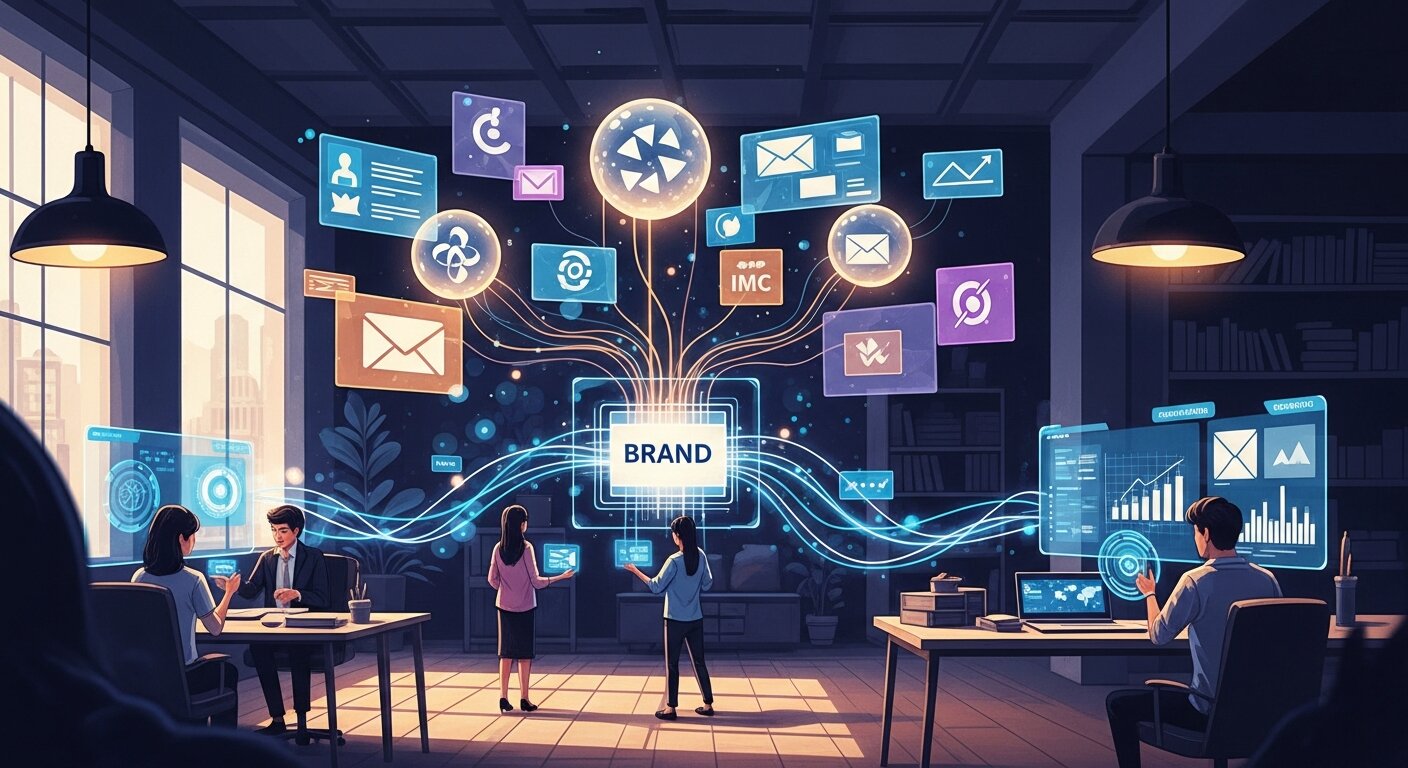
Integrated marketing communications (IMC) means pulling together all elements of your marketing strategy — message, content, and customer engagement channels — so that every interaction delivers one powerful, compelling, and unified brand story. Rather than treating each marketing channel as a separate entity, an IMC Marketing Strategy ensures that everything works together as a cohesive system.
The objective is to create a seamless customer experience that builds credibility, trust, and long-term loyalty while driving consistent and measurable business results. When executed properly, an IMC Marketing Strategy not only strengthens brand perception but also improves efficiency, reduces duplication of efforts, and maximizes the impact of every campaign.
Key Ingredients of an Effective IMC Marketing Strategy
An effective IMC Marketing Strategy consists of several interconnected core elements that work together to create a unified, cohesive, and high-impact marketing approach. Rather than treating marketing activities as isolated efforts, IMC ensures that every component supports the same brand vision and objectives.
Harmonized Messaging
This refers to maintaining consistency in brand identity, tone, voice, and messaging across all platforms. Whether a customer interacts with your brand through social media, email, website, paid ads, or offline communication, the message should feel seamless and aligned. Consistency in language, visuals, and storytelling strengthens brand recognition and prevents confusion. When messaging is harmonized, customers are more likely to trust and engage with your brand because they experience a clear and reliable identity at every touchpoint.
Coordinated Channels
A strong IMC Marketing Strategy aligns all marketing channels — including social media, email marketing, public relations, content marketing, paid advertising, and even offline campaigns — so they function as parts of a single, integrated system. Instead of competing or contradicting each other, these channels reinforce the same key messages and themes. For example, a social media campaign, an email newsletter, and a paid ad should all support the same campaign objective and brand narrative. This coordination amplifies impact and ensures a more powerful overall marketing presence.
Customer Insights
Data and audience understanding are at the heart of an effective IMC Marketing Strategy. By analyzing customer behavior, preferences, and engagement patterns, brands can tailor their messaging to meet real audience needs. This allows businesses to deliver the right message to the right person at the right time through the most appropriate channel. Leveraging customer insights makes marketing more personalized, relevant, and meaningful, which ultimately leads to higher engagement and better conversion rates.
Centralized Planning
IMC requires collaboration and alignment across all departments within an organization. Centralized planning brings marketing, sales, PR, customer service, and other relevant teams together under a shared vision and common strategic goals. When everyone works from the same playbook, it ensures consistency in execution and reduces miscommunication. This unified approach helps organizations implement their IMC Marketing Strategy more effectively and efficiently.
How IMC Shapes the Customer Journey

In today’s digital world, consumers rarely make purchasing decisions based on a single interaction with a brand. Instead, they engage with businesses across multiple platforms and touchpoints before forming an opinion or making a purchase. These touchpoints may include social media posts, Google searches, email campaigns, website visits, online reviews, advertisements, and even direct customer support interactions.
A well-designed IMC Marketing Strategy ensures that each of these interactions delivers a consistent, meaningful, and positive experience. Rather than encountering fragmented or conflicting messages, customers receive a unified brand story that builds trust and familiarity over time.
For example, if a brand promotes sustainability heavily on Instagram but fails to mention its eco-friendly practices on its website or product packaging, customers may feel confused or misled. This inconsistency can weaken credibility and damage brand trust. An effective IMC Marketing Strategy prevents such misalignment by ensuring that the same values, promises, and messaging are communicated consistently across all channels.
According to Forrester, 94% of consumers prefer brands that maintain transparency and consistency across all touchpoints. This statistic highlights why a strong IMC Marketing Strategy is no longer just a nice-to-have — it is essential for building trust, credibility, and long-term customer relationships in today’s highly connected digital landscape.
The Role of Data in IMC Success
Data plays a critical role in the success of any IMC Marketing Strategy. It serves as the foundation for understanding customer behavior, preferences, and engagement patterns across different platforms and channels. By collecting and analyzing data from social media, email marketing, website analytics, and paid advertising, brands can gain valuable insights into what resonates with their audience.
For instance, if data reveals that customers engage more with video ads on Instagram than with static images, brands can prioritize video content while ensuring that the same core message is reflected in other formats such as blog posts, email campaigns, and display ads. This ensures consistency while still optimizing for platform-specific preferences.
A data-driven IMC Marketing Strategy enables businesses to continuously refine and improve their marketing efforts. Instead of relying on guesswork, companies can make informed decisions based on real customer insights. Over time, this leads to more targeted campaigns, higher engagement, better customer experiences, and stronger overall marketing performance.
Breaking Down Marketing Silos

IMC is not just about aligning channels — it is fundamentally about aligning people, processes, and priorities under a unified IMC Marketing Strategy. Even the most creative campaigns and strongest brand messages can fail if internal departments operate separately rather than collaboratively. True integration starts from within the organization before it reaches the customer.
Marketing, PR, sales, social media, and customer service teams must work in close coordination rather than functioning in isolation. Each of these departments interacts with customers in different ways, but they all represent the same brand. When departments operate in silos, messaging becomes inconsistent, customer experience suffers, and valuable opportunities for engagement and conversion are lost. A well-structured IMC Marketing Strategy ensures that every team speaks the same language, follows the same brand guidelines, works toward the same objectives, and reinforces the same brand narrative at every touchpoint.
Centralized planning plays a crucial role in eliminating these silos. When teams share common goals, key performance indicators (KPIs), and strategic direction, collaboration becomes natural rather than forced. Regular cross-department communication — through meetings, shared dashboards, and collaborative planning sessions — helps align priorities and avoid misalignment in campaigns. By embedding collaboration into your IMC Marketing Strategy, organizations can improve operational efficiency, reduce internal miscommunication, streamline workflows, and ultimately deliver a more seamless and cohesive experience to customers.
Why Integrated Marketing Communications Matter More Than Ever
The digital landscape is increasingly fragmented, fast-paced, and competitive. Consumers are constantly exposed to messages from multiple sources — including social media platforms, search engines, email marketing, online advertisements, influencers, brand websites, and word-of-mouth. Often, they encounter several of these touchpoints at the same time. This information overload makes it harder for brands to capture attention, maintain consistency, and create meaningful impact.
A strong IMC Marketing Strategy helps brands cut through this noise by ensuring clarity, consistency, and cohesion across every campaign and customer touchpoint. Instead of delivering scattered and disconnected messages, businesses can present a unified and compelling brand story that resonates both emotionally and logically with their audience. This not only improves engagement but also strengthens credibility and trust over time.
According to a HubSpot report, implementing a well-coordinated IMC Marketing Strategy can improve overall campaign performance by up to 20%, largely due to better alignment and smoother integration across marketing channels.
Similarly, McKinsey research suggests that companies adopting an effective IMC Marketing Strategy are 1.5 times more likely to achieve significant business growth compared to those relying on fragmented marketing approaches. This clearly shows that an IMC Marketing Strategy is no longer just a best practice — it is a key driver of sustainable competitive advantage.
Common IMC Mistakes to Avoid
While an IMC Marketing Strategy is highly powerful, many brands struggle to implement it successfully due to common strategic and operational mistakes:
- Inconsistent messaging across platforms – When brand tone, visuals, or messaging differ across channels, customers become confused, and brand identity weakens. This damages trust and reduces credibility.
- Poor collaboration between departments – If marketing, sales, PR, and customer service do not communicate effectively, campaigns become misaligned, opportunities are missed, and brand perception suffers.
- Ignoring customer data – Brands that fail to analyze audience behavior, preferences, and feedback often deliver irrelevant or poorly targeted messages, reducing engagement and ROI.
- Treating IMC as a one-time effort – Some companies implement IMC for a single campaign instead of integrating it into their long-term strategy. However, IMC must be an ongoing, evolving approach that adapts to changing market trends and consumer behavior.
Avoiding these pitfalls and continuously refining your IMC Marketing Strategy ensures long-term success, stronger customer relationships, improved brand loyalty, and sustainable business growth.
How IMC Fuels Long-Term Brand Growth
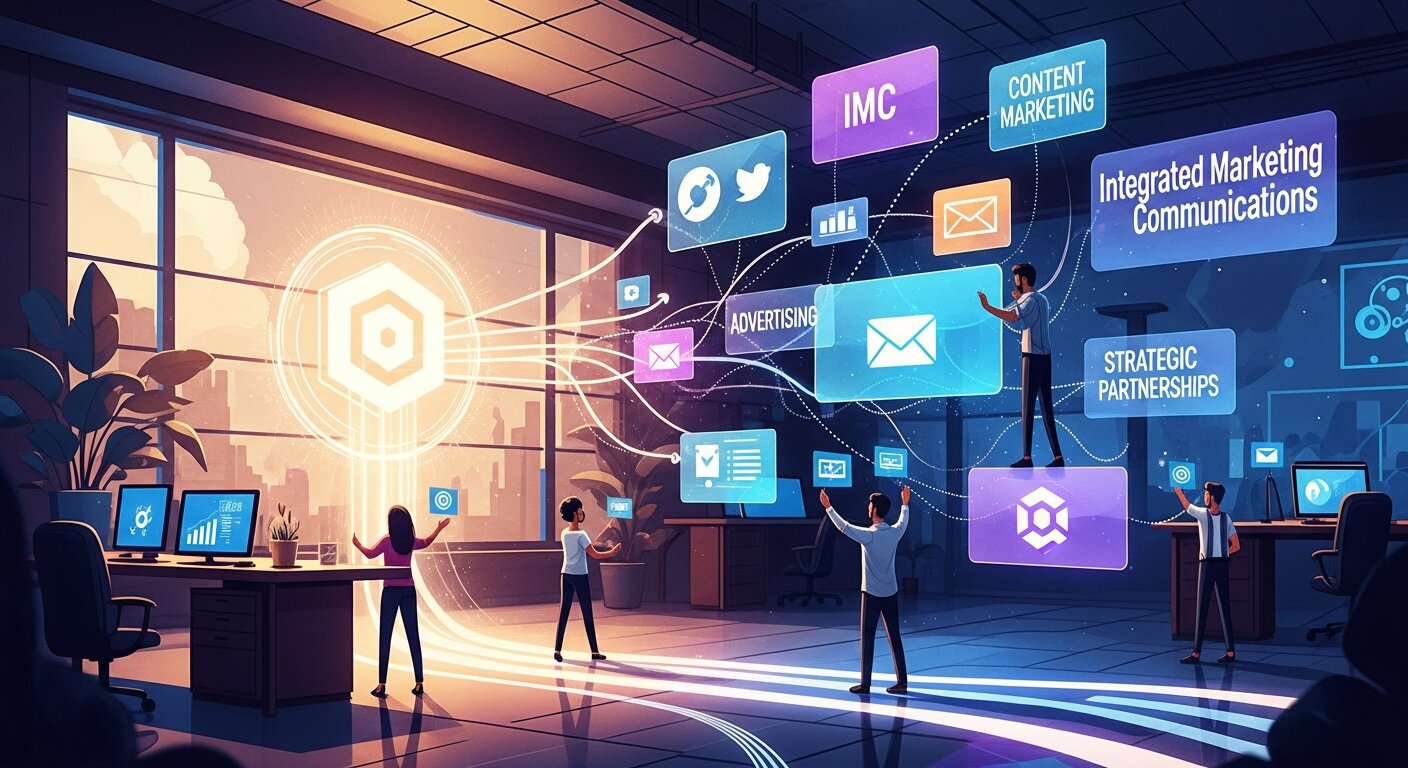
An IMC Marketing Strategy does much more than improve short-term campaign performance — it strengthens the overall foundation of a brand and drives long-term success.
By consistently delivering customer-centric, aligned, and value-driven messaging, businesses can significantly enhance trust, credibility, and brand recognition. A well-executed IMC Marketing Strategy helps brands move beyond transactional marketing and focus on building meaningful, lasting relationships with their audience.
Over time, this consistency leads to higher customer retention, deeper emotional engagement, increased brand loyalty, and stronger advocacy from satisfied customers. Ultimately, companies that invest in a long-term IMC Marketing Strategy are better positioned to achieve sustained revenue growth, competitive differentiation, and market leadership in an increasingly crowded marketplace.
Steps to Implement an Effective IMC Marketing Strategy
Develop a Clear Brand Strategy
Start by defining your brand’s mission, vision, core values, unique selling points (USPs), and overarching brand story. This forms the foundation of your IMC Marketing Strategy. Create a comprehensive brand style guide that includes tone of voice, visual identity, key messaging pillars, and communication guidelines to ensure consistency across all channels.
Understand Your Audience
Use data analytics, customer research, surveys, and behavioral insights to segment your audience based on demographics, psychographics, interests, and buying behavior. This allows your IMC Marketing Strategy to be more targeted, personalized, and relevant, increasing engagement and conversion rates.
Align Your Teams
Ensure that marketing, sales, PR, and customer service teams collaborate closely under a unified IMC Marketing Strategy. Establish shared objectives, transparent communication processes, and regular strategy alignment meetings to maintain consistency and coordination.
Centralize Your Messaging
Identify one core brand message that reflects your values and value proposition. Ensure this message is consistently reinforced across all platforms — including social media, email marketing, website content, and advertising — as part of your IMC Marketing Strategy.
Implement Multi-Channel Campaigns
Design and execute integrated marketing campaigns that span multiple channels such as email, social media, paid advertising, influencer marketing, and content marketing. Each channel should complement and support your IMC Marketing Strategy rather than operate independently.
Measure and Improve
Use analytics tools to track performance across all marketing channels. Evaluate campaign results, identify areas for improvement, and continuously refine your IMC Marketing Strategy based on real-time data, customer feedback, and market trends.
Conclusion
Integrated marketing communications is no longer optional — it is essential.
By aligning channels, teams, and messaging, businesses can create a seamless customer experience that drives trust, engagement, and growth.
If you want to elevate your IMC strategy, start by auditing your current marketing channels, aligning your teams, and refining your core message. With consistency and data-driven optimization, IMC can transform your marketing from fragmented efforts into a powerful brand strategy.
Frequently Asked Questions
1. What is (IMC)?
IMC is a strategic approach that aligns all marketing channels, messages, and teams to deliver a consistent and unified brand experience across all customer touchpoints. Understanding Integrated Marketing Communication concept is essential in today’s fragmented digital landscape, where brands must engage audiences across multiple platforms while maintaining coherence, credibility, and clarity in their messaging.
2. Why is IMC important for businesses ?
Because consumers interact with brands across multiple digital and offline channels, IMC helps maintain consistency, build trust, and improve campaign effectiveness in a fragmented media environment.
3. How does an IMC Marketing Strategy improve customer experience?
By ensuring that every interaction — from social media to email to ads — delivers the same core message, IMC creates a seamless and credible brand experience.
4. What are the key elements of a strong IMC Marketing Strategy?
A successful IMC strategy includes harmonized messaging, coordinated channels, data-driven customer insights, and centralized planning across teams.
5. How can companies break down marketing silos with IMC?
By encouraging cross-department collaboration, shared goals, centralized planning, and regular communication between marketing, sales, PR, and customer service teams.
6. What are common mistakes in implementing IMC?
Common mistakes include inconsistent messaging, poor team collaboration, ignoring customer data, and treating IMC as a one-time campaign instead of a long-term strategy.
7. How can businesses measure IMC success?
By tracking key metrics such as engagement rates, conversion rates, brand consistency, customer retention, and overall campaign performance using analytics tools.
8. Is IMC only for large companies?
No — IMC benefits businesses of all sizes, from startups to multinational corporations, as long as they prioritize consistency and customer experience.