

Marketing communication connects brands with audiences through multiple channels to inform, persuade, and engage. Understanding Marketing Communication Concepts ensures campaigns are consistent, effective, and measurable. Mastery of these principles is essential for students, marketers, and business professionals aiming to achieve impactful results.
Marketing Communication (Marcom) is the backbone of any brand’s strategy to connect with its audience. It goes beyond simply advertising products; it includes all forms of communication that inform, persuade, and engage consumers. By understanding Marketing Communication Concepts, marketers can design campaigns that not only increase awareness but also foster loyalty and drive meaningful customer actions. These concepts are equally important for students preparing for exams, professionals building strategies, and businesses looking to strengthen their brand presence. This FAQ addresses common questions about marketing communication to clarify essential principles, practical applications, and emerging trends in the field.
What is Marketing Communication?
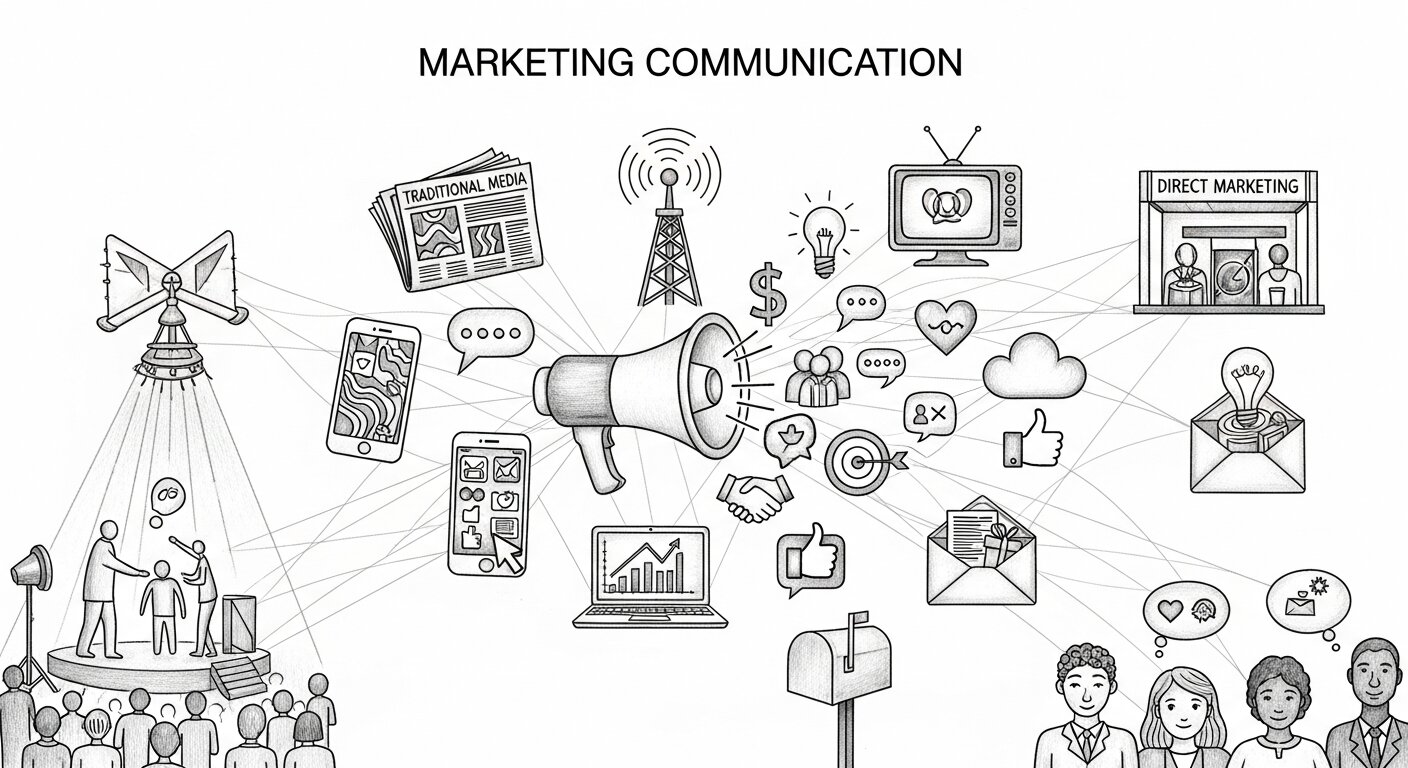
Marketing Communication (Marcom) refers to the full spectrum of ways a company communicates its brand message, product information, and value propositions to its target audience. It is a strategic approach that leverages multiple channels and tools to inform, persuade, and remind consumers about a brand or product. Understanding Marketing Communication Concepts is essential for marketers, students, and business professionals who want to design effective campaigns that resonate with audiences and drive measurable results.
The core objectives of marketing communication are:
- Creating Awareness – ensuring that potential customers know about the brand, products, or services. Awareness is the first step in building a strong connection between the brand and its target market.
- Building Loyalty – fostering trust, credibility, and long-term relationships with customers. Loyalty helps brands retain customers and generate repeat business.
- Driving Conversions – encouraging audiences to take specific actions, such as purchasing, subscribing, or engaging with the brand. Conversions reflect the ultimate success of marketing communication efforts.
Grasping these Marketing Communication Concepts helps marketers structure campaigns that are strategically aligned with business objectives, whether they aim to increase brand visibility, strengthen customer relationships, or maximize sales.
Key Elements of Marketing Communication Concepts
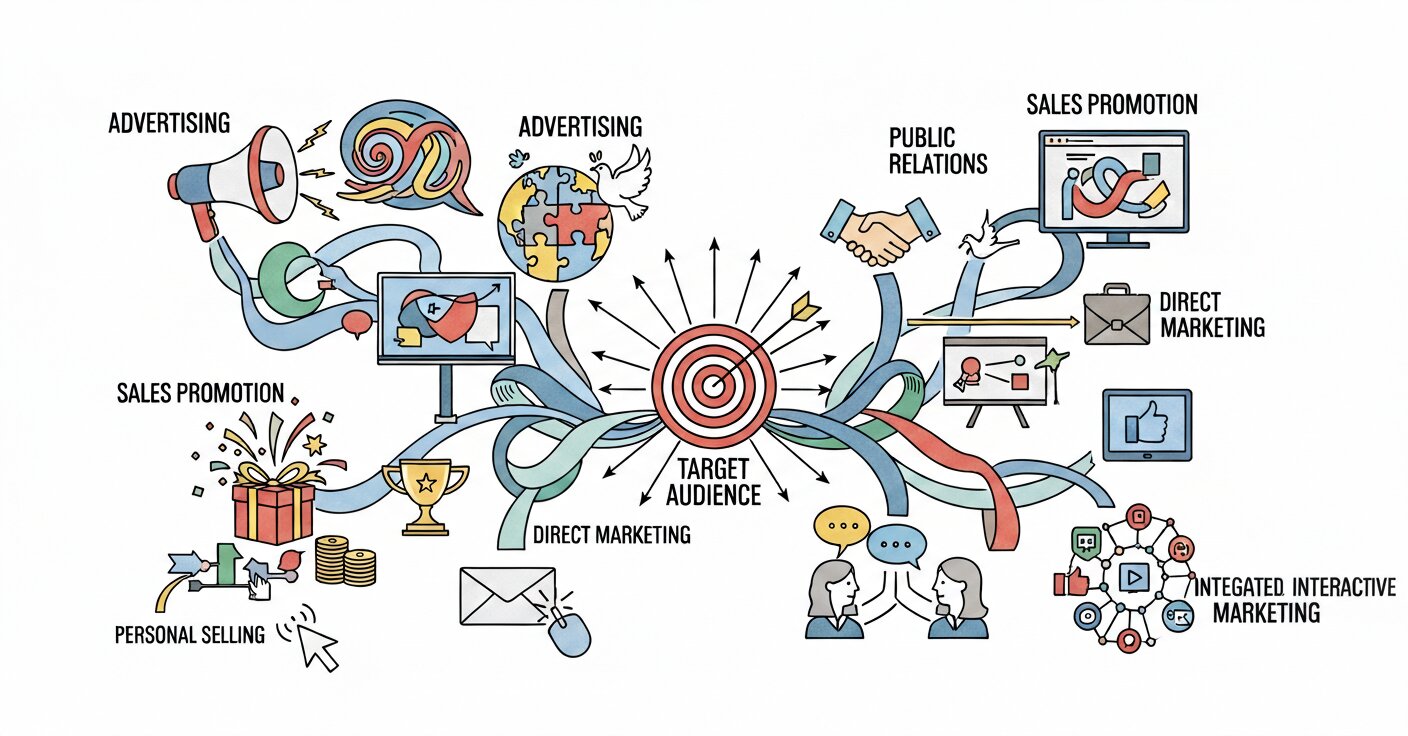
Marketing communication is multifaceted, blending creative, strategic, and interactive elements to create meaningful connections between brands and customers. The following are the core elements of Marketing Communication Concepts:
Advertising
Advertising is the most visible form of marketing communication, involving paid promotions to reach large audiences. Its main purpose is to inform, persuade, and influence consumer behavior.
Channels include:
- Television and radio ads – Ideal for mass audiences, building brand recall and recognition.
- Print advertising – Newspapers, magazines, brochures, and flyers to target specific demographics.
- Digital advertising – Social media campaigns, search engine marketing (SEM), display banners, and video ads.
- Outdoor media – Billboards, transit ads, posters, and digital signage for increasing visibility in public spaces.
Example: Coca-Cola’s global campaigns combine TV, digital, and outdoor advertising to maintain brand visibility while reinforcing its themes of happiness and togetherness.
Why it matters: Advertising can generate widespread awareness quickly, establish brand identity, and ensure consistent messaging across multiple channels. Mastering these Marketing Communication Concepts is essential for designing campaigns that reach both mass and niche audiences.
Public Relations (PR)
PR focuses on managing a brand’s reputation and generating positive publicity. Unlike paid advertising, PR relies on earned media, including press coverage, influencer collaborations, and strategic communications.
Key activities include:
- Press releases and media announcements
- Influencer partnerships and endorsements
- Crisis communication to maintain brand integrity
Example: Apple leverages PR to create anticipation for product launches, generating media buzz while reinforcing its premium brand image. Understanding Marketing Communication Concepts related to PR allows marketers to build trust, credibility, and brand authority effectively.
Sales Promotions
Sales promotions are short-term incentives designed to encourage immediate action, such as purchases or sign-ups. These promotions are tactical, measurable, and result-oriented.
Examples include:
- Discounts, coupons, and special offers
- Loyalty programs and reward points
- Free trials or limited-time bundles
Example: Supermarkets frequently run “Buy 1 Get 1 Free” campaigns to boost sales and attract new customers. Sales promotions are a vital part of Marketing Communication Concepts, as they provide quick results and can complement long-term branding strategies.
Personal Selling
Personal selling involves direct, one-on-one interactions between a sales representative and potential customers. This element emphasizes understanding customer needs, providing tailored solutions, and closing sales effectively.
Example: Car dealerships rely on personal selling to guide customers through various models, features, and financing options.
Why it matters: Personal selling is essential for complex or high-value products because it allows for personalized communication, relationship-building, and immediate feedback. Understanding this aspect is critical for a comprehensive grasp of Marketing Communication Concepts.
Direct Marketing
Direct marketing is the practice of communicating directly with individual consumers, often using personalized messages. This approach allows brands to track responses and optimize campaigns.
Channels include:
- Email marketing campaigns
- SMS or text message promotions
- Personalized catalogs and direct mail
Example: E-commerce platforms like Amazon send personalized product recommendations and discount offers based on consumer behavior. Integrating direct marketing into a broader strategy reflects a deeper understanding of Marketing Communication Concepts and audience targeting.
Events and Sponsorships
Events and sponsorships are experiential marketing tools that engage audiences through live or virtual experiences. They are highly effective for increasing brand visibility and recall.
Examples include:
- Product launches and roadshows
- Trade shows and exhibitions
- Sponsorships of sports, music, or cultural events
Example: Red Bull sponsors extreme sports events to align its brand with adventure and energy. Using events strategically demonstrates mastery of Marketing Communication Concepts, creating emotional engagement and long-lasting impressions.
Integrating Marketing Communication Concepts
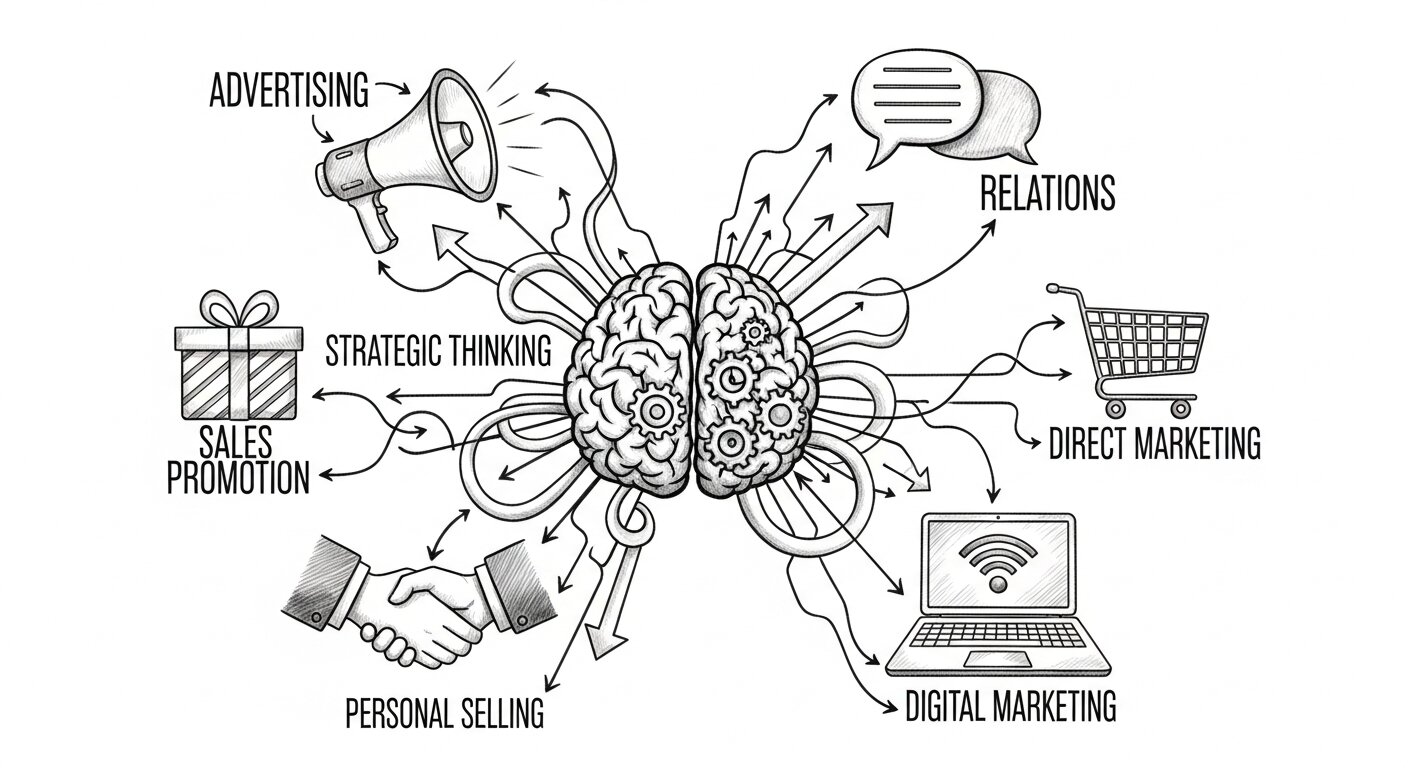
A modern approach emphasizes Integrated Marketing Communication (IMC), which coordinates all messaging and channels to deliver a consistent and cohesive brand experience. IMC ensures that whether a customer sees an advertisement, attends an event, or receives a personalized email, the brand message is unified, clear, and persuasive.
Why it matters:
- Reinforces brand recognition
- Builds trust and credibility
- Increases efficiency by avoiding conflicting messages
- Enhances marketing ROI
Understanding Marketing Communication Concepts in the context of IMC helps marketers design campaigns that resonate across multiple platforms and touchpoints, maximizing both awareness and engagement.
Why Marketing Communication Concepts Matter
- Clarity in Messaging: Avoids confusion and ensures the target audience understands the brand promise.
- Consistency Across Channels: Builds a strong and recognizable brand identity.
- Customer Engagement: Encourages interaction, loyalty, and advocacy.
- Measurable Impact: Modern digital tools allow tracking of campaign performance and personalization.
- Competitive Advantage: Helps brands differentiate themselves in crowded marketplaces.
Example: Nike consistently uses storytelling in advertising, sponsorships, and social media campaigns, illustrating how Marketing Communication Concepts work together to create strong emotional connections with audiences.
Public Relations (PR)
Public Relations (PR) is focused on managing and shaping a brand’s reputation. Unlike paid advertising, PR relies on earned media coverage and strategic communications to build trust and credibility.
Key activities include:
- Writing and distributing press releases to announce company updates, product launches, or events.
- Collaborating with influencers and opinion leaders to enhance brand perception.
- Crisis communication to address negative publicity and protect the brand image.
Example: Apple’s product launch events generate massive media coverage, creating excitement and reinforcing its premium brand image without directly paying for advertising space.
Why it matters: PR strengthens credibility, builds trust, and allows brands to tell their story in a trusted, third-party voice.
Sales Promotions
Sales promotions are short-term incentives that encourage immediate action, such as making a purchase or signing up for a service. These are typically tactical, measurable, and results-oriented.
Types of sales promotions include:
- Discounts and coupons – temporary price reductions to stimulate purchases.
- Loyalty programs – reward points, membership benefits, or repeat-purchase incentives.
- Free trials or limited-time bundles – encourage customers to try a product or service.
Example: Supermarkets often run “Buy 1 Get 1 Free” campaigns to increase product turnover and attract customers.
Why it matters: Promotions drive short-term trades, attract new customers, and can complement long-term marketing strategies.
Personal Selling
Personal selling is the direct interaction between a salesperson and a potential customer, usually in a one-on-one setting. The focus is on understanding customer needs, offering tailored solutions, and closing sales.
Key aspects include:
- Building personal relationships and trust with customers.
- Answering questions and addressing concerns.
- Demonstrating products or services in a customized manner.
Example: Car dealerships rely on personal selling, where sales representatives guide customers through different models, features, and financing options.
Why it matters: Personal selling is highly effective for complex or high-value products, as it allows for personalized communication and immediate feedback.
Direct Marketing
Direct marketing involves directly communicating with target audiences, often in a personalized way, without intermediaries. Its main purpose is to encourage immediate response or engagement.
Channels include:
- Email campaigns with tailored offers or newsletters.
- SMS or text marketing for timely notifications or promotions.
- Personalized catalogs or mailers for niche audiences.
Example: E-commerce brands like Amazon send personalized product recommendations and promotional emails based on customer browsing and purchase history.
Why it matters: Direct marketing is measurable, targeted, and cost-effective, allowing brands to track engagement and optimize campaigns.
Events and Sponsorships
Events and sponsorships are experiential marketing tools that engage audiences through live or virtual experiences. They help create emotional connections and reinforce brand identity.
Examples of events and sponsorships include:
- Product launches – creating excitement and press coverage.
- Trade shows and exhibitions – allowing direct interaction with potential customers.
- Sports, cultural, or music event sponsorships – associating the brand with values and lifestyles.
Example: Red Bull sponsors extreme sports events, reinforcing its adventurous and energetic brand personality.
Why it matters: Events and sponsorships create memorable brand experiences that improve recognition, recall, and engagement.
Main Goals of Marketing Communication
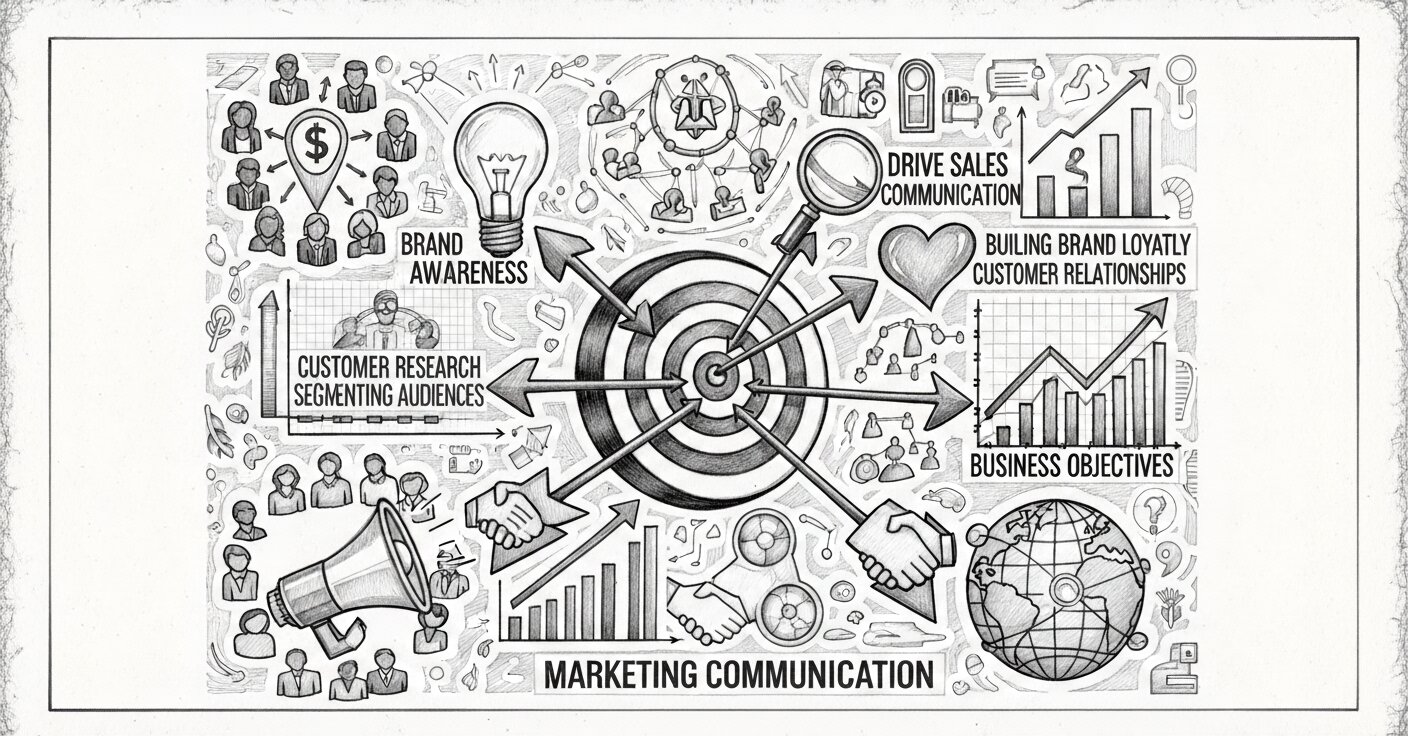
The main objectives of marketing communication can be summarized as follows:
- Increase Awareness
Ensure that the target audience knows about your product, service, or brand. Awareness is the first step in the customer journey. - Build Loyalty
Develop trust and maintain long-term relationships with customers, which encourages repeat business and advocacy. - Drive Conversions
Motivate the audience to take action, such as making a purchase, signing up for a service, or sharing content with their network.
Marketing Communication Concepts: Exam-Focused Guide
Marketing Communication (Marcom) is one of the most important topics in marketing exams, whether at the undergraduate, postgraduate, or professional level. It evaluates a student’s understanding of how brands interact with their target audience, the channels they use, and the strategies behind these interactions. Mastering Marketing Communication Concepts is not only crucial for exams but also for practical application in real-world marketing campaigns.
Exam questions are generally presented in three main formats:
- Multiple Choice Questions (MCQs) – Test your ability to identify correct concepts, terms, or strategies.
- True/False Questions – Assess your understanding of definitions and differences between marketing communication methods.
- Short-Answer Questions – Evaluate your ability to explain concepts, provide examples, and apply theoretical knowledge.
Understanding these formats and how Marketing Communication Concepts are applied is key to performing well on exams.
Frequently asked questions
What is Marketing Communication?
Marketing communication (Marcom) refers to all ways a brand conveys its message, value proposition, and product information to its target audience. It includes advertising, PR, sales promotions, personal selling, direct marketing, events, and sponsorships.
Why is Marketing Communication important?
It ensures that brand messages are clear, consistent, and compelling. Effective marketing communication helps build awareness, establish trust, strengthen loyalty, and drive conversions.
What are the main objectives of marketing communication?
The primary objectives are:
- Increase awareness
- Build loyalty
- Drive conversions
What is the promotional mix?
The promotional mix is a combination of communication tools used to reach target audiences. It includes advertising, sales promotions, PR, personal selling, and direct marketing. Each element serves a specific purpose in reaching and influencing consumers.
How does Integrated Marketing Communication (IMC) work?
IMC coordinates all marketing channels to deliver a consistent brand message. It ensures that every touchpoint, whether advertising, social media, events, or emails, aligns with the brand’s core values and messaging.
What role does digital marketing play in marketing communication?
Digital marketing allows brands to interact with audiences in real time, personalize communication using data, measure performance instantly, and reach global markets cost-effectively. It has transformed marketing communication into a two-way, interactive strategy.
How is storytelling used in marketing communication?
Storytelling humanizes brands, creates emotional connections, and makes messages more memorable. Through narratives, brands can convey values, inspire audiences, and strengthen loyalty. Example: Nike’s campaigns often feature athletes’ stories to inspire and engage.
What is the difference between advertising and personal selling?
Advertising targets large audiences via mass media to build awareness, while personal selling involves direct, one-on-one interactions to address individual customer needs and close sales. Both are critical but serve different purposes in Marketing Communication Concepts.
Why are events and sponsorships important?
Events and sponsorships create experiential engagement, enhance brand recall, and build emotional connections. They allow brands to interact directly with audiences, strengthening loyalty and association with specific lifestyles or values.
How can brands measure the effectiveness of marketing communication?
Brands use key performance indicators (KPIs) such as engagement rates, click-through rates, conversion rates, reach, impressions, and ROI. Data-driven insights help optimize campaigns and improve audience targeting.