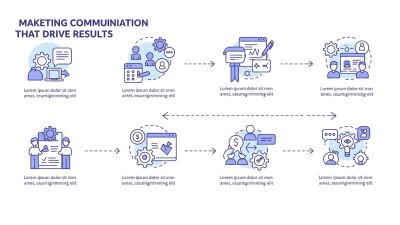


Marketing communication is a strategic framework connecting brands with audiences. By mastering the seven core elements—source, message, channel, receiver, encoding, decoding, and feedback—businesses can craft impactful campaigns. Understanding audience behavior, integrating channels, minimizing noise, and continuously measuring performance ensures messages resonate, build trust, and drive measurable results.
Marketing communication isn’t just about crafting catchy slogans or designing eye-catching visuals. It’s a strategic framework that connects your brand with your audience in meaningful ways. Understanding the core elements of marketing communication can transform how your business engages with customers and drives results.
Whether you’re launching a new product, building brand awareness, or nurturing customer relationships, mastering these fundamental components will help you create campaigns that resonate and convert. Let’s explore the seven essential elements that form the backbone of effective marketing communication.
The Source: Your Brand’s Voice and Credibility

The source represents who is delivering your marketing message. This element encompasses your brand’s reputation, credibility, and the spokesperson or channel through which you communicate. A trustworthy source significantly impacts how your audience receives and processes your message.
Consider how consumers respond differently to product recommendations from industry experts versus unknown influencers. The source’s expertise, attractiveness, and trustworthiness directly influence message effectiveness. Brands like Apple leverage their reputation for innovation, while companies often partner with credible spokespersons to enhance their messaging.
Building source credibility requires consistent delivery of value, transparency in communications, and alignment between your brand values and actions. Your source credibility affects every other element in your marketing communication mix.
The Message: Crafting Content That Connects
Your message is the core information you want to communicate to your audience. This includes the main selling points, benefits, emotional appeals, and rational arguments that support your marketing objectives.
Effective messages balance rational and emotional appeals. While features and specifications provide logical reasons to purchase, emotional connections drive decision-making. The best marketing messages address both what your product does and how it makes customers feel.
Message Structure and Appeal Types
Messages can follow different structural approaches:
- Problem-solution format: Identify a customer pain point and present your product as the solution
- Comparison structure: Highlight advantages over competitors
- Testimonial approach: Use customer success stories and social proof
- Demonstration style: Show your product in action
The appeal you choose—whether fear-based, humor-driven, or aspirational—should align with your brand personality and audience preferences.
The Channel: Selecting the Right Medium
The channel refers to the medium through which you deliver your marketing message. Different channels offer unique advantages and reach different audience segments. Your channel selection should align with where your target audience spends their time and how they prefer to consume information.
Digital channels like social media, email, and search engines offer precise targeting and measurable results. Traditional channels such as television, radio, and print media provide broad reach and established credibility. The most effective marketing communication strategies often integrate multiple channels for maximum impact.
Channel Characteristics to Consider
Each channel has distinct characteristics:
- Reach: How many people the channel can access
- Frequency: How often can you deliver messages
- Cost: Investment required for effective use
- Targeting: Ability to reach specific audience segments
- Interactivity: Level of two-way communication possible
The Receiver: Understanding Your Audience
The receiver is your target audience—the people you’re trying to reach and influence. Understanding your receivers involves knowing their demographics, psychographics, media consumption habits, and decision-making processes.
Successful marketing communication requires deep audience insight. This means going beyond basic demographics to understand motivations, challenges, preferences, and behaviors. Different audience segments may require different messages, channels, and approaches.
Audience research helps you identify the most effective communication strategies. Surveys, focus groups, social media listening, and analytics provide valuable insights into how your receivers think, feel, and behave.
Encoding: Translating Strategy into Execution
Encoding is the process of converting your marketing strategy into actual creative execution. This involves choosing words, images, colors, sounds, and overall design elements that effectively communicate your intended message.
The encoding process requires careful consideration of cultural context, visual hierarchy, and cognitive processing. How you encode your message affects how easily your audience can understand and remember it. Simple, clear encoding typically produces better results than complex or ambiguous approaches.
Visual elements, tone of voice, and formatting all play crucial roles in encoding. The same message can produce vastly different responses depending on how it’s encoded and presented to the audience.
Decoding: How Your Audience Interprets Messages
Decoding occurs when your audience receives and interprets your marketing message. While marketers carefully craft and encode messages with specific intentions, audiences do not always interpret them as intended. Individual experiences, cultural backgrounds, personal biases, current mindset, and environmental factors all influence how a message is understood. Because of this variability, decoding is a critical point in the communication process where misinterpretations or misunderstandings can occur.
However, decoding doesn’t always align with your encoding intentions. Audiences may perceive tone, humor, urgency, or benefits differently, depending on their personal filters and context. For instance, a message meant to convey excitement may be perceived as aggressive, or a culturally neutral slogan may be interpreted differently across regions. This unpredictability is why testing and feedback are crucial components of effective marketing communication.
Understanding common decoding patterns allows marketers to anticipate audience reactions, identify potential misinterpretations, and adjust their messaging strategies accordingly. Incorporating cultural sensitivity, clear and concise language, and audience-centered design enhances comprehension and reduces miscommunication. Additionally, conducting focus groups, A/B testing, and surveys provides direct insights into how audiences decode messages, helping brands refine their campaigns for maximum clarity, resonance, and engagement.
By proactively addressing the decoding process, marketers can ensure their messages are not only received but also correctly interpreted, strengthening the overall effectiveness of their communication strategy.
Feedback: Measuring and Optimizing Performance
Feedback represents the audience’s response to your marketing communication. This includes both direct responses (like purchases, inquiries, or comments) and indirect indicators (such as brand awareness, engagement metrics, or sentiment changes).
Effective feedback systems help you understand what’s working and what needs improvement. Modern marketing provides numerous feedback mechanisms:
- Direct feedback: Sales data, website conversions, survey responses
- Behavioral feedback: Click-through rates, time spent viewing content, social media engagement
- Attitudinal feedback: Brand perception studies, sentiment analysis, customer satisfaction scores
Using Feedback for Continuous Improvement
The most successful marketing communication strategies treat feedback as a learning opportunity. Regular analysis of feedback data helps you refine your source positioning, improve message effectiveness, optimize channel selection, and better understand your audience.
Feedback loops enable iterative improvement. A/B testing, customer surveys, and performance analytics provide insights that inform future communication strategies. This data-driven approach leads to more effective and efficient marketing investments.
Noise: Overcoming Communication Barriers
Noise represents anything that interferes with the successful transmission and reception of a marketing message between the source and the receiver. In the context of marketing, noise can be both literal—such as distracting background sounds in a video ad—or figurative, including competing messages from other brands, information overload, poorly timed campaigns, or misaligned communication channels. Noise reduces the clarity and effectiveness of your message, making it essential to identify and address potential barriers proactively.
Common types of marketing noise include:
-
Message Clutter: When your audience is bombarded with too many advertisements or marketing messages at once, your content risks being ignored or overlooked.
-
Channel Interference: Technical issues, platform limitations, or poor delivery quality can distort your message, reducing its impact.
-
Cognitive Noise: Overwhelming your audience with excessive information, complex messaging, or irrelevant content can hinder understanding and engagement.
-
Cultural Barriers: Misinterpretations due to cultural differences, language issues, or differing social norms can create misunderstandings and reduce message effectiveness.
Minimizing noise requires thoughtful planning, precision, and clarity in execution. Marketers should focus on creating simple, concise, and targeted messages that speak directly to the audience’s needs and expectations. Selecting the right channels, timing, and format ensures your message reaches the audience with minimal interference. Additionally, testing content and messaging before full deployment can reveal potential sources of noise and allow for adjustments. By addressing noise effectively, brands increase the likelihood that their marketing communication is received, understood, and acted upon, ultimately driving stronger engagement and results.
Integrating All Elements for Maximum Impact

These seven elements work together as an integrated system, where a change in one element naturally influences the others. For instance, switching communication channels may require adjustments in your messaging style, a reconsideration of audience targeting, or modifications to feedback mechanisms to ensure accurate measurement of campaign effectiveness. Recognizing these interdependencies allows marketers to create more harmonious, impactful campaigns that resonate with their audience on multiple levels.
The most effective marketing communication strategies carefully balance all elements to deliver cohesive, compelling campaigns. By treating each component as part of a unified framework—source, message, channel, receiver, encoding, decoding, feedback, and noise—you ensure consistency across all touchpoints. This integrated approach enhances brand perception, strengthens audience engagement, and increases the likelihood of achieving desired outcomes, whether that’s awareness, lead generation, or conversions.
Regular evaluation and continuous adjustment of each element are critical to keeping your marketing communication fresh, relevant, and effective. As markets shift, technology evolves, and audience preferences change, your strategies must adapt accordingly. By monitoring performance metrics, collecting audience feedback, and analyzing the effectiveness of each element, marketers can make informed, data-driven decisions that enhance overall campaign impact and long-term brand success.
Building Your Marketing Communication Framework
Understanding these seven elements provides a solid foundation for creating more effective marketing campaigns. By breaking down each component—source, message, channel, receiver, encoding, decoding, feedback, and noise—you gain a structured approach to analyzing how your brand communicates and where improvements are needed. Start by evaluating your current approach against each element. Identify the gaps, weaknesses, or inconsistencies, and determine which areas need strengthening to maximize the impact of your marketing efforts.
Develop a systematic approach to planning that considers all seven elements from the very beginning of your campaign design. This comprehensive perspective ensures that every marketing initiative aligns with your overall objectives and communicates a unified message across channels. By thinking of these elements as interconnected, you prevent disjointed or contradictory messaging that could confuse your audience or dilute your brand identity. Incorporate insights from past campaigns, audience research, and competitor analysis to refine your strategy and make informed decisions that drive results.
Remember that mastering marketing communication is an ongoing process rather than a one-time effort. Consumer behavior, market trends, and communication platforms are constantly evolving, so your strategies must evolve as well. Continue learning from new data, testing different approaches, and refining your tactics based on feedback and changing conditions. Establishing feedback loops, conducting regular audits of messaging, and monitoring audience engagement ensures that your campaigns remain relevant, compelling, and effective over time.
The brands that consistently communicate most effectively are those that treat these elements as interconnected components of a larger strategic system. By embracing this holistic framework, businesses can create campaigns that not only deliver clear, consistent messaging but also foster stronger customer relationships, build trust, and ultimately drive sustainable business growth.
Conclusion
Effective marketing communication is more than just catchy slogans or visuals—it’s a strategic system that connects your brand with the right audience, through the right channels, with the right message. By mastering the seven core elements—source, message, channel, receiver, encoding, decoding, feedback, and noise—businesses can create campaigns that resonate, build trust, and drive measurable results. Continuous evaluation, adaptation, and audience insight ensure that your communication remains relevant in a constantly evolving marketplace. Ultimately, brands that integrate these elements thoughtfully will achieve stronger engagement, loyalty, and long-term growth.
Frequently Asked Questions (FAQ)
1. What is marketing communication?
Marketing communication involves conveying messages from a brand to its target audience to inform, persuade, and build relationships.
2. Why is the source important?
The source establishes credibility and trust. A reputable brand or spokesperson increases message acceptance and engagement.
3. How do I choose the right channel?
Select channels where your audience spends time and tailor content to each platform’s strengths for maximum impact.
4. What is encoding in marketing communication?
Encoding is the process of converting a strategy into visual, verbal, or digital content that communicates your message effectively.
5. How does decoding affect communication?
Decoding is how the audience interprets your message. Misalignment between encoding and decoding can reduce effectiveness.
6. Why is feedback critical?
Feedback measures campaign success, highlights areas for improvement, and guides iterative optimization for better results.
7. What is marketing noise?
Noise refers to any barrier that prevents the audience from correctly receiving or interpreting your message, such as competing ads or distractions.
8. How can I integrate all elements effectively?
Align source, message, channel, and audience insights, then monitor feedback and minimize noise to create cohesive, high-impact campaigns.