


An Integrated Marketing Strategy aligns all marketing channels to deliver consistent messages and strengthen brand trust. It enhances recognition, engagement, and overall ROI. This approach creates a seamless, connected journey for customers across every touchpoint.
In today’s fast-paced digital world, customers interact with brands across multiple channels—social media, emails, websites, mobile apps, physical stores, events, and more. An Integrated Marketing Strategy ensures that every touchpoint communicates a consistent message, reflects the brand’s values, and creates a seamless experience for consumers. It’s more than just running ads on multiple platforms; it’s about unifying all promotional efforts, coordinating messaging, and leveraging data-driven insights to maximize engagement, brand recall, and ROI.
By implementing a comprehensive Integrated Marketing Strategy, businesses can build trust, foster customer loyalty, streamline operations, and make every marketing dollar count. Real-world examples, such as Starbucks’ pumpkin spice latte campaigns and Nike’s “Just Do It” strategy, illustrate how brands successfully use integration to amplify impact, strengthen identity, and connect with audiences on a deeper level.
Whether you are a startup or an established enterprise, adopting an Integrated Marketing Strategy is essential for achieving long-term success, ensuring consistent communication, and standing out in a competitive marketplace.
What is an Integrated Marketing Strategy?
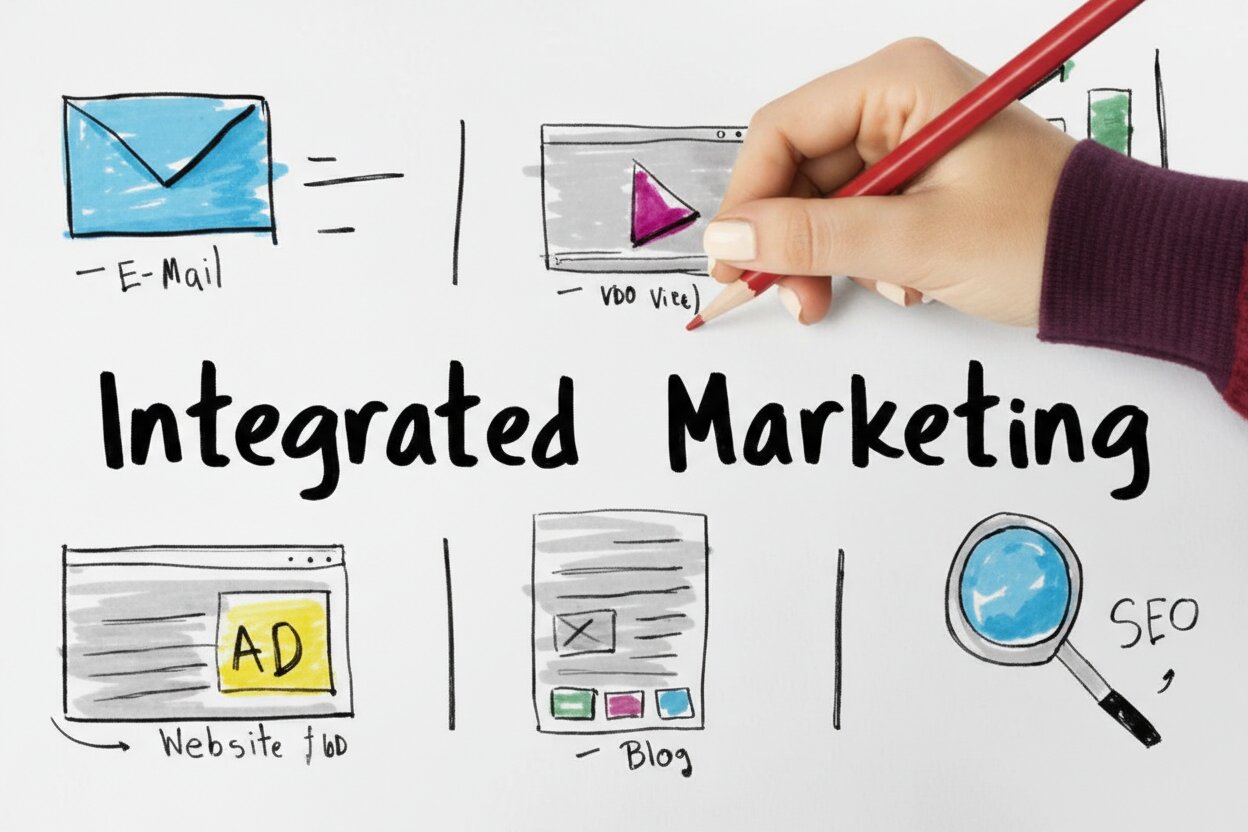
At its most basic level, an Integrated Marketing Strategy is about unifying all promotional efforts to deliver a consistent brand message across multiple channels. It’s not just about running ads on different platforms—it’s about ensuring that every touchpoint a customer interacts with tells the same story, reinforces the same values, and creates a seamless experience.
Take Starbucks’ annual pumpkin spice latte (PSL) release as an example. Everywhere you go, you see posts on Instagram promoting the PSL, in-store signage highlighting seasonal gifts, and emails offering limited-time discounts. Even user-generated content from fans, influencers sharing their PSL moments, and sponsored posts align with the campaign theme. Everything is coordinated with the branded #PSLSeason hashtag. This demonstrates how an Integrated Marketing Strategy ensures each channel works together to amplify the message and deliver a cohesive customer experience.
IMC principles ensure that no element operates in isolation. Each piece of content, whether it’s a social media post, a paid advertisement, or an email, builds on the others. This creates a multiplier effect, increasing customer engagement, recall, and overall impact.
The Benefits of an Integrated Marketing Strategy
Consistency Builds Trust
Consistency is the foundation of brand trust. A robust strategy ensures that every advertisement, email, social media post, and in-store promotion reinforces the same core message. Customers see a unified brand image, which strengthens credibility and fosters long-term loyalty.
For instance, imagine a financial firm promoting “high security” in emails but presenting inconsistent visuals or messages in print campaigns. Such contradictions confuse customers and undermine trust. A cohesive approach avoids these issues, guaranteeing that every touchpoint reflects the brand’s values accurately.
Beyond visual elements, consistency also applies to tone, messaging, and customer service. When customers experience the same level of professionalism and value across all channels, trust builds naturally, making them more likely to engage, purchase, and advocate for the brand.
Cost Efficiency and Productivity
Disconnected campaigns waste both time and money. By implementing a unified approach, businesses can reuse creative assets across multiple platforms, streamline operations, and focus on campaigns that deliver cumulative impact.
For example, instead of designing three separate campaigns—one for social media, one for email, and one for print—a single campaign can be adapted for each channel. A video ad might be shared on Instagram, embedded in an email newsletter, and featured on a website landing page. This approach reduces production costs, improves resource efficiency, and ensures consistent messaging across the board.
Moreover, a coordinated strategy allows marketing teams to manage schedules and content calendars, minimizing overlaps or gaps in communication. By centralizing efforts, it maximizes productivity and ensures every campaign element contributes to overall business goals.
Stronger Brand Recognition
Repetition and reinforcement are key to brand recall. When customers see the same message delivered consistently across multiple channels, it sticks in their minds. A coordinated approach ensures that the frequency and visibility of messaging are optimized for maximum impact.
For example, Nike’s “Just Do It” slogan is not only present in TV commercials but also appears on social media, email campaigns, influencer posts, in-store displays, and even sponsored events. The repeated exposure reinforces brand identity, making it instantly recognizable.
This kind of consistent brand recognition allows businesses to differentiate themselves in crowded markets. When customers see coherent messaging across every touchpoint, it signals reliability, professionalism, and authority, increasing the likelihood of engagement and loyalty.
Meeting Customers on Their Own Terms
Modern consumers interact with brands in complex, non-linear ways. One customer might first see a YouTube ad, then check Instagram posts, visit the website, and finally walk into a physical store. Another might engage via email, click a retargeting ad on Facebook, and complete a purchase on mobile.
A unified approach ensures that these multi-channel interactions feel like a single, connected journey. The customer doesn’t experience disjointed touchpoints but rather a smooth narrative that guides them from awareness to conversion.
For instance, e-commerce brands often align social media campaigns with email promotions and retargeting ads. When a customer abandons a shopping cart, they might receive a reminder email featuring the same products they saw in Instagram Stories. This consistency enhances engagement and drives sales while maintaining a seamless experience across channels.
This concept is also reflected in Higher Education Enrollment Marketing: Strategies, Roles, and Best Practices, where institutions coordinate multiple communication channels to guide prospective students through the decision-making process.
Enhanced ROI
A structured approach transforms marketing from a set of disparate activities into a measurable, performance-driven system. By tracking results across channels, businesses can identify what works, what doesn’t, and adjust strategies in real-time.
This approach optimizes budget allocation, reduces waste, and maximizes returns. For example, if a social media campaign generates high engagement but low conversions, marketing teams can retarget those audiences with tailored email offers or special promotions.
By integrating analytics into campaign planning, brands gain insights into customer behavior, preferences, and touchpoint effectiveness. This data-driven approach ensures every marketing dollar contributes to tangible business outcomes, making a coordinated marketing effort not just a creative tool, but a critical investment in growth.
How Organizations Use an Integrated Marketing Strategy
| Step | Purpose | Key Actions | Role in Strategy |
|---|---|---|---|
| Define Brand Voice | Establish identity | Logos, colors, tone | Ensure consistency |
| Understand Audience | Know your market | Demographics, behavior, preferences | Tailor messaging |
| Select Channels | Use relevant platforms | Instagram, TikTok, LinkedIn, email | Maximize reach |
| Coordinate Teams | Ensure collaboration | Marketing, PR, sales | Unified messaging |
| Use Technology | Streamline efforts | HubSpot, Salesforce, analytics | Track & optimize campaigns |
| Measure & Adjust | Improve performance | KPIs, A/B testing, ROI | Continuous improvement |
Define Your Brand Voice
Every marketing communication must reflect the brand’s identity. Visual elements, tone, and messaging rules are critical for building a consistent Integrated Marketing Strategy.
Understand Your Audience
IMC cannot succeed without audience insights. Demographic, psychographic, and behavioral analysis helps companies understand customer touchpoints and tailor campaigns effectively within their Integrated Marketing Strategy.
Select the Right Channels
Not every channel fits every brand. For professional services, LinkedIn and email may be central; for e-commerce targeting millennials, Instagram and TikTok may dominate. Channel selection is a cornerstone of any Integrated Marketing Strategy.
Coordinate Teams and Messaging
Integration requires collaboration between marketing, PR, and sales teams. A unified Integrated Marketing Strategy avoids message fragmentation and ensures brand consistency across channels.
Use Technology to Connect Efforts
Platforms like HubSpot and Salesforce help centralize marketing efforts. Tracking engagement, automation, and analytics tools make campaigns measurable and scalable, allowing businesses to optimize every interaction. Mastering Marketing Communication Tools to Amplify Your Brand ensures that these technologies are not just implemented but strategically leveraged to strengthen messaging, boost engagement, and deliver consistent results across all channels.
Measure, Optimize, and Repeat
A strong Integrated Marketing Strategy relies on continuous measurement. Organizations should monitor KPIs, optimize campaigns, and refine messaging to improve performance across all channels.
Case Studies of Successful Integrated Marketing Strategy
| Brand | Campaign | Key Elements | Outcome |
|---|---|---|---|
| Coca-Cola | “Share a Coke” | Personalized bottles, social media hashtags, in-store promotions | Increased engagement, sales, and social sharing |
| Nike | “Just Do It” | TV ads, influencer posts, UGC campaigns, Instagram quotes | Reinforced brand identity, high customer loyalty |
Coca-Cola and Nike demonstrate how a comprehensive Integrated Marketing Strategy can unify messaging across channels, creating a strong brand presence and customer connection.
The Future of Integrated Marketing Strategy

As customer journeys fragment across multiple touchpoints, the importance of a well-executed marketing approach continues to grow. Modern consumers interact with brands through websites, mobile apps, social media platforms, email campaigns, video channels, chatbots, physical stores, events, and even voice assistants. Each of these touchpoints offers an opportunity to engage customers—but also poses a challenge: maintaining consistency, relevance, and personalization.
Companies that adopt a robust marketing approach gain a clear competitive advantage. This ensures that all communications, from digital to traditional channels, work together to deliver a seamless brand experience. The benefits include:
Higher Trust and Credibility
Consistency is the cornerstone of credibility. Customers notice when brands communicate mixed messages across different channels. A strong approach guarantees that every advertisement, social post, email, and in-store interaction conveys the same core message and reflects the brand’s identity.
For example, a luxury fashion brand that promotes “sustainability” in its social media campaigns but ignores it in packaging or customer service risks eroding trust. Alignment prevents such gaps, ensuring authenticity and reinforcing customer confidence.
Long-Term Customer Loyalty
Brand loyalty is built over time through repeated, meaningful interactions. A carefully crafted marketing approach nurtures lasting relationships by providing consistent experiences at every touchpoint. Customers feel understood and valued, increasing retention rates, brand advocacy, and lifetime value.
A practical illustration is Starbucks, whose seasonal campaigns—like the pumpkin spice latte—use emails, social media posts, and in-store promotions in harmony. This approach encourages repeat engagement, turning seasonal excitement into a long-term loyalty loop.
Efficient Budget Use
Disjointed marketing campaigns waste both time and money. A coordinated approach enables businesses to maximize resources by reusing content across channels and focusing on campaigns that have cumulative impact.
For instance, a single high-quality video can be repurposed as a YouTube ad, social media post, and website landing page. This reduces creative costs while amplifying reach. Brands strategically allocate their budgets, optimizing ROI while minimizing redundancy.
Stronger Brand Recall and Recognition
When messaging is consistent and repeated across multiple channels, it sticks in the minds of consumers. A well-designed approach ensures that brand visuals, messaging, and tone are aligned, creating a recognizable and memorable identity.
Consider Nike’s “Just Do It” campaigns. From television commercials to Instagram influencer partnerships and user-generated content, every element reinforces the brand’s ethos. Cohesive messaging strengthens brand recall globally.
Meeting Customers on Their Terms
Modern customers expect brands to be present where they are. They may see a social media ad, read a blog post, watch a video, and visit a store—all before making a purchase decision. A fragmented approach can make these interactions feel disconnected and confusing.
A unified approach ensures that customers experience a seamless journey, regardless of the touchpoint. This smooth transition from awareness to conversion enhances engagement, builds confidence, and increases the likelihood of purchase.
Enhanced ROI Through Data-Driven Decisions
Unified communication allows for real-time performance tracking across all channels. By monitoring metrics such as engagement, click-through rates, conversions, and customer acquisition cost, companies can refine their campaigns continuously.
This approach leverages analytics tools, CRM systems, and marketing automation platforms to make data-driven decisions. Insights gained from these tools help businesses adjust messaging, optimize targeting, and allocate budgets effectively, maximizing returns.
Take Your Marketing to the Next Level
Investing in a comprehensive marketing approach is no longer optional—it is essential for long-term business growth. To implement an effective plan, businesses should follow these steps:
- Define Brand Identity: Establish a clear brand voice, visual identity, tone, and messaging guidelines. Every communication should reflect these standards.
- Understand Your Audience: Conduct demographic, psychographic, and behavioral research to identify the channels and content formats that resonate most.
- Select the Right Channels: Focus on platforms that match your audience and goals. B2B firms may prioritize LinkedIn and email newsletters, while lifestyle brands may thrive on Instagram and TikTok.
- Align Teams and Messaging: Ensure marketing, creative, and sales teams collaborate to prevent inconsistent messaging. A centralized approach to content creation and approval is vital.
- Leverage Technology: Marketing automation platforms, AI-powered analytics, and CRM systems streamline campaign management, personalization, and measurement.
- Monitor and Optimize: Track campaign performance continuously, analyze results, and refine strategies. A dynamic approach evolves with customer behavior and market trends.
By combining creative alignment, strategic planning, and technological tools, companies can implement a marketing plan that delivers consistent, measurable, and impactful results across all platforms.
strategy that delivers consistent, measurable, and impactful results across all platforms.
Frequently asked questions
What is an Integrated Marketing Strategy?
An Integrated Marketing Strategy is a unified approach to marketing that ensures all promotional channels—online and offline—deliver consistent messaging aligned with brand values.
Why is an Integrated Marketing Strategy important?
It builds brand trust, enhances customer experience, increases ROI, and ensures every marketing activity works toward the same goal.
How does an Integrated Marketing Strategy differ from traditional marketing?
Traditional marketing often operates in silos, while an Integrated Marketing Strategy coordinates all channels for a seamless and cohesive customer journey.
What are the key elements of an Integrated Marketing Strategy?
Brand voice, audience understanding, channel selection, coordinated messaging, technology integration, and continuous measurement.
How can a business measure the effectiveness of its Integrated Marketing Strategy?
Through KPIs like engagement rates, conversion rates, ROI, customer retention, and brand awareness metrics across all platforms.
Can small businesses benefit from an Integrated Marketing Strategy?
Yes. Even small businesses can increase efficiency, maintain consistent messaging, and improve brand perception by integrating their marketing efforts.
Which channels are best for an Integrated Marketing Strategy?
It depends on your audience—social media (Instagram, TikTok, LinkedIn), email, websites, offline promotions, events, and content marketing can all be integrated effectively.
How does technology support an Integrated Marketing Strategy?
Tools like CRM systems, marketing automation platforms, analytics dashboards, and AI-powered segmentation help track campaigns, personalize messages, and optimize results.
How often should an Integrated Marketing Strategy be updated?
It should be reviewed regularly based on performance analytics, market trends, and customer behavior to ensure continuous improvement.
What are some examples of successful Integrated Marketing Strategies?
Coca-Cola’s “Share a Coke” campaign and Nike’s “Just Do It” campaigns demonstrate seamless integration of social media, email, retail, influencer marketing, and events.