

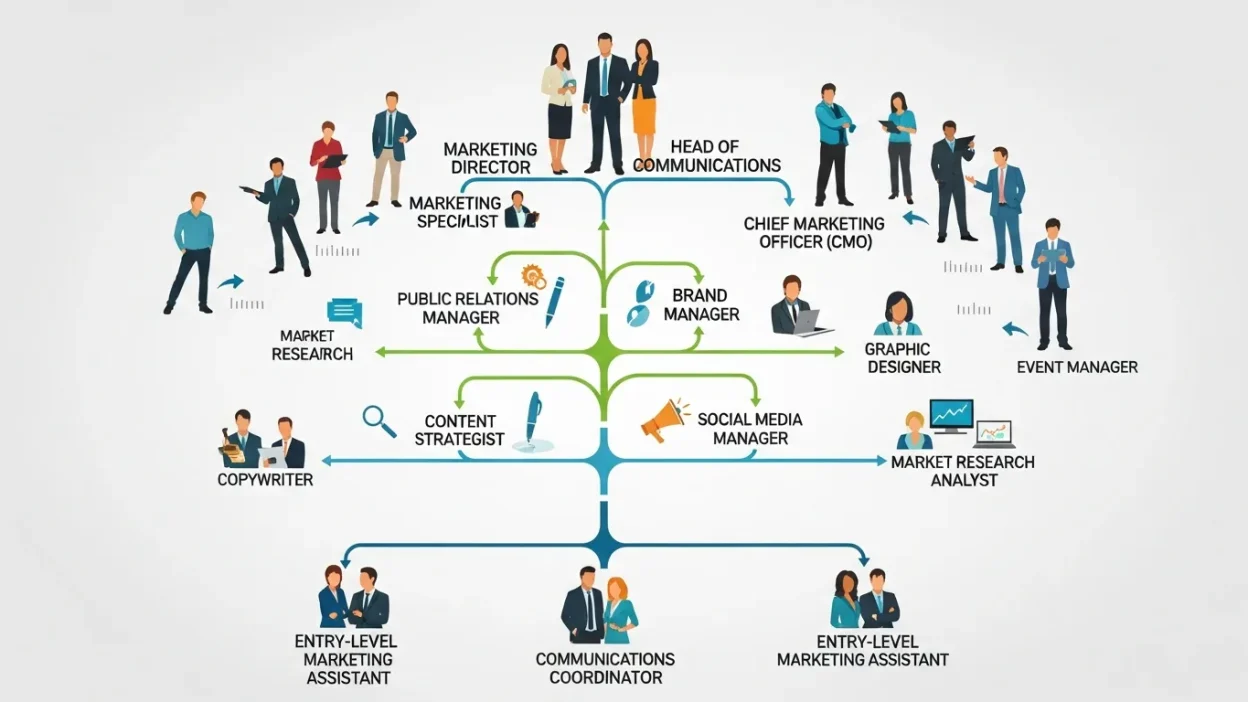
Marketing and communications careers merge creativity, analytics, and strategic messaging. Roles include content creation, PR, and social media management. Essential skills, continuous learning, and adaptability help professionals influence audiences, shape brand perception, and advance successfully in this evolving industry.
Marketing and communications play a critical role in shaping how businesses connect with their audiences. These fields go beyond simply promoting products or services—they focus on crafting meaningful narratives, building trust, and fostering lasting relationships with customers. Whether it’s through compelling storytelling that evokes emotional connections or data-driven strategies designed to optimize conversions, professionals in marketing and communications are the driving force behind a brand’s public image, voice, and reputation.
In today’s fast-paced digital world, businesses need experts who can seamlessly blend creativity with analytics, combining social media campaigns, content creation, public relations, and market research into cohesive strategies. A strong marketing and communications team ensures consistent messaging, aligns marketing initiatives with business goals, and leverages modern tools and platforms to reach audiences effectively across channels.
Are you curious about starting a career in marketing and communications? This guide will walk you through the diverse roles available—from content creation and social media management to public relations and brand strategy—along with the skills, qualifications, and pathways to succeed in this dynamic, ever-evolving industry. By understanding the opportunities, responsibilities, and growth potential, aspiring professionals can confidently chart a course toward a rewarding career that combines creativity, strategy, and measurable impact.
What Are Marketing and Communications Jobs?

Jobs in marketing and communications encompass a broad range of responsibilities that revolve around brand promotion, audience engagement, and the strategic messaging of products and services. These roles often overlap in the following key functions:
- Marketing focuses on understanding customer needs and developing campaigns to reach target audiences effectively. This could include activities like digital advertising, social media management, and content creation.
- Communications highlights messaging strategies and public relations. Employees working in this area build the voice of the brand, manage its reputation, and ensure the right message reaches the right audience.
With career opportunities spanning industries, marketing and communications offer something for nearly everyone—from creatives to analytical thinkers.
Key Roles in Marketing and Communications
The wide scope of this industry means there are many roles to explore. Below are examples of some of the most common jobs within marketing and communications, along with their key responsibilities.
1. Content Marketer
Content marketers specialize in creating value-driven materials, like blogs, videos, and infographics, to attract and retain an audience. Their goal is to drive organic traffic, build trust, and establish authority in the marketplace.
Skills Required:
- Exceptional writing and editing skills
- SEO expertise
- Basic understanding of design and multimedia tools
Example Career Path:
- Junior Content Writer → Content Marketing Specialist → Content Marketing Manager → Director of Content Strategy
2. Digital Marketing Specialist
A digital marketing specialist focuses on online tactics like pay-per-click (PPC) advertising, email campaigns, or influencer collaborations. They analyze performance metrics and optimize campaigns for maximum ROI.
Skills Required:
- Familiarity with Google Ads and Meta Platforms
- Data analysis and reporting
- Knowledge of marketing automation tools
Example Career Path:
- Digital Marketing Coordinator → Digital Marketing Manager → Growth Marketing Lead
3. Public Relations Specialist
Public relations specialists craft a brand’s public-facing image, navigating media relations, crisis communication, and press releases. Their role involves relationship-building with journalists and influencers for consistent, positive coverage.
Skills Required:
- Strong communication and networking abilities
- Ability to manage crisis communication
- A knack for staying updated on socio-political trends that affect reputation
Example Career Path:
- PR Assistant → Communications Officer → PR Manager → VP of Communications
4. Social Media Manager
With platforms like TikTok and Instagram dominating online content consumption, social media managers are indispensable. They create and schedule posts, respond to audience queries, and collaborate on campaigns to maximize engagement.
Skills Required:
- Social media analytics and trends tracking
- Creative content creation, including photo and video editing
- Knowledge of each platform’s algorithms and features
Example Career Path:
- Social Media Coordinator → Social Media Specialist → Social Media Manager → Head of Social Media
5. Brand Manager
Brand managers oversee the positioning and identity of a brand, ensuring consistency across all channels while connecting emotionally with the audience. They collaborate across marketing, design, and product teams to build long-lasting customer loyalty.
Skills Required:
- Strategic thinking and storytelling
- Strong analytical skills
- Collaboration and leadership across multiple departments
Example Career Path:
- Assistant Brand Manager → Brand Strategist → Senior Brand Manager → Director of Brand Development
Core Skills Needed in Marketing and Communications
Breaking into marketing and communications requires a combination of technical skills and soft skills. Here’s what you’ll need to succeed:
1. Excellent Communication
Unsurprisingly, strong verbal and written communication abilities are essential in these roles. Everything from engaging web copies to persuasive pitches requires this skill.
2. Analytical Thinking
Data is the backbone of modern marketing strategies. Whether you’re evaluating customer demographics, campaign KPIs, or social media trends, being able to draw insights from metrics is critical.
3. Creativity and Storytelling
Exceptional campaigns don’t just connect knowledgeably but also emotionally. Creativity and the ability to craft compelling stories are crucial, especially as content continues to saturate the market.
4. Adaptability in Technology
From marketing automation and CRM software to design tools like Canva or Adobe Suite, digital fluency ensures you’re equipped to deliver results in tech-driven, fast-paced environments.
5. Time Management Skills
Marketing campaigns often run on tight deadlines. Being able to balance planning, execution, and problem-solving simultaneously requires top-notch organizational habits.
How to Start a Career in Marketing and Communications

Breaking into this thriving industry can feel competitive, but carving an impactful marketing and communications careers is achievable. Follow these steps to get started effectively.
1. Develop Your Skillset
Take advantage of free or paid online courses to build foundational marketing knowledge. Platforms like Coursera, HubSpot Academy, or Google Digital Garage offer industry-recognized certifications in areas such as SEO, content marketing, and digital advertising.
2. Gain Practical Experience
Landing your first job is more accessible if you have relevant experience on your resume. Look for internships, freelance work, or volunteer opportunities within marketing departments to get hands-on exposure.
3. Build a Portfolio
Create a portfolio of successful projects, like blog posts, ad campaigns, or social media content. Even if they’re theoretical or practice-based, these samples demonstrate your abilities to future employers.
4. Network in the Industry
Connect through LinkedIn or attend industry-specific events to grow your network. Genuine connections in the marketing community can lead to mentorships, collaborations, or job opportunities.
5. Stay Curious and Updated
Trends evolve in the blink of an eye in marketing. Subscribe to industry publications or follow thought leaders to keep up with the latest technology, tactics, and emerging best practices.
Essential Soft Skills for Career Growth
While technical skills are crucial, soft skills distinguish top professionals in marketing and communications. Strong communication ensures clarity in messaging and collaboration, while creativity drives innovative campaigns. Adaptability helps navigate rapid technological and market changes. Leadership and teamwork are essential for coordinating cross-department projects. Critical thinking enables problem-solving in campaign strategy, crisis management, and data interpretation. Networking skills open doors to mentorships, partnerships, and career advancement. Emotional intelligence ensures marketers understand consumer sentiment and respond empathetically. Together, these soft skills complement technical expertise, allowing professionals to excel in complex, dynamic environments while building trust with colleagues, clients, and audiences.
Career Progression and Advancement Opportunities
Marketing and communications careers offer structured progression opportunities. Entry-level roles like marketing coordinator or PR assistant build foundational knowledge, while mid-level positions such as content manager or social media strategist allow for specialization. Senior roles, including brand director, communications lead, or VP of marketing, involve strategic decision-making, budgeting, and team leadership. Continuous learning through certifications, workshops, and conferences accelerates growth. Professionals who diversify skills—combining analytics, digital tools, and storytelling—are highly competitive. Mentorship, networking, and portfolio development further enhance advancement prospects. By understanding potential career pathways, aspiring marketers can plan strategically, positioning themselves for promotions, leadership roles, and increased responsibility over time.
Future Trends in Marketing and Communications
The future of marketing and communications is shaped by AI, immersive experiences, voice search, and personalization. AI-powered tools automate repetitive tasks, improve targeting, and generate content at scale. Virtual and augmented reality create interactive campaigns, enhancing engagement. Voice-activated assistants and smart devices influence how audiences access content, requiring marketers to adapt strategies. Personalization, powered by behavioral analytics, allows messages to be tailored to individual preferences. Sustainability and corporate social responsibility are increasingly critical in shaping brand perception. Staying ahead requires continuous learning, experimentation, and embracing technology-driven innovation. Professionals who anticipate trends and adapt will remain competitive, agile, and effective in a rapidly evolving industry.
Why a Career in Marketing and Communications is Worth It

Marketing and communications professionals hold immense influence in shaping global brands and delivering impactful campaigns. Whether you’re passionate about storytelling, data analytics, or reputation management, this field offers boundless opportunities for personal and professional growth.
Plus, the demand is booming. For example, the U.S. Bureau of Labor Statistics projects double-digit growth for marketing management roles over the next decade. For creative thinkers eager to connect brands with audiences worldwide, this field couldn’t be more exciting.
Conclusion
Marketing and communications careers offer dynamic, versatile, and rewarding opportunities. Success combines creativity, analytics, adaptability, and strong communication skills. With diverse roles, emerging technologies, and a growing global demand, professionals can influence audiences, shape brand narratives, and drive measurable business growth while pursuing continuous learning and career advancement.
Frequently Asked Questions (FAQs)
1. What is marketing and communications?
Marketing and communications is a dynamic field focused on promoting brands, products, or services while engaging audiences effectively. It combines advertising, content creation, public relations, social media, and strategic messaging to ensure a brand’s voice, reputation, and messaging resonate across multiple channels.
2. What skills do I need to succeed?
Successful professionals require a mix of soft and technical skills, including creativity, strong communication, analytical thinking, adaptability, time management, and tech proficiency. Familiarity with marketing automation, analytics tools, SEO, content management systems, and social media platforms is increasingly essential for measurable results.
3. What types of jobs are available?
Marketing and communications offer diverse career paths: content marketer, social media manager, PR specialist, brand manager, digital marketing specialist, email marketer, SEO analyst, and event coordinator. Roles can span strategy, execution, and analysis, allowing professionals to focus on creativity, technical skills, or leadership.
4. Is prior experience necessary to start?
While prior experience helps, entry-level opportunities exist through internships, freelance projects, or volunteer work. Gaining hands-on exposure in content creation, campaign management, or social media helps build practical skills, enhances your resume, and provides real-world examples for your portfolio.
5. How can I build a strong portfolio?
A marketing portfolio should showcase a range of projects: blog posts, social media campaigns, press releases, video content, or analytics reports. Include metrics wherever possible to demonstrate measurable results, such as engagement rates, conversion rates, or campaign ROI, which highlight both creativity and performance.
6. What certifications can advance my career?
Industry-recognized certifications strengthen credibility. Popular options include HubSpot Content Marketing, Google Analytics, Google Ads, Meta Blueprint, SEMrush Academy, and Coursera marketing courses. These certifications demonstrate expertise in digital marketing tools, analytics, SEO, and strategy, increasing your chances of career advancement.
7. How important is digital marketing knowledge?
Digital marketing knowledge is essential. Most modern campaigns rely on SEO, email marketing, social media, PPC, and analytics to reach audiences effectively. Professionals must understand these channels, measure results, and adjust strategies in real time to ensure campaigns are both creative and results-driven.
8. Can I work remotely in marketing and communications?
Yes. Many roles, including content creation, social media management, digital advertising, and analytics, support remote or hybrid work. This flexibility allows professionals to collaborate online, manage campaigns from anywhere, and access global opportunities without being tied to a specific office location.
9. What is the average salary in this field?
Salaries vary by role, experience, and location. In the U.S., entry-level marketing specialists earn around $45K–$60K, while marketing managers can earn $65K–$120K annually. Senior roles such as directors or VPs of communications may earn $130K–$200K, depending on the organization and industry.
10. How fast can I advance in my career?
Career growth depends on skill development, experience, networking, and measurable performance. Ambitious professionals who continuously update their digital skills, take initiative, and demonstrate results can advance from junior to managerial roles within 3–5 years, eventually progressing to senior leadership positions.
11. Which industries hire marketing professionals?
Marketing and communications roles are in demand across nearly every industry, including technology, retail, healthcare, finance, entertainment, non-profits, and government. Any organization seeking to grow its audience, manage reputation, or engage customers requires skilled marketing and communications specialists.
12. Is creativity more important than analytics?
Both are equally critical. Creativity drives engaging campaigns that capture attention, while analytics ensures strategies are measurable, optimized, and aligned with business objectives. Successful professionals balance artistic vision with data-driven decision-making to maximize campaign effectiveness and ROI.