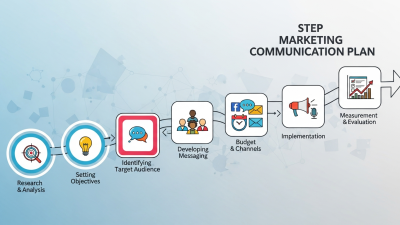

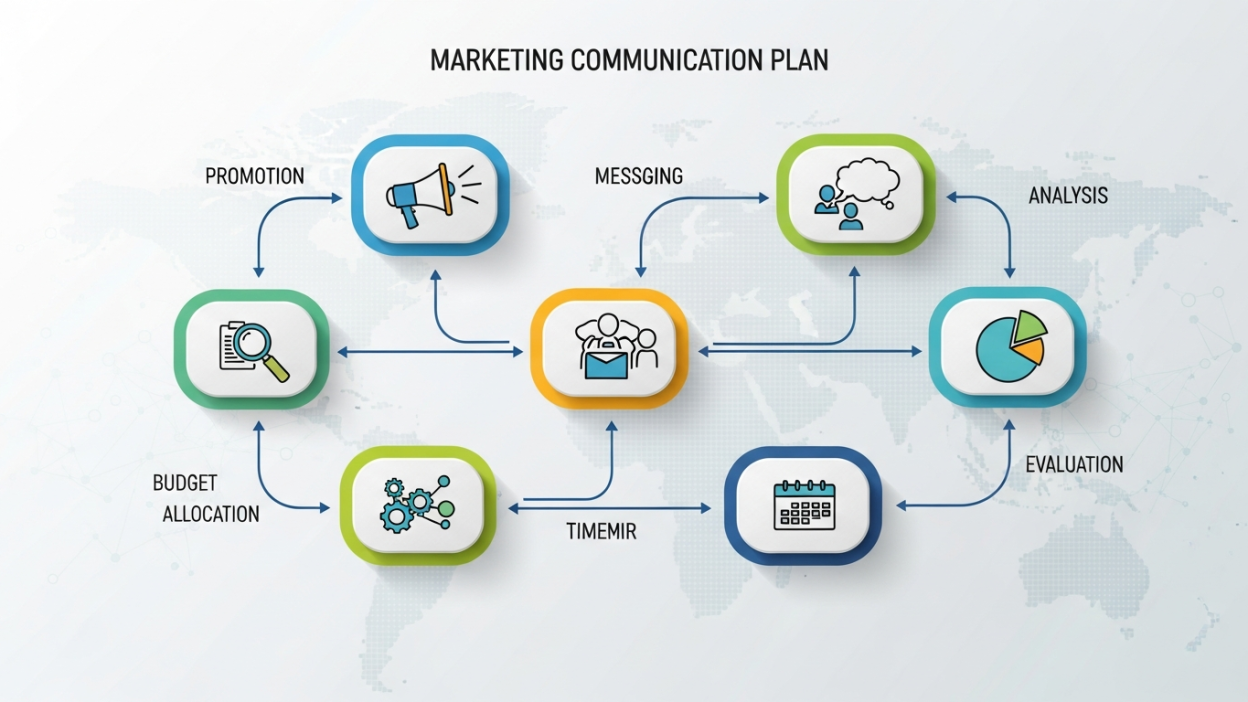
A marketing communication plan guides strategic messaging to reach the right audience effectively. By defining objectives, crafting key messages, selecting channels, planning content, and monitoring performance, businesses ensure consistency and efficiency. Continuous analysis and optimization improve ROI, engagement, and brand credibility, enabling organizations to connect with customers meaningfully and achieve long-term marketing success.
A well-crafted marketing communication plan serves as your roadmap to reaching the right audience with the right message at the right time. Without this strategic foundation, even the most creative campaigns can fall flat, wasting valuable resources and missing opportunities to connect with potential customers.
Whether you’re launching a new product, building brand awareness, or nurturing existing customer relationships, a comprehensive marketing communication plan ensures every touchpoint works together toward your business objectives. This guide will walk you through the essential components of creating an effective plan that delivers measurable results for your organization.
What is a Marketing Communication Plan?
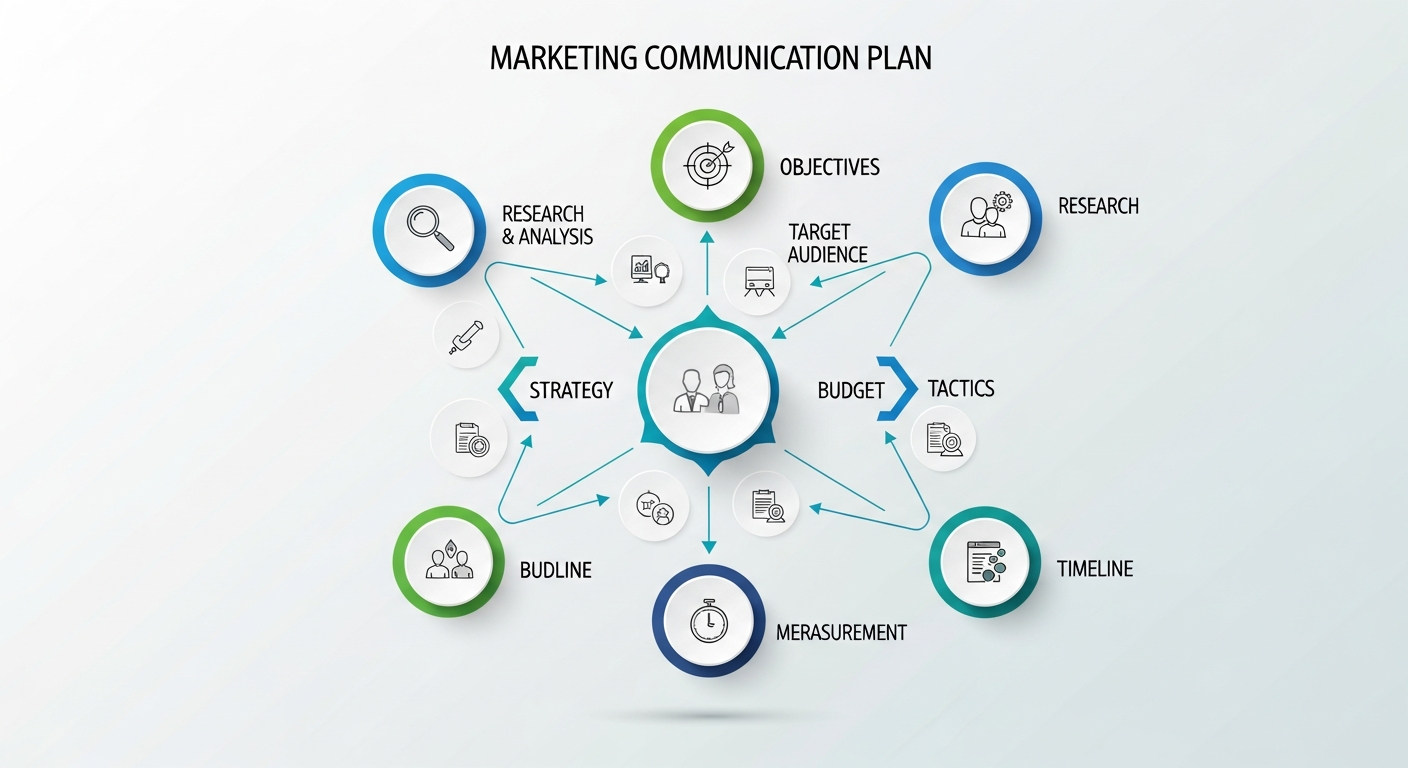
A marketing communication plan is a strategic document that outlines how your business will communicate with its target audience across various channels and touchpoints. It serves as a blueprint for coordinating all marketing messages, ensuring consistency and maximizing impact.
The plan encompasses everything from advertising and public relations to social media and direct marketing. By establishing clear objectives, identifying target audiences, and selecting appropriate channels, it helps businesses deliver cohesive messages that resonate with their intended recipients.
Why Your Business Needs a Marketing Communication Plan
Ensures Message Consistency
Without a unified plan, different teams might communicate conflicting messages about your brand. A marketing communication plan establishes consistent messaging guidelines that maintain your brand’s voice and positioning across all platforms.
Maximizes Resource Efficiency
Strategic planning helps allocate your marketing budget more effectively. Rather than spreading resources thin across numerous channels, you can focus investments on the platforms and tactics most likely to reach your target audience.
Improves Campaign Coordination
A comprehensive plan synchronizes various marketing activities, creating synergies between different channels. When your social media, email marketing, and advertising efforts work together, they amplify each other’s impact.
Enables Better Measurement
Clear objectives and defined metrics make it easier to track performance and demonstrate return on investment. This data-driven approach allows for continuous improvement and optimization.
Key Components of an Effective Marketing Communication Plan

1. Situation Analysis
Begin by conducting a thorough assessment of your current market position. This analysis should include:
Internal Assessment: Evaluate your company’s strengths, weaknesses, resources, and existing marketing efforts. Review past campaign performance and identify what has worked well and what hasn’t.
Market Analysis: Research your industry landscape, including market size, growth trends, and emerging opportunities. Understanding market dynamics helps inform strategic decisions.
Competitive Analysis: Study your competitors’ marketing approaches, messaging strategies, and channel preferences. This intelligence reveals gaps in the market and potential differentiation opportunities.
2. Target Audience Definition
Successful marketing communication starts with a deep understanding of your audience. Create detailed buyer personas that include:
- Demographics (age, gender, income, location)
- Psychographics (values, interests, lifestyle)
- Behavioral patterns (purchasing habits, media consumption)
- Pain points and challenges
- Communication preferences
Consider segmenting your audience into distinct groups if you serve multiple customer types. Each segment may require tailored messaging and different communication channels.
3. Clear Objectives and Goals
Establish specific, measurable objectives that align with your broader business goals. Effective marketing communication objectives might include:
- Increasing brand awareness by 25% within six months
- Generating 500 qualified leads per quarter
- Improving customer retention rates by 15%
- Launching a new product and achieving 10% market penetration
Use the SMART framework (Specific, Measurable, Achievable, Relevant, Time-bound) to ensure your objectives provide clear direction and enable accurate performance measurement.
4. Key Messages and Positioning
Develop compelling core messages that communicate your value proposition clearly and persuasively. Your messaging should:
- Address your audience’s primary pain points
- Highlight your unique competitive advantages
- Align with your brand personality and values
- Be easily understood and memorable
Create message hierarchies that prioritize your most important points while supporting secondary messages that reinforce your main themes.
5. Channel Strategy and Selection
Choose communication channels based on where your target audience spends their time and how they prefer to receive information. Consider both traditional and digital options:
Digital Channels:
- Social media platforms (Facebook, LinkedIn, Instagram, Twitter)
- Email marketing
- Content marketing (blogs, videos, podcasts)
- Search engine marketing
- Display advertising
Traditional Channels:
- Print advertising
- Radio and television
- Direct mail
- Trade shows and events
- Public relations
Evaluate each channel’s strengths, costs, and alignment with your objectives. Most successful plans incorporate multiple channels that work together to reinforce key messages.
6. Content Strategy
Develop a content strategy that supports your communication objectives across chosen channels. This includes:
Content Themes: Establish topics and themes that resonate with your audience while showcasing your expertise.
Content Formats: Determine the most effective formats for each channel (articles, infographics, videos, case studies, webinars).
Content Calendar: Create a schedule that ensures consistent communication while timing messages for maximum impact.
Content Guidelines: Establish standards for tone, style, and quality that maintain brand consistency across all content.
7. Budget Allocation
Distribute your marketing budget strategically across channels and activities based on their potential return on investment. Consider factors such as:
- Historical performance data
- Channel costs and efficiency
- Audience reach and engagement levels
- Strategic priorities and objectives
Build flexibility into your budget to allow for optimization and reallocation based on performance data.
8. Timeline and Implementation Schedule
Create a detailed timeline that coordinates all marketing communication activities. Your schedule should include:
- Campaign launch dates
- Content creation and approval deadlines
- Key milestones and checkpoints
- Seasonal considerations and industry events
- Review and optimization periods
Developing Your Marketing Communication Strategy

Research and Planning Phase
Start by gathering comprehensive data about your market, competitors, and customers. Use surveys, interviews, focus groups, and analytics data to build a complete picture of your communication environment.
Analyze your current marketing efforts to identify strengths to build upon and weaknesses to address. This baseline assessment helps set realistic expectations and benchmarks for improvement.
Message Development Process
Craft messages that speak directly to your audience’s needs and motivations. Test different approaches through small-scale campaigns or focus groups before committing to full implementation.
Ensure your messages are differentiated from competitors while remaining authentic to your brand. Avoid generic statements that could apply to any company in your industry.
Channel Integration Strategy
Design your channel strategy to create multiple touchpoints that reinforce your key messages. Consider how different channels can work together to move prospects through your sales funnel.
For example, social media might create initial awareness, while email marketing nurtures leads, and sales teams provide personal consultation for high-value prospects.
Implementation and Execution Best Practices
Team Coordination
Establish clear roles and responsibilities for team members involved in executing your marketing communication plan. Regular meetings and communication help ensure everyone stays aligned with objectives and timelines.
Create approval processes that maintain quality standards while avoiding bottlenecks that could delay implementation.
Quality Control
Implement review processes that catch errors and ensure all communications meet your brand standards. This includes proofreading, fact-checking, and brand compliance verification.
Test campaigns on small audiences before full deployment to identify potential issues and optimize performance.
Performance Monitoring
Track key performance indicators regularly to assess progress toward your objectives. Use analytics tools to monitor metrics such as:
- Reach and impressions
- Engagement rates
- Lead generation and conversion
- Customer acquisition costs
- Return on investment
Measuring Success and ROI
Key Performance Indicators
Establish metrics that directly relate to your stated objectives. Track both leading indicators (like website traffic and social media engagement) and lagging indicators (such as sales and customer acquisition).
Create dashboards that provide real-time visibility into campaign performance, enabling quick adjustments when needed.
Analysis and Optimization
Regularly analyze performance data to identify trends and patterns. Look for insights that can inform future campaigns and improve overall effectiveness.
Test different approaches systematically to understand what resonates best with your audience. A/B testing can provide valuable insights into messaging, design, and channel preferences.
Reporting and Documentation
Create regular reports that communicate results to stakeholders and document lessons learned. This information becomes valuable for planning future marketing communication efforts.
Your Path to Marketing Communication Success

Creating an effective marketing communication plan requires careful planning, strategic thinking, and ongoing optimization. By following this comprehensive framework, you’ll develop a roadmap that guides your marketing efforts and delivers measurable results.
Start by conducting a thorough situation analysis and defining your target audience clearly. Then establish specific objectives, craft compelling messages, and select channels that reach your audience effectively. Remember that successful marketing communication is an iterative process that improves through testing, measurement, and refinement.
The investment in developing a comprehensive marketing communication plan pays dividends through improved campaign performance, better resource allocation, and stronger customer relationships. Take the first step by assessing your current marketing efforts and identifying areas for improvement.
Conclusion
A marketing communication plan ensures your brand delivers consistent, targeted messages that resonate with your audience. By combining strategic planning, channel integration, and continuous optimization, businesses can maximize engagement, lead generation, and ROI. Investing in a structured plan reduces wasted resources, aligns teams, and strengthens customer relationships for sustainable growth.
FAQs About Marketing Communication Plans
1. What is a Marketing Communication Plan?
A marketing communication plan is a comprehensive strategic document that outlines how a business communicates with its target audience across multiple channels. It serves as a blueprint for all marketing activities, ensuring messaging is consistent, aligned with business objectives, and tailored to the audience. This plan covers advertising, public relations, content, social media, and other marketing channels, enabling cohesive campaigns that maximize engagement, brand visibility, and return on investment.
2. Why is a Marketing Communication Plan Important for Businesses?
A marketing communication plan is crucial because it ensures message consistency, improves coordination between teams, and maximizes the efficiency of marketing resources. Without a clear plan, campaigns risk sending mixed messages, wasting budgets, and missing growth opportunities. A structured plan enables businesses to align messaging with audience needs, measure campaign effectiveness, and make data-driven adjustments that strengthen brand reputation and engagement over time.
3. What Are the Key Components of a Marketing Communication Plan?
An effective marketing communication plan includes:
-
Situation Analysis: Understanding the market, competitors, and internal capabilities.
-
Target Audience: Detailed buyer personas and audience segmentation.
-
Objectives and Goals: SMART objectives aligned with business outcomes.
-
Key Messages and Positioning: Core value propositions that resonate.
-
Channel Strategy: Selecting digital and traditional communication channels.
-
Content Strategy: Planning topics, formats, schedules, and quality guidelines.
-
Budget Allocation: Strategic distribution for maximum ROI.
-
Timeline and Implementation: Coordinated execution and deadlines.
-
Team Roles and Responsibilities: Ensuring accountability.
-
Performance Tracking and KPIs: Measuring engagement, leads, and conversions.
-
Continuous Optimization: Testing and refining campaigns for better results.
4. How Do I Define My Target Audience for Marketing Communication?
Defining your target audience requires creating detailed buyer personas. Include demographics (age, gender, income, location), psychographics (values, interests, lifestyle), behavioral patterns (purchasing habits, media consumption), pain points, and communication preferences. Segment your audience based on their unique needs. Accurate profiling helps tailor messages, select the right channels, and ensure campaigns engage and convert potential customers effectively.
5. What Are Key Messages and Brand Positioning in a Communication Plan?
Key messages are core statements that convey your brand’s value proposition, address customer pain points, and differentiate your company from competitors. Brand positioning defines how your business is perceived in the market. Together, these ensure all communications are consistent, persuasive, and memorable, allowing audiences to understand why they should choose your brand over others. Well-crafted messages build trust, authority, and brand loyalty.
6. How Do I Select the Right Communication Channels?
Choosing communication channels depends on your audience’s preferences, channel effectiveness, and cost efficiency. Digital channels include social media, email, content marketing, SEO, and paid advertising. Traditional channels include print, TV, radio, direct mail, and events. The right mix ensures your message reaches your audience at the right time and place. An integrated multi-channel approach amplifies impact and increases conversions.
7. What is a Content Strategy in a Marketing Communication Plan?
A content strategy defines what, how, and when content will be created and distributed to support your objectives. It includes content themes, formats (blogs, videos, webinars, infographics), publishing schedules, and tone/style guidelines. Effective content strategies deliver consistent, relevant, and engaging messaging across all channels, attracting your target audience, nurturing leads, and reinforcing brand authority.
8. How Should I Allocate My Marketing Budget?
Marketing budget allocation involves prioritizing high-ROI channels, adjusting spending based on performance, and aligning resources with business objectives. Analyze historical data, audience engagement, and channel efficiency to distribute funds effectively. A flexible budget allows for optimization and quick adaptation to changing market conditions. Proper budgeting ensures maximum campaign impact while minimizing waste.
9. Why is a Timeline Important in a Marketing Communication Plan?
A marketing communication timeline ensures coordinated campaign execution, timely delivery of messages, and alignment with business objectives. It includes campaign launch dates, content deadlines, key milestones, and review periods. Timelines prevent delays, maintain quality, and ensure consistent communication across all channels, increasing engagement and lead conversion opportunities.
10. How Do Teams Coordinate Marketing Communication Campaigns?
Effective team coordination requires clearly defined roles, responsibilities, and approval processes. Regular meetings and communication protocols ensure everyone is aligned with objectives and timelines. Collaboration fosters creativity, prevents duplication of effort, and ensures campaigns meet quality standards. Coordinated teams can respond quickly to challenges, maintain consistent messaging, and maximize campaign performance.
11. How is Marketing Communication Campaign Success Measured?
Campaign success is measured through key performance indicators (KPIs) like audience engagement, reach, website traffic, lead generation, conversion rates, and ROI. Both leading indicators (social engagement, click-through rates) and lagging indicators (sales and customer acquisition) provide insights into campaign effectiveness. Regular monitoring allows businesses to make data-driven decisions and optimize strategies to achieve marketing goals.
12. What is Continuous Optimization in Marketing Communication?
Continuous optimization involves regularly analyzing campaign data, testing different strategies, and adjusting messages, creatives, and channels for better results. Techniques like A/B testing, performance tracking, and iterative improvements ensure campaigns remain relevant, effective, and aligned with audience preferences. Continuous optimization improves ROI, enhances customer engagement, and maintains a competitive advantage in the market.