

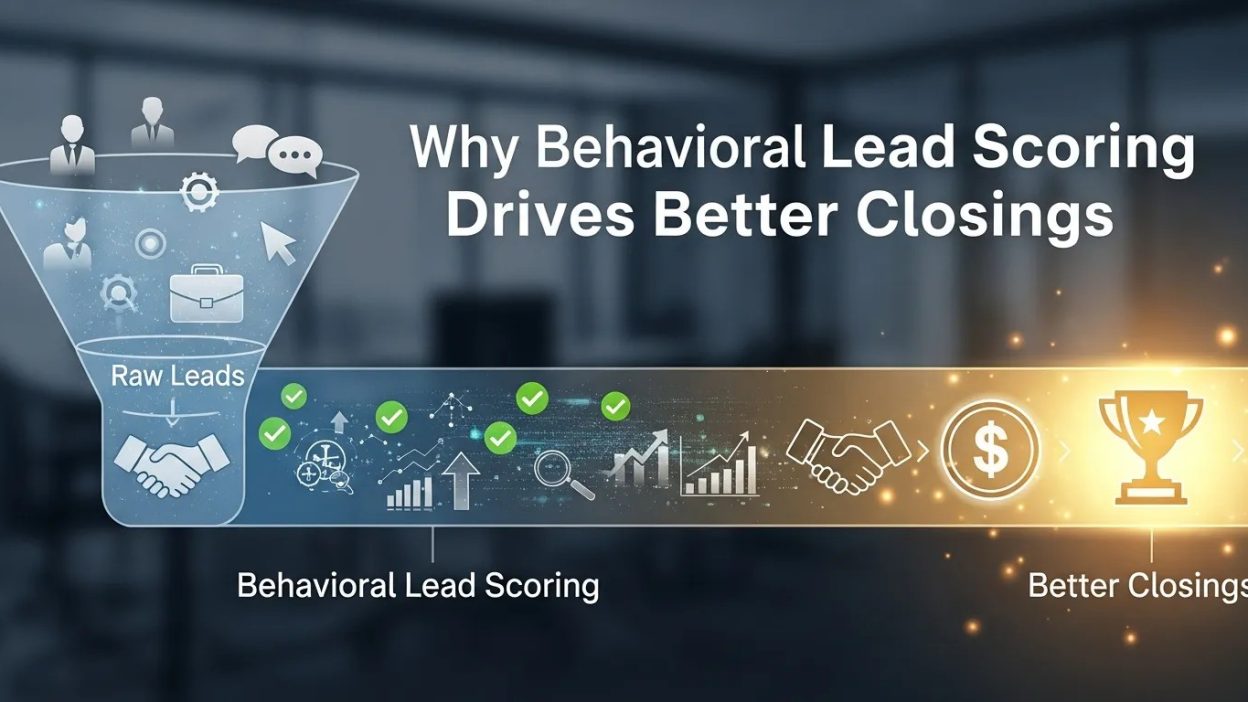
Behavioral Lead Scoring helps teams spot real buying intent sooner, prioritize warmer accounts with confidence, and guide follow-up that feels timely, useful, and more likely to close.
Behavioral Lead Scoring has become one of the clearest ways to separate casual interest from real buying intent. In modern sales, the hardest part is not finding names; it is knowing which accounts are actually moving toward a decision. That is why Behavioral Lead Scoring matters so much. It watches what people do, not just who they are. When a lead opens emails, visits pricing pages, compares plans, attends webinars, or returns to the site multiple times, those actions reveal momentum. Sales teams that understand this momentum can prioritize better conversations, reduce wasted outreach, and improve close rates. Behavioral Lead Scoring also works well because it aligns marketing and sales around shared evidence instead of guesswork. A lead that fits an ideal customer profile but never shows action is not always ready, while a lead that keeps engaging may be much closer than expected. This article explains how Behavioral Lead Scoring supports better closing outcomes, how to build it, where it fails, and how to use it with practical workflows that match human buying psychology. Behavioral Lead Scoring keeps the conversation anchored in evidence.
What Behavioral Lead Scoring Really Means
Behavioral Lead Scoring is a system for assigning value to actions a prospect takes across digital channels. Those actions can include page visits, content downloads, demo requests, repeat sessions, feature comparisons, reply behavior, webinar attendance, and even product trial usage. The system does not replace human judgment; it improves it. Behavioral Lead Scoring makes that judgment faster and more accurate. Instead of asking only who the lead is, sales and marketing ask what the lead is doing right now.
At its core, Behavioral Lead Scoring works because behavior is often a stronger signal than static firmographic data. A director at a perfect company may never take the next step, while a smaller account may show intense buying activity. Behavioral Lead Scoring catches that difference early. It turns scattered actions into a useful signal, and that signal helps sales teams respond with the right message at the right time.
To make Behavioral Lead Scoring useful, the rules must be clear. A visit to the homepage should not matter as much as a visit to the pricing page. A single blog read should not equal a product comparison, and a webinar registration should not be treated like a completed demo. The best systems score intent in layers. Light curiosity earns a small score, repeated engagement earns more, and high-intent actions earn the most. When done well, Behavioral Lead Scoring gives teams a sharper view of sales readiness.
Why Static Data Alone Is Not Enough
Traditional lead qualification often depends on demographic or firmographic filters. These can be useful, but they cannot tell the full story. A Demographic Scoring Model may reveal whether a lead is in the right role, the right industry, or the right company size. That information matters, yet it does not prove the person is ready to buy. Many teams discover that a large percentage of their best closed deals came from people who did not look ideal on paper but behaved like active buyers.
Behavioral Lead Scoring fills that gap. It adds motion to the picture. Instead of assuming fit equals readiness, it shows how much interest has actually been expressed. This is important because people rarely buy in a straight line. They research, disappear, return, compare options, and ask internal questions. Behavioral Lead Scoring helps teams recognize that nonlinear journey. A static model can miss that process entirely. Behavioral Lead Scoring tracks it in real time.
When teams rely too heavily on static data, they often over-contact cold leads and under-contact hot ones. That creates frustration on both sides. Reps chase the wrong accounts, while promising buyers wait too long for attention. Behavioral Lead Scoring helps avoid that problem by moving the conversation from “Who looks right?” to “Who is acting ready?”
The Psychology Behind Better Closings

Behavioral Lead Scoring works because buying is emotional before it is logical. People want certainty, safety, social proof, and a sense that they are making a good decision. The behaviors they show often reveal which of those needs is strongest. A visitor who checks security pages may be thinking about risk. A lead who watches a case study may be looking for reassurance. A prospect who returns to pricing several times is usually balancing value against cost.
That is why Behavioral Lead Scoring is tied closely to human psychology. It helps teams see where the buyer is in the decision process. It also helps sales reps avoid mistimed outreach. A lead that is still gathering background information needs education, not pressure. A lead that is comparing packages needs clarity. A lead that is revisiting implementation details may already be thinking about internal approval. Behavioral Lead Scoring turns these clues into action.
For closing, timing matters as much as relevance. A good message sent too early can lose the lead. A direct offer sent too late can miss the window. Behavioral Lead Scoring gives teams a better chance to act during the right emotional moment. That is one reason it improves close rates over time. Behavioral Lead Scoring adds precision at the moments that matter most.
Key Signals That Matter Most
Not all behaviors deserve the same weight. Behavioral Lead Scoring becomes more accurate when the scoring model reflects buying seriousness instead of raw activity volume. Below is a simple example of how signals can be ranked.
| Signal Type | Example Action | Typical Intent Level | Suggested Weight |
|---|---|---|---|
| Light engagement | Blog visit | Low | 1-3 |
| Returning interest | Multiple site visits | Medium | 5-10 |
| Comparison behavior | Pricing or feature page views | High | 10-20 |
| Commitment action | Demo request | Very high | 20-30 |
| Validation action | Case study, review, ROI page | High | 10-15 |
| Product exploration | Trial login, repeated feature use | Very high | 20-40 |
Behavioral Lead Scoring should always reflect what matters in your own funnel. A company selling enterprise software may care deeply about pricing-page activity and security-page visits. A lower-cost SaaS brand may value trial engagement more than page depth. The rule is simple: score behaviors based on what reliably predicts a close.
Some teams also build negative scoring into the system. For example, no activity for 30 days, unsubscribes, or irrelevant content patterns may reduce the score. That keeps the list clean and helps reps focus on truly active prospects. Behavioral Lead Scoring becomes most powerful when it rewards buying motion and filters out noise. Behavioral Lead Scoring should feel selective, not noisy.
How Behavior Signals Build Better Sales Priorities
One of the biggest advantages of Behavioral Lead Scoring is prioritization. Sales teams have limited time, and not every lead deserves immediate attention. A good score makes the queue more useful. It helps reps contact the people most likely to respond, which increases productivity and morale.
Behavioral Lead Scoring also improves handoff quality between marketing and sales. Marketing can send leads when the behavior suggests readiness instead of when a form is simply completed. This makes the transition smoother. Reps receive leads with context, and the follow-up becomes more specific. Instead of a generic check-in, the rep can mention the pages visited, the content consumed, or the webinar attended.
This is especially valuable for Sales Ready Leads for SDR Teams, because SDRs need a strong reason to call or email. Behavioral Lead Scoring gives that reason. When the lead score shows meaningful activity, outreach feels timely rather than random. The result is stronger engagement, better conversations, and more meetings booked.
A Practical Scoring Framework
A good Behavioral Lead Scoring model does not need to be complicated. In fact, simpler systems often perform better because the team can explain and trust them. Start by identifying the behaviors most closely linked to closed deals. Then assign points based on intent level. Review the model after enough data accumulates.
Here is a practical framework:
- Awareness actions: homepage visits, blog reads, social clicks.
- Consideration actions: product page visits, comparison content, webinar registration.
- Evaluation actions: pricing views, case studies, return visits, trial starts.
- Decision actions: demo requests, contact sales, proposal downloads, stakeholder invites.
Behavioral Lead Scoring should increase as behavior moves from awareness to decision. Behavioral Lead Scoring becomes more predictive when the path is clear. That movement matters more than raw frequency alone. For example, five blog visits are not always as important as one pricing-page visit. Likewise, a single trial login may matter more than many passive page views.
A useful rule is to tie the model to actual pipeline stages. If a behavior is common in deals that moved forward, it deserves higher value. If it appears in many leads that never close, it should not receive too much weight. Behavioral Lead Scoring becomes smarter when it learns from past wins rather than assumptions.
Where Many Teams Go Wrong
Even though Behavioral Lead Scoring is powerful, many teams use it poorly. One common mistake is scoring too many low-value actions. When every click matters, nothing matters. Reps stop trusting the score. Another mistake is copying a generic model from another company. A model that works for one product may fail for another because the buying journey is different.
Another issue is ignoring data decay. A lead who was highly active two months ago may no longer be warm. Behavioral Lead Scoring should account for recency. Recent actions matter more than old ones. Without decay, the score can look impressive while the lead has actually gone cold.
Teams also struggle when marketing and sales disagree about what counts. If marketing scores a webinar registration as strong intent but sales sees it as early research, the system breaks down. Behavioral Lead Scoring works best when both teams agree on the meaning of each action. That shared language creates trust.
Finally, many businesses forget to test. A score is not sacred. It should be reviewed against conversion data. If a signal does not predict deals, it should be adjusted. Behavioral Lead Scoring is a living system, not a one-time setup. Behavioral Lead Scoring improves when the team keeps testing it.
Linking Lead Scoring to Outreach Timing
The real value of Behavioral Lead Scoring appears when it changes outreach timing. A rep who contacts a lead immediately after a high-intent action usually has a better chance of starting a real conversation. Timing creates relevance, and relevance creates trust.
The best outreach is not just fast; it is specific. If someone visits the pricing page twice and reads a comparison article, the follow-up should reflect that. If someone attends a product webinar, the message should build on the topic discussed. That is where a Practical Outreach Workflow Process becomes useful. It gives reps a repeatable way to act on score changes without sounding robotic. Behavioral Lead Scoring gives the workflow a trigger.
Behavioral Lead Scoring can also trigger automation. For example, a lead can enter a fast-response sequence after reaching a high score threshold. The first message can reference the most recent behavior, the second can offer a useful resource, and the third can ask whether the lead wants a direct conversation. This keeps the outreach aligned with the buyer journey.
The Role of Marketing Content in the Score

Content creates the behavior that lead scoring measures. If the content is too broad, the signals will be weak. If the content is too shallow, the score will not reveal much. That is why content strategy and Behavioral Lead Scoring should be built together.
Top-of-funnel content can attract attention, but mid-funnel and bottom-funnel assets usually provide the strongest intent signals. Product comparisons, implementation guides, ROI breakdowns, and case studies tend to reveal serious evaluation behavior. These pages deserve special attention because they often show that a lead is moving beyond curiosity.
This is also why teams should watch pattern clusters, not just single actions. A lead who reads one blog post is probably exploring. A lead who reads that post, visits pricing, returns two days later, and downloads a case study is showing a much clearer buying pattern. Behavioral Lead Scoring works best when it sees the pattern as a whole. Behavioral Lead Scoring is about context, not isolated clicks.
Some organizations use their content library to segment intent by topic. Product fit pages may indicate technical interest, while industry pages may signal business case building. Over time, the score becomes more predictive because it is based on the journey, not a random click. Some teams also compare Perplexity Rank Tracking Tools with a Rank Tracking Tool AI Mode to see which content signals are rising before competitors notice them.
Common Behavioral Signals and Sales Actions
| Behavior | What It Often Means | Sales Action |
|---|---|---|
| Repeated pricing visits | Budget comparison or internal review | Fast personal outreach |
| Case study downloads | Need for proof | Send relevant success story |
| Webinar attendance | Active evaluation | Follow up with a topic-based message |
| Trial activation | Hands-on interest | Offer setup help or demo support |
| Multiple stakeholder visits | Internal buying committee is involved | Adjust messaging for group buying |
| Return visits after inactivity | Renewed interest | Re-engage with fresh value |
Behavioral Lead Scoring should not end at the number. Behavioral Lead Scoring must always lead to action. The number is only useful if it changes what the team does next. Every strong signal should lead to a smarter action.
How Behavioral Scoring Supports Revenue Alignment
Revenue teams work better when they agree on what matters. Behavioral Lead Scoring creates a common standard for that agreement. Marketing knows which actions are driving pipeline. Sales knows which leads deserve attention. Leadership gets a clearer view of how interest turns into revenue.
When scoring is aligned, handoffs are cleaner. Sales no longer complains about low-quality leads while marketing says sales is not following up. Instead, both sides can see the same activity trail. That shared visibility reduces friction and improves accountability.
This alignment becomes especially important in account-based motions or longer sales cycles. Multiple people may engage from the same company before any single form fill happens. Behavioral Lead Scoring can roll up activity across contacts and help teams see account-level intent. That makes it easier to know when a company is truly in play.
The value is not only operational. It is also strategic. Better scoring helps teams invest time where the pipeline is most likely to grow. In competitive markets, that efficiency can become a serious advantage.
Why It Matters for SaaS and Recurring Revenue
In subscription businesses, timing and fit have an outsized impact on revenue quality. A weak lead that churns fast can cost more than no lead at all. That is why Behavioral Lead Scoring is especially useful in SaaS. It helps the business identify people who are more likely to buy and stay.
Because recurring revenue depends on retention, teams should think beyond the first close. The same signals that show promise before the sale can also hint at adoption risk later. If a user is highly engaged during evaluation but disappears after onboarding, the business may need better implementation support. Behavioral Lead Scoring can support both acquisition and retention analysis when used carefully.
In some companies, the same behavioral logic is also useful for Predicting SaaS Customer Churn. Low usage, declining logins, ignored emails, and missing key feature adoption can all indicate risk. That does not make lead scoring and churn scoring identical, but it shows how behavior can inform the full revenue lifecycle.
Building Trust in the Score
A scoring system only works if the team trusts it. Trust comes from transparency, simplicity, and proof. People need to know why a lead received a particular score. If the model looks like a black box, adoption will suffer.
One way to build trust is to document the rules. Make sure everyone knows which actions are weighted most and why. Another way is to compare scored leads against actual closed deals. If the model regularly highlights the right leads, confidence will rise. Behavioral Lead Scoring becomes part of the sales culture when it keeps proving itself. Behavioral Lead Scoring earns trust through results.
It also helps to review the model regularly with both marketing and sales. Ask questions like: Which actions produce conversations? Which scores turn into opportunities? Which signals look impressive but do not lead anywhere? These reviews keep the system honest and useful.
Trust also comes from consistency. The score should behave the same way each time a similar action happens. Randomness destroys confidence. Reliable logic creates adoption.
Connection Between Scoring and Conversion Quality
Better closing is not only about closing more deals. It is also about closing better-fit deals. Behavioral Lead Scoring improves conversion quality by helping teams focus on buyers who are truly engaged. That means less wasted effort, fewer mismatched deals, and more meaningful conversations.
When a sales team works from behavior, it usually starts the conversation with context. Context improves rapport. A prospect feels understood when the rep references something relevant instead of asking generic discovery questions. That small difference often changes how the conversation feels.
Behavioral Lead Scoring also helps reduce premature pitching. Reps who see the score can choose the right level of pressure. Sometimes the best move is to educate. Sometimes the best move is to challenge. Sometimes the best move is to ask for the meeting while interest is highest. Good scoring helps the rep choose.
For many organizations, this creates a cleaner funnel from interest to opportunity to close. That cleaner funnel is one of the main reasons Behavioral Lead Scoring keeps gaining attention across modern B2B teams.
Example of a Modern Revenue Stack
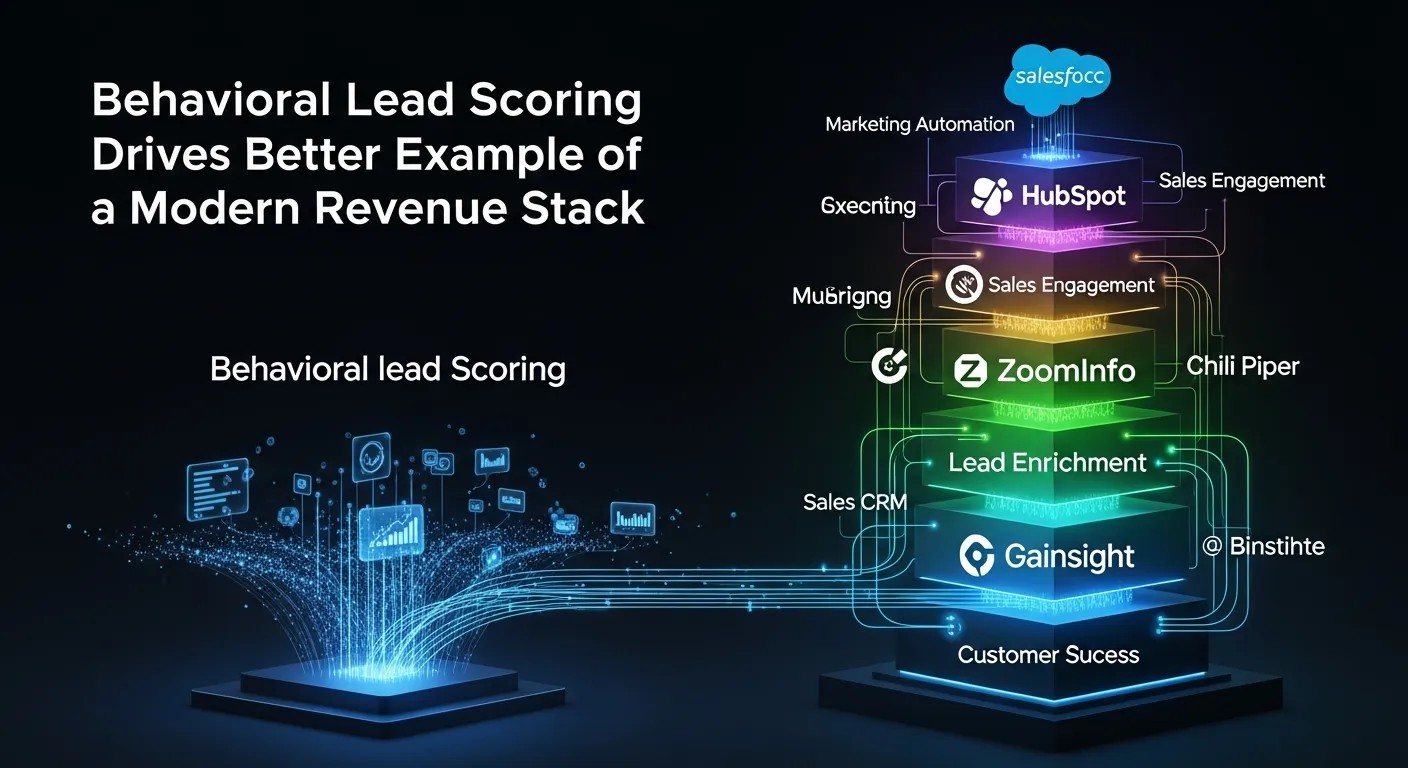
A strong scoring system often works alongside other tools. Marketing automation platforms collect the data. CRM systems store the history. Product analytics tools track in-app behavior. Intent data tools add outside signals. Together, these create a fuller picture of buyer motion.
Behavioral Lead Scoring becomes more useful when these tools connect cleanly. A lead might first discover the brand through content, then return through a comparison page, then engage in the product, and finally request a demo. That chain of actions tells a far richer story than one isolated form submission.
The same ecosystem can also support a SaaS License Management Tool, especially when usage, access, and account activity are tracked closely. While license management is not the same as lead scoring, both depend on understanding behavior as a signal of value and risk. SaaS Referral Programs can generate another layer of behavior worth watching, because referred traffic often arrives with stronger trust. When teams manage that data well, they make better decisions across the revenue stack.
The Human Side of Faster Closings
At the end of the day, people close people. Behavioral Lead Scoring helps, but it does not replace empathy, clarity, and timing. The best sales teams use the score as a guide, not a script. They listen, adapt, and respond to what the buyer is trying to accomplish.
That human element matters because buyers want to feel understood, not tracked. When scoring is used well, it improves the conversation without making it feel mechanical. The rep reaches out with something useful, and the buyer feels that the message fits the moment. That is a powerful combination.
Good closing happens when the buyer feels confident. Behavioral Lead Scoring helps create that confidence by improving relevance at every stage. Behavioral Lead Scoring is the bridge between interest and action. It gives teams the ability to show up with the right message, at the right time, for the right person.
Conclusion
Behavioral Lead Scoring gives sales and marketing a sharper lens for identifying real buying intent. Instead of relying only on titles, company size, or form fills, it focuses on actions that reveal momentum. That makes prioritization smarter, outreach more relevant, and closing more efficient. The best systems are simple, transparent, and tied to actual conversion data. They reward recent high-intent actions, respect buyer psychology, and support clean handoffs between teams. When used well, Behavioral Lead Scoring does more than rank leads. It helps revenue teams talk to the right people at the right time, which is often the difference between a missed opportunity and a signed deal.
Frequently Asked Questions (FAQ)
1. What is Behavioral Lead Scoring?
Behavioral Lead Scoring is a method of assigning value to actions a prospect takes, such as page visits, content downloads, webinar attendance, and demo requests.
2. Why is Behavioral Lead Scoring better than static scoring alone?
Behavioral Lead Scoring captures what a lead is doing right now, while static scoring only reflects who the lead is on paper.
3. Which actions should be scored highest?
High-intent actions like pricing visits, demo requests, trial activity, and repeated return visits usually deserve the highest scores.
4. How often should a scoring model be reviewed?
Behavioral Lead Scoring should be reviewed regularly, especially after enough conversion data is available to see which signals actually predict deals.
5. Can Behavioral Lead Scoring help SDR teams?
Yes. Behavioral Lead Scoring helps SDRs prioritize sales ready leads for SDR teams and reach out at the right moment with better context.
6. Should all website activity be scored the same way?
No. Not every click matters equally. Pricing views, comparison pages, and demo requests usually carry more weight than casual blog visits.
7. What is the biggest mistake teams make with lead scoring?
A common mistake is scoring too many low-value actions, which creates noise and causes reps to stop trusting the score.
8. Does Behavioral Lead Scoring work for SaaS?
Yes. It is especially useful in SaaS because it can reflect evaluation intent, product adoption, and even long-term engagement patterns.
9. How does Behavioral Lead Scoring improve outreach?
It helps reps contact leads when they are most active and most likely to respond, which makes outreach more relevant and effective.
10. What is the main business benefit?
The main benefit is better closings: more qualified conversations, less wasted effort, and a higher chance of turning interest into revenue.