

Lead Magnet Ideas help brands exchange real value for attention, turning casual visitors into subscribers by solving a specific problem, building trust, and encouraging action.
Every business wants a bigger email list, but the real goal is not volume alone. The real goal is a list filled with people who are interested, engaged, and ready to move forward. That is where Lead Magnet Ideas become powerful. They give a visitor a reason to exchange their email address for something useful, immediate, and relevant. When the offer feels timely and valuable, the signup feels natural rather than forced.
The best Lead Magnet Ideas do more than collect leads. They shape first impressions, filter for intent, and create a relationship before the first sales message is even sent. That first exchange matters because people do not hand over their email for nothing. They need a clear emotional and practical reason. A strong lead magnet answers a problem, reduces uncertainty, or helps the user save time, money, or effort.
For marketers, founders, creators, and service providers, the right Lead Magnet Ideas can become the engine behind Quality Sales Leads Generation. The question is not simply what to offer, but how to offer it in a way that feels useful and trustworthy. That is why strategy, psychology, and presentation matter just as much as the content itself.
What Makes a Lead Magnet Actually Convert
Most people think conversion comes from “free” alone, but that is not true. People subscribe when the offer feels relevant, specific, and easy to consume. The best Lead Magnet Ideas solve one clear problem instead of trying to do everything at once. A user who lands on a page should immediately understand what they will get, why it matters, and how fast they can use it.
Conversion also depends on trust. If the visitor does not believe the resource will help, they will not opt in. This is why Lead Magnet Ideas need to feel credible, practical, and well matched to the audience’s current stage. A beginner does not want an advanced blueprint. A buyer-ready visitor does not want a broad introduction. The offer must match the moment.
Finally, the best Lead Magnet Ideas are designed around action. They help someone do something faster, easier, or more confidently. That action could be creating a plan, diagnosing a problem, making a choice, or comparing options. The more direct the result, the stronger the conversion.
Why Lead Magnets Work on Human Psychology
People are drawn to immediate relief. They want a quick win, a clear answer, or a shortcut that still feels honest. The strongest Lead Magnet Ideas use this human tendency by offering something that lowers effort and uncertainty. A visitor thinking, “I need help but I do not know where to start,” is much more likely to subscribe when the next step is simple.
Reciprocity is another powerful principle. When someone receives something helpful for free, they feel a natural pull to continue the relationship. That is why Lead Magnet Ideas can be the beginning of trust rather than just a list-building tactic. The right resource creates a small emotional commitment. It says, “This brand understands my problem.”
Clarity also matters. Confusing offers weaken response. People are more likely to act when the value is obvious. The most effective Lead Magnet Ideas explain the payoff in plain language and remove mental friction. A good offer does not ask the user to think too hard. It makes the next step feel easy.
The Psychology Trigger Behind Fast Signups
A strong lead magnet often uses one or more of these triggers:
- immediate usefulness
- reduced uncertainty
- perceived exclusivity
- quick win satisfaction
- identity alignment
When these triggers are combined carefully, Lead Magnet Ideas become much more persuasive. A subscriber does not just see “free content.” They see something that helps them feel smarter, faster, or more capable right away.
Types of Lead Magnet Ideas That Convert
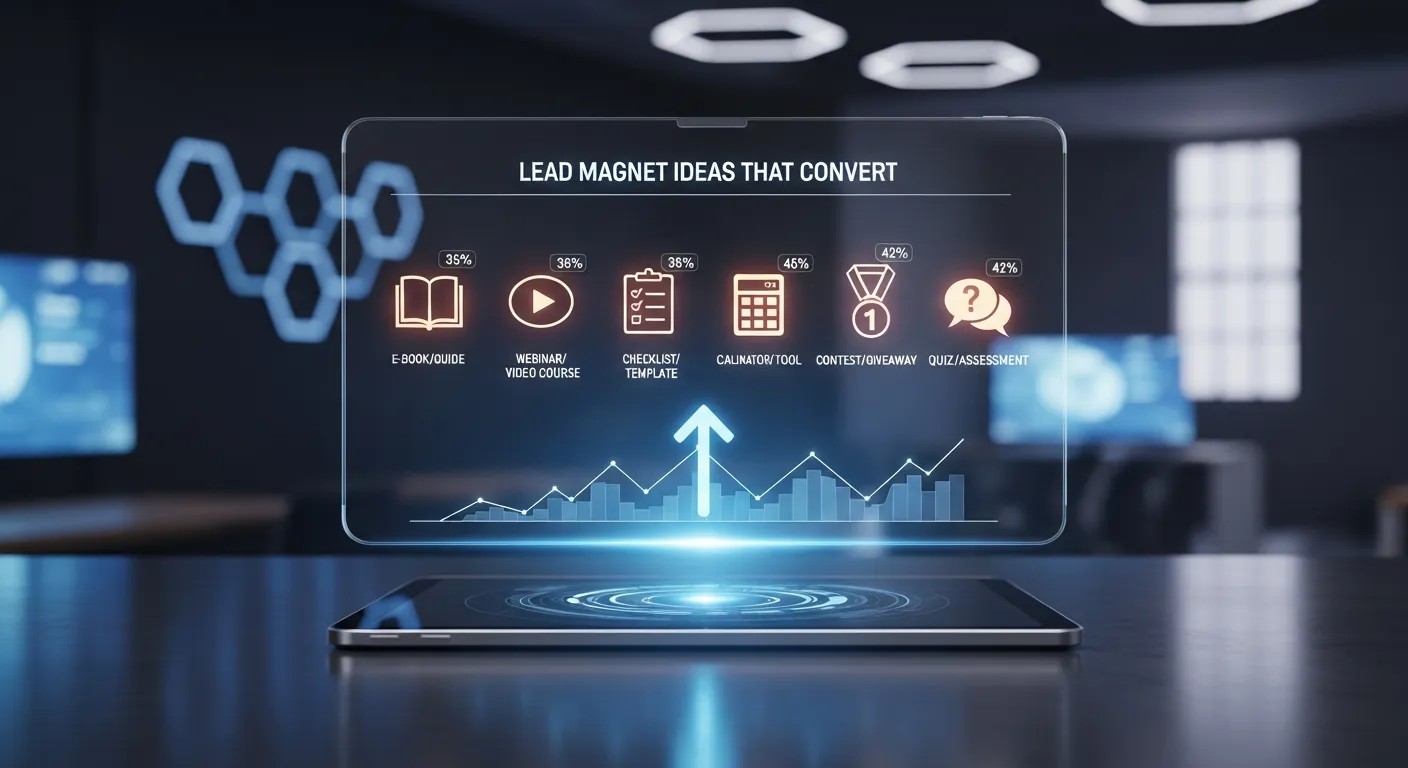
There are many kinds of lead magnets, but the best ones usually fit one of a few proven formats. The format should match the audience’s need and the depth of the problem. Some people want speed. Others want detail. Some want a template, while others want a decision tool. The right Lead Magnet Ideas make that choice easier.
1. Checklists
Checklists are popular because they are simple, practical, and immediately useful. They help people avoid mistakes and stay organized. For many audiences, Lead Magnet Ideas based on checklists work well because they provide a sense of progress right away.
2. Templates
Templates save time by giving the subscriber a starting point. Whether it is an email template, content template, or planning template, the perceived value is often high. Some of the best Lead Magnet Ideas use templates because they reduce blank-page anxiety and make the next action faster.
3. Guides and Playbooks
Longer educational resources work well when the audience needs context. These Lead Magnet Ideas are ideal when the visitor is asking, “How do I do this properly?” A good guide feels like a shortcut to competence.
4. Quizzes and Assessments
Interactive formats can increase engagement and segmentation. They work because people enjoy learning about themselves. These Lead Magnet Ideas can also help you tailor follow-up emails based on answers and intent.
5. Mini-courses
A short course can feel premium and structured. It is especially useful when the topic is complex. Lead Magnet Ideas in course format work best when the lesson is focused and the outcome is realistic.
6. Swipe Files and Examples
People often want to see what “good” looks like. Swipe files, sample libraries, and example packs are strong Lead Magnet Ideas because they remove guesswork and reduce risk.
Matching Lead Magnet Ideas to Audience Intent
The most common mistake in list building is choosing an offer based on what the business likes instead of what the audience needs. Strong Lead Magnet Ideas are built from intent. A visitor who is researching has different expectations from someone who is close to buying. The offer should match that stage.
If the visitor is early in the journey, educational Lead Magnet Ideas work well. These usually include beginner guides, glossaries, or foundational checklists. They answer broad questions and create trust. If the visitor is more advanced, Lead Magnet Ideas should move closer to implementation. That is where templates, calculators, audits, and decision tools perform better.
Intent also shapes tone. A professional audience may respond better to concise, result-focused language. A creative audience may prefer inspiration and examples. Good Lead Magnet Ideas reflect the user’s mindset, not just the company’s message.
How to Choose the Right Topic
Topic selection is where many campaigns win or lose. The strongest Lead Magnet Ideas are built around a painful, urgent, or aspirational problem. The topic must feel valuable enough to justify the email address. If the visitor can solve the problem easily elsewhere, the magnet may not convert well.
Start by identifying questions your audience already asks. Look at sales calls, support tickets, search terms, social comments, and page behavior. These signals reveal what people actually care about. Then shape Lead Magnet Ideas around those moments of need.
The best topics are narrow enough to feel specific, but broad enough to attract many qualified leads. “Marketing tips” is too vague. “How to plan your first email welcome sequence” is much more actionable. Specific Lead Magnet Ideas usually perform better because the promise feels clearer.
Building a Strong Value Promise
A lead magnet headline should tell people exactly what they will get and why it matters. A weak promise sounds generic. A strong one sounds useful, concrete, and timely. The best Lead Magnet Ideas focus on outcome rather than format.
For example, the audience does not care that something is a PDF. They care that it helps them save time, get clients, reduce risk, or make better decisions. This is why the wording around Lead Magnet Ideas matters so much. The offer should communicate the result, not the container.
A good value promise often uses one of these angles:
- save time
- increase confidence
- remove confusion
- improve results
- avoid mistakes
When your Lead Magnet Ideas connect to one of these desires, signups become more likely because the benefit is easy to understand.
Designing the Landing Page for Conversion
Even the best offer can fail on a weak page. The page where you present Lead Magnet Ideas matters just as much as the resource itself. Visitors should see a clear headline, a simple subheadline, a visible benefit, and an easy form. Every extra distraction can reduce conversions.
The page should answer three questions quickly: What is it? Why should I care? What do I do next? If those answers are easy to find, the page performs better. High Converting Landing Page Design Strategies always focus on reducing friction and strengthening the value message.
Social proof can also help. A short testimonial, a number of subscribers, or a line about what the resource helps with can improve trust. But do not overload the page. Lead Magnet Ideas convert best when the page is clean, direct, and visually easy to scan.
Landing Page Elements That Help
A well-built page may include:
- one clear headline
- one supporting subheadline
- one primary call to action
- a short form
- a visual preview
- trust cues
- a benefit-focused bullet list
The goal is not to impress with complexity. The goal is to make the choice easy. Strong Lead Magnet Ideas need a page that matches their clarity.
Email List Growth and List Quality
A large list is not automatically valuable. A smaller, engaged list can outperform a larger, indifferent one. That is why the best Lead Magnet Ideas are not only about growth. They are about attracting the right people. Every signup should increase relevance, not just numbers.
When the lead magnet solves a very specific problem, it filters the audience. That means people who subscribe are more likely to care about your future emails. This improves open rates, click-through rates, and response quality. Lead Magnet Ideas should therefore be built with both acquisition and qualification in mind.
One practical way to think about it is this: a good lead magnet acts like a pre-sales conversation. It tells the subscriber what kind of help you provide and whether your offers might matter to them later. That is why Lead Magnet Ideas can influence not only list size, but also long-term revenue.
Creating Offers That Feel Easy to Say Yes To
People often say yes to small, low-risk commitments. That is one reason effective Lead Magnet Ideas work so well. The visitor is not buying yet. They are just taking a small first step. That step feels easier when the resource is relevant, fast, and clearly beneficial.
The sign-up form should ask for the minimum necessary information. Every extra field increases resistance. In most cases, name and email are enough. If the user feels the process is simple, the chance of conversion rises. Simplicity is one of the most important ingredients behind Lead Magnet Ideas.
It also helps when the deliverable arrives immediately. Instant access reinforces the feeling that the exchange was worth it. Delays weaken momentum. The most persuasive Lead Magnet Ideas promise a quick reward and actually deliver it right away.
Segmenting Subscribers for Better Results

Not every subscriber wants the same thing. Some are beginners. Some are ready to compare options. Some need inspiration, while others need implementation support. Smart Lead Magnet Ideas can help segment these different groups from the start.
For example, you might use different magnets for different traffic sources or interest categories. A visitor from a blog post about productivity may want a checklist. A visitor from a pricing page may want a comparison guide. These differences matter because they reveal intent. Well planned Lead Magnet Ideas make future email campaigns more relevant.
Segmentation improves personalization. Once you know which magnet someone chose, you can send follow-up content that fits that topic. That creates a more natural path from signup to trust. The better the match, the stronger the relationship.
The Role of Storytelling in Lead Magnets
People remember stories more easily than instructions. That is why some Lead Magnet Ideas convert better when they include real examples, transformation narratives, or case-based lessons. A story helps the reader see themselves in the problem and imagine the outcome.
Good storytelling does not mean making the resource dramatic. It means making the information relatable. A reader who feels understood is more likely to trust the resource. That trust is central to Lead Magnet Ideas because the first conversion usually depends on emotional resonance as much as practical value.
Story can also reduce complexity. A short before-and-after example can explain a process faster than a long explanation. When used well, stories make Lead Magnet Ideas feel more human and more memorable.
Using Lead Magnets Across the Funnel
Not every lead magnet serves the same purpose. Some are designed to attract new visitors. Others are built to move warmer prospects toward a decision. The best Lead Magnet Ideas fit into a funnel instead of standing alone.
Top-of-funnel offers usually educate or entertain. Middle-of-funnel offers help people compare, plan, or evaluate. Bottom-of-funnel offers may include audits, consultations, calculators, or decision support. When Lead Magnet Ideas are aligned with funnel stage, they do a better job of moving people forward.
This is where content strategy matters. A blog article, a landing page, and an email sequence should all support the same journey. Lead Magnet Ideas work best when they are part of a larger system rather than a one-time trick.
Measuring Performance the Right Way
Conversion rate is important, but it is not the only metric. You also need to look at downstream quality. Do subscribers open your emails? Do they click? Do they reply? Do they buy later? The best Lead Magnet Ideas do well on both quantity and quality.
A lead magnet that brings in many uninterested subscribers may look successful at first but perform poorly later. A smaller magnet with stronger intent may produce far better business outcomes. That is why Lead Magnet Ideas should be judged by how they influence the customer journey, not only the first form submission.
Track the source, topic, conversion rate, and post-signup behavior. Over time, patterns will show you which Lead Magnet Ideas attract the most valuable audience.
Referral and Social Sharing Potential
Some lead magnets spread naturally because people like to share useful tools. When that happens, list growth becomes more efficient. This is where Referral Marketing can amplify results. If a lead magnet is practical enough, subscribers may pass it to colleagues, friends, or community members.
The strongest shareable offers often feel universal, quick, and non-threatening. They solve a common problem or make someone look helpful when they forward it. The Psychology of Successful Customer Referral shows that people share things that make them feel smart, generous, or useful. Your Lead Magnet Ideas can benefit from that behavior if the resource has obvious social value.
A lead magnet can also support referral loops when it leads to a second useful resource. That creates a chain of engagement, not just a single signup. The more helpful the resource, the more likely it is to travel.
Examples of High-Performing Lead Magnet Concepts
Different businesses need different angles, but some patterns consistently work well. Here are a few broad concepts that can inspire Lead Magnet Ideas across industries:
- a quick-start checklist for beginners
- a template pack for saving time
- a short diagnostic quiz
- a practical roadmap
- a resource vault or swipe file
- a mini-course with one clear outcome
- a calculator that estimates value or savings
- a comparison sheet for decision-making
What makes these Lead Magnet Ideas effective is not just the format. It is the relevance, clarity, and usefulness. The concept should feel like an answer, not just a freebie.
Optimizing the Offer for Trust
Trust signals can increase conversions dramatically. People are more likely to exchange their email when they believe the brand is credible and the resource is safe. Strong Lead Magnet Ideas should be supported by visible trust markers such as testimonials, recognizable expertise, clean branding, and a clear privacy statement.
The tone also matters. Overhyped language can reduce confidence. Honest, practical wording usually works better. If the resource is truly valuable, let the value speak for itself. The best Lead Magnet Ideas do not need exaggerated claims. They need clarity and proof.
You should also keep the promise aligned with the delivery. If the signup page says one thing and the resource delivers another, trust drops quickly. Reliability is a core part of Lead Magnet Ideas because the first exchange sets the tone for the relationship.
Building a Simple Lead Magnet System
You do not need dozens of offers to start. In many cases, three or four strong assets can cover a large part of the journey. The system can be built around one primary lead magnet, one segmentation magnet, one sales-support magnet, and one re-engagement magnet. That makes Lead Magnet Ideas more strategic and easier to manage.
The primary magnet can attract cold traffic. The segmentation magnet can separate audience interests. The sales-support magnet can help warmer leads compare options. The re-engagement magnet can bring inactive subscribers back. When Lead Magnet Ideas are organized this way, they support the whole email marketing ecosystem.
This is also easier to test. You can compare different topics, formats, and messages without rebuilding your entire funnel. A simple system is usually more sustainable than a complex one.
Mistakes That Reduce Conversions
Even strong content can underperform when the strategy is off. One common mistake is making the offer too broad. Another is making the resource too large, which creates intimidation instead of relief. Some Lead Magnet Ideas fail because they try to be everything for everyone.
Another mistake is burying the value. If the visitor cannot understand the benefit in a few seconds, the page loses momentum. Some offers also fail because the follow-up delivery is slow or unclear. Lead Magnet Ideas should feel immediate, useful, and easy to trust.
A final mistake is ignoring the email sequence after signup. A lead magnet is only the beginning. The follow-up must continue the promise. Otherwise, the initial interest fades quickly.
Why Some Subscribers Convert and Others Do Not

Not every subscriber is equally ready. Some are curious. Some are evaluating. Some are close to buying. Lead Magnet Ideas help you attract the right mix, but the email sequence must continue shaping the relationship. Conversion often depends on timing, relevance, and confidence.
People move when the lead magnet matches their current need. That is why the same lead magnet may perform differently depending on traffic source, audience maturity, or season. Great lead magnets can bring in quality attention, but they work best in a system that keeps building trust after the opt-in.
The more accurately you understand the visitor’s context, the better your offers will perform. That is the real advantage of well-built lead magnets.
How to Refresh Old Offers
A lead magnet should not stay static forever. Audiences change, search habits change, and expectations change. Sometimes a simple refresh can improve performance significantly. Updating examples, tightening the promise, or improving the layout can make the resource perform better without changing the core topic.
You can also test different headlines, visuals, or formats. A checklist may outperform a long guide. A quiz may outperform a static download. Small changes can reveal what your audience values most. That is why Lead Magnet Ideas should be treated as living assets, not one-time downloads.
When you review old offers, ask whether the topic still matches current pain points. If not, update or replace it. Relevance keeps the magnet effective.
Conclusion
Lead Magnet Ideas are one of the most important tools for building an email list that actually converts. They work because they connect value, timing, and psychology in a way that feels natural to the visitor. The strongest offers are specific, practical, and aligned with what the audience wants right now. When Lead Magnet Ideas are matched to intent, supported by a clear landing page, and followed by relevant email nurturing, they do far more than collect addresses. They create trust, segment the audience, and set up long-term sales opportunities. In a crowded digital space, the brands that win are the ones that make their value easy to receive and easy to remember. That is the real power of the resource.
Frequently Asked Question (FAQ)
What are lead magnets?
Lead magnets are free offers used to encourage people to join an email list in exchange for something useful.
Why are lead magnets important?
Lead magnets help attract the right subscribers, build trust early, and improve the quality of your email list.
What types of lead magnets work best?
Checklists, templates, quizzes, guides, mini-courses, and swipe files often perform well because they are practical and easy to use.
How do lead magnets improve conversions?
They reduce friction by offering immediate value, which makes the signup decision feel easier and more rewarding.
Should a lead magnet be long or short?
It depends on the audience. Short, focused offers often work best because they feel quick and actionable.
How can I choose the right lead magnet topic?
Use customer questions, pain points, and search intent to build Lead Magnet Ideas around real problems.
Do lead magnets help with sales?
Yes. They bring in interested leads, build trust, and create a warmer audience for future email offers.
What makes a landing page effective for a lead magnet?
A clear headline, simple design, strong benefit statement, and minimal form fields usually support better conversions.
Can one business use multiple lead magnets?
Yes. Different lead magnets can serve different audience stages, traffic sources, and customer needs.
How often should I update my lead magnet?
Review it regularly and refresh your lead magnet whenever the audience, market, or offer is no longer producing strong results.