

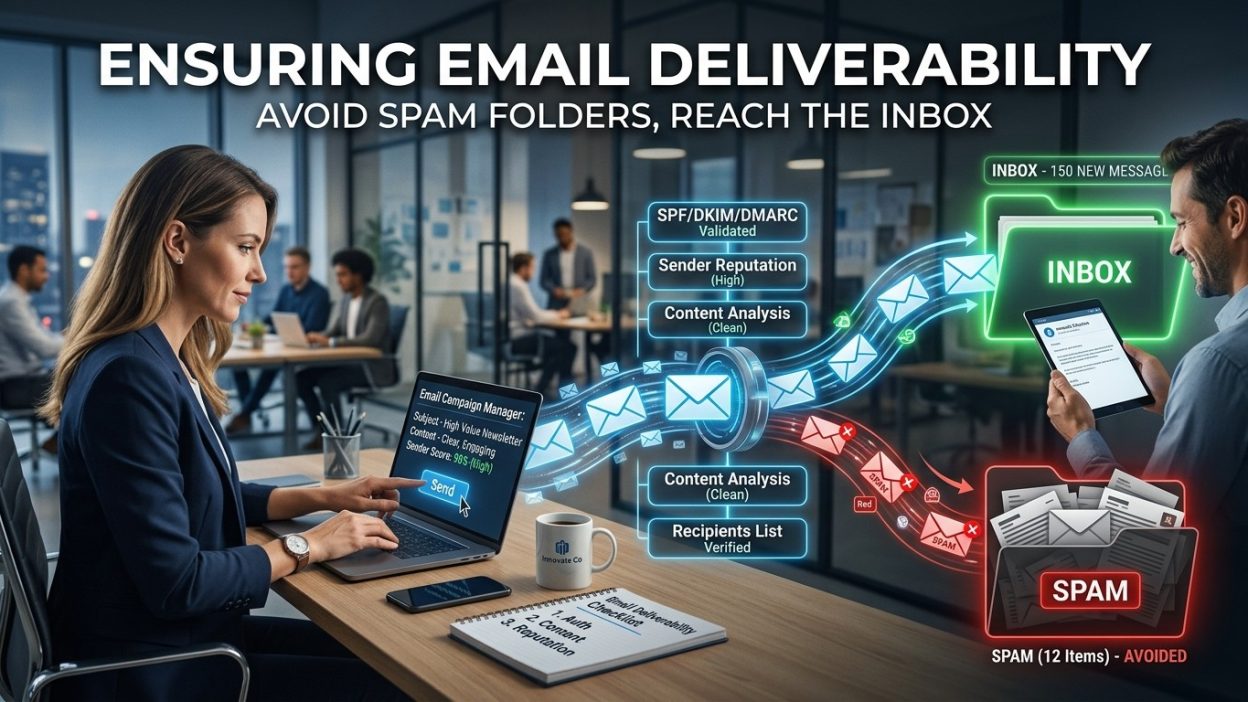
Strong inbox placement depends on trust, relevance, list quality, and sender discipline, helping messages reach real readers instead of disappearing into spam, promotions, or being ignored.
Many teams obsess over the number of emails they send and still miss the main issue: whether the right person actually sees the message. Ensuring Email Deliverability begins with understanding that mailbox providers care about behavior, not just content. If recipients open, read, reply, or click, the sender looks useful. If they delete or ignore, the sender starts to look risky. Ensuring Email Deliverability therefore has a psychological side as much as a technical one, because people do not want to feel tricked, pressured, or overloaded.
The best way to think about inbox placement is as a relationship, not a broadcast. Ensuring Email Deliverability improves when the audience expects the message and recognizes why it belongs in their inbox. That expectation lowers friction. It also makes the email feel familiar, which helps the recipient trust it faster. Ensuring Email Deliverability is strongest when the message feels like a helpful continuation of a conversation rather than a sudden interruption. That is why volume alone does not solve delivery problems. A smaller, more responsive audience usually supports better results than a larger list that barely reacts.
The practical lesson is simple: before you ask how many emails to send, ask whether the message deserves attention. Ensuring Email Deliverability becomes easier when the answer is yes for a clear, well-defined audience.
List quality and permission
A healthy list is built on permission, clarity, and regular maintenance. Ensuring Email Deliverability starts with people who genuinely want to hear from you, because willingness is the first signal that matters. Purchased lists, scraped contacts, and weak signups often create more harm than value. They lower engagement, increase complaints, and weaken trust across the entire sending environment. Ensuring Email Deliverability should therefore be treated as a quality control process before it is treated as a campaign tactic.
Good list management does not mean chasing every inactive contact forever. It means identifying who is still interested and protecting the active segment from unnecessary decline. Ensuring Email Deliverability improves when the sender removes obvious risk, re-engages stale contacts carefully, and avoids sending to people who never opted in with real intent. That discipline keeps the data cleaner and the reputation stronger.
When list quality is strong, the rest of the system has a better chance to work. Ensuring Email Deliverability becomes more reliable because the audience is less likely to ignore, delete, or complain. In practice, that means better inbox placement, better open rates, and better long-term campaign stability. A clean list is not glamorous, but it is one of the most powerful forms of email insurance.
Sender reputation and trust

Sender reputation is the long memory of the inbox. Ensuring Email Deliverability depends on that memory because mailbox providers watch how your messages behave over time. If your emails generate bounces, complaints, and low engagement, the system becomes less confident that future messages deserve the inbox. If the opposite happens, trust improves gradually and future sends become easier to place. Ensuring Email Deliverability is therefore never a one-campaign issue; it is the result of many sends adding up to a clear pattern.
The human side matters too. People trust names they recognize and content that matches their expectation. Ensuring Email Deliverability gets stronger when the sender feels consistent, helpful, and predictable. If the brand feels random, aggressive, or noisy, the recipient becomes less willing to engage. That hesitation shows up in performance data and eventually influences how future messages are filtered. Repetition of value is often more useful than dramatic creative changes.
One of the smartest habits is to protect reputation before growth becomes urgent. Ensuring Email Deliverability improves when volume rises slowly, authentication is stable, and complaint risk stays low. Good reputation is not a marketing luxury. It is the infrastructure that allows every future email to have a fair chance of being seen.
Relevance and segmentation
The inbox rewards messages that feel matched to the reader’s context. Ensuring Email Deliverability becomes easier when segmentation reduces mismatch and keeps the message close to intent. A new subscriber should not receive the same email as a repeat customer, and a dormant contact should not be treated like an active buyer. When the content fits the stage, the email feels more useful and less intrusive. That usefulness supports engagement, and engagement supports future delivery.
Segmentation can be simple and still powerful. It may be based on behavior, interest, geography, purchase history, or activity level. Ensuring Email Deliverability benefits when the sender uses these differences to avoid sending generic messages to people with very different expectations. A relevant message is more likely to be opened, clicked, and remembered. A mismatched one is more likely to be ignored or marked as spam.
This is where the psychology of attention becomes important. People respond when they feel understood. Ensuring Email Deliverability improves when the sender shows that understanding by delivering the right message at the right moment. The result is not just better inbox placement. It is a better subscriber relationship that tends to compound over time.
Authentication and technical trust
Technical setup is the foundation under everything else. Ensuring Email Deliverability requires proper SPF, DKIM, and DMARC configuration so mailbox providers can verify that the sender is legitimate. These records help confirm that the message is authorized, which reduces the risk of spoofing and filtering problems. Without that baseline, even a strong message may face unnecessary resistance. With it, the sender starts with a more trustworthy posture.
The important point is that technical trust and audience trust work together. Ensuring Email Deliverability becomes steadier when the infrastructure tells one story and the content tells another. The infrastructure says the message is authentic. The content says the message is useful. When both signals align, inbox placement becomes easier to maintain. If either side is weak, the whole system becomes more fragile.
This is also why setup mistakes should be fixed early. Ensuring Email Deliverability is much easier to protect than to repair after damage. A stable domain, correct authentication, and consistent sending identity remove a major source of uncertainty. That gives the team a cleaner starting point for every future campaign, which makes optimization more meaningful.
| Risk | What it does | Better response |
|---|---|---|
| Low engagement | Weakens trust signals | Improve relevance and segmentation |
| Spam complaints | Damages sender reputation | Send only to opted-in contacts |
| High bounce rates | Suggests poor list quality | Clean and verify addresses |
| Inconsistent volume | Looks unusual to providers | Maintain steady sending patterns |
| Confusing content | Reduces clicks and replies | Keep one clear message per email |
Structure and readability
A strong email respects the reader’s time. Ensuring Email Deliverability improves when the structure is simple, the message is focused, and the next step is easy to find. Long blocks of text, crowded layouts, and hidden calls to action make the email feel heavier than it needs to be. That kind of friction can lower engagement, especially on mobile devices where attention is even shorter. Clean structure helps the reader understand the point quickly, which makes interaction more likely.
Readable emails also feel more trustworthy. Ensuring Email Deliverability benefits when the design looks organized and the language is direct. Readers do not want to solve a puzzle just to understand an offer. They want clarity. A short introduction, a logical body, and one obvious action usually perform better than a cluttered message that tries to say too much. The email should guide the reader without making them work.
In practical terms, structure is a deliverability tool. Ensuring Email Deliverability improves when the message feels easy to absorb because ease often leads to engagement. Engagement tells inbox providers that the sender is offering something valuable. That means readability is not cosmetic. It is part of the delivery system that helps the email stay visible.
Monitoring and feedback
You cannot improve what you do not measure. Ensuring Email Deliverability becomes more manageable when teams watch opens, clicks, replies, bounces, unsubscribes, and complaint patterns. Those signals show how people are responding and whether the reputation path is moving in the right direction. If the numbers shift, the shift usually means something in the sending behavior, content, or audience targeting needs attention. Waiting too long makes the correction harder.
Email Tracking Tools help make those patterns visible, especially when campaigns run across different segments or stages. Ensuring Email Deliverability improves when the team can see where engagement starts, where it fades, and where a message seems to lose momentum. That insight turns reporting into action. Instead of guessing, the sender can test subject lines, timing, or content angle with more confidence. The goal is not to stare at every metric. The goal is to detect meaningful change early enough to respond.
Monitoring also protects consistency. Ensuring Email Deliverability is easier to sustain when there is a regular review process that catches decline before it spreads. Good feedback loops make the email program smarter over time because each send teaches the team something useful.
Lead flow and nurture timing

Email works best as a journey, not a single event. Ensuring Email Deliverability becomes stronger when the message sits inside a larger path that guides the reader from first interest to deeper trust. Lead Nurturing Workflows help because they give each follow-up email a reason to exist. The reader does not feel randomly interrupted; instead, the sequence feels like the next natural step. That sense of continuity can improve engagement and reduce complaints.
Timing matters because people move at different speeds. Ensuring Email Deliverability improves when the next message arrives after the reader has had enough time to absorb the previous one. If the pace is too fast, fatigue rises. If the pace is too slow, the relationship loses momentum. The right cadence depends on the audience, the offer, and the context of the sign-up. There is no universal number, but there is a clear principle: the sequence should feel helpful rather than pushy.
A good nurture path is patient, relevant, and purposeful. Ensuring Email Deliverability benefits when each email answers a likely question or removes a likely objection. That support builds trust, and trust often leads to better delivery outcomes as the series continues.
Template design and visual clarity
Design can either support the message or distract from it. Ensuring Email Deliverability benefits from Modern Email Template Design that keeps the layout clean, easy to scan, and comfortable on a phone. Readers should not have to fight the structure to understand the point. Heavy graphics, odd spacing, or cluttered sections can create hesitation, especially when the email needs to be read quickly. Simplicity often performs better because it feels clearer and more honest.
The visual hierarchy should guide the eye naturally. Ensuring Email Deliverability improves when the subject line promise is matched by a readable opening, a clear body, and a visible action. If the design makes the reader search for the point, the email has already lost some of its power. Good design is not decorative noise. It is support for the message.
The best template is the one that disappears into the experience and lets the content do the work. Ensuring Email Deliverability stays stronger when the message feels easy, familiar, and worth reading. That kind of design usually creates better engagement, which feeds back into delivery quality over time.
Tracking and brand perception
Inbox performance is shaped by more than the immediate email. Ensuring Email Deliverability becomes clearer when teams understand how recipients experience the sender overall. If the brand feels inconsistent, unhelpful, or overly promotional across channels, inbox behavior can suffer too. Trust is cumulative. It is built by the website, support tone, product experience, and the emails themselves. Every touchpoint adds a little weight to the sender’s reputation.
Brand Tracking Tools help teams notice whether the wider perception is improving or slipping. Ensuring Email Deliverability benefits when the brand is recognizable and associated with useful communication. That recognition lowers friction because people are more likely to open messages from names they know and respect. When the market sentiment is weak, inbox behavior often follows. That is why brand trust is not separate from deliverability; it is part of it.
The practical lesson is to align the promise across all channels. Ensuring Email Deliverability improves when the subscriber sees the same credibility in the email that they see everywhere else. Consistency makes the sender feel safer, and safer senders tend to perform better.
Testing, frequency, and consistency
Optimization works best when it is controlled. Ensuring Email Deliverability improves when testing is small, disciplined, and focused on one variable at a time. Change the subject line, the call to action, or the send time, but do not change everything at once. That way, the team learns what caused the improvement or decline. Testing is valuable because inbox behavior can change gradually, and small adjustments often create meaningful gains over time.
Frequency matters as well. Ensuring Email Deliverability becomes harder to maintain if the audience gets too many messages too quickly or if the brand disappears for long stretches and then returns loudly. Consistency creates familiarity. Familiarity reduces surprise. Reduced surprise often helps engagement and lowers complaint risk. The right pace is the one that the audience can tolerate while still finding useful.
The best long-term strategy is to treat each send as part of a reputation system. Ensuring Email Deliverability gets easier when every campaign supports the next one. That means respecting the list, keeping the message clear, and watching the signals that tell you whether the audience still wants to hear from you.
Deliverability habits that compound over time

The best email programs are built on habits that repeat well. Ensuring Email Deliverability becomes much easier when the team treats every send as part of a larger reputation story. One campaign may succeed because of a strong subject line, but the next campaign succeeds because the list is still healthy, the message is still relevant, and the frequency has not become annoying. That is why routine matters. Small improvements applied consistently usually beat occasional dramatic changes.
Ensuring Email Deliverability also benefits from good internal discipline. Someone should own list cleanup, someone should review complaint trends, and someone should watch engagement changes before they become larger problems. When responsibilities are clear, the team is less likely to drift into guesswork. The result is not just better inbox placement. It is a calmer operating rhythm that helps the entire email function feel more dependable.
A useful habit is to pause after every major campaign and ask what the audience told you. Did they open? Did they click? Did they reply? Did they move the email to spam? Ensuring Email Deliverability improves when those answers shape the next message instead of being ignored. That learning loop is where long-term gains usually come from.
Another useful habit is to protect the promise that brought the subscriber in the first place. If the first message said one thing and the follow-up says something else entirely, trust weakens. Ensuring Email Deliverability gets stronger when the promise stays aligned across the journey. That is how email becomes a reliable channel instead of a fragile one.
The final habit is patience. Ensuring Email Deliverability is rarely fixed by one change alone. It improves through clean data, relevant messaging, steady sending, and careful review over time. When those pieces work together, the inbox becomes less mysterious and more predictable. That predictability is the real payoff because it lets the business plan, communicate, and grow with more confidence.
Conclusion
Strong inbox placement is not a lucky break. It is the result of many small choices working together: permission, list hygiene, authentication, relevance, design, and steady measurement. Ensuring Email Deliverability improves when each of those pieces supports the others instead of fighting them. A sender that respects the audience usually earns better engagement, and that engagement helps future messages land more reliably. Ensuring Email Deliverability is therefore not just a checklist item; it is a long-term operating standard that shapes how the whole channel behaves. The real goal is not simply to avoid one spam folder. The real goal is to build a durable email system that people trust over time. When the message is helpful, the list is clean, and the rhythm is consistent, the inbox becomes a much more predictable place for communication.
Frequently Asked Questions (FAQ)
1. What is the biggest reason emails land in spam?
The most common reasons are poor list quality, weak engagement, spam complaints, and missing authentication. Stronger list hygiene and more relevant messaging usually help most.
2. How often should I clean my email list?
Regular cleanup is best. Review inactive contacts, bounced addresses, and stale segments on a schedule so reputation stays healthier and reporting stays accurate.
3. Does email design affect deliverability?
Yes, indirectly. Clear, simple templates often improve readability and engagement, which can support better inbox placement over time.
4. Why is authentication so important?
Authentication confirms that the sender is legitimate. It helps mailbox providers trust the message and reduces the risk of spoofing or filtering issues.
5. Should I send to inactive subscribers?
Only with care. Try re-engagement first, and remove contacts that remain inactive or risky so they do not hurt performance.
6. How do I know if deliverability is getting worse?
Watch for lower opens, fewer clicks, more complaints, more bounces, and weaker replies. Those trends usually point to a deliverability problem.
7. Can too many emails hurt performance?
Yes. High frequency can cause fatigue, unsubscribes, and complaints. A steady and respectful cadence usually performs better.
8. Do subject lines matter for deliverability?
They matter because they affect opens and early engagement. Honest, clear subject lines often perform better than vague or misleading ones.
9. What is the role of segmentation?
Segmentation helps match the message to the reader’s intent and stage. Better match usually means better engagement and lower complaint risk.
10. Is deliverability only a technical issue?
No. Technical setup matters, but so do relevance, list quality, branding, and how people respond to the message.