

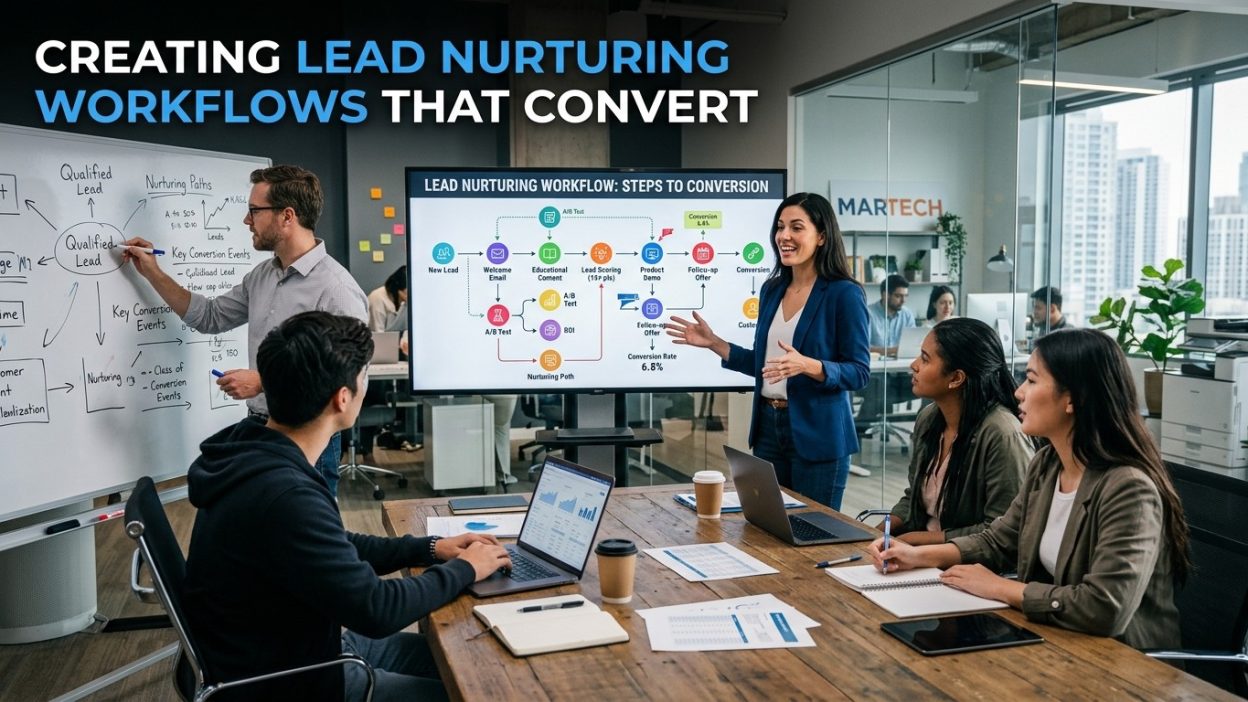
Lead Nurturing Workflows help businesses guide leads with timely, relevant messages that build trust, answer objections, and move buyers from curiosity to conversion.
Lead Nurturing Workflows are one of the most reliable ways to turn early interest into meaningful action. Most leads do not become customers the first time they see a brand, read a page, or fill out a form. They need time to evaluate the problem, compare options, and build confidence in the solution. Lead Nurturing Workflows help that process feel organized instead of random. They keep the brand present while giving the buyer space to think. That balance matters because people respond better to relevance than pressure.
A strong system is not just a sequence of emails. Lead Nurturing Workflows connect behavior, timing, segmentation, content, and follow-up logic into one clear process. That process helps the marketing team stay consistent and helps the sales team focus on warmer opportunities. Lead Nurturing Workflows also improve the experience for the lead because the communication feels more helpful and less intrusive. When the messaging aligns with what the buyer actually needs, the path to conversion becomes easier to follow.
This guide explains how to build Lead Nurturing Workflows that convert, not just communicate. It covers buyer psychology, segmentation, timing, subject lines, template design, reporting, referral lessons, and common mistakes. It also shows how to make the workflow feel human, useful, and scalable. The goal is not to send more emails. The goal is to send the right message at the right time in a way that helps the buyer move forward with confidence.
Why Nurturing Matters
Lead Nurturing Workflows work because buyers rarely move in a straight line. They get distracted, compare alternatives, ask colleagues, and revisit decisions later. Lead Nurturing Workflows help a brand stay useful during that uncertain period. They keep the conversation alive without forcing an immediate purchase. That makes the lead feel supported rather than chased.
Psychologically, people engage more when a message feels relevant to their current state. Lead Nurturing Workflows are effective because they let the business respond to what the lead is doing instead of sending one generic message to everyone. If a person downloads a resource, views a pricing page, or returns to the site, the follow-up can reflect that behavior. Lead Nurturing Workflows then feel like a conversation, not a broadcast.
There is also a trust effect. People are more willing to move forward when communication feels consistent and useful. Lead Nurturing Workflows can build that trust slowly over time through helpful content, clear next steps, and a steady rhythm. That is why nurturing often performs better than one-off campaigns. Lead Nurturing Workflows help the buyer feel informed rather than pressured, which is usually the better path to conversion.
Mapping the Buyer Journey

Lead Nurturing Workflows should always begin with a map of the buyer journey. Before writing a sequence, the team needs to know what the lead is likely trying to understand at each stage. Lead Nurturing Workflows become more effective when they match the real questions buyers ask as they move from awareness to consideration to decision.
A first-touch lead needs education. A middle-stage lead needs clarity and comparison. A late-stage lead needs proof and confidence. Lead Nurturing Workflows should reflect that progression instead of treating every contact the same. That is why segmentation is so important. The better the workflow matches the stage, the more natural the communication feels. Lead Nurturing Workflows should guide the lead forward one useful step at a time.
This journey map also helps the internal team stay aligned. Marketing knows what content is needed. Sales knows when the lead is becoming warmer. Leadership gets a clearer picture of how the pipeline moves. Lead Nurturing Workflows work best when the whole organization understands what each stage is supposed to do.
Building Trust Through Value
Lead Nurturing Workflows are strongest when they give value before asking for commitment. Too many companies open with too much selling. That usually creates resistance. Lead Nurturing Workflows avoid that problem by focusing first on education, reassurance, and relevance. The buyer should feel like the brand is helping them make a good decision.
Value can take many forms. It may be a practical article, a short checklist, a customer story, a helpful comparison, or a simple explanation that reduces confusion. Lead Nurturing Workflows should use these assets to answer questions and lower uncertainty. When the buyer feels informed, the conversation becomes easier. Lead Nurturing Workflows are more persuasive when they help the reader understand the problem and the solution more clearly.
Trust also grows through tone. A calm, respectful message is often more effective than a loud or urgent one. Lead Nurturing Workflows should sound like a knowledgeable guide rather than a hard seller. That difference is subtle, but it matters. People remember how communication made them feel, and trust grows when the feeling is helpful and low-pressure.
Segmenting for Better Response
Lead Nurturing Workflows become much more effective when segmentation is used properly. Not every lead has the same role, budget, pain point, or urgency. Some leads need educational content while others need comparison material or proof. Lead Nurturing Workflows should reflect those differences so the message feels relevant to each group.
Common segmentation methods include behavior, source, industry, company size, role, and lifecycle stage. Lead Nurturing Workflows can then use these distinctions to deliver messages that feel more personal. A person who came from a webinar may be more engaged than someone who read a blog article. Lead Nurturing Workflows should react to that difference.
Segmentation also helps optimize performance. If one segment converts faster than another, the team can learn what the message, offer, or timing did right. Lead Nurturing Workflows are not only about automation. They are about using audience differences to make better decisions. That is what makes them valuable over time.
Timing and Trigger Logic
Lead Nurturing Workflows depend heavily on timing. A strong message sent at the wrong moment can get ignored, while a simple message sent at the right moment can create movement. Lead Nurturing Workflows should be triggered by meaningful behavior such as downloads, clicks, page visits, signups, or inactivity.
Good timing also means restraint. Lead Nurturing Workflows should not overwhelm the lead with too many messages too quickly. The goal is to stay visible without becoming annoying. Some leads need a more active sequence for a short period. Others need a slower pace over a longer window. Lead Nurturing Workflows should adapt to attention patterns instead of ignoring them.
Trigger logic should be tested and refined. If a trigger fires too often, the lead may feel crowded. If it fires too late, the opportunity may cool down. Lead Nurturing Workflows become more precise when the team watches how leads respond and adjusts the sequence accordingly.
B2B Email Strategy Alignment
Lead Nurturing Workflows should always support a broader email strategy. A B2B Email Marketing Strategy defines the audience, the message, the goal, and the desired action. Lead Nurturing Workflows turn that strategy into a repeatable experience. Without strategic alignment, the emails may exist but fail to create real movement.
A good strategy usually includes awareness messages, educational messages, proof messages, and conversion prompts. Lead Nurturing Workflows then place those messages in the right order. That order matters because B2B buyers often need multiple touchpoints before they are ready to act. Lead Nurturing Workflows help the brand stay useful throughout that process.
This alignment also keeps the team focused. If the workflow is built around a clear goal, it becomes easier to judge success. Lead Nurturing Workflows should not be measured only by open rates. They should be measured by whether they help leads move forward in a meaningful way.
Subject Lines and Open Rates
Lead Nurturing Workflows often succeed or fail at the subject line level. If the subject line does not earn the open, the rest of the message never gets seen. That is why subject lines should be clear, relevant, and honest. Lead Nurturing Workflows usually perform better when the subject line matches the value in the email.
A strong subject line does not need to be clever. It needs to make sense to the person receiving it. Lead Nurturing Workflows benefit from subject lines that reflect the lead’s stage or action. If the message is about next steps, the line should indicate that. If the message is about education, the line should signal that too. Consistency builds trust and improves response.
Testing matters here. Small changes in wording, length, and tone can influence open behavior. Lead Nurturing Workflows improve when the team compares results and keeps what works. The goal is not attention for its own sake. The goal is useful attention that leads to action.
Modern Design Matters
Lead Nurturing Workflows are also shaped by how the email looks. A message can be strong in content but weak in presentation. Modern Email Template Design improves readability, scanning, and response. A clean layout helps the lead focus on the message and the next step.
Good design is especially important on mobile. Many leads read emails on phones, so Lead Nurturing Workflows should be easy to view on a small screen. That means enough spacing, a clear hierarchy, and a call to action that is easy to tap. If the email is hard to read, the message loses power even if the content is strong.
The best design is simple and intentional. Lead Nurturing Workflows should feel polished without feeling crowded. The design should support the message, not compete with it. When the structure is clear, the lead is more likely to keep reading and move forward.
Content Types That Convert

Lead Nurturing Workflows work best when the content inside them matches the lead’s stage. Early-stage leads may need educational content. Mid-stage leads may need comparisons or use cases. Late-stage leads may need case studies, pricing support, or a direct invitation to speak with sales. Lead Nurturing Workflows should place the right content in the right order.
A useful sequence might include a short explainer, a customer story, a checklist, a comparison page, and a next-step invitation. Lead Nurturing Workflows are not just about frequency. They are about message progression. The buyer should feel like each email is helping them move one step closer to a decision.
Content also shapes authority. If the messages are helpful, the brand feels knowledgeable. If they are repetitive or generic, engagement drops. Lead Nurturing Workflows convert better when the content feels practical, clear, and worth reading.
Lead Scoring and Readiness
Lead Nurturing Workflows become stronger when lead scoring is part of the system. Scoring helps the team understand which leads are engaged and which ones need more time. Lead Nurturing Workflows can then react differently based on readiness. A highly engaged lead may be ready for sales, while a lower-score lead may still need education.
A good scoring system is based on behavior and fit. Repeated visits, clicks, demo requests, and key page views are often stronger signals than a single interaction. Lead Nurturing Workflows should use those behaviors to help the team prioritize better. That makes sales outreach more relevant and prevents premature handoff.
The model should stay simple enough for the team to use. Lead Nurturing Workflows become less useful if the scoring logic is too complicated to understand. The best systems are easy to explain, easy to review, and easy to improve.
Lessons From Referral Marketing
Lead Nurturing Workflows can learn from relationship-driven growth models. Accounting Referral Marketing shows how trust, timing, and appreciation can create strong movement over time. Lead Nurturing Workflows can borrow that same principle by focusing on helpfulness before conversion.
Referral marketing works because people refer when they feel confident in the experience. Lead Nurturing Workflows should create that same confidence through consistent value and respectful communication. The lead should feel guided, not pressured. That approach improves engagement and makes conversion feel more natural.
This lesson is useful because many nurture sequences fail when they are too aggressive. Lead Nurturing Workflows should feel like a well-timed conversation, not a hard pitch. When the relationship is respected, response tends to improve.
Premium Experience Lessons
Lead Nurturing Workflows can also benefit from the idea behind Luxury Brand Referral Marketing. Premium brands often win because the experience feels intentional, polished, and consistent. Lead Nurturing Workflows can reflect that same quality by making every touchpoint feel deliberate.
The goal is not to sound fancy. The goal is to sound considered. Lead Nurturing Workflows should make the lead feel like the brand understands what matters and has taken the time to communicate well. That kind of precision can increase trust and improve response.
Luxury Brand Referral Marketing shows that small details shape perception. Lead Nurturing Workflows contain many small details: timing, formatting, subject lines, tone, and sequencing. Each one can support the overall experience or weaken it. The more carefully those details are handled, the better the workflow can convert.
Measuring What Matters
Lead Nurturing Workflows should be measured by more than opens and clicks. Those numbers matter, but they are only part of the picture. The real question is whether the workflow is helping leads move toward a meaningful outcome. Lead Nurturing Workflows should be judged by conversion rate, sales readiness, response quality, and pipeline impact.
A good report should show where people drop off and which messages create movement. Lead Nurturing Workflows improve when the team uses the data to simplify and refine the journey. The report should help the team understand what to change next.
Measurement should be regular but not frantic. Lead Nurturing Workflow need enough time to reveal real patterns. Reviewing the system consistently helps the team stay honest about what is working and what is not.
Common Mistakes to Avoid
Lead Nurturing Workflow often fail because teams make a few predictable mistakes. One is sending too many sales-heavy emails too soon. Another is failing to segment properly. A third is setting up a sequence and never reviewing it. Lead Nurturing Workflows are most effective when they are built around behavior, stage, and real buyer needs.
Another mistake is inconsistency. If the sequence feels random or repetitive, the lead may lose interest. Lead Nurturing Workflow should feel planned and useful. They should support the buyer journey without overwhelming it.
A final mistake is measuring only surface metrics. Lead Nurturing Workflow need to be judged by their effect on the pipeline and the customer journey, not just by inbox activity. The best systems stay focused on business outcomes.
Long-Term Conversion Thinking

Lead Nurturing Workflows are not just about short-term conversion. They also help keep the brand present until the lead is ready. Some buyers need more time than others, and a strong workflow respects that. Lead Nurturing Workflow create steady contact without forcing immediate action.
That long-term view matters because many conversions happen after multiple touches over an extended period. Lead Nurturing Workflow keep those touches organized and useful. They help the brand stay in the buyer’s mind until the timing is right. That is one reason nurture is so valuable in longer sales cycles.
This approach also reduces pressure on the team. Lead Nurturing Workflow do not require every lead to convert at once. They create a system that keeps moving people forward at a realistic pace.
Practical Workflow Checklist
Lead Nurturing Workflows are easier to build when the team starts with a simple checklist. The workflow should answer these questions: Who is the lead? What action did they take? What stage are they in? What message helps most right now? What next step should be offered?
When those answers are clear, the workflow becomes more effective. Lead Nurturing Workflow should not be built around guesswork or habit alone. They should reflect the actual buying process. That is what makes them useful, scalable, and worth improving over time.
Conclusion
Lead Nurturing Workflow work best when they are built around the buyer’s needs, not just the company’s goals. A strong workflow combines segmentation, timing, helpful content, clean design, and clear measurement so the lead feels guided instead of pressured. The aim is not to overwhelm the inbox. The aim is to create a path that feels ueful and easy to follow. When that path is clear, trust grows and conversion becomes more likely. The best nurture systems do not try to force a decision. They create the conditions that make the decision easier.
Frequently Asked Questions (FAQ)
1. What are Lead Nurturing Workflows?
They are structured communication sequences that guide leads from interest toward conversion with timely and relevant messages.
2. Why are they important?
They help businesses stay useful during longer buying cycles and improve the chance of conversion.
3. How does a B2B Email Marketing Strategy support them?
It gives the workflow a clear audience, message, and goal so the sequence feels purposeful.
4. Why does Modern Email Template Design matter?
It improves readability, mobile experience, and the overall professionalism of the message.
5. Can referral marketing teach nurture strategy?
Yes. Accounting Referral Marketing and Luxury Brand Referral Marketing both show the power of trust, timing, and thoughtful communication.
6. What should be measured?
Conversion rate, engagement quality, sales handoff success, and pipeline impact are the most useful measures.
7. How often should workflows be reviewed?
They should be reviewed regularly so the content, timing, and segmentation stay relevant.
8. What is a common mistake?
Sending too much too soon or using one generic sequence for every lead.
9. Do Lead Nurturing Workflows need automation?
Automation helps a lot, but the strategy and content still need to be thoughtful and human.
10. What makes a workflow convert better?
Relevance, timing, trust, and a clear next step usually produce the best results.