
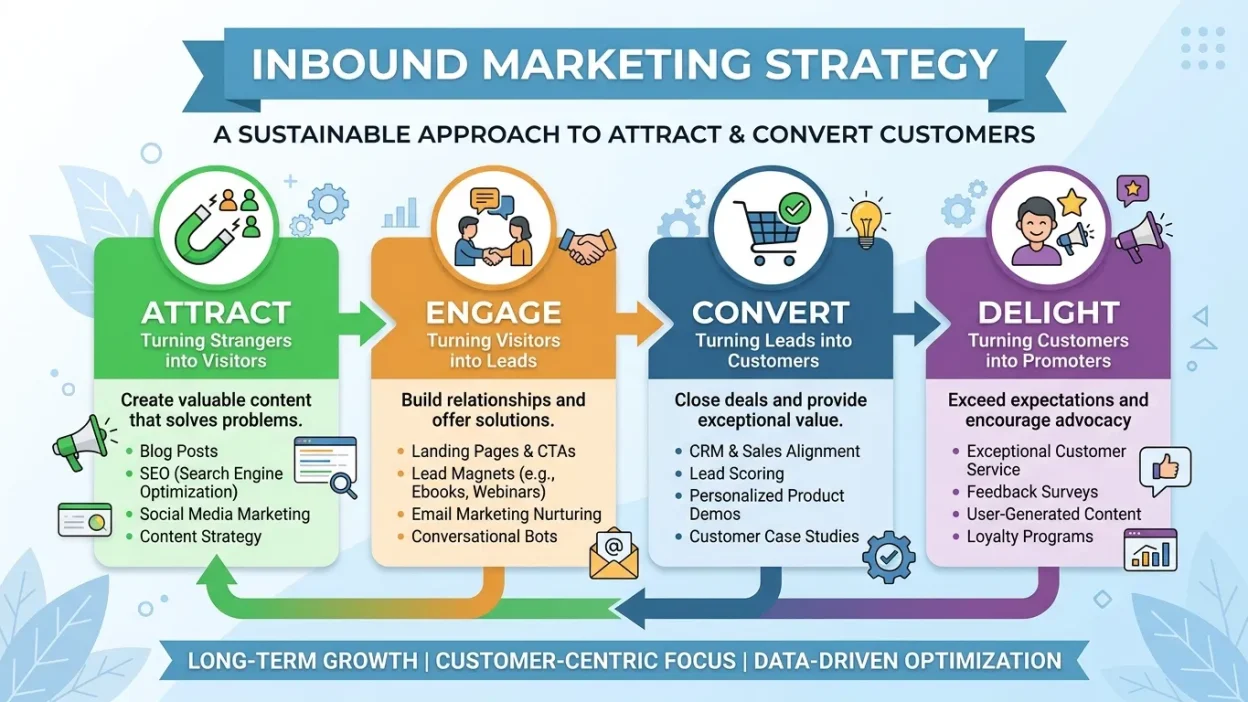
An inbound marketing strategy helps businesses attract, engage, convert, and retain customers through valuable content and relevant digital experiences. By combining an inbound marketing plan, inbound lead generation, content marketing, lead nurturing, marketing automation, sales alignment, and customer journey marketing, businesses can build trust, generate qualified opportunities, and create a sustainable foundation for long-term growth.
An inbound marketing strategy helps businesses attract potential customers by providing useful, relevant, and valuable experiences throughout the buying journey. Instead of relying entirely on interruptive advertising, inbound marketing focuses on creating content and experiences that encourage people to discover a business when they are actively looking for information, solutions, products, or services.
The modern customer journey is rarely linear. People may discover a company through search engines, social media, blogs, videos, email, reviews, podcasts, or recommendations before they ever speak with a salesperson. This creates an opportunity for businesses to build relationships long before a purchase decision is made.
A strong inbound approach connects content, search visibility, lead generation, nurturing, automation, sales, and customer experience. The objective is not simply to generate website traffic. It is to attract the right audience, build trust, encourage engagement, convert qualified prospects, and create long-term customer relationships.
Understanding Inbound Marketing Strategy
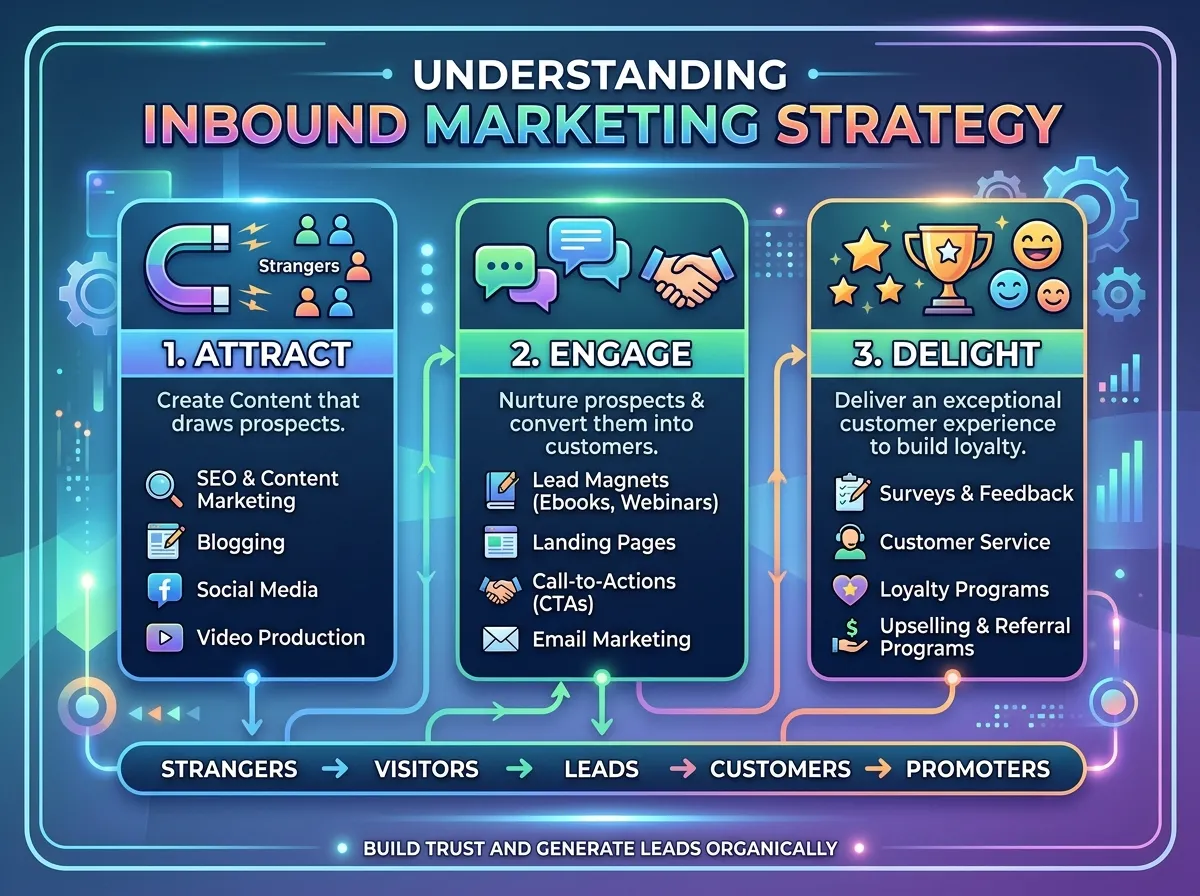
An inbound marketing strategy is a coordinated approach to attracting potential customers through relevant content, digital experiences, and helpful communication. The strategy is designed around customer needs rather than simply around what a company wants to promote.
Traditional marketing may place a message in front of an audience regardless of whether the person is currently interested. Inbound marketing takes a different approach by creating resources that people can actively find and engage with.
A business might publish educational blog content, answer common customer questions, create downloadable resources, produce videos, optimize its website for search, or share useful information through social media.
When these activities are connected strategically, they can create a continuous flow of awareness, engagement, lead generation, and customer development.
The Role of an Inbound Marketing Plan
An inbound marketing plan provides structure for implementing the overall strategy. It connects business objectives with audience needs, content opportunities, distribution channels, conversion opportunities, and performance measurement.
A strong plan begins with a clear understanding of the target audience. Businesses need to know what their potential customers are searching for, what challenges they face, what questions they ask, and what information they need before making a decision.
The plan can then determine which types of content and channels are most appropriate for reaching those people.
An inbound marketing plan should also account for the entire customer lifecycle. Content that attracts a new visitor will often be different from content designed to help an existing lead evaluate a product or service.
This connection between audience needs and business objectives makes inbound marketing more purposeful and measurable. Businesses can also use a marketing analytics maturity model to understand how effectively they are using data to measure and improve marketing performance.
Inbound Marketing Tactics and Audience Attraction
Inbound marketing tactics are the individual activities used to support an inbound strategy. These can include search engine optimization, blogging, social media marketing, email marketing, video content, webinars, downloadable resources, case studies, landing pages, and educational content.
The effectiveness of a tactic depends on how well it fits the audience and the stage of the customer journey.
For example, informative blog content can attract people researching a problem, while a detailed case study may be more useful to someone comparing potential solutions.
Successful inbound marketing does not require businesses to use every available channel. The focus should be on creating valuable experiences where the target audience is already searching for information.
Consistency is also important. An occasional blog post or social media update is unlikely to create a strong inbound ecosystem on its own. A sustained content and distribution approach can gradually build visibility and authority.
Inbound Lead Generation
Inbound lead generation focuses on turning interested website visitors and content consumers into identifiable prospects. Traffic alone does not necessarily create business value. Businesses need appropriate opportunities for visitors to take the next step.
Lead generation can occur through newsletter subscriptions, resource downloads, contact forms, consultations, webinar registrations, free trials, product demonstrations, or other relevant conversion experiences.
The conversion offer should match the visitor’s intent. Someone reading a beginner-level educational article may not be ready to request a sales consultation. A useful checklist, research report, or email subscription may provide a more natural next step.
As prospects demonstrate greater interest, the business can provide more detailed resources and eventually introduce sales-oriented conversion opportunities.
This creates a more natural transition from anonymous visitor to qualified lead.
Content-Driven Marketing Strategy
A content-driven marketing strategy places useful content at the center of customer acquisition and relationship building. Content can help businesses answer questions, demonstrate expertise, address objections, explain complex concepts, and establish credibility.
The content should be based on genuine audience needs rather than created simply to fill a publishing calendar.
Search behavior can reveal important topics. Customer service questions, sales conversations, competitor comparisons, industry discussions, and customer feedback can also provide ideas for useful content.
Different formats can serve different purposes. Blog posts can support organic discovery, videos can explain concepts visually, case studies can demonstrate results, webinars can create deeper engagement, and downloadable resources can support lead generation.
A connected content ecosystem allows one topic to support multiple stages of the customer journey. This approach also benefits from a customer-centric communications strategy that keeps messaging aligned with customer needs and expectations.
Inbound Content Marketing
Inbound content marketing is one of the central components of an inbound strategy. It focuses on producing and distributing content that attracts people who are likely to become customers.
Quality is more important than simply publishing a large volume of content. A useful article that directly answers a customer’s question can create more value than several superficial posts.
Content should also demonstrate expertise and credibility. Businesses can use original research, practical examples, expert insights, customer stories, data, and clear explanations to make their content more valuable.
Over time, a strong library of relevant content can become a long-term marketing asset. Older content can continue attracting search traffic and supporting customers, particularly when it remains accurate and useful.
Regular evaluation and updating can help maintain its value.
Lead Nurturing Strategy
A lead nurturing strategy helps businesses maintain relationships with prospects who are not yet ready to purchase. Many potential customers need time to research options, compare alternatives, secure approval, or better understand their needs.
Nurturing provides relevant information during this period rather than immediately pushing for a sale.
Email is often an important nurturing channel, but nurturing can also involve personalized website experiences, educational content, webinars, retargeting, and sales communication.
The most effective nurturing is based on relevance. A prospect interested in one service should not receive a constant stream of unrelated information.
Behavioral signals can also provide useful context. Content engagement, downloads, webinar attendance, and website interactions may indicate changes in a prospect’s interests.
This allows communication to become more timely and appropriate.
Customer Acquisition Strategy
A customer acquisition strategy determines how a business attracts and converts new customers. Inbound marketing can become an important component of this strategy because it can attract people who are already researching problems or solutions related to the company’s offering.
Inbound acquisition often starts with awareness and education. Prospects discover useful content, become familiar with the brand, engage with additional resources, and eventually consider a product or service.
The process can reduce the pressure of immediate sales communication by allowing customers to learn at their own pace.
However, inbound marketing should work alongside other acquisition channels when appropriate. Paid advertising, partnerships, referrals, events, outbound sales, and other marketing activities can complement inbound efforts.
The most effective acquisition strategy depends on the company’s audience, market, sales cycle, product, and business model.
Marketing Automation Strategy
A marketing automation strategy can make inbound marketing more efficient by automating repetitive communication and customer journeys.
Automation can support email sequences, lead segmentation, behavioral triggers, content recommendations, lead scoring, notifications, and campaign management. Platforms such as Adobe Marketo Engage can support these activities by helping marketers manage automated campaigns and customer engagement workflows.
For example, someone who downloads an educational resource may automatically receive additional relevant content. A prospect who repeatedly engages with high-intent pages may trigger a notification for the sales team.
Automation should not mean sending the same messages to everyone. Its value comes from delivering relevant communication based on customer behavior and preferences.
Data quality is therefore essential. Poor information can result in irrelevant messages, inaccurate segmentation, and a frustrating customer experience.
Human involvement remains important, especially when prospects reach complex or high-value purchasing decisions.
Businesses should also consider how automation and artificial intelligence may change customer communication over time. A future-proof communications strategy can help organizations prepare their messaging, data, and technology for evolving customer expectations.
Inbound Sales Strategy
An inbound sales strategy connects marketing-generated interest with the sales process. Instead of approaching every prospect in exactly the same way, sales teams can use information about a prospect’s interests and behavior to make conversations more relevant.
Marketing and sales alignment is important because both teams influence the customer journey. Marketing may generate and nurture leads, while sales can provide deeper consultation when prospects are ready.
Shared definitions of qualified leads can help prevent misunderstandings. Sales teams can also provide feedback about lead quality, common objections, customer questions, and content gaps.
This feedback can then improve future inbound content and campaigns.
The result is a continuous relationship between marketing and sales rather than two disconnected processes.
Customer Journey Marketing
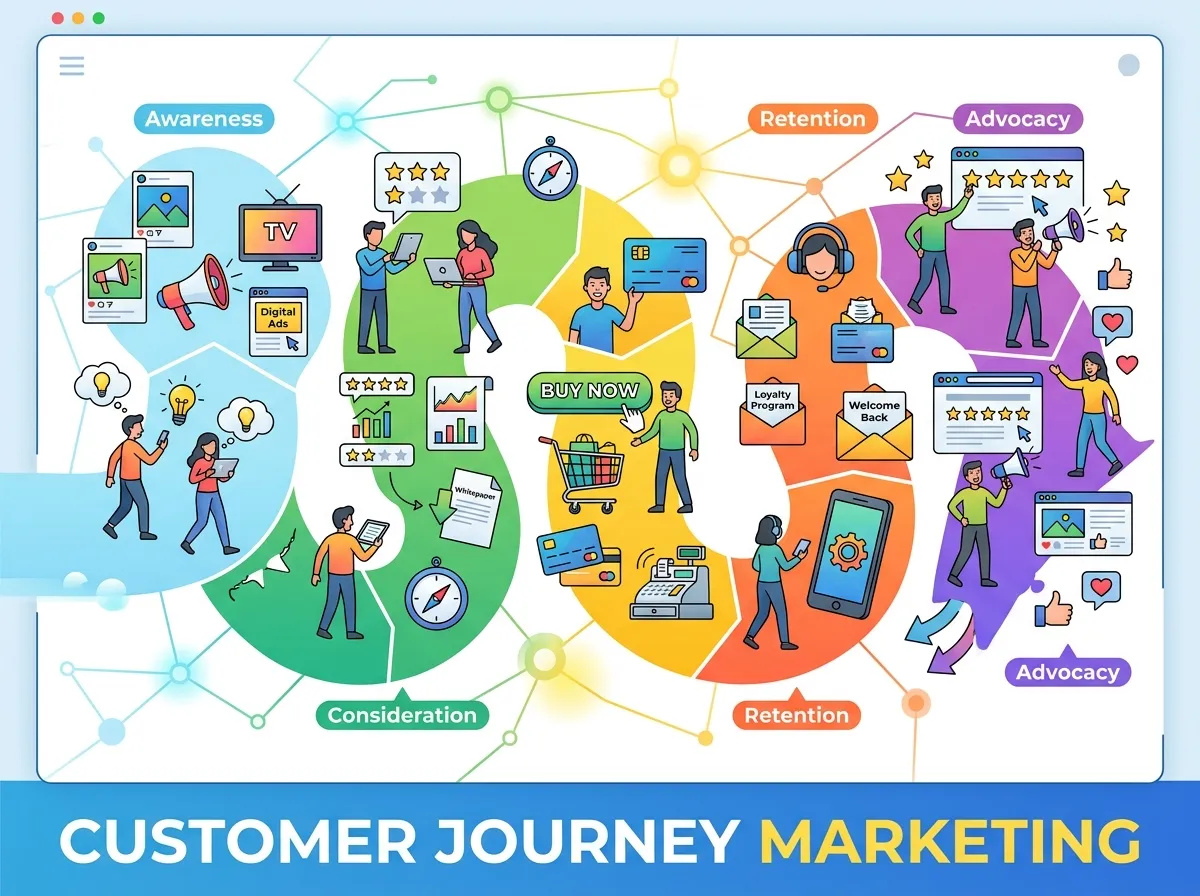
Customer journey marketing focuses on delivering relevant experiences as customers move through different stages of their relationship with a brand.
Early-stage prospects may need educational content that helps them understand a problem. Prospects evaluating solutions may need comparisons, case studies, demonstrations, or detailed product information.
Customers may need onboarding resources, support content, product education, or recommendations for additional services.
Understanding these different needs prevents businesses from treating every audience member as though they have the same level of awareness and intent.
Customer journey marketing also helps businesses identify gaps. If many prospects engage with educational content but rarely move toward conversion, there may be a need for stronger middle- or bottom-of-funnel content.
Personalization in Inbound Marketing
Personalization can make an inbound marketing strategy more relevant by adapting content and communication to different audience groups.
Personalization does not always require highly complex technology. Simple segmentation based on industry, customer type, interests, previous interactions, or lifecycle stage can improve relevance.
For example, a business serving both small companies and large enterprises may create different content experiences for each audience.
Personalization can also extend to recommendations, email communication, landing pages, and lead nurturing.
However, businesses should use customer data responsibly and transparently. Personalization should improve the experience rather than make customers feel that their behavior is being monitored unnecessarily.
Measuring Inbound Marketing Performance
Measurement is essential for understanding whether an inbound strategy is contributing to business growth.
Website traffic, organic search visibility, engagement, conversion rates, lead volume, qualified leads, email engagement, customer acquisition costs, sales pipeline, and revenue can all provide useful information.
The most valuable metrics depend on business objectives. A company focused on awareness may prioritize organic visibility and audience growth, while a B2B company with a long sales cycle may focus more heavily on qualified leads and pipeline contribution.
Businesses should also evaluate content performance. Some content may attract large amounts of traffic but produce few qualified leads, while a smaller article may generate significant commercial interest.
This distinction helps businesses allocate resources more effectively.
Building Trust Through Inbound Marketing
Trust is a major advantage of inbound marketing. When businesses consistently provide useful information without immediately demanding a purchase, potential customers can develop familiarity and confidence.
Expert content can demonstrate knowledge, while case studies and customer experiences can provide evidence. Transparent communication can further strengthen credibility.
Trust is especially important when products are expensive, technically complex, or associated with long decision-making processes.
A customer who has already consumed useful content from a company may enter a sales conversation with greater awareness of the brand and its expertise.
The Long-Term Value of Inbound Marketing
An inbound marketing strategy can create long-term value because content and digital assets may continue working after their initial publication.
A well-optimized article can attract organic visitors for an extended period. A useful video can continue answering customer questions. A detailed case study can support sales conversations months after publication.
This creates a compounding effect when businesses consistently build and improve their content library.
Inbound marketing also creates valuable first-party relationships. Subscribers, leads, customers, and community members can become part of an ongoing communication ecosystem.
Over time, these relationships can reduce dependence on short-term campaigns and create a more sustainable approach to customer acquisition.
The Future of Inbound Marketing Strategy
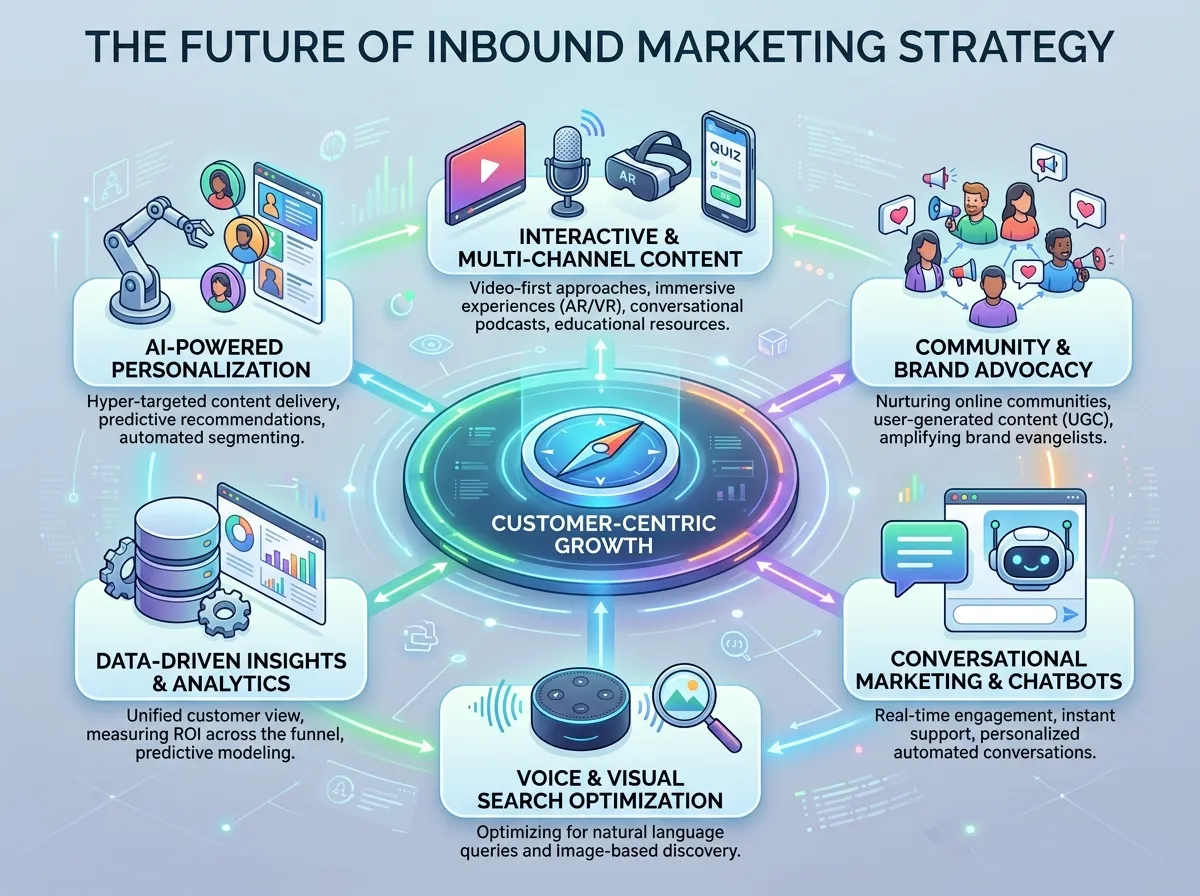
The future of inbound marketing will increasingly involve artificial intelligence, personalization, automation, conversational search, multimedia content, and changing customer expectations.
As search and discovery experiences become more conversational, businesses will need to create content that answers real questions clearly and comprehensively.
AI can assist with research, content analysis, personalization, segmentation, and automation, but human expertise remains important. Businesses still need accurate information, original perspectives, strong customer understanding, and authentic communication.
The central principle of inbound marketing is unlikely to change: businesses that consistently provide useful value can create stronger relationships with the people they want to serve.
Conclusion
An effective inbound marketing strategy brings together content, search visibility, lead generation, nurturing, automation, sales, and customer experience. Rather than treating marketing as a collection of disconnected campaigns, inbound marketing creates a connected system that supports customers throughout their journey.
An effective inbound marketing plan can establish direction, while inbound marketing tactics bring the strategy to life through content, search, email, social media, and other channels. Inbound lead generation converts audience interest into relationships, while a lead nurturing strategy keeps those relationships moving forward.
When combined with a strong customer acquisition strategy, marketing automation strategy, inbound sales strategy, and customer journey marketing, inbound marketing can support sustainable growth.
The greatest strength of inbound marketing is its focus on value. By understanding what customers need and consistently helping them, businesses can attract more relevant audiences, build trust, generate qualified opportunities, and develop stronger long-term customer relationships.
Frequently Asked Questions
1. What is an inbound marketing strategy?
An inbound marketing strategy is an approach that attracts potential customers through useful content, digital experiences, search visibility, and relevant communication rather than relying primarily on interruptive advertising.
2. Why is an inbound marketing plan important?
An inbound marketing plan provides structure for connecting business goals with audience needs, content creation, lead generation, distribution channels, nurturing, sales, and performance measurement.
3. What are common inbound marketing tactics?
Common inbound marketing tactics include SEO, blogging, email marketing, social media, video content, webinars, case studies, downloadable resources, landing pages, and educational content.
4. How does inbound lead generation work?
Inbound lead generation attracts potential customers through useful content and experiences and provides relevant opportunities for them to become identifiable prospects through forms, subscriptions, registrations, consultations, trials, or other conversions.
5. What is a content-driven marketing strategy?
A content-driven marketing strategy uses valuable and relevant content as a central part of attracting audiences, building trust, generating leads, supporting sales, and maintaining customer relationships.
6. What is a lead nurturing strategy?
A lead nurturing strategy maintains communication with prospects who are not yet ready to buy by providing relevant information, educational resources, and experiences that support their decision-making process.
7. How does marketing automation support inbound marketing?
Marketing automation can streamline repetitive activities such as email communication, segmentation, lead scoring, behavioral triggers, content distribution, and notifications while allowing businesses to provide more timely experiences.
8. What is an inbound sales strategy?
An inbound sales strategy connects sales activities with the interest generated through inbound marketing. Sales teams can use prospect information and engagement signals to make conversations more relevant.
9. How does customer journey marketing improve inbound marketing?
Customer journey marketing recognizes that customers have different needs at different stages. It allows businesses to provide educational, evaluative, purchasing, onboarding, and retention content that matches customer intent.
10. How can inbound marketing contribute to long-term growth?
Inbound marketing can create long-term growth by building organic visibility, valuable content assets, qualified leads, customer relationships, brand trust, and reusable marketing resources that continue generating value over time.