
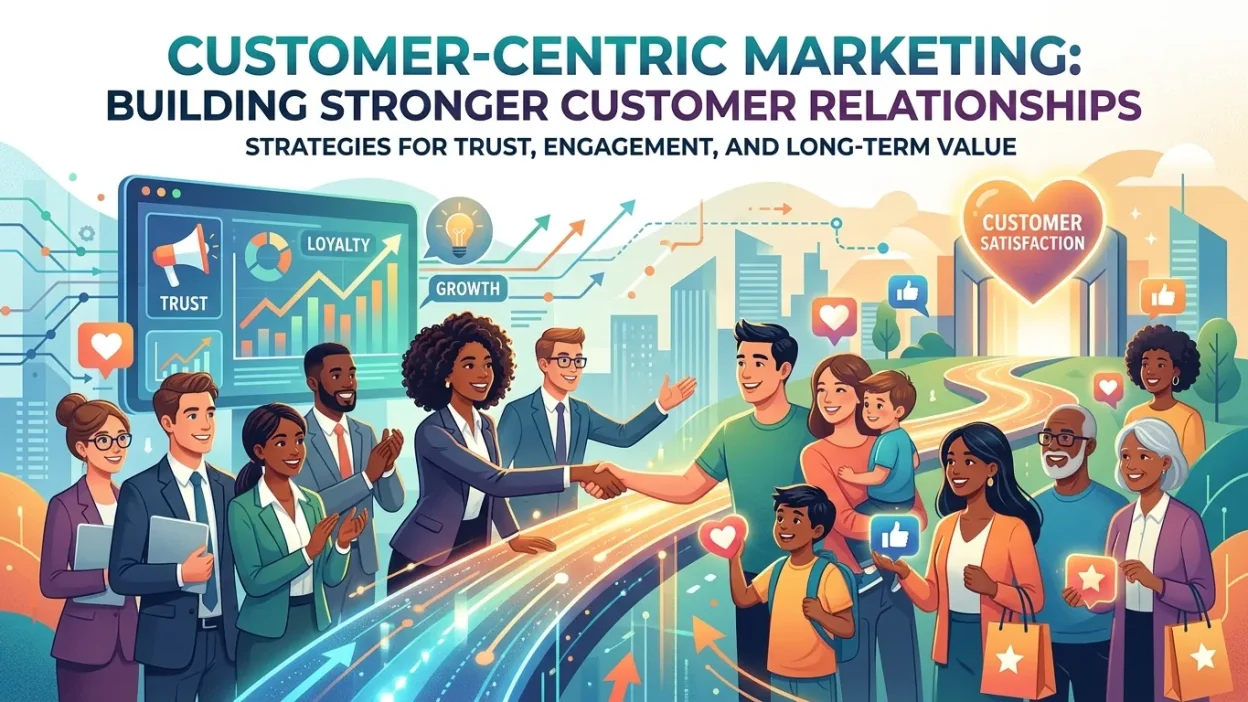
Customer-centric marketing puts customer needs, preferences, experiences, and relationships at the center of marketing decisions. By using personalization, customer insights, relevant communication, engagement strategies, and consistent experiences, businesses can build stronger relationships, improve loyalty, and support long-term growth.
Customer expectations are changing quickly, and businesses can no longer rely only on product features, discounts, or traditional advertising to attract and retain customers. People want brands to understand their needs, preferences, challenges, and experiences. This shift has made customer-centric marketing an important approach for businesses that want to build meaningful relationships and achieve sustainable growth.
What Is Customer-Centric Marketing?
Customer-centric marketing is a marketing approach that puts the customer at the center of business decisions, communication, content, and experiences. Instead of focusing mainly on what a company wants to sell, this approach considers what customers actually need and how a brand can provide useful value throughout the customer journey.
A customer-centric business tries to understand its audience before creating campaigns. It considers customer behavior, preferences, feedback, expectations, and purchasing decisions. This information can then shape messaging, content, offers, products, and customer experiences.
The goal is not simply to generate a sale. It is to create an experience that makes customers feel understood and valued. When businesses consistently deliver relevant experiences, they have a stronger opportunity to earn trust, increase engagement, and encourage repeat purchases.
Why Customer-Centric Marketing Matters
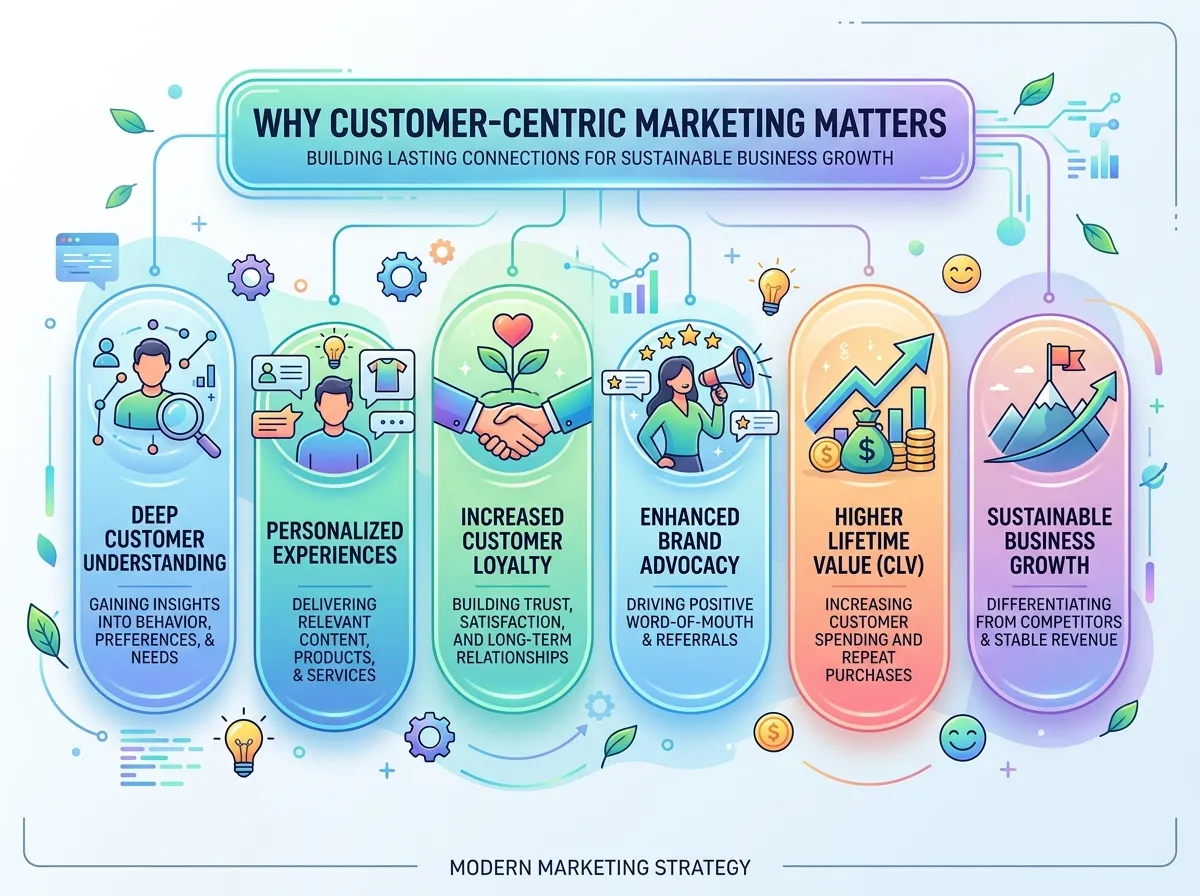
Modern customers have access to more choices than ever. They can compare products, read reviews, research competitors, and switch brands with relatively little effort. Because of this, businesses need to provide more than a good product. They need to create experiences that customers remember for the right reasons.
A strong customer-centric marketing strategy helps businesses understand what matters most to their target audience. Instead of sending the same message to everyone, companies can create communication that feels more relevant to different customer groups.
This approach can also improve marketing efficiency. When businesses understand their customers better, they can spend more time creating content and campaigns that address real needs. This can reduce irrelevant communication while increasing the likelihood of meaningful engagement.
Customer-centric marketing can also strengthen long-term relationships. Customers who consistently receive useful information, personalized experiences, and responsive support are more likely to develop confidence in a brand.
Understanding Customer Needs
A successful customer-focused approach begins with understanding the people a business wants to serve. Customer needs can include practical requirements, emotional expectations, convenience, price sensitivity, product quality, service reliability, and personalized communication.
Customer needs analysis helps businesses identify these expectations. Companies can use customer feedback, website behavior, purchase history, surveys, reviews, conversations, and other forms of audience research to understand what customers are looking for.
The value of this information goes beyond marketing campaigns. It can influence product development, customer service, website design, sales processes, and brand communication.
For example, if customers repeatedly ask for simpler purchasing options, a company may improve its checkout experience. If customers struggle to understand a product, the business may create clearer educational content. If customers prefer personalized recommendations, the company can adjust its communication accordingly.
This is where customer-centric marketing becomes more powerful than simply promoting products. Customer information becomes the foundation for better business decisions.
Customer-Focused Marketing and Relevant Communication
Customer-focused marketing puts greater emphasis on relevance. Instead of asking, “What do we want to tell our audience?” marketers can ask, “What does our audience need to know?”
This small change in thinking can significantly influence content and communication.
A customer-focused campaign might address a common problem, explain how to make a better purchasing decision, answer frequently asked questions, or demonstrate how a product can solve a specific challenge. The message becomes more useful because it is connected to the customer’s situation.
Email marketing is one area where this approach can be particularly effective. Businesses can create more relevant messages based on customer interests, previous interactions, or different stages of the buying journey. A strong B2B email marketing strategy can help businesses communicate with professional audiences in a more targeted and meaningful way.
When customers receive information that matches their interests, marketing feels less like an interruption and more like a useful interaction.
Customer Experience Marketing
Customer experience marketing focuses on the complete experience a person has with a brand. This includes the first interaction with an advertisement, the website experience, communication with sales teams, purchasing, delivery, customer support, and interactions after the sale.
Every touchpoint can influence how customers perceive a business.
A company may have excellent advertising, but if its website is difficult to use, customers may leave. A business may have a great product, but slow customer service can damage trust. Similarly, a brand may attract customers through competitive pricing but lose them if the overall experience feels confusing or impersonal.
Customer experience marketing encourages businesses to look at these interactions as connected parts of one customer journey. Consistency across those interactions can make the brand easier to understand and more trustworthy.
The Role of Personalization
Personalization has become an important part of modern customer-centric marketing. Customers often expect businesses to provide information and recommendations that are relevant to their interests instead of sending identical messages to everyone.
A personalized marketing strategy can use customer information to create more relevant experiences. This might include personalized email content, product recommendations, website experiences, offers, or follow-up messages.
However, effective personalization is not simply about inserting someone’s name into an email. Meaningful personalization requires understanding context.
For example, a customer who has already purchased a product may need different communication from someone who is still researching it. A returning customer may benefit from recommendations based on previous interests, while a new visitor may need introductory information.
The better a business understands customer behavior, the more useful its personalization can become.
Building a Strong Customer Engagement Strategy

Customer relationships grow through interaction. A customer engagement strategy helps businesses create meaningful opportunities for customers to communicate, respond, participate, and interact with the brand.
Engagement can happen through social media, email, websites, communities, events, customer support, reviews, and other channels. The most effective channel depends on where customers naturally spend time and how they prefer to communicate.
Businesses should also remember that engagement is not only about getting customers to click or comment. Listening is equally important.
Customer questions and feedback can reveal what people value, what frustrates them, and where a business can improve. Responding thoughtfully can make customers feel heard and strengthen their connection with the brand.
Over time, these interactions can transform one-time buyers into active customers who continue to engage with the company.
Customer-Driven Marketing Decisions
Customer-driven marketing means allowing customer insights to influence important marketing decisions. Instead of developing campaigns based entirely on internal assumptions, businesses can use real customer information to guide their choices.
This can affect everything from campaign messaging to content topics and promotional offers. Customer reviews may reveal common concerns. Sales conversations may highlight objections. Website analytics may show where visitors struggle. Support requests may identify recurring problems.
When these insights are connected, businesses can develop a clearer picture of their audience.
This also creates an opportunity for marketing and other departments to work together. Sales teams understand customer objections, support teams understand customer problems, and marketing teams understand audience communication. Sharing these insights can create a more consistent customer experience.
Creating a Personalized Customer Experience
A personalized customer experience should feel helpful rather than intrusive. Customers appreciate relevance, but they also expect businesses to respect privacy and use their information responsibly.
Businesses should focus on collecting information that genuinely improves the customer experience. They can then use that information to make communication more useful.
For example, customers might receive recommendations based on products they previously explored or information related to their interests. A company could also tailor educational content according to different customer needs.
Personalization should always support the customer rather than simply increase the number of promotional messages. When personalization provides real value, customers are more likely to see it as helpful.
Customer Relationship Marketing
Customer relationship marketing focuses on developing lasting connections rather than treating every interaction as an opportunity for an immediate sale.
This means businesses need to think beyond acquisition. After a customer makes a purchase, communication can continue through useful information, support, product education, feedback requests, loyalty programs, and relevant updates.
Strong relationships are built through consistency. A brand that provides excellent experiences only during the sales process may struggle to maintain customer trust. A customer-centric business continues to provide value after conversion.
Relationship-focused marketing can also create opportunities for customers to become advocates. When people have positive experiences with a brand, they may recommend it to colleagues, friends, or other potential customers.
Using Data to Improve Customer-Centric Marketing
Data plays an important role in understanding customers, but the goal should not be to collect information simply because it is available. The purpose of data is to produce useful insights.
Marketing teams can examine customer behavior, campaign performance, conversion patterns, engagement, purchase history, and feedback to understand what is working.
Marketing analytics can also help organizations become more mature in how they use information. A structured marketing analytics maturity model can help businesses think about how effectively they collect, analyze, and apply marketing data to improve decision-making and return on investment.
When data and customer feedback are considered together, marketers can make more informed decisions while avoiding assumptions about what customers want.
Consistency Across the Customer Journey
Customer-centric marketing works best when the customer experience remains consistent across different channels.
A customer might discover a company through social media, visit its website, receive an email, speak with a salesperson, and later contact customer support. If every interaction feels completely different, the customer may become confused.
Consistent messaging, tone, offers, and service expectations can create a smoother experience. This does not mean every channel needs identical content. Instead, each channel should support the same overall customer relationship.
Businesses can also use segmentation to make communication more relevant without creating disconnected experiences.
The Connection Between Marketing and Business Growth
Customer-centric marketing can contribute to growth in several ways. Better understanding of customers can improve acquisition, while stronger experiences can support retention. Personalized communication can improve engagement, and positive customer relationships can encourage recommendations.
The approach can also help businesses identify opportunities for improvement.
For example, customer feedback may reveal a new market need. Purchase data may show growing interest in a particular service. Support conversations may reveal a product feature that customers find confusing. These insights can influence future marketing and business decisions.
This creates a continuous relationship between customer understanding and business growth.
Measuring Customer-Centric Marketing
Businesses need meaningful measurements to understand whether their customer-centric approach is working. Traditional metrics such as traffic, clicks, and conversions remain useful, but they do not tell the complete story.
Customer retention, repeat purchases, customer lifetime value, engagement, satisfaction, reviews, referrals, and churn can provide additional insight into the strength of customer relationships.
The right metrics depend on the business model and customer journey. A subscription company may focus heavily on retention and churn, while an ecommerce business may pay more attention to repeat purchases and customer lifetime value.
The important point is to measure outcomes that reflect both business performance and customer relationships.
Creating Long-Term Customer Loyalty
Customer loyalty marketing is closely connected to customer-centric thinking. Loyalty does not come only from rewards or discounts. It often develops when customers repeatedly experience reliability, relevance, convenience, and value.
A loyalty program can support retention, but it should be part of a broader relationship. Customers are more likely to remain loyal when they believe a brand understands their needs and consistently delivers on its promises.
Businesses can strengthen loyalty by recognizing returning customers, providing helpful communication, solving problems quickly, and continuing to improve their products and services.
When customers feel valued, the relationship becomes less dependent on short-term promotions.
The Importance of Continuous Improvement
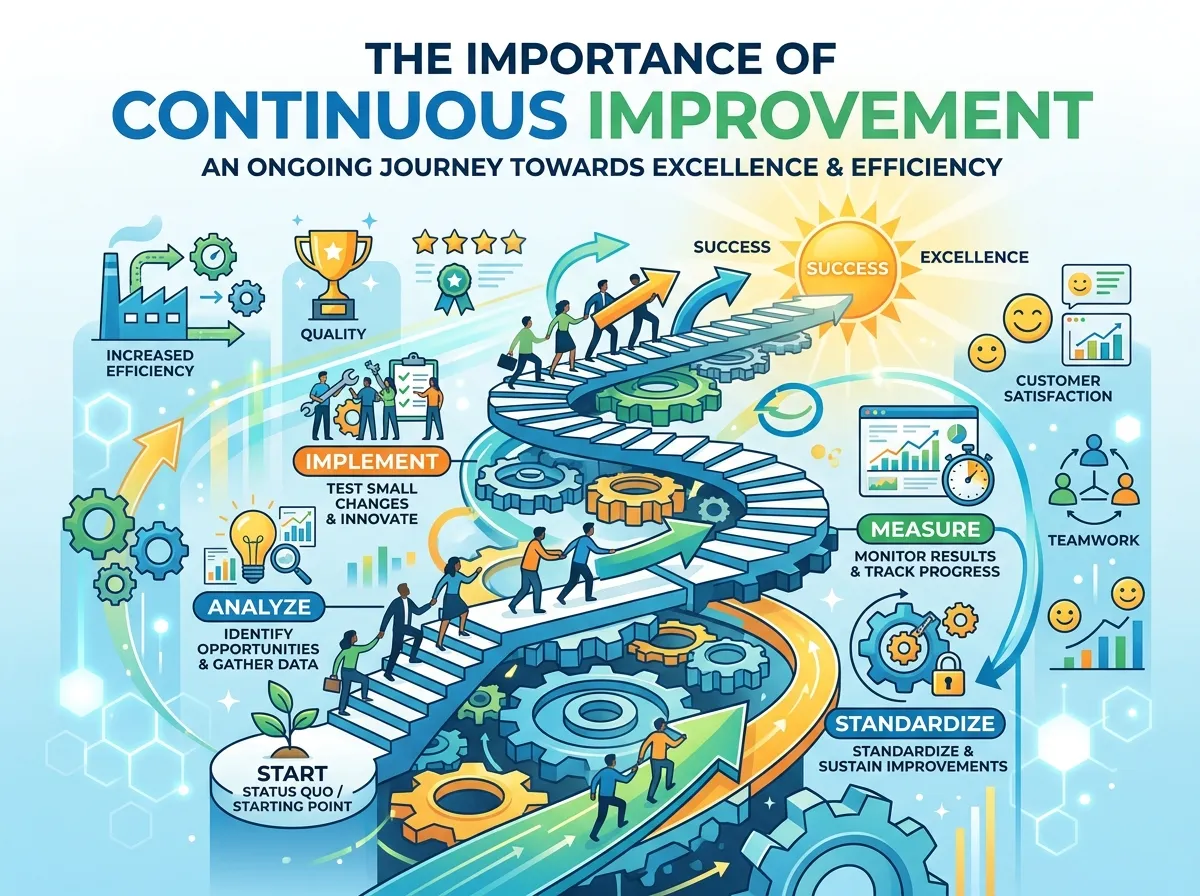
Customer-centric marketing is not a one-time campaign. Customer expectations change, competitors evolve, and new communication channels appear. Businesses therefore need to keep listening and adapting.
Regular customer feedback can help identify changing expectations. Marketing performance can reveal which messages are producing meaningful results. Sales and support teams can provide additional insight into customer concerns.
Businesses can also compare their positioning with competitors. Resources such as understanding the key differences between ABM and demand generation can help marketers think more carefully about different approaches to reaching and engaging business audiences.
Continuous improvement ensures that customer-centric marketing remains connected to real customer behavior instead of becoming a fixed strategy that stops evolving.
Conclusion
Customer-centric marketing is ultimately about changing the way businesses think about their audiences. Instead of viewing customers only as buyers, companies can build strategies around their needs, expectations, experiences, and long-term relationships.
A strong customer-centric marketing strategy combines customer-focused communication, personalization, customer experience marketing, engagement, data, and relationship building. When these elements work together, businesses can create experiences that feel more relevant and valuable.
The result can be stronger customer relationships, greater loyalty, better engagement, and more sustainable growth. In a competitive market, understanding customers and consistently delivering value can become one of the strongest advantages a brand has.
FAQs About Customer-Centric Marketing
1. What is customer-centric marketing?
Customer-centric marketing is an approach that places customer needs, preferences, experiences, and expectations at the center of marketing decisions. It focuses on creating relevant value and building long-term relationships rather than concentrating only on immediate sales.
2. Why is customer-centric marketing important?
Customer-centric marketing is important because customers have many choices and expect brands to understand their needs. A customer-focused approach can improve engagement, trust, satisfaction, retention, and loyalty while helping businesses create more relevant marketing campaigns.
3. What is a customer-centric marketing strategy?
A customer-centric marketing strategy uses customer insights to influence communication, content, personalization, campaigns, and experiences. It considers the complete customer journey and aims to provide useful value at different stages of the relationship.
4. How does personalization support customer-centric marketing?
Personalization makes marketing more relevant by adapting communication, recommendations, offers, or experiences to individual customer interests and behavior. Effective personalization should provide useful value while respecting customer privacy.
5. What is customer experience marketing?
Customer experience marketing focuses on the complete experience customers have with a brand across different touchpoints. It includes marketing, websites, sales interactions, purchasing, delivery, customer support, and post-purchase communication.
6. How does customer-centric marketing improve customer loyalty?
Customer-centric marketing can improve loyalty by consistently delivering relevant communication, convenient experiences, helpful support, and meaningful value. When customers feel understood and valued, they may be more likely to continue doing business with a brand.
7. What role does data play in customer-centric marketing?
Data helps businesses understand customer behavior, preferences, engagement, purchases, and interactions. When used responsibly, these insights can help marketers create more relevant campaigns and improve the overall customer experience.
8. What is customer-driven marketing?
Customer-driven marketing uses customer feedback, behavior, research, and needs to influence marketing decisions. Instead of relying entirely on assumptions, businesses use real customer insights to develop more relevant messages and experiences.
9. How can businesses measure customer-centric marketing?
Businesses can measure customer-centric marketing through metrics such as customer retention, repeat purchases, engagement, customer lifetime value, satisfaction, referrals, reviews, and churn. The most useful metrics depend on the company’s goals and business model.
10. Is customer-centric marketing useful for small businesses?
Yes. Small businesses can benefit significantly from customer-centric marketing because they can often develop close relationships with their customers. Listening to feedback, providing personalized service, responding quickly, and creating relevant communication can help smaller brands compete through stronger customer relationships.