

A strong brand marketing strategy helps businesses create a recognizable identity, connect with their target audience, increase brand awareness, and support long-term growth. From developing a clear brand marketing plan and positioning strategy to using digital channels and consistent communication, effective brand marketing creates meaningful relationships with customers and strengthens overall business performance.
A brand is more than a logo, color palette, or memorable slogan. It represents how customers recognize, understand, and feel about a business. Companies that invest in a clear and consistent brand marketing strategy can create stronger connections with their audiences while building a reputation that supports long-term growth.
Brand marketing focuses on communicating what a business stands for and why customers should choose it. It brings together messaging, positioning, content, promotion, customer experiences, and communication across different channels. When these elements work together, a business becomes easier to recognize and more memorable.
A successful strategy also helps businesses remain consistent while adapting to changing customer expectations. Whether a company is launching a new product, entering a new market, or trying to strengthen its existing reputation, a well-planned approach can provide direction for marketing activities and help turn awareness into customer loyalty.
What Is a Brand Marketing Strategy?

A brand marketing strategy is a structured approach that businesses use to promote their identity, values, products, and services while building a strong relationship with their target audience. It defines how a brand should be presented, communicated, and positioned in the market.
Unlike short-term promotional campaigns that primarily focus on immediate sales, brand marketing takes a broader view. It aims to build recognition, trust, credibility, and emotional connections over time. A strong strategy considers the audience, competitive environment, brand personality, messaging, visual identity, marketing channels, and customer experience.
The process begins with understanding what makes a business different. A company needs to know its audience, competitors, strengths, values, and market position before creating marketing messages. This foundation makes it easier to develop campaigns that feel relevant rather than generic.
A well-designed strategy also creates consistency. When customers see similar values, messaging, visuals, and experiences across a website, social media, email, advertising, and other channels, they are more likely to develop a clear understanding of the brand.
Creating an Effective Brand Marketing Plan
A strong brand marketing plan provides a practical structure for turning a brand’s goals into marketing activities. It should begin with clearly defined objectives. These objectives might include increasing awareness, improving customer trust, entering a new market, strengthening customer loyalty, or supporting business growth.
Understanding the target audience is another important part of planning. Businesses should identify who they want to reach and understand their needs, preferences, challenges, motivations, and purchasing behavior. Audience research helps marketers create messages that address real customer interests instead of relying on assumptions.
The plan should also establish a clear brand identity. This includes the brand’s personality, voice, values, visual presentation, and positioning. Every marketing channel should reflect these elements consistently.
Content and promotion should then be connected to specific objectives. For example, a business trying to increase awareness may focus on educational content, social media visibility, partnerships, and public relations. A company focused on customer retention may emphasize community engagement, email communication, loyalty initiatives, and personalized experiences.
Businesses can also use performance data to evaluate their efforts. Tracking awareness, engagement, website activity, conversions, customer feedback, and other relevant metrics helps marketers understand what is working and where adjustments are needed.
Building a Strong Brand Promotion Strategy
A brand promotion strategy determines how a business will communicate its value and increase visibility among its target customers. Promotion should not simply tell people that a product exists. It should explain why the brand matters and what makes it different.
Effective promotion often combines multiple channels. Social media can help brands interact directly with audiences, while content marketing can demonstrate expertise and provide useful information. Email marketing can maintain relationships with existing prospects and customers, while paid advertising can increase visibility among carefully selected audiences.
Businesses should also consider partnerships and collaborations when they fit the brand. Working with relevant creators, industry professionals, complementary businesses, or communities can introduce a brand to new audiences while adding credibility.
Promotional consistency is important as well. If a business uses completely different messages and personalities across its channels, customers may struggle to understand what the brand represents. A consistent promotional approach makes communication clearer and strengthens recognition.
The Importance of Strategic Brand Marketing
Strategic brand marketing connects everyday marketing activities with broader business objectives. Instead of creating disconnected campaigns, businesses can develop a unified direction that supports their desired market position.
This approach requires marketers to think beyond individual advertisements or social media posts. Every interaction with a customer can influence brand perception. Website design, customer service, content, packaging, advertising, social media conversations, and email communication can all contribute to the overall experience.
Strategic marketing also helps businesses prioritize their resources. Not every platform or marketing technique will be equally effective for every audience. By understanding customer behavior and business goals, marketers can focus their time and budget on activities that have the strongest potential.
A strategic approach also makes it easier to measure progress. When campaigns are connected to specific brand objectives, businesses can determine whether their marketing is improving awareness, engagement, trust, customer relationships, or revenue.
Developing a Brand Growth Strategy

A brand growth strategy focuses on increasing the reach, relevance, and value of a brand over time. Growth can come from reaching new customers, entering new markets, introducing new products, strengthening loyalty, or increasing the value of existing customer relationships.
Successful growth starts with a strong foundation. If customers do not clearly understand what a brand represents, expanding its reach may not produce sustainable results. Businesses should first establish a clear identity and a compelling reason for customers to pay attention.
Content can play an important role in growth. Educational articles, videos, social media content, case studies, newsletters, and other resources can help brands demonstrate expertise while attracting people who are interested in their solutions.
Businesses should also pay attention to customer feedback. Reviews, surveys, social conversations, and direct interactions can reveal how customers perceive the brand. These insights can help companies identify opportunities for improvement and discover new ways to create value.
For businesses focused on measurable performance, understanding marketing metrics is equally important. Resources such as Daily KPIs to Boost ROI can help marketers think more carefully about the performance indicators connected to their broader marketing objectives.
Creating a Clear Brand Positioning Strategy
A brand positioning strategy defines how a business wants to be perceived compared with its competitors. Strong positioning answers an important question: why should customers choose this brand instead of another option?
Effective positioning requires a clear understanding of the market. Businesses need to identify competitors, customer expectations, market gaps, and their own strengths. This information can help them identify a distinctive position.
Positioning should be specific enough to create differentiation but flexible enough to support business development. A company may position itself around quality, affordability, innovation, expertise, convenience, customer service, sustainability, or another meaningful characteristic.
The positioning should then appear consistently throughout the brand’s communication. Website copy, advertising, social media content, sales messaging, and customer experiences should reinforce the same central idea.
When positioning is clear, customers can understand the brand more easily. This improves recognition and can make marketing messages more memorable.
Using Brand Awareness Marketing to Increase Visibility
Brand awareness marketing focuses on making more people familiar with a business and helping them remember it when they need a relevant product or service. Awareness is often the first stage of a longer customer journey.
Businesses can build awareness through content marketing, social media, search engine optimization, video, advertising, partnerships, events, public relations, and other channels. The best combination depends on the target audience and the nature of the business.
Consistency plays an important role in awareness. Repeated exposure to recognizable visual elements, messaging, values, and content themes helps audiences form stronger associations with a brand.
However, awareness should not be measured only by impressions. Businesses should also consider branded search activity, direct website visits, engagement, mentions, audience growth, customer surveys, and other indicators that show whether people are becoming familiar with the brand.
A useful brand awareness campaign should therefore combine visibility with meaningful communication. Getting attention is valuable, but giving audiences a reason to remember the brand is even more important.
Building a Brand Development Strategy
A brand development strategy helps businesses strengthen their identity and adapt as they grow. A brand may need development when it enters a new market, targets a different audience, launches new services, or discovers that its existing identity no longer reflects its direction.
Brand development does not always require a complete rebrand. Sometimes small improvements to messaging, positioning, visual presentation, or customer experience can make a significant difference.
Understanding brand personality can also support this process. A business can use resources such as Brand Personality Assessment to explore how its personality influences customer perception and communication.
Strong development should preserve the elements that customers already recognize while improving areas that no longer work effectively. This balance can help businesses evolve without losing the familiarity they have built.
Using a Digital Brand Marketing Strategy
A digital brand marketing strategy uses online channels to increase visibility, engagement, and customer relationships. Digital platforms give brands opportunities to communicate with audiences quickly and consistently.
A business website often serves as the central digital brand destination. It should communicate the company’s value, personality, positioning, and offerings clearly. Search optimization can then help relevant audiences discover the website through organic search.
Social media provides another important opportunity. Rather than simply publishing promotional messages, businesses can use social platforms to educate, entertain, answer questions, share customer stories, and participate in conversations.
Email is also valuable because it allows businesses to maintain direct communication with interested audiences. A strong B2B Email Marketing Strategy can complement broader brand marketing by keeping prospects and customers connected with the business.
Digital marketing also makes measurement easier. Businesses can monitor traffic, engagement, conversions, audience behavior, and campaign performance to understand how their brand activities are performing.
Developing a Strong Brand Communication Strategy
A brand communication strategy determines what a business says, how it says it, and where those messages appear. Consistent communication helps customers develop a clear understanding of the brand.
The first step is establishing key messages. These messages should communicate the brand’s value, personality, differentiators, and customer benefits. They should be easy to understand and flexible enough to work across different marketing channels.
Brand voice is equally important. A company may choose to communicate in a professional, friendly, conversational, confident, educational, or inspirational style. The chosen voice should reflect the brand’s personality and audience expectations.
Communication should also focus on customer needs rather than constantly talking about the company. Customers are more likely to engage with messages that explain how a product or service solves a problem or improves their experience.
Consistency does not mean repeating the exact same message everywhere. Instead, it means maintaining the same core identity while adapting communication to the specific platform and audience.
Effective Brand Marketing Techniques
Businesses can use a wide range of brand marketing techniques to strengthen their presence and build stronger relationships with customers. Content marketing is one of the most useful because it allows businesses to demonstrate expertise while providing value.
Storytelling is another powerful technique. Stories can communicate the history, purpose, challenges, values, and people behind a business in a way that feels more personal than traditional advertising.
Social proof can also strengthen credibility. Customer reviews, testimonials, case studies, and user-generated content can help potential customers feel more confident about a brand.
Community building is increasingly important as well. Brands that encourage meaningful interaction can create stronger relationships and turn customers into active participants in the brand experience.
Businesses should also connect brand marketing with their broader content efforts. A Content Strategy for Quality Sales Leads Generation can help align useful content with audience needs while supporting lead generation and broader marketing goals.
Measuring the Success of a Brand Marketing Strategy
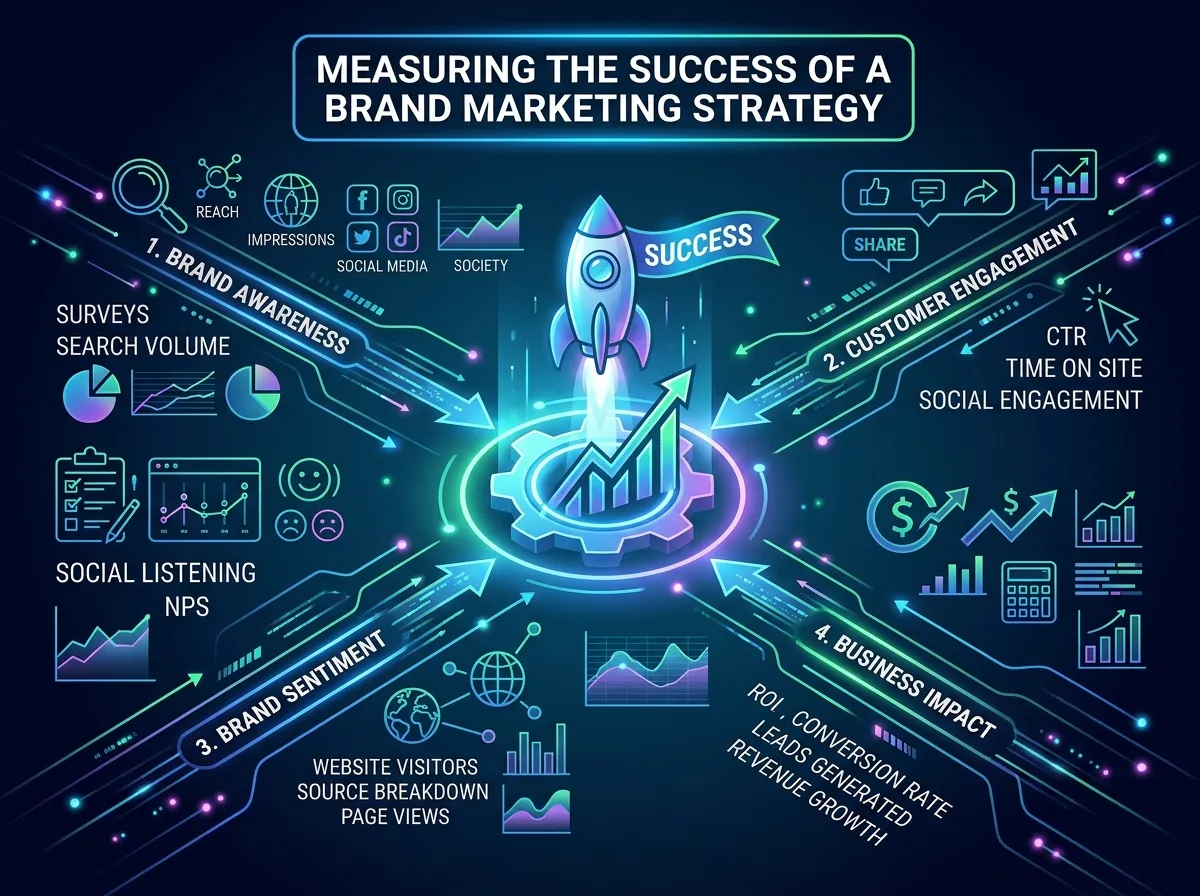
Measuring brand performance helps businesses determine whether their efforts are creating meaningful results. Because brand marketing often produces long-term benefits, businesses should use a combination of short-term and long-term metrics.
Brand awareness can be evaluated through branded search growth, direct traffic, social reach, mentions, and audience surveys. Engagement metrics can show whether people are interacting with content and participating in brand conversations.
Customer-focused measurements can provide deeper insights. Repeat purchases, customer retention, referrals, reviews, and customer satisfaction can indicate whether brand relationships are becoming stronger.
Financial metrics are also important. Depending on the business, marketers may examine conversion rates, customer acquisition costs, customer lifetime value, revenue growth, and return on marketing investment.
The goal is not to track every available metric. Instead, businesses should identify measurements that connect directly to their objectives and use the results to improve future marketing decisions.
Common Challenges in Brand Marketing
Building a strong brand takes time, and businesses can face several challenges during the process. One common problem is inconsistent messaging. When different departments or marketing channels communicate different ideas, the brand can become difficult to understand.
Another challenge is focusing too heavily on promotion. Constantly pushing products without providing useful information or meaningful experiences can reduce engagement.
Some businesses also try to appeal to everyone. A broad message may seem attractive, but it can make a brand less distinctive. Understanding a specific audience often allows businesses to create stronger and more relevant communication.
Failing to measure results can create another problem. Without performance data, businesses may continue investing in activities that do not contribute meaningfully to their objectives.
Finally, brands need to evolve. Customer expectations, competitors, technologies, and markets change over time. A strategy should provide consistency while still allowing the business to adapt.
Conclusion
A strong brand marketing strategy gives businesses a clear direction for building awareness, strengthening customer relationships, and supporting sustainable growth. It connects brand positioning, promotion, communication, content, digital marketing, and customer experiences into a consistent approach.
Developing a clear brand marketing plan, understanding the target audience, creating meaningful positioning, and maintaining consistent communication can make a brand more recognizable and trustworthy. Businesses can then use digital channels, content, social media, email, partnerships, and other marketing techniques to expand their reach.
The strongest brands are not built through one campaign. They are developed through consistent experiences and meaningful interactions over time. By continually measuring performance, listening to customers, and improving their approach, businesses can create a brand that remains relevant and valuable as they grow.
Frequently Asked Questions
1. What is a brand marketing strategy?
A brand marketing strategy is a planned approach for promoting a company’s identity, values, products, and services while building recognition and relationships with its target audience. It covers positioning, messaging, promotion, content, communication, and customer experience.
2. Why is a brand marketing strategy important?
A brand marketing strategy helps businesses create a consistent identity, improve recognition, differentiate themselves from competitors, increase awareness, and build customer trust. It also gives marketing teams a clear direction for their activities.
3. What should a brand marketing plan include?
A brand marketing plan should include business objectives, target audience research, brand positioning, key messages, marketing channels, content priorities, promotional activities, timelines, and performance measurements.
4. How does brand positioning support marketing?
Brand positioning explains how a business wants to be perceived in the market. Clear positioning helps businesses communicate their differences and gives customers a stronger reason to remember and choose the brand.
5. What is brand awareness marketing?
Brand awareness marketing focuses on increasing familiarity with a business. It can use content marketing, SEO, social media, advertising, public relations, events, partnerships, and other channels to help audiences recognize and remember the brand.
6. How can digital marketing improve brand growth?
Digital marketing allows brands to reach targeted audiences through websites, search engines, social media, email, video, advertising, and other online channels. These platforms also provide valuable performance data that can help businesses improve their marketing.
7. What are effective brand marketing techniques?
Effective brand marketing techniques include storytelling, content marketing, social media engagement, customer testimonials, influencer or business partnerships, community building, email marketing, search optimization, and consistent brand communication.
8. How often should a brand marketing strategy be updated?
A brand marketing strategy should be reviewed regularly rather than changed constantly. Businesses can assess it quarterly or annually and make adjustments when audience behavior, market conditions, competitors, business goals, or customer expectations change.
9. How can businesses measure brand marketing success?
Businesses can measure brand marketing through metrics such as branded search activity, website traffic, social engagement, audience growth, mentions, customer retention, referrals, reviews, conversions, revenue, and customer lifetime value.
10. Can small businesses benefit from brand marketing?
Yes. Small businesses can benefit significantly from brand marketing because a clear identity can help them stand out, build trust, create stronger customer relationships, and compete more effectively. A focused strategy can also help small businesses use limited marketing resources more efficiently.