
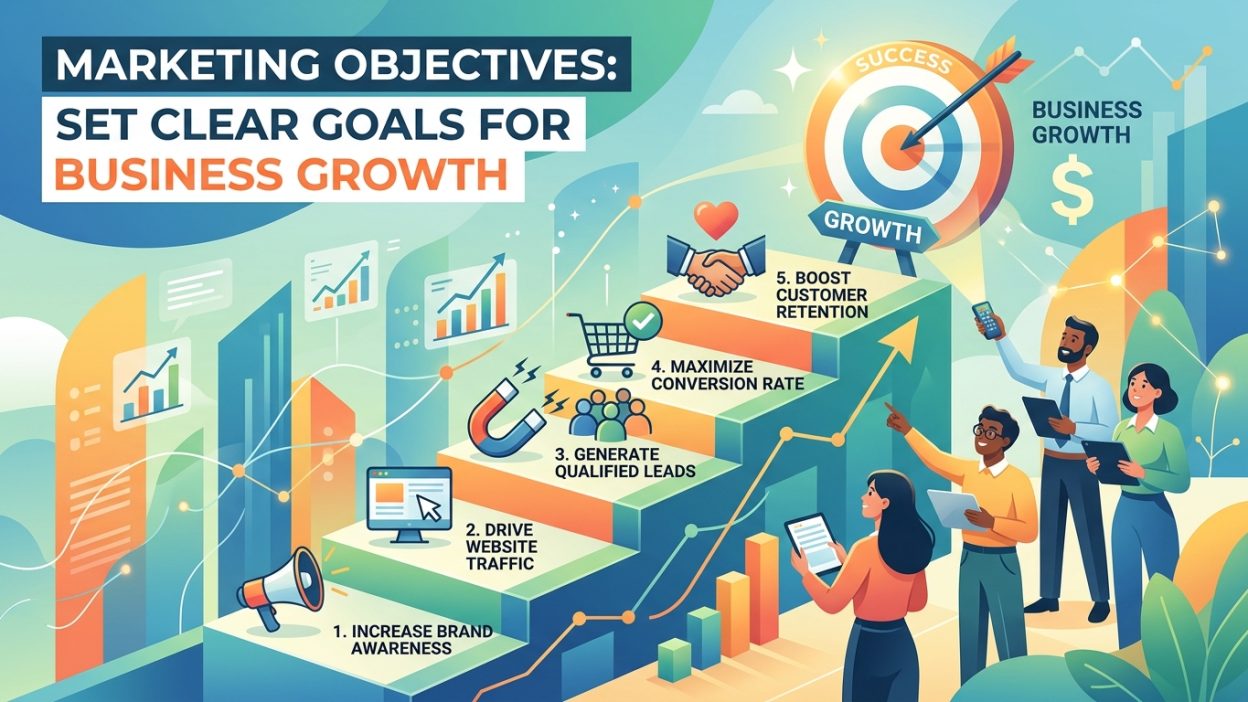
Marketing objectives define what a business wants its marketing efforts to achieve. Clear and measurable objectives help teams plan campaigns, track performance, align marketing with business goals, and make better use of available resources.
Marketing becomes much more effective when businesses know exactly what they want to achieve. Creating content, running advertisements, sending emails, publishing social media posts, or improving a website can generate activity, but activity alone does not define success. Clear marketing objectives help businesses connect their marketing efforts with measurable business outcomes.
Marketing objectives provide direction for campaigns and teams. They help marketers understand what needs to improve, which audiences should be reached, and how success will be measured. Whether a company wants to increase brand awareness, generate leads, improve customer retention, increase sales, or expand into a new market, clearly defined objectives can make marketing decisions more focused.
What Are Marketing Objectives?
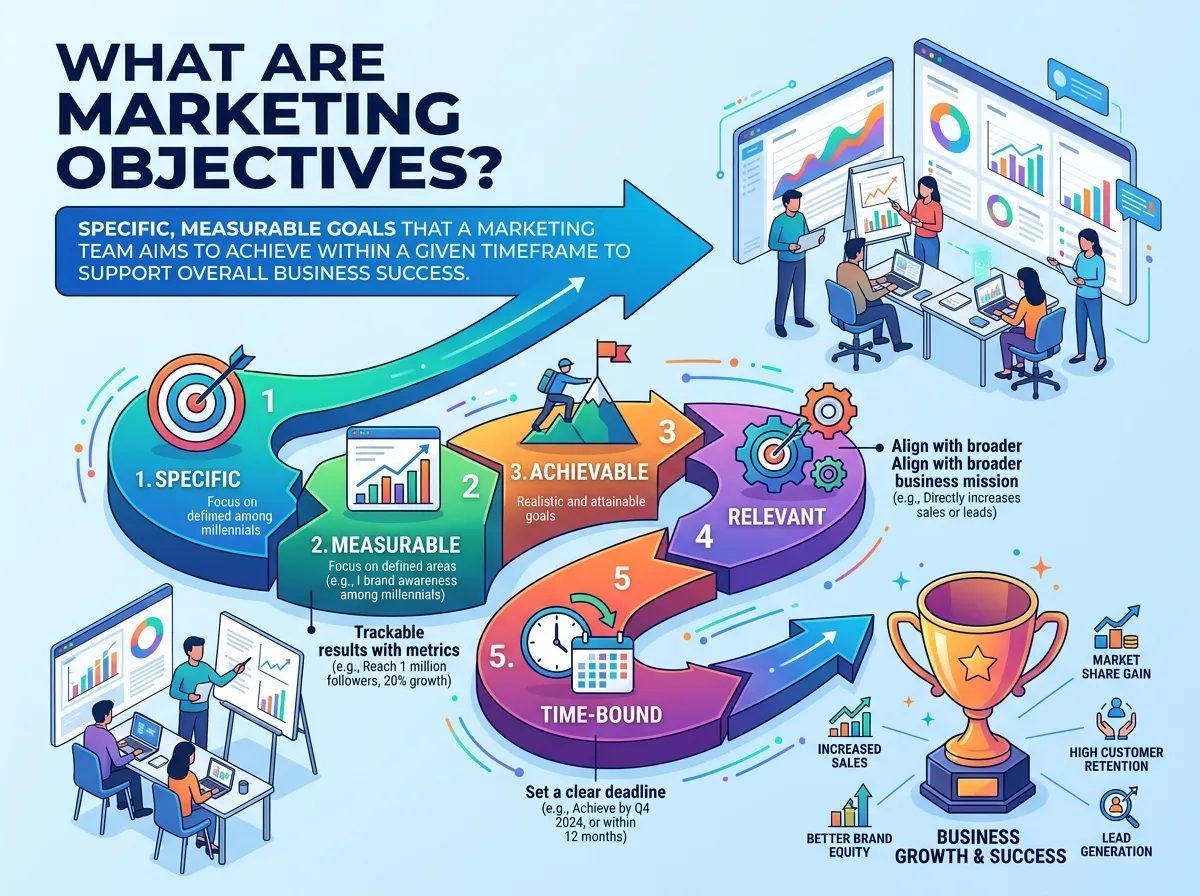
Marketing objectives are specific outcomes that a business wants to achieve through its marketing activities within a defined period. They provide a practical connection between broad business ambitions and individual marketing campaigns.
For example, a company may have a general business goal of increasing revenue. A related marketing objective could focus on generating more qualified leads through organic search, improving conversion rates, or increasing customer engagement.
Understanding the difference between marketing goals and objectives is important. Goals are generally broader statements about what a business wants to accomplish, while objectives provide more specific and measurable outcomes. A goal might be to strengthen brand awareness, while an objective could focus on increasing branded search traffic or social engagement within a particular period.
Why Marketing Objectives Matter
Clear objectives help marketing teams prioritize their time, budget, and resources. Without them, businesses may run multiple campaigns without knowing whether those activities are contributing to meaningful results.
Well-defined objectives also make it easier to evaluate performance. When an objective includes a measurable outcome, marketers can compare actual results with the intended target and identify areas that need adjustment.
Marketing objectives can also improve communication between departments. Sales, marketing, customer service, and leadership teams can work from a shared understanding of what marketing is expected to accomplish.
This alignment becomes particularly useful when businesses use data to evaluate their efforts. Marketing Analytics and Data-Driven Insights can help organizations understand how marketing performance connects with broader business outcomes.
Marketing Goals and Objectives: Understanding the Difference
Although the terms are often used together, marketing goals and objectives serve different purposes. A marketing goal describes a desired direction or result, while an objective makes that direction more precise.
For example, increasing customer engagement can be a marketing goal. An objective could be to increase email click-through rates by a specific percentage during a defined campaign period.
This distinction makes planning easier because objectives turn broad intentions into measurable outcomes. A business can have several objectives supporting one larger marketing goal.
The relationship between marketing objectives and goals should therefore be clear. Each objective should contribute to the broader direction of the business rather than exist as an isolated marketing target.
Common Marketing Objectives Examples
There are many marketing objectives examples that businesses can use depending on their priorities. Increasing brand awareness is one common objective, particularly for businesses entering new markets or launching new products.
Lead generation is another frequent objective. A company may want to increase the number of qualified leads generated through search engines, social media, email campaigns, paid advertising, or content marketing.
Businesses may also set objectives around customer acquisition, sales growth, website traffic, conversion rates, customer retention, engagement, email performance, or market expansion.
For example, an organization might aim to increase qualified website leads, improve landing-page conversion rates, grow its email subscriber base, increase repeat purchases, or improve engagement with a specific customer segment.
The most appropriate objective depends on the organization’s current position and business priorities.
Business Marketing Objectives and Business Priorities
Business marketing objectives should directly support the wider needs of the organization. Marketing should not operate separately from business strategy.
If a company is focused on entering a new market, marketing objectives might center on awareness, audience research, lead generation, and customer acquisition. If retention is a priority, objectives may focus more heavily on customer engagement, loyalty, and repeat purchases.
This alignment helps prevent marketing teams from optimizing metrics that have little connection to business outcomes. High website traffic, for example, may look positive, but it may not provide much value if visitors are not part of the target audience or do not engage with the business.
A strong objective therefore considers not only what can be measured but also why the measurement matters.
SMART Marketing Objectives
SMART marketing objectives are designed to be Specific, Measurable, Achievable, Relevant, and Time-bound. This framework can make objectives easier to understand and evaluate.
A specific objective clearly identifies what needs to happen. A measurable objective includes a way to track progress. An achievable objective should be realistic considering available resources and market conditions. A relevant objective should support important business priorities. A time-bound objective includes a clear timeframe.
For example, instead of saying that a company wants to improve website performance, a more structured objective could focus on increasing qualified organic leads by a defined percentage within a specified period.
SMART objectives are useful because they reduce ambiguity. Team members can understand what they are working toward and how progress will be evaluated.
Setting Marketing Objectives Based on the Customer Journey

Effective objectives can be connected to different stages of the customer journey. At the awareness stage, a business may focus on reaching relevant audiences and increasing visibility. At the consideration stage, objectives may involve engagement, content consumption, or lead generation.
At the conversion stage, businesses may focus on improving sales or lead conversion rates. After purchase, objectives can shift toward retention, customer satisfaction, repeat purchases, and advocacy.
Setting marketing objectives around the customer journey helps businesses create a more complete marketing strategy. Instead of concentrating entirely on acquisition, teams can consider how marketing supports customers throughout their relationship with the brand.
This approach can also reveal gaps. A business may generate plenty of leads but have weak conversion rates, or it may acquire customers successfully but struggle to retain them.
Digital Marketing Objectives
The growth of online channels has made digital marketing objectives an important part of modern marketing planning. These objectives can focus on search visibility, website traffic, content engagement, social media activity, email performance, paid advertising, lead generation, or online sales.
Digital objectives should still connect with broader business priorities. For example, increasing website traffic may be useful when the traffic comes from relevant audiences and contributes to conversions.
A company may also establish separate objectives for different digital channels. Search marketing could focus on qualified organic traffic, email marketing could focus on engagement and conversions, while paid advertising could focus on lead acquisition.
For businesses developing digital skills and knowledge, resources such as Google Digital Marketing & E-commerce can provide additional context around digital marketing activities and channels.
Marketing Campaign Objectives
Individual campaigns should have objectives that connect to the larger marketing strategy. Marketing campaign objectives define what a particular campaign is expected to accomplish.
A product launch campaign may focus on awareness and initial demand. An email campaign could focus on driving registrations or purchases. A content campaign might aim to increase qualified organic traffic and lead generation.
Campaign objectives should be clear enough to guide decisions about messaging, targeting, channels, creative assets, and measurement.
For example, if the objective is lead generation, campaign managers may prioritize landing pages, lead forms, calls to action, audience targeting, and conversion tracking. If the objective is awareness, reach and qualified impressions may become more important.
Marketing Objectives Strategy
A strong marketing objectives strategy connects individual objectives into a coordinated plan. Instead of creating unrelated targets for each channel, marketers can determine how different objectives work together.
For example, content marketing may attract organic visitors, social media may increase content distribution, email may nurture prospects, and sales teams may convert qualified opportunities.
The objectives for these activities can support a common business outcome. This creates a more connected marketing system where different channels contribute to the same strategic direction.
Businesses should also review objectives regularly. Market conditions, customer behavior, competition, budgets, and organizational priorities can change. An objective that was appropriate several months ago may need to be adjusted as circumstances change.
Using Data to Measure Progress
Measurement is an essential part of effective objectives. Businesses need relevant performance indicators to determine whether marketing activities are moving toward the desired outcome.
Depending on the objective, marketers might monitor conversion rates, qualified leads, customer acquisition cost, website traffic, engagement, email interactions, revenue contribution, retention rates, or other relevant indicators.
The important point is to select measurements that reflect the objective. Tracking dozens of metrics can create unnecessary complexity if those metrics do not help explain progress.
Data should also be interpreted in context. A change in traffic or conversions does not automatically explain why performance changed. Marketers may need to consider campaign changes, seasonality, audience behavior, market conditions, and other factors.
Marketing Performance Objectives
Marketing performance objectives focus on improving measurable aspects of marketing activity. These objectives can help teams understand how effectively campaigns and channels are performing.
For example, a marketing team might establish an objective around improving lead conversion, reducing customer acquisition costs, increasing qualified traffic, or improving engagement rates.
Performance objectives can also support continuous improvement. Once a baseline is established, marketers can identify weaknesses and test different approaches.
Businesses should avoid treating every metric as an objective. A metric is a measurement, while an objective describes a desired outcome. Keeping that distinction clear can make performance reporting more useful.
Handling Challenges When Setting Objectives
One common challenge is creating objectives that are either too broad or too narrow. An objective such as “get more customers” does not provide enough detail to guide action. At the other extreme, setting dozens of highly specific objectives can make marketing difficult to manage.
Another challenge is setting unrealistic expectations. Objectives should reflect available resources, historical performance, market conditions, and business capacity.
It is also important to avoid focusing entirely on short-term results. Some marketing activities, such as content marketing and brand building, may require time before their full impact becomes visible.
When objectives involve reputation or sensitive communication, planning should also account for potential risks. A clear Crisis Communication Strategy can help businesses prepare communication processes when unexpected issues affect customers or the public.
Reviewing and Improving Marketing Objectives
Marketing objectives should not be treated as permanent statements. Regular reviews allow teams to determine whether objectives remain relevant and whether performance is moving in the expected direction.
A review can examine what has been achieved, what remains outstanding, which channels are contributing, and whether market conditions have changed.
If an objective is consistently unrealistic, the problem may be the target, timeframe, available resources, or underlying strategy. Adjusting an objective based on evidence is different from abandoning accountability. It can help ensure that the marketing plan remains aligned with actual business conditions.
Comparing results over time can also help identify patterns. Businesses can use historical performance to create more informed future objectives rather than relying entirely on assumptions.
Connecting Marketing Objectives With Different Marketing Approaches
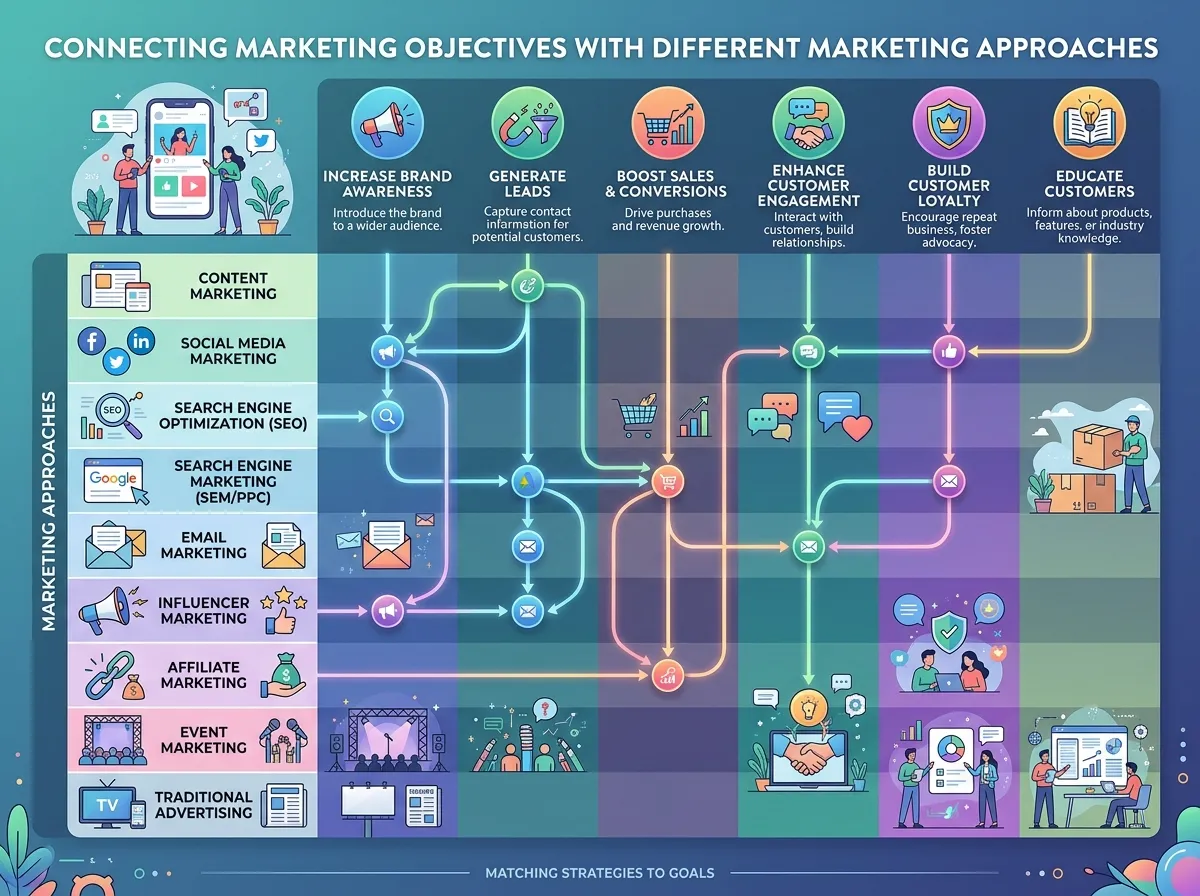
Different marketing approaches may require different objectives. Account-based marketing, for example, may focus on engaging specific high-value accounts, while demand generation may emphasize broader audience awareness and interest.
Understanding these differences can help marketers create objectives that match the strategy being used. The resource Understanding Key Differences can provide additional context on how different marketing approaches serve different purposes.
The key is consistency. Marketing objectives should reflect the intended audience, channel, customer journey, and business outcome.
Conclusion
Clear marketing objectives give businesses a practical way to connect marketing activity with meaningful outcomes. They help teams understand what they are trying to accomplish, how progress will be measured, and how individual campaigns support broader business priorities.
From SMART marketing objectives and digital marketing objectives to campaign and performance objectives, the right structure depends on the organization’s needs. The strongest objectives are specific enough to guide action while remaining connected to realistic business priorities.
By regularly reviewing performance, using relevant data, and adjusting strategies when necessary, businesses can create a marketing process that is more focused, measurable, and aligned with long-term objectives.
Frequently Asked Questions
1. What are marketing objectives?
Marketing objectives are specific outcomes that a business wants to achieve through its marketing activities. They can focus on areas such as brand awareness, lead generation, sales, customer retention, website performance, or engagement.
2. What is the difference between marketing goals and objectives?
Marketing goals are broader desired outcomes, while objectives are more specific and measurable targets that help achieve those goals. Objectives provide greater detail about what should be accomplished and within what timeframe.
3. What are some common marketing objectives examples?
Common examples include increasing brand awareness, generating qualified leads, improving conversion rates, increasing website traffic, growing sales, improving customer retention, increasing engagement, and expanding into new markets.
4. What are SMART marketing objectives?
SMART marketing objectives are Specific, Measurable, Achievable, Relevant, and Time-bound. The framework helps businesses create objectives that are clear and easier to track and evaluate.
5. Why are marketing objectives important?
Marketing objectives provide direction for marketing teams and make it easier to measure results. They also help businesses connect marketing activities with broader organizational priorities.
6. How do you set marketing objectives?
Businesses can set marketing objectives by reviewing their business priorities, understanding their target audience, assessing current performance, identifying desired outcomes, selecting appropriate measurements, and establishing realistic timeframes.
7. What are digital marketing objectives?
Digital marketing objectives are targets related to online marketing activities. They can include increasing qualified website traffic, improving online conversions, generating leads, increasing email engagement, improving search visibility, or growing digital sales.
8. What are marketing campaign objectives?
Marketing campaign objectives define what a specific campaign should accomplish. Depending on the campaign, objectives may focus on awareness, engagement, lead generation, conversions, sales, or customer retention.
9. How can businesses measure marketing performance objectives?
Businesses can measure performance objectives using relevant indicators such as qualified leads, conversion rates, customer acquisition cost, website traffic, engagement, revenue contribution, retention, and other metrics connected to the specific objective.
10. Should marketing objectives change over time?
Marketing objectives can be reviewed and adjusted as business priorities, customer behavior, market conditions, resources, and campaign performance change. Regular reviews help keep objectives relevant and realistic.