

Marketing Budgeting helps businesses plan expenses, allocate resources, forecast costs, and measure performance. Through effective budget planning and cost analysis, companies can reduce waste and invest in activities that support business goals. Regular budget reviews improve financial control, advertising efficiency, and long-term profitability while helping businesses adapt to changing market conditions.
Marketing success depends on more than creative campaigns, engaging content, and strong promotional ideas. Businesses also need to manage their financial resources carefully to ensure that every marketing activity supports their objectives. This is where Marketing Budgeting becomes essential. A well-planned marketing budget helps businesses determine how much to spend, where to invest, and how to evaluate whether their spending delivers meaningful results.
Without a clear financial plan, marketing teams may invest too much in underperforming channels, overlook valuable opportunities, or struggle to explain their expenses. Effective budgeting creates a connection between marketing activities and broader business priorities. It also allows companies to respond to changing customer behavior, market competition, and financial conditions without losing control of their spending.
Marketing budgeting is not simply about reducing costs. It is about allocating resources intelligently, balancing short-term performance with long-term growth, and ensuring that marketing investments contribute to sustainable business development.
Understanding the Importance of Marketing Budgeting
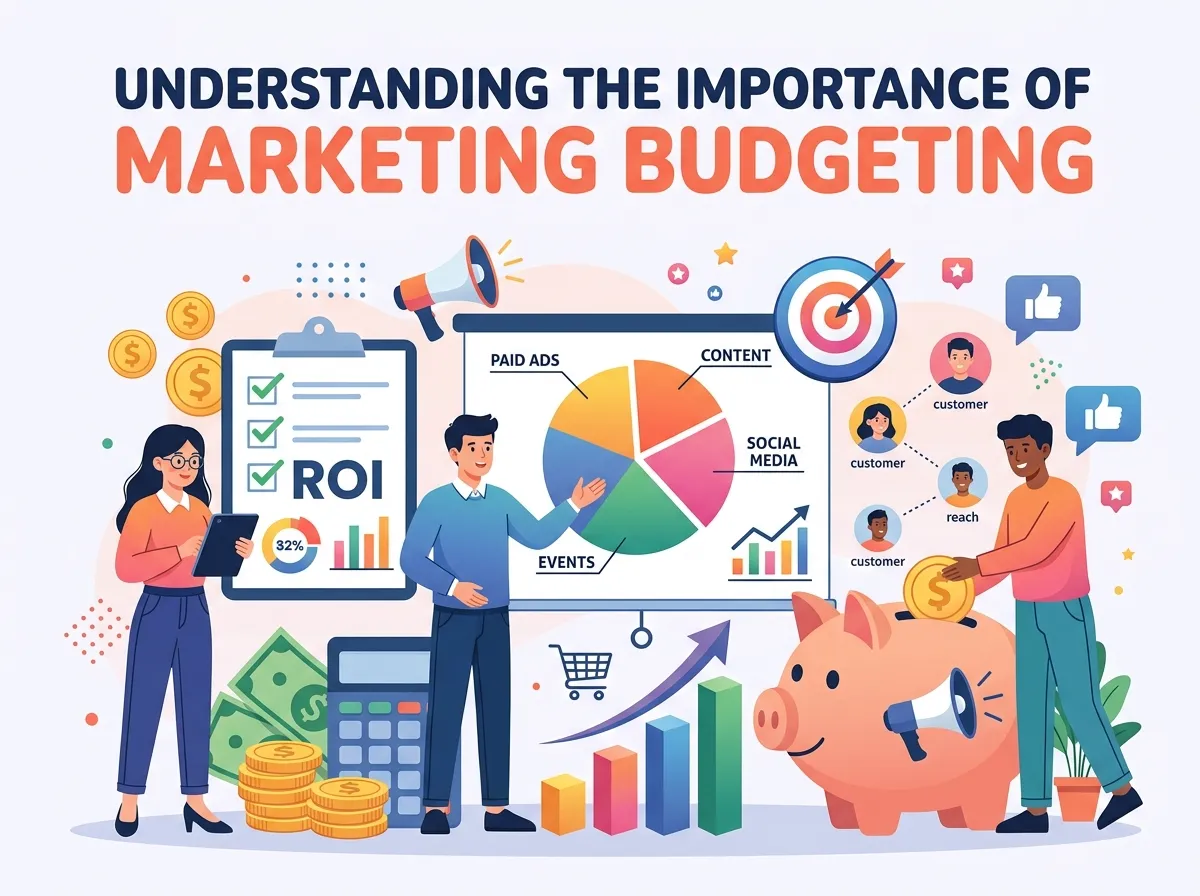
Marketing budgeting is the process of estimating, organizing, allocating, and monitoring the money required for marketing activities. These expenses may include digital advertising, content creation, email campaigns, social media management, search engine optimization, marketing technology, public relations, events, and customer research.
A structured budget gives businesses a clearer understanding of their available resources and expected expenses. It also helps marketing teams set realistic priorities. Instead of distributing funds across every possible channel, businesses can focus on activities that align with their target audience, brand positioning, and commercial objectives.
An effective budget also improves coordination between marketing, sales, and finance teams. When everyone understands the available resources and expected outcomes, departments can make more informed decisions. Marketing teams can explain why certain investments matter, while finance teams can assess whether the proposed spending fits the organization’s financial plans.
Strong Marketing Budgeting also supports accountability. When expenses are recorded and compared with planned allocations, businesses can identify unexpected costs and investigate areas where spending exceeds expectations. This visibility makes it easier to adjust investments before small financial problems affect the overall marketing program.
Marketing Budget Planning and Business Objectives
Marketing Budget Planning begins with a clear understanding of what the business wants to achieve. A company focused on building brand awareness may prioritize content, public relations, and advertising reach. A business seeking qualified leads may allocate more resources to search campaigns, landing pages, email marketing, and conversion-focused content.
The budget should reflect these differences rather than follow a generic spending formula. Business size, industry competition, audience behavior, product pricing, and available cash flow all influence how much an organization can reasonably invest. A growing company may need to increase spending to reach new customers, while an established business may concentrate on retaining existing customers and improving campaign efficiency.
A broader Marketing Strategy Roadmap can help connect financial decisions with business priorities. When marketing activities follow a defined roadmap, budget owners can determine which initiatives deserve immediate funding and which can be scheduled for later. This connection reduces the risk of spending money on disconnected activities that do not contribute to the company’s wider objectives.
Planning should also account for both recurring and one-time expenses. Recurring costs may include software subscriptions, agency retainers, email platforms, and ongoing advertising campaigns. One-time expenses may involve website redesigns, campaign launches, brand development, or new marketing technology. Recognizing these differences helps businesses prepare a realistic budget and avoid unexpected financial pressure.
Marketing Budget Allocation Across Channels
Marketing Budget Allocation determines how available funds are distributed among channels, campaigns, teams, and activities. The objective is to ensure that each investment has a clear purpose and receives an appropriate share of the budget.
Businesses often use several channels simultaneously, but not every channel delivers the same value. Paid search may generate immediate traffic, while organic content can build visibility over a longer period. Email marketing may help nurture existing prospects, whereas social media advertising can introduce a brand to new audiences. The most suitable allocation depends on campaign objectives, audience preferences, historical performance, and the resources required to manage each channel effectively.
Understanding the target audience is particularly important when distributing funds. A business targeting enterprise buyers may benefit from professional content, account-based campaigns, and personalized email communication. A company serving individual consumers may place greater emphasis on social platforms, search advertising, partnerships, and promotional content.
A well-developed Target Market Strategy helps businesses identify the customers they want to reach and the channels those customers are most likely to use. This understanding makes budget allocation more precise because investments can be directed toward relevant audiences instead of being spread too widely.
Marketing teams should also avoid allocating the entire budget based on past performance alone. Historical results provide useful evidence, but customer expectations, platform costs, and competitive conditions can change. Maintaining a balance between proven channels and carefully tested opportunities helps businesses protect existing performance while discovering new sources of growth.
Digital Marketing Budget Management in a Changing Market
Digital Marketing Budget Management requires continuous attention because online advertising costs, audience behavior, and campaign results can change quickly. Businesses may operate search advertisements, social media campaigns, email programs, website content, and marketing automation systems at the same time. Without clear oversight, these activities can create overlapping expenses and inconsistent priorities.
Effective management begins with accurate records of planned and actual spending. Marketing teams should understand how much has been committed, how much has already been spent, and how much remains available. This information helps prevent overspending and allows teams to make timely adjustments when campaigns perform differently from expectations.
Technology can simplify this process by bringing campaign costs, reporting, and financial records into a more organized system. However, purchasing additional software is not always the answer. Businesses should evaluate whether a tool improves visibility, saves time, or supports better decisions before adding its cost to the budget.
Digital marketing also requires coordination between acquisition and retention activities. Companies may invest heavily in attracting new prospects while overlooking the value of maintaining relationships with existing customers. In some cases, improving customer communication and repeat purchasing can support stronger long-term returns than continuously increasing acquisition spending.
For organizations selling to other businesses, a focused B2B Email Marketing Strategy can support lead nurturing, relationship development, and communication throughout longer sales cycles. Budgeting for these activities should consider content production, email platforms, audience segmentation, and performance measurement rather than focusing only on the cost of sending messages.
Marketing Expense Forecasting and Financial Control

Marketing Expense Forecasting helps businesses estimate future costs before they occur. By reviewing previous spending, upcoming campaigns, seasonal demand, planned launches, and expected changes in channel costs, organizations can develop more realistic financial projections.
Forecasting is especially valuable when marketing activities depend on variable expenses. Advertising costs may increase during competitive periods, event participation may require additional resources, and campaign production may become more expensive when new creative materials are needed. Anticipating these possibilities helps businesses prepare instead of making rushed decisions after expenses have already increased.
Reliable forecasting combines historical information with current business expectations. Previous campaign costs provide a useful starting point, but forecasts should also reflect changes in marketing objectives, customer demand, and available resources. A business expanding into a new region, for example, may need additional research, localized content, and promotional spending that cannot be estimated accurately from its existing campaigns alone.
Marketing Budget Forecasting should also account for uncertainty. Businesses can create different spending scenarios based on conservative, expected, and ambitious growth assumptions. These scenarios help decision-makers understand how budget requirements may change if revenue falls short, advertising costs rise, or a campaign generates stronger demand than anticipated.
Forecasts should be reviewed regularly rather than treated as permanent figures. Monthly reviews can reveal differences between projected and actual expenses, allowing teams to update their expectations. This flexible approach improves financial control while giving marketing departments enough room to respond to new opportunities.
Marketing Budget Optimization and Better Resource Use
Marketing Budget Optimization focuses on improving the value generated by existing resources. Instead of assuming that better results always require higher spending, businesses evaluate whether their current investments are being used effectively.
One important area is identifying unnecessary or overlapping expenses. A company may pay for multiple tools with similar features, run campaigns targeting nearly identical audiences, or continue funding activities that no longer support its objectives. Reviewing these costs can free up resources for more valuable initiatives.
Optimization also involves understanding the relationship between spending and outcomes. A campaign that generates a large amount of traffic may appear successful, but traffic alone does not demonstrate commercial value. Businesses should consider lead quality, customer acquisition costs, conversion rates, revenue contribution, and the longer-term value of customers when deciding whether to increase or reduce an investment.
Testing can further improve efficiency. Marketing teams may compare different advertising messages, audience segments, landing pages, or promotional offers to understand which options perform better. These experiments should have clear objectives and reasonable budgets so that the cost of learning does not become excessive.
Partnerships can also influence resource allocation. For example, Dropshipping Affiliate Marketing illustrates a performance-oriented partnership model in which affiliate promotion can support product discovery and sales. Businesses considering affiliate partnerships should still budget for commissions, tracking systems, partner management, and quality control. The financial value depends on the terms of the arrangement and the profitability of the resulting sales, not simply the number of partners involved.
Marketing Cost Analysis and Performance Measurement
Marketing Cost Analysis helps businesses understand where money is being spent and what those expenses produce. Without this analysis, budget decisions may rely on assumptions rather than evidence. A clear view of marketing costs makes it easier to identify inefficiencies, compare activities, and determine whether current investments remain appropriate.
Common measures include cost per lead, customer acquisition cost, conversion rate, return on marketing investment, and revenue generated by specific campaigns. Each metric answers a different question. Cost per lead helps assess how efficiently prospects are generated, while customer acquisition cost estimates the expense of acquiring customers. Return on marketing investment examines the financial contribution of marketing relative to its cost, although the calculation depends on how revenue and expenses are defined.
Metrics should always be interpreted in context. A campaign with a higher acquisition cost may still be valuable if it attracts customers who make larger purchases or remain with the business longer. Similarly, a low-cost campaign may deliver limited value if its leads rarely convert into paying customers.
Marketing Budget Performance Evaluation should combine financial measurements with strategic considerations. Brand awareness, customer trust, market learning, and audience development may not generate immediate revenue, but they can contribute to future performance. Businesses should distinguish between activities expected to produce quick results and investments designed to build value over time.
Consistent reporting is essential. Marketing teams should compare planned spending with actual expenses, review results against campaign objectives, and document the reasons behind major differences. These records create a stronger foundation for future decisions and make it easier to explain budget changes to leadership.
Advertising Budget Allocation and Campaign Efficiency
Advertising Budget Allocation requires careful decisions about how much money to invest in different paid channels, audiences, and campaign objectives. Search advertising, social media promotions, display campaigns, sponsored placements, and other paid activities each have different cost structures and performance characteristics.
The most effective allocation depends on the business’s goals and the behavior of its audience. If customers actively search for a particular product or service, search advertising may capture existing demand. If the business needs to introduce a new offer to unfamiliar audiences, social advertising or display placements may help generate awareness.
Campaign budgets should reflect both expected demand and operational capacity. Increasing advertising spend can generate more leads, but only when the business has the resources to respond to those leads and convert them into customers. If the sales team cannot manage incoming inquiries or the website provides a poor user experience, additional advertising may increase costs without producing proportional revenue.
Marketing teams should also monitor how performance changes as spending increases. A campaign may deliver strong results at a modest budget but become less efficient when expanded to broader audiences. Reviewing marginal performance helps businesses understand whether additional investment is likely to create enough value to justify the expense.
A flexible spending plan allows teams to move funds when reliable evidence supports a change. However, reallocations should be based on clear performance signals rather than short-term fluctuations alone. Giving campaigns enough time to produce meaningful data helps prevent unnecessary adjustments and supports more consistent decision-making.
Marketing Spending Strategy for Sustainable Growth
A strong Marketing Spending Strategy balances immediate business needs with investments that support future competitiveness. Businesses that focus exclusively on short-term returns may underinvest in content, brand development, customer experience, and market research. Conversely, spending too heavily on long-term initiatives without reviewing their progress can place unnecessary pressure on cash flow.
A balanced approach assigns funding according to the purpose and expected timing of each activity. Some investments may support immediate sales, while others improve customer relationships, strengthen market positioning, or create assets that remain useful for years. The budget should make these priorities visible so decision-makers can assess trade-offs more effectively.
Financial flexibility is equally important. Unexpected opportunities and challenges can emerge throughout the year, including new competitors, shifts in customer demand, changes in advertising costs, or the launch of a promising product. Setting aside a reasonable contingency reserve allows businesses to respond without disrupting every existing campaign.
Marketing spending should also reflect profitability, not just revenue growth. A campaign that increases sales but requires excessive discounts, high commissions, or expensive customer acquisition may weaken overall margins. Reviewing the full cost of marketing activity helps businesses determine whether growth is financially sustainable.
Regular communication between marketing and finance teams strengthens this process. Shared assumptions about revenue targets, spending limits, reporting periods, and performance expectations reduce misunderstandings. When both departments work from consistent information, budget decisions become easier to explain and adjust.
Building a More Effective Marketing Budget
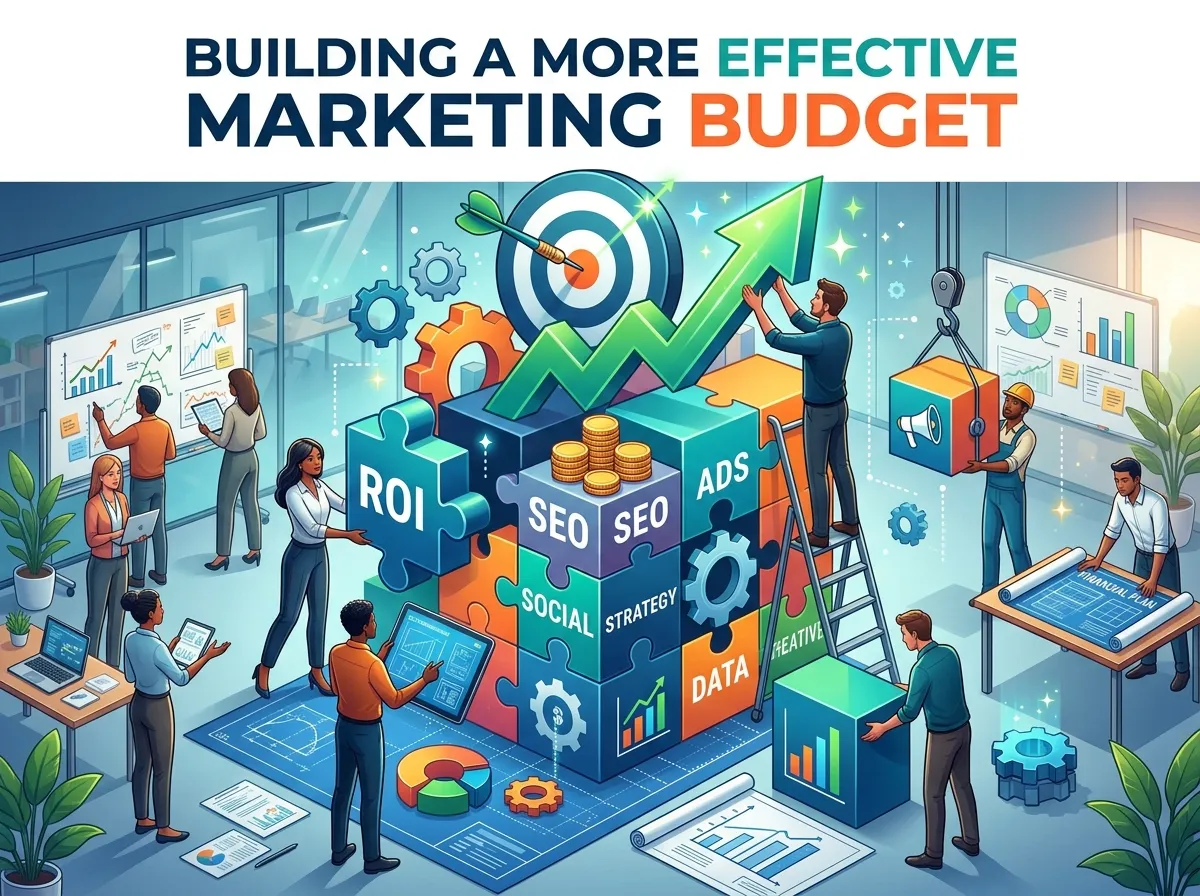
Effective Marketing Budgeting combines planning, allocation, forecasting, measurement, and ongoing adjustment. Businesses need a clear view of their objectives, a realistic understanding of available resources, and reliable information about how marketing activities perform.
The strongest budget is not necessarily the largest or the most restrictive. It is the one that connects spending with meaningful priorities, supports informed experimentation, and allows the business to respond to changing conditions. By reviewing expenses regularly, evaluating performance in context, and directing funds toward activities that support sustainable growth, companies can make better use of their marketing resources.
Ultimately, marketing budgeting should be treated as an ongoing business process rather than an annual administrative task. When financial planning and marketing decisions work together, businesses gain greater control over costs, clearer accountability, and a stronger foundation for long-term success.
Frequently Asked Questions
1. What is Marketing Budgeting?
Marketing Budgeting is the process of planning, allocating, monitoring, and evaluating the money used for marketing activities. It helps businesses manage expenses, prioritize campaigns, and ensure that marketing investments support their commercial objectives.
2. Why is Marketing Budgeting important for businesses?
Marketing Budgeting helps businesses control spending, reduce unnecessary expenses, and make better investment decisions. It also improves coordination between marketing and finance teams, supports accountability, and helps organizations evaluate whether their marketing activities contribute to growth.
3. How does Marketing Budget Planning work?
Marketing Budget Planning begins with business objectives, available financial resources, and expected marketing requirements. Businesses estimate campaign costs, prioritize activities, allocate funding across channels, and establish performance expectations to create a realistic spending plan.
4. What factors influence Marketing Budget Allocation?
Marketing Budget Allocation depends on business goals, target audience behavior, industry competition, historical campaign performance, channel costs, and available resources. Companies should distribute funds according to the purpose and expected value of each activity rather than dividing their budgets equally across all channels.
5. What is Digital Marketing Budget Management?
Digital Marketing Budget Management involves tracking and controlling spending across online channels such as search advertising, social media, email marketing, content marketing, and marketing technology. It helps businesses monitor actual expenses, prevent overspending, and adjust investments based on campaign performance.
6. How does Marketing Expense Forecasting help a company?
Marketing Expense Forecasting estimates future marketing costs using historical spending, planned campaigns, seasonal trends, and expected changes in market conditions. It helps businesses prepare for upcoming expenses, manage cash flow, and make more informed financial decisions.
7. What is Marketing Budget Optimization?
Marketing Budget Optimization is the process of improving the value generated by marketing investments. It involves identifying unnecessary expenses, reviewing campaign performance, testing different approaches, and directing resources toward activities that better support business objectives.
8. Which metrics are useful for Marketing Cost Analysis?
Useful metrics include cost per lead, customer acquisition cost, conversion rate, return on marketing investment, and revenue contribution. Businesses should select metrics that match their objectives and interpret them alongside customer quality, profitability, and long-term value.
9. How often should a marketing budget be reviewed?
Many businesses benefit from reviewing marketing spending monthly, with more frequent checks for campaigns with rapidly changing costs. Quarterly reviews can support broader strategic adjustments, while an annual review helps establish priorities for the next budgeting period.
10. How can businesses improve their Marketing Budgeting process?
Businesses can improve Marketing Budgeting by setting measurable objectives, maintaining accurate expense records, forecasting future costs, reviewing channel performance, and coordinating marketing decisions with financial priorities. Regular evaluations and flexible allocations help organizations respond to changing conditions without losing sight of long-term growth.