

A Marketing Strategy Roadmap helps businesses connect their marketing objectives with practical actions, realistic timelines, and measurable outcomes. By prioritizing the right opportunities, allocating resources effectively, understanding the target audience, and reviewing performance milestones, organizations can improve coordination and make better strategic decisions. A flexible, evidence-based roadmap also helps marketing teams adapt to changing market conditions while keeping their activities aligned with long-term business growth.
A successful marketing strategy requires more than creative campaigns and promotional activities. Businesses need a clear direction, realistic objectives, organized resources, and a practical plan for turning ideas into measurable results. A Marketing Strategy Roadmap brings these elements together, helping teams understand what they want to achieve, which actions matter most, and how each marketing activity contributes to long-term business growth.
Without a structured roadmap, marketing efforts can become disconnected. Teams may invest in channels that do not reach the right audience, spend resources on low-priority activities, or struggle to measure whether their campaigns are producing meaningful results. A well-developed roadmap provides a shared direction, allowing businesses to make informed decisions and adjust their marketing activities as customer needs and market conditions change.
Understanding the Purpose of a Marketing Strategy Roadmap
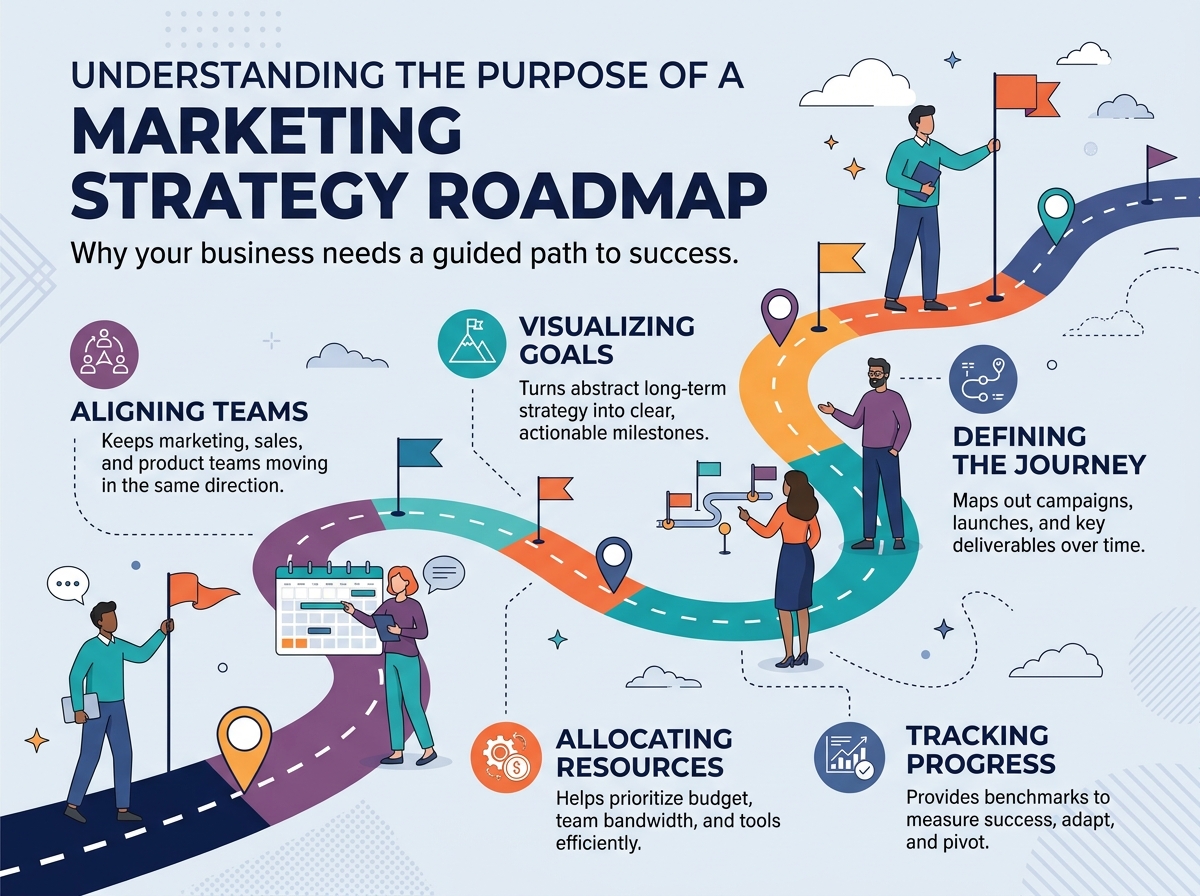
A marketing strategy roadmap is a structured plan that connects business goals with marketing priorities, activities, timelines, and performance expectations. It helps organizations move from broad ambitions to practical decisions about how they will attract customers, communicate their value, strengthen brand awareness, and support revenue growth.
Unlike a list of marketing tasks, a roadmap explains why specific activities matter and how they fit into the wider business strategy. For example, a company aiming to expand into a new market may need to improve its audience research, refine its messaging, strengthen its online visibility, and develop campaigns that introduce its products to potential customers. The roadmap organizes these efforts into a coordinated plan rather than treating each activity as an isolated project.
An effective roadmap also creates alignment between marketing, sales, leadership, and other departments. When everyone understands the objectives and expected outcomes, teams can coordinate their work more efficiently and avoid unnecessary duplication. This shared understanding becomes particularly valuable as businesses grow, introduce new products, or manage multiple marketing channels.
Turning Business Ambitions Into Clear Marketing Objectives
Every strong marketing roadmap begins with a clear understanding of what the business wants to accomplish. Some organizations want to increase brand awareness, while others focus on generating qualified leads, improving customer retention, entering new markets, or increasing sales of specific products. These ambitions influence which marketing activities deserve attention and how success should be measured.
Setting meaningful marketing goals and objectives helps transform broad business ambitions into measurable outcomes. Instead of simply aiming to improve online visibility, a business might seek to increase relevant website traffic by a defined percentage over a specific period. Rather than focusing only on lead generation, it could aim to improve the number of qualified leads that progress into sales opportunities.
The most useful objectives are specific enough to guide decisions while remaining realistic in relation to available resources and market conditions. They should also reflect the company’s wider commercial priorities. If the primary goal is profitable growth, marketing objectives should consider lead quality, customer acquisition costs, conversion rates, and revenue contribution rather than relying exclusively on impressions or social media engagement.
Businesses should distinguish between long-term ambitions and short-term targets. A long-term objective might involve becoming a recognized provider within a particular industry, while a short-term target could involve improving search visibility for important service categories. Connecting these objectives ensures that immediate activities support a larger strategic direction.
Building a Strategic Marketing Plan Around the Right Audience
A roadmap becomes more effective when it is built around a clear understanding of the intended audience. Even well-funded campaigns can produce weak results if their messages fail to address customer needs, purchasing concerns, or decision-making preferences.
A strong strategic marketing plan begins with research into customer behavior, market demand, competitor positioning, and the problems that the business can solve. Customer interviews, website behavior, sales conversations, search trends, and feedback can all reveal useful information about audience expectations. These insights help marketing teams develop relevant messages and select channels that reach potential customers more effectively.
Audience selection also influences how a business communicates its value. A company selling business software may need to address operational efficiency, integration requirements, and financial benefits. A local service provider may need to emphasize reliability, convenience, customer reviews, and service quality. The roadmap should reflect these differences instead of relying on a generic message across every channel.
Businesses can strengthen these decisions by connecting audience research with target market strategy. A clearly defined target market helps teams prioritize the customer segments most likely to benefit from their offerings, reducing wasted effort and making campaign messaging more relevant.
As customer preferences change, audience assumptions should be reviewed regularly. A roadmap should provide strategic direction without preventing the business from responding to new opportunities or emerging customer needs.
Organizing Priorities for Greater Marketing Impact
Marketing teams often face more opportunities than they can realistically pursue. Search engine optimization, content development, paid advertising, social media, partnerships, email marketing, and customer retention activities may all compete for limited time and budget. Without clear marketing priority setting, teams risk spreading their resources too thinly across initiatives that deliver different levels of value.
Prioritization should begin with the relationship between each activity and the business objectives. A campaign that supports a major product launch or reaches a high-value customer segment may deserve more attention than an experimental activity with uncertain benefits. Teams should also consider the expected impact, implementation effort, cost, urgency, and confidence behind each opportunity.
For example, a business with strong website traffic but few qualified inquiries may benefit more from improving landing pages and conversion messaging than from immediately increasing advertising expenditure. Another organization with a limited audience may need to invest in brand visibility and audience development before focusing heavily on conversion optimization.
A useful roadmap separates essential initiatives from supporting activities and experiments. Essential initiatives directly advance key business objectives. Supporting activities improve the effectiveness of those initiatives, while experiments allow the team to test new ideas without committing excessive resources.
This structure creates a more disciplined approach to decision-making. It also helps stakeholders understand why some projects are prioritized while others are postponed. Priorities should be reviewed when performance changes, business conditions shift, or new opportunities emerge.
Connecting Marketing Activities With a Practical Action Plan
Once objectives and priorities are established, they must be translated into clear responsibilities and deliverables. A marketing action plan explains what needs to happen, who is responsible, which resources are required, and how progress will be evaluated.
For instance, a business seeking to strengthen its organic search presence might coordinate keyword research, content production, technical improvements, internal linking, and performance monitoring. These activities depend on one another, so the roadmap should show how they connect rather than treating them as unrelated tasks.
Clear ownership is equally important. Each major initiative should have an accountable person or team, defined expectations, and an agreed method for reporting progress. This reduces confusion and makes it easier to identify delays before they affect the broader marketing plan.
The action plan should also account for dependencies. A campaign may require approved messaging, completed creative assets, a functioning landing page, and reliable tracking before it can launch. Identifying these requirements early helps teams avoid last-minute problems and coordinate work more effectively.
Businesses should keep the action plan detailed enough to support execution without making it unnecessarily complicated. The purpose is not to document every minor activity but to provide enough clarity for teams to move forward confidently and understand how their work contributes to the overall roadmap.
Creating a Long-Term Marketing Strategy That Can Adapt
Short-term campaigns can produce immediate attention, but sustainable growth usually depends on consistent effort over time. A long-term marketing strategy helps businesses balance immediate opportunities with investments that gradually build stronger market positioning.
Activities such as publishing useful content, improving search visibility, developing customer relationships, building brand recognition, and refining audience insights may require sustained investment before their full value becomes visible. Including these initiatives in the roadmap prevents teams from abandoning important work simply because the results are not immediate.
Long-term planning also encourages businesses to think beyond individual campaigns. Rather than measuring every activity in isolation, teams can evaluate how marketing initiatives reinforce one another. Educational content may support organic visibility, generate interest from potential buyers, and provide sales teams with useful resources. Customer feedback may improve messaging, product positioning, and future campaign development.
For businesses operating in competitive markets, marketing intelligence can strengthen these decisions by revealing patterns in customer behavior, market performance, and campaign results. Organizations can explore marketing intelligence for smarter decisions to understand how useful data can support more informed planning and help teams recognize opportunities that might otherwise be overlooked.
A flexible long-term strategy should include regular review points. The overall direction may remain stable while individual activities change in response to performance, customer demand, competitive pressure, or available resources.
Establishing a Realistic Marketing Implementation Timeline

A marketing roadmap becomes easier to manage when major initiatives are arranged across a realistic timeline. The marketing implementation timeline shows when activities should begin, when important deliverables are expected, and how different projects relate to one another.
The appropriate timeline depends on the complexity of the business objectives. A small campaign may require only a few weeks of preparation, while a major repositioning initiative or market expansion may involve research, development, testing, launch, and ongoing optimization over several months.
A practical timeline often separates marketing work into broader phases. The initial phase may focus on research, objective setting, and resource planning. The next phase may involve campaign development, content production, technical preparation, and internal approvals. Later phases can focus on launch, measurement, and optimization.
These phases should include reasonable allowances for review and unexpected delays. A timeline that assumes every task will finish perfectly on schedule can create pressure and reduce quality. Buffer time gives teams room to resolve problems without disrupting the entire plan.
The timeline should also reflect the order in which work needs to happen. For example, audience research should inform campaign messaging before final creative materials are produced. Tracking requirements should be established before launch so that performance data is available from the beginning.
Regular timeline reviews help teams recognize bottlenecks, adjust deadlines, and keep important initiatives moving forward.
Allocating Marketing Resources Where They Matter Most
Even a well-designed roadmap can fail if it requires more resources than the business can provide. Effective marketing resource allocation ensures that budgets, staff, tools, and time are distributed according to strategic priorities rather than short-term pressure or habit.
Budget decisions should consider expected business impact, historical performance, campaign costs, and the resources needed to execute each initiative successfully. A business may need to balance spending between paid advertising that generates immediate demand and content development that supports longer-term visibility. The right balance depends on its objectives, cash flow, competitive position, and current marketing capabilities.
Human resources deserve equal attention. A roadmap that assigns too many projects to a small team can create delays, inconsistent quality, and employee burnout. Before approving new initiatives, managers should evaluate whether the necessary skills and working hours are available. Some activities may require external specialists, additional training, or a more manageable delivery schedule.
Technology and operational tools should also support the plan. Analytics platforms, customer relationship management systems, marketing automation software, and project management tools can help teams coordinate work and evaluate results. However, purchasing more tools does not automatically improve performance. Each tool should address a specific need and contribute to a clear business objective.
Resource allocation should remain flexible. If one channel consistently delivers stronger results, the business may decide to increase its investment there. If an initiative underperforms despite reasonable optimization, the team may need to redirect resources toward more promising opportunities.
Measuring Progress Through Meaningful Marketing Milestones
A roadmap needs measurable checkpoints to show whether marketing activities are moving in the right direction. Marketing performance milestones provide opportunities to evaluate progress, identify obstacles, and decide whether the current approach remains appropriate.
Milestones should reflect the nature of the initiative. A content project might measure publication consistency, relevant organic traffic, engagement, and qualified inquiries. A paid campaign might focus on cost per qualified lead, conversion rate, and revenue contribution. A customer retention initiative might examine repeat purchases, renewal rates, and customer lifetime value.
It is important to distinguish between activity metrics and outcome metrics. Publishing more content or increasing advertising impressions demonstrates that work is taking place, but these numbers do not automatically prove that the business is moving closer to its objectives. Outcome metrics help establish whether marketing activity is producing meaningful progress.
Measurement also requires reliable tracking. Teams should define key performance indicators before campaigns begin and make sure the relevant systems can capture the necessary information. Inconsistent tracking can lead to misleading conclusions and make it difficult to compare performance across channels.
Regular milestone reviews should lead to practical decisions. If results are below expectations, the team can investigate possible causes, test alternative messages, improve audience targeting, or adjust the implementation timeline. If results exceed expectations, the business can evaluate whether additional investment is justified.
The goal is not to make every initiative appear successful. It is to create a clear understanding of what is working, what needs improvement, and where the next decision should be made.
Aligning Demand Generation With the Wider Marketing Roadmap
Marketing roadmaps become particularly valuable when they connect awareness-building activities with lead generation and sales outcomes. Businesses often invest in attracting attention without creating a clear path for interested prospects to move toward a purchase.
An effective roadmap considers the full customer journey, from initial discovery to research, evaluation, and conversion. Content, advertising, email communication, sales follow-up, and customer relationship management should work together to support this journey.
For B2B organizations, this coordination can be especially important because purchasing decisions may involve several stakeholders and longer evaluation periods. Marketing teams need to create awareness, educate potential buyers, nurture interest, and provide sales teams with relevant information at the appropriate time. A connected B2B demand generation engine can help organizations structure these activities around a more consistent process for creating and developing business opportunities.
Automation can also support the roadmap when it is used thoughtfully. Automated follow-ups, audience segmentation, lead nurturing, and performance reporting can reduce repetitive work and improve consistency. Businesses exploring affiliate marketing automation tools and techniques can apply similar planning principles to coordinating partner communications, tracking referrals, and managing affiliate-related activities.
Automation should support the strategy rather than replace it. Teams still need to understand customer needs, create relevant messaging, maintain accurate data, and review performance. When these foundations are in place, automation can help marketing activities operate more efficiently and consistently.
Keeping the Roadmap Relevant as Business Conditions Change
A marketing strategy roadmap should provide stability without becoming rigid. Customer expectations, competitor activities, technology, budgets, and market conditions can change throughout the year. A plan that never adapts may continue directing resources toward assumptions that are no longer valid.
Regular reviews help businesses compare actual performance with planned outcomes. These reviews can identify emerging opportunities, highlight underperforming channels, and reveal whether the original objectives remain realistic. They also give marketing and leadership teams a chance to discuss changing business priorities before those changes disrupt execution.
However, flexibility does not mean abandoning the roadmap whenever results fluctuate. Some marketing activities require time to produce reliable evidence, and short-term changes may not justify a complete strategic shift. Teams should distinguish between temporary variation and a consistent performance pattern before making major decisions.
A useful review process considers performance data alongside customer feedback, sales insights, competitive developments, and resource constraints. Together, these sources provide a more complete understanding of what needs to change.
The roadmap should be updated when evidence supports a change in direction, but its central purpose should remain clear: helping the business connect marketing investments with meaningful commercial outcomes.
Building a Business Marketing Growth Plan for Sustainable Results

The ultimate value of a roadmap lies in its ability to connect everyday marketing activities with the company’s broader growth ambitions. A business marketing growth plan brings together objectives, audience insights, priorities, timelines, budgets, and performance measures in one coordinated structure.
This approach helps businesses make more consistent decisions about where to invest, which opportunities to pursue, and how to evaluate the results. It also improves communication across teams because everyone can see how individual responsibilities support shared objectives.
A growing company might initially focus on building awareness and generating qualified leads. As its customer base expands, the roadmap may shift toward improving conversion rates, increasing repeat purchases, developing referral opportunities, and strengthening customer relationships. These changes allow marketing to evolve alongside the business instead of remaining fixed around its earliest priorities.
The strongest roadmaps are grounded in evidence, realistic about resources, and clear about expected outcomes. They recognize that successful marketing depends not only on planning but also on consistent execution, thoughtful measurement, and a willingness to learn from results.
When these elements work together, a marketing strategy roadmap becomes more than a planning document. It becomes a practical foundation for making smarter marketing decisions, coordinating teams, responding to change, and pursuing sustainable business growth.
Frequently Asked Questions
1. What is a marketing strategy roadmap?
A marketing strategy roadmap is a structured plan that connects business goals with marketing priorities, campaigns, resources, timelines, and performance indicators. It helps teams understand what they need to achieve, how they will approach their objectives, and how progress will be measured.
2. Why is a marketing strategy roadmap important for businesses?
It provides direction, improves coordination between teams, and helps businesses focus their resources on activities that support their most important objectives. It also makes it easier to track progress, identify problems, and adjust marketing activities when circumstances change.
3. What should a marketing strategy roadmap include?
A roadmap typically includes business objectives, target audience insights, marketing priorities, planned activities, responsible teams, implementation timelines, budget requirements, performance milestones, and review schedules. The exact structure depends on the organization’s size, goals, and available resources.
4. How is a marketing roadmap different from a marketing plan?
A marketing plan explains the strategy, target audience, channels, and activities used to achieve marketing objectives. A marketing roadmap emphasizes how those priorities and activities are organized over time, including important milestones, dependencies, and expected progress. The two documents work best when they support one another.
5. How often should a marketing strategy roadmap be updated?
Many businesses review their roadmaps monthly or quarterly, depending on how quickly their markets and campaigns change. Major changes in customer demand, business objectives, budgets, or campaign performance may require an earlier review. Regular evaluation helps keep the roadmap relevant without creating unnecessary changes.
6. How can businesses prioritize marketing activities?
Businesses can prioritize activities by considering their expected impact, alignment with business objectives, implementation effort, cost, urgency, and available evidence. Activities that address important customer needs or remove significant barriers to growth generally deserve closer attention than projects with unclear benefits.
7. Which metrics should be used to measure marketing roadmap performance?
Useful metrics depend on the business objectives and may include qualified leads, conversion rates, customer acquisition costs, revenue contribution, organic traffic, customer retention, and return on marketing investment. Businesses should select indicators that demonstrate progress toward their goals rather than measuring activity alone.
8. How does resource allocation affect marketing success?
Resource allocation determines whether teams have the budget, skills, tools, and time needed to execute their marketing activities effectively. Appropriate allocation reduces wasted effort, prevents teams from becoming overloaded, and helps direct investment toward initiatives with stronger potential business value.
9. Can small businesses benefit from a marketing strategy roadmap?
Yes. Small businesses can use a simple roadmap to clarify their goals, choose suitable marketing channels, manage limited budgets, and track results. They do not need a complicated planning system; a clear set of priorities, responsibilities, deadlines, and performance measures can provide a useful foundation.
10. How does a marketing strategy roadmap support long-term growth?
It helps businesses maintain consistent marketing efforts, learn from performance data, adapt to changing customer needs, and invest in activities that support future opportunities. By connecting short-term actions with long-term objectives, the roadmap encourages more sustainable and coordinated growth.