


Marketing Procurement helps businesses manage the purchasing of external marketing services, control supplier expenses, and build valuable agency partnerships. From vendor selection and contract management to budget allocation and procurement optimization, an effective approach connects marketing investments with organizational objectives. By improving supplier relationships, financial visibility, and purchasing decisions, companies can strengthen marketing operations while maintaining service quality and long-term business value.
Marketing departments are responsible for creating campaigns, building brand awareness, reaching customers, and supporting business growth. However, these activities depend on more than internal creativity and planning. Behind most successful marketing operations is a network of external agencies, service providers, technology companies, production teams, and specialized suppliers. Managing these relationships while maintaining financial control has become an important responsibility for modern organizations. This is where Marketing Procurement plays a significant role.
Marketing procurement refers to the broader process of sourcing, evaluating, purchasing, and managing the external resources required to support marketing activities. It connects purchasing decisions with organizational priorities, helping companies obtain the right services without compromising quality, efficiency, or financial stability. From hiring a digital marketing agency to purchasing advertising services and investing in marketing technology, procurement influences how businesses distribute their resources.
The growing complexity of marketing operations has made this function more important. Companies frequently work with multiple suppliers across different channels, each offering different pricing models, capabilities, and service arrangements. Without proper coordination, these relationships can create overlapping expenses, inconsistent delivery, and limited visibility into marketing investments.
A well-developed procurement approach brings greater structure to these activities. It allows businesses to understand what they are purchasing, why particular suppliers are selected, and how external services contribute to their marketing objectives. Rather than treating purchasing as an administrative responsibility, organizations can use procurement as a valuable part of their broader business strategy.
The Changing Relationship Between Marketing and Procurement

Marketing and procurement were traditionally viewed as separate business functions. Marketing teams concentrated on creative development, campaign execution, and customer engagement, while procurement departments focused on purchasing requirements, supplier agreements, and financial approvals. As marketing operations expanded, the responsibilities of these departments increasingly began to overlap.
Modern campaigns often require several external services working together. A single product launch might involve a branding agency, video production company, advertising provider, content specialist, market research firm, and marketing technology platform. Each supplier contributes something different, but their combined performance influences the final campaign outcome.
This creates a need for stronger coordination between marketing and procurement. Marketing professionals understand campaign objectives and creative requirements, while procurement teams bring experience in commercial evaluation, supplier relationships, and purchasing controls. When both departments exchange information, purchasing decisions become more closely connected to actual business needs.
For example, selecting an advertising agency should involve more than comparing service prices. The marketing team needs to evaluate creative capabilities and audience understanding, while procurement examines contractual terms, service commitments, pricing transparency, and supplier reliability.
This collaborative approach makes it easier to balance creative expectations with financial responsibility. It also reduces the likelihood of purchasing services that appear attractive commercially but fail to support the intended marketing objectives.
Why Supplier Relationships Influence Marketing Performance
External suppliers are an important part of the marketing ecosystem. Businesses depend on them for specialized knowledge, technical resources, creative production, and campaign support. The quality of these relationships can influence project timelines, brand consistency, and the overall effectiveness of marketing activities.
Marketing Supplier Management focuses on maintaining productive relationships with external providers throughout the purchasing and service delivery process. It includes supplier communication, performance evaluation, service monitoring, and ongoing relationship development.
A supplier relationship should not be measured only by whether a provider completes an agreed task. Businesses also need to consider communication quality, responsiveness, flexibility, and the ability to understand changing requirements.
Imagine an organization working with an external content production company. The supplier may consistently deliver articles, but problems can arise if the content does not match brand expectations, revisions take too long, or communication becomes inconsistent. These issues can affect publishing schedules and create additional work for internal marketing teams.
Regular supplier evaluations help organizations recognize these problems before they become larger operational concerns. Businesses can also identify providers that consistently deliver reliable services and deserve stronger long-term partnerships.
This is where Marketing Vendor Reviews become relevant. Evaluating vendor experiences, service quality, and delivery performance provides useful information for future procurement decisions. It also helps companies distinguish between suppliers that simply complete transactions and those that contribute meaningful value to their marketing operations.
Strong supplier relationships create continuity. They allow businesses to work with providers that understand their expectations, maintain service standards, and adapt as marketing requirements change.
Marketing Vendor Selection and the Value of Making the Right Choice
Selecting a supplier can have long-term consequences for a marketing department. A provider may offer competitive pricing, but that does not necessarily mean it has the experience or resources required to deliver satisfactory results.
Marketing Vendor Selection involves assessing potential suppliers according to their suitability for specific business requirements. Relevant considerations include industry experience, service quality, technical capabilities, previous work, communication standards, pricing structures, and delivery capacity.
The evaluation process becomes particularly important when businesses purchase specialized services. A company looking for technical SEO support needs a provider with relevant search optimization expertise, while an organization planning a brand campaign may require a creative agency with strong design and storytelling capabilities.
Supplier suitability also depends on the organization’s internal working environment. A provider might have an impressive portfolio but struggle to meet approval requirements, communicate with different departments, or deliver projects within established timelines.
Commercial transparency is another important factor. Businesses should understand what a proposal includes, which services require additional payments, and whether the supplier charges separately for revisions, reporting, software, or production expenses.
Choosing a vendor based entirely on the lowest quotation can create problems later. Additional expenses, poor service delivery, and repeated corrections may make an inexpensive agreement more costly over time.
Effective vendor selection considers the complete relationship between price, capability, reliability, and expected business value.
The Marketing Purchasing Process Behind Everyday Business Decisions
Every marketing purchase involves a series of decisions that determine how a service is acquired and managed. These decisions may appear simple when a department purchases an individual subscription or hires a freelancer. However, larger projects require greater coordination and financial oversight.
The Marketing Purchasing Process connects business requirements with supplier proposals, approvals, agreements, and service delivery. It creates a consistent structure for handling purchases while ensuring that marketing departments remain aware of their financial commitments.
Consider a company preparing a regional advertising campaign. It may need creative production, promotional materials, media placement, and performance reporting. Each requirement has different suppliers, delivery expectations, and costs.
Without a coordinated purchasing process, departments may approve services independently or overlook expenses associated with external providers. This can lead to budget confusion and difficulties when multiple suppliers are involved in the same campaign.
A structured purchasing environment makes these relationships easier to manage. Requirements are identified before suppliers are approached, commercial proposals are evaluated against business needs, and appropriate approvals are obtained before commitments are finalized.
The process also creates a record of purchasing decisions. This information becomes useful when reviewing previous projects, comparing supplier expenses, or planning future marketing activities.
Marketing Procurement Strategy as a Long-Term Business Investment
Individual purchasing decisions become more valuable when they support a consistent organizational direction. This is the central purpose of a Marketing Procurement Strategy.
A strategic approach considers how suppliers, contracts, services, and purchasing priorities contribute to long-term marketing performance. Instead of treating every transaction separately, organizations examine the wider structure of their supplier relationships and identify opportunities to improve coordination.
For example, a company might discover that several departments purchase similar design or content services from different providers. Reviewing these arrangements could reveal opportunities to consolidate certain requirements, negotiate more suitable commercial agreements, or improve communication between teams.
However, supplier consolidation is not always the right decision. Different marketing activities may require highly specialized expertise, and maintaining several providers can offer greater flexibility. The objective is to create an appropriate supplier structure rather than simply reduce the number of vendors.
A strong strategy also accounts for changing market conditions. Marketing technologies, advertising platforms, consumer behavior, and business priorities can change considerably over time. Procurement decisions should reflect these developments rather than relying entirely on previous purchasing arrangements.
This makes procurement a continuing business function. Organizations need to review their supplier networks, reassess service requirements, and ensure that purchasing arrangements remain relevant to current marketing objectives.
Marketing Agency Procurement and the Cost of External Expertise
Marketing agencies often provide businesses with capabilities that would be difficult or expensive to develop internally. These may include campaign strategy, advertising management, creative development, public relations, content production, and market research.
Marketing Agency Procurement involves identifying and acquiring agency services that match organizational requirements. Because agency agreements can involve substantial financial commitments, selecting the right partner requires careful commercial and operational evaluation.
One important consideration is the agency’s actual service scope. An agency may present a comprehensive marketing proposal, but certain activities could be excluded from the quoted price. Media spending, additional creative revisions, third-party software, production expenses, and specialized consulting may be charged separately.
Understanding these differences helps organizations avoid unexpected expenses. It also makes it easier to compare proposals from different agencies on an equal basis.
Another important factor is the relationship between the agency and the internal marketing team. Even an experienced provider may struggle to deliver satisfactory results if communication is limited or responsibilities are unclear.
Businesses should understand how account management will work, who approves campaign materials, how reporting will be delivered, and how changes to project requirements will be handled.
Agency procurement therefore involves more than hiring external expertise. It establishes a commercial and operational relationship that should support the organization’s marketing activities over time.
Marketing Cost Management Beyond Reducing Expenses
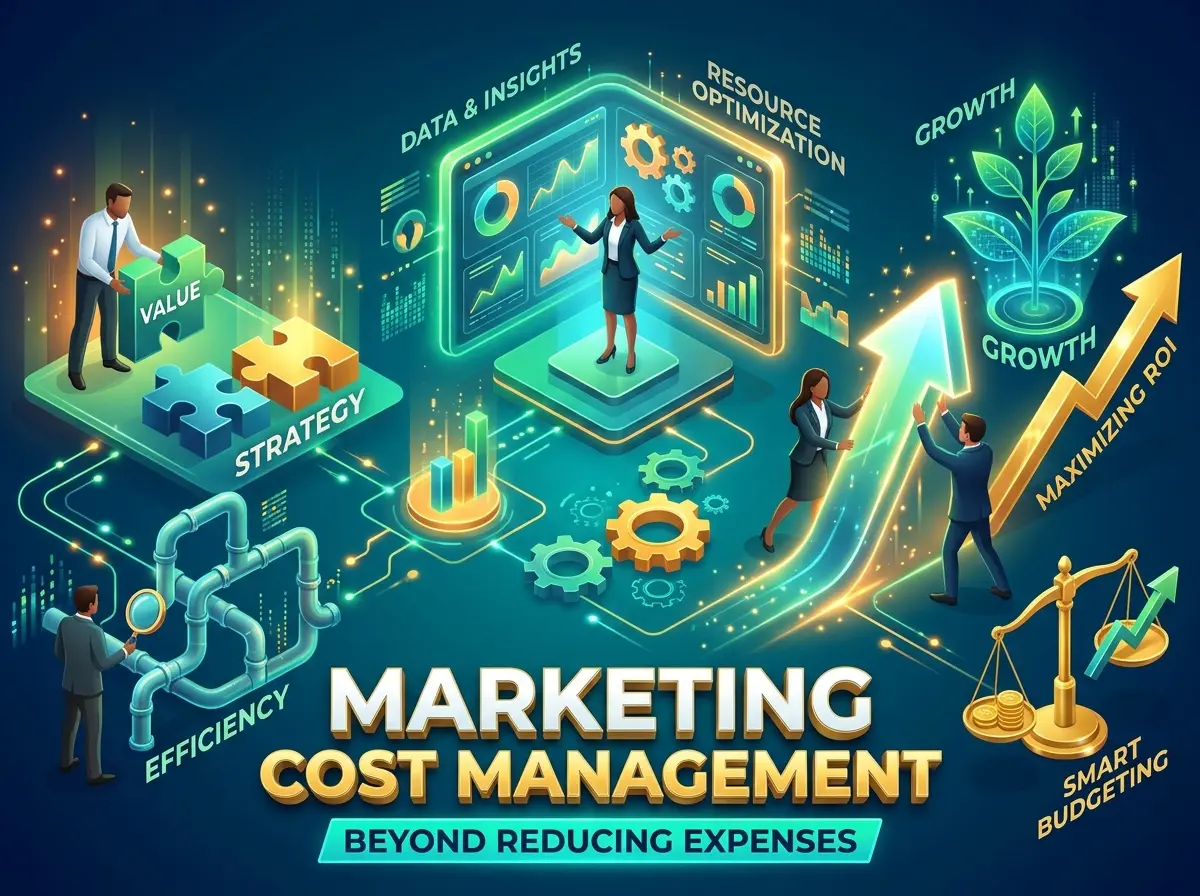
Marketing budgets often include several different types of expenditure. Advertising platforms, software subscriptions, agency retainers, freelance services, production costs, and research activities can all contribute to the total investment.
Marketing Cost Management helps organizations understand these expenses and evaluate whether their purchasing decisions provide appropriate value.
The challenge is that marketing costs are not always easy to compare. Some suppliers charge fixed monthly fees, while others use project-based pricing, hourly rates, performance-based arrangements, or additional service charges.
Procurement teams can improve financial visibility by reviewing these commercial structures and identifying how individual purchases affect the overall budget.
However, cost management should not become a process of automatically selecting cheaper suppliers. Marketing services frequently require expertise and creative quality that cannot be measured through price alone.
For instance, a business may choose an inexpensive website design provider only to discover that the delivered website requires extensive corrections or additional development work. The initial savings may disappear once the additional expenses are considered.
A more useful approach examines the total cost of acquiring and maintaining a service. This includes the initial purchase, ongoing fees, support requirements, implementation expenses, and potential costs associated with poor delivery.
Understanding the complete financial picture allows organizations to make more balanced purchasing decisions.
Marketing Contract Management and the Importance of Transparency
Supplier agreements establish the responsibilities and commercial expectations that define a marketing partnership. They are particularly important when organizations work with external agencies, production companies, consultants, and technology providers.
Marketing Contract Management involves creating, reviewing, maintaining, and monitoring agreements throughout their lifecycle.
A marketing contract may include service descriptions, pricing arrangements, project deadlines, payment conditions, confidentiality requirements, ownership rights, and termination clauses. These details help ensure that both parties understand what has been agreed upon.
Intellectual property is especially relevant in marketing. Businesses should understand who owns the final creative materials, whether original files will be provided, and how content, images, videos, and campaign assets can be used after a project ends.
Contract renewal also requires attention. Some supplier agreements continue automatically unless one party provides notice within a specified period. Without proper monitoring, businesses may continue paying for services that no longer meet their requirements.
Clear contract management improves accountability and helps organizations maintain better control over external commitments. It also supports stronger supplier relationships because expectations are established before disagreements arise.
Marketing Service Sourcing and Access to the Right Capabilities
Marketing departments cannot always maintain every required skill internally. Some projects demand specialized professionals, advanced technology, or production resources that are only available through external providers.
Marketing Service Sourcing connects these requirements with suitable service providers in the market.
The sourcing process can involve finding SEO specialists, advertising consultants, video production companies, research agencies, designers, public relations professionals, and marketing technology providers.
The type of service determines what makes a supplier suitable. A business searching for a long-term content partner may prioritize editorial experience and consistent delivery, whereas a company looking for event photography may focus on portfolio quality, equipment, availability, and project turnaround.
Understanding the available supplier market helps businesses make better comparisons. It also provides insight into pricing differences, service capabilities, and emerging solutions.
Supplier availability is another important consideration. A provider may have excellent technical expertise but insufficient capacity to handle a large campaign within the required timeframe.
Effective sourcing therefore connects business requirements with realistic supplier capabilities. It gives marketing departments access to external expertise while helping organizations avoid unnecessary long-term resource commitments.
Marketing Budget Allocation and the Importance of Financial Priorities
A marketing budget reflects the financial resources available for business promotion and customer engagement. However, distributing those resources across different activities requires more than estimating individual service costs.
Marketing Budget Allocation connects spending decisions with organizational priorities, campaign requirements, and expected outcomes.
For example, a business may need to distribute its resources across paid advertising, search optimization, content production, agency services, and marketing technology. Each activity contributes differently to the marketing operation, and its financial requirements may change as campaigns develop.
Procurement supports these decisions by providing information about existing supplier commitments, proposed service costs, contract obligations, and available alternatives.
This information helps marketing and finance departments understand how much flexibility remains within the budget and whether new purchasing requests can be accommodated.
Budget allocation also needs to account for unexpected requirements. A company may identify a new advertising opportunity or decide to expand into another market during an existing financial period. If too much of its budget is tied to inflexible supplier arrangements, responding to these opportunities becomes difficult.
A balanced allocation approach maintains financial discipline while leaving room for changing business priorities.
How Analytics Strengthen Procurement Decisions
Procurement decisions become more meaningful when organizations can evaluate the results of their spending. Supplier performance, campaign outcomes, delivery timelines, and financial records provide useful information about the effectiveness of external marketing services.
Marketing analytics helps businesses connect these different sources of information. Rather than evaluating a supplier only through quotations or personal opinions, organizations can consider measurable evidence when reviewing purchasing decisions.
For example, a company working with multiple advertising providers may compare service expenses, campaign reporting quality, delivery consistency, and relevant performance indicators. This provides a stronger basis for understanding which supplier arrangements are producing value.
Organizations investing in Marketing Analytics And Data-Driven Insights can use these capabilities to improve the connection between marketing investments and business performance.
Communication also influences how effectively this information is used. Marketing teams understand campaign requirements, finance departments monitor spending, and procurement professionals manage supplier arrangements. When these departments exchange accurate information, purchasing decisions become more consistent.
Strong Strategic Business Communication helps maintain this coordination by creating a shared understanding of responsibilities, supplier expectations, and organizational priorities.
Marketing Procurement Optimization in an Increasingly Digital Environment
As marketing operations expand, businesses often face growing numbers of suppliers, purchasing agreements, subscriptions, and external service requirements. Managing these activities manually can create unnecessary complexity.
Marketing Procurement Optimization focuses on improving the efficiency, transparency, and consistency of purchasing operations.
Digital procurement systems can help organizations centralize supplier records, monitor purchasing approvals, track contract information, and maintain visibility into financial commitments. These capabilities make it easier for different departments to access relevant purchasing information.
Automation can also reduce repetitive administrative work. Approval notifications, invoice tracking, contract renewal alerts, and purchasing records can be managed through connected systems, allowing procurement teams to concentrate on supplier evaluation and strategic decisions.
Artificial intelligence may further support procurement by helping analyze supplier proposals, identify spending patterns, and organize large volumes of purchasing information. Nevertheless, human evaluation remains important when assessing creative expertise, service quality, business relationships, and supplier suitability.
The most effective optimization efforts combine technology with clear internal processes. Introducing new software without establishing accurate records or departmental responsibilities may simply transfer existing problems into a digital environment.
A well-coordinated system makes procurement easier to manage while supporting better decisions across the marketing department.
Building a More Connected Future for Marketing Procurement

Organizations will need to pay closer attention to supplier transparency, data protection, intellectual property, contract flexibility, and the long-term value of external partnerships. Data-driven methods such as market basket analysis can provide additional insights into purchasing patterns, helping businesses identify relationships between different marketing services, supplier offerings, and operational expenses. By understanding how various services and resources are connected, marketing teams can make more informed procurement decisions, recognize opportunities for better resource allocation, and evaluate whether their existing supplier relationships are delivering sufficient value. This analytical approach can also support more strategic purchasing decisions by revealing patterns that might otherwise remain unnoticed during routine procurement reviews.
Conclusion
Marketing Procurement is an important part of managing the resources, suppliers, and external services that support business marketing activities. It connects purchasing decisions with organizational goals while improving supplier relationships, financial visibility, and operational coordination.
From marketing agency procurement and vendor selection to contract management, service sourcing, and budget allocation, every purchasing decision contributes to the wider effectiveness of marketing operations.
Businesses that approach procurement strategically can make better use of their resources, maintain reliable supplier partnerships, and evaluate external investments more effectively. As marketing requirements continue to change, a coordinated procurement function will remain valuable for organizations seeking sustainable performance and stronger business relationships.
Frequently Asked Questions (FAQs)
1. What is Marketing Procurement?
Marketing Procurement is the process of identifying, evaluating, purchasing, and managing external products and services required for marketing activities. It helps businesses select suitable suppliers, control expenses, and ensure that purchasing decisions support marketing objectives.
2. Why is marketing procurement important for businesses?
It improves purchasing transparency, reduces unnecessary expenses, strengthens supplier relationships, and helps organizations use marketing budgets more effectively. It also creates better coordination between marketing, finance, and procurement departments.
3. What services are included in marketing procurement?
Marketing procurement can include advertising, SEO, content creation, graphic design, public relations, market research, influencer marketing, media buying, video production, and marketing technology services.
4. How does marketing supplier management improve business performance?
Marketing supplier management helps businesses monitor service quality, maintain communication, evaluate vendor reliability, and establish clear expectations. These activities contribute to more consistent marketing delivery and stronger external partnerships.
5. What should businesses consider during marketing vendor selection?
Businesses should evaluate supplier expertise, previous experience, service quality, pricing transparency, communication, delivery capacity, and reliability. The selected vendor should also understand the organization’s marketing requirements.
6. How does marketing procurement help control costs?
It helps identify unnecessary purchases, compare supplier prices, review existing contracts, reduce duplicated services, and improve spending visibility. This allows businesses to manage expenses without automatically compromising service quality.
7. What is the difference between marketing procurement and marketing purchasing?
Marketing purchasing generally focuses on completing individual transactions, while marketing procurement covers the broader process of planning requirements, sourcing suppliers, evaluating proposals, negotiating agreements, and managing supplier relationships.
8. Why is contract management important in marketing procurement?
Contract management establishes clear responsibilities, pricing arrangements, service expectations, deadlines, intellectual property rights, and renewal conditions. It reduces misunderstandings and helps businesses maintain control over supplier agreements.
9. How can marketing analytics support procurement decisions?
Marketing analytics provides information about campaign performance, supplier effectiveness, service costs, and business outcomes. Procurement teams can use these insights to compare providers and determine whether marketing investments deliver sufficient value.
10. How can businesses optimize their marketing procurement process?
Businesses can improve procurement by centralizing supplier information, standardizing purchasing procedures, reviewing contracts regularly, monitoring supplier performance, using procurement technology, and maintaining communication between marketing and finance teams.