


Marketing Resource Allocation is the process of distributing budgets, employee time, technology, and other resources across marketing activities. Effective allocation connects investments with business goals, improves channel performance, supports team productivity, and reduces unnecessary spending. By reviewing campaign results and adjusting priorities regularly, businesses can make better use of their marketing resources and build a more efficient strategy.
Marketing success is not determined only by how much a business spends. It also depends on how effectively that money, time, people, and technology are distributed across different activities. A company may have a large marketing budget but still struggle to achieve meaningful results if its resources are concentrated in the wrong channels or assigned to activities that do not support its objectives. This is why Marketing Resource Allocation plays an important role in building an efficient and results-driven marketing operation.
Marketing teams work with several competing priorities, including brand awareness, lead generation, customer acquisition, retention, product promotion, and market expansion. Each activity requires different levels of investment and attention. Without a clear allocation strategy, teams can overspend on familiar channels, overlook promising opportunities, or stretch employees across too many responsibilities.
A thoughtful approach helps businesses understand where their resources create the greatest value. It connects marketing investments with organizational goals, customer needs, and measurable performance. Rather than distributing resources equally across every activity, companies can make informed decisions based on potential impact, current performance, and future opportunities.
Understanding Marketing Resource Allocation
Marketing Resource Allocation refers to the process of distributing a company’s available marketing resources among campaigns, channels, teams, technologies, and business priorities. These resources include financial budgets, employee time, creative capabilities, marketing tools, customer data, and operational support.
The purpose is not simply to control expenses. Effective allocation ensures that each resource contributes to a meaningful business outcome. For example, a company focused on increasing brand awareness may invest more heavily in content creation, public relations, and social media. A business prioritizing immediate sales growth may direct a larger share of its investment toward paid search, conversion optimization, and sales enablement.
Marketing teams must also consider how different activities support one another. A social media campaign may introduce customers to a brand, while educational content helps them understand its products. Email communication can then maintain interest and encourage a purchase. When resources are distributed with this wider customer journey in mind, marketing activities become more connected.
Why Resource Distribution Influences Marketing Performance
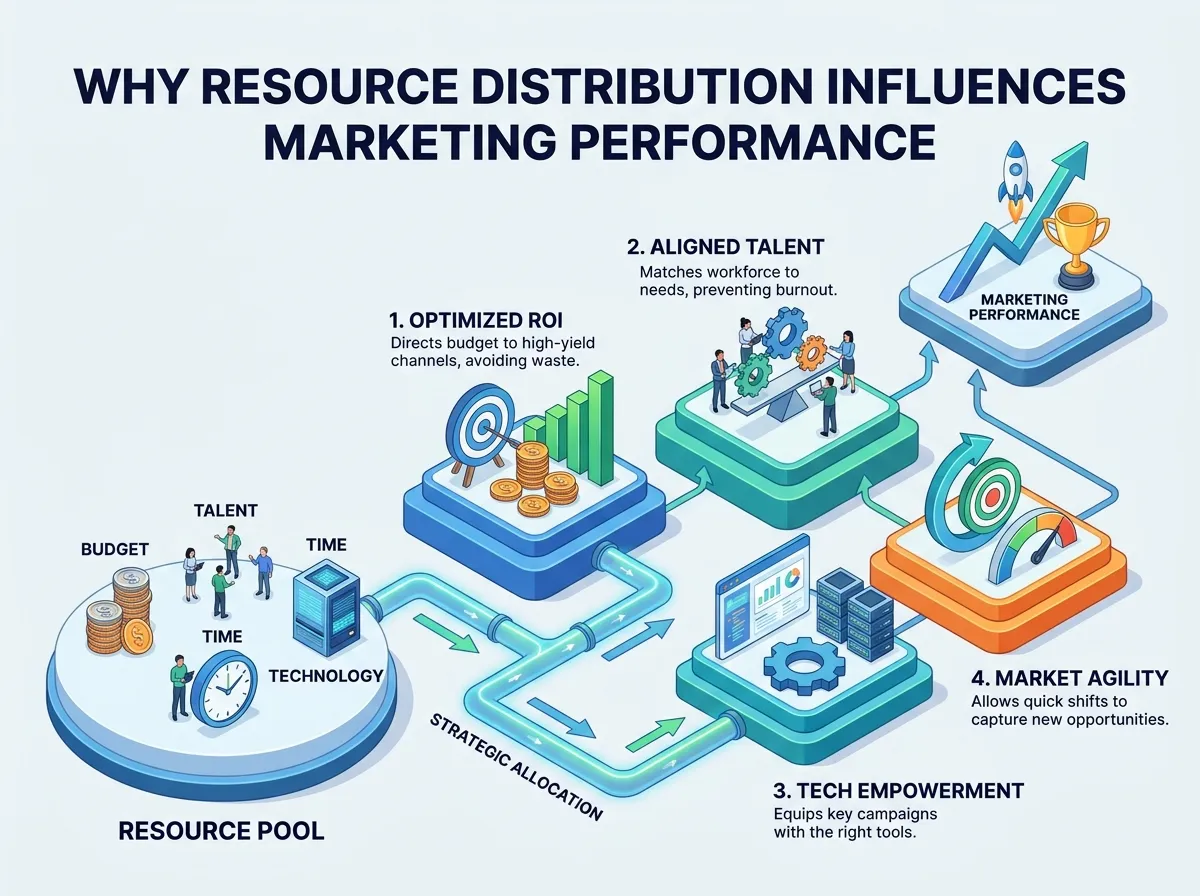
Poor resource distribution can weaken even a well-designed marketing strategy. A business might invest heavily in advertising without allocating enough money to landing page improvements, creative development, or lead follow-up. The campaign may generate traffic, but the organization could struggle to convert that attention into revenue.
A similar problem occurs when marketing teams have more projects than available employees can reasonably manage. Important campaigns may experience delays, content quality may decline, and employees may spend too much time switching between unrelated responsibilities.
A balanced approach helps prevent these problems. It gives teams a clearer understanding of priorities and allows managers to identify where additional support is necessary. It also makes performance evaluation more meaningful because spending and operational effort can be compared with actual results.
For businesses operating in competitive markets, the ability to adjust investments is especially valuable. Customer expectations, advertising costs, and channel performance can change quickly. Companies that regularly review their resource decisions are better positioned to respond without wasting their entire budget on outdated assumptions.
Connecting Marketing Budget Allocation With Business Goals
Marketing Budget Allocation should begin with the outcomes a business wants to achieve. A company cannot determine whether an investment is appropriate without understanding what that investment is expected to accomplish.
For instance, an organization entering a new market may need to prioritize research, audience education, brand positioning, and awareness campaigns. An established business with a strong customer base may place greater emphasis on retention, loyalty programs, and cross-selling opportunities. Although both companies may use similar marketing channels, their spending priorities should reflect different objectives.
Clear goals also make it easier to evaluate competing requests. When several departments want additional funding, managers can compare proposals according to their expected contribution to business performance. A campaign that supports a major product launch may deserve more immediate attention than an activity with limited strategic relevance.
This connection between investment and business direction is also important when companies are developing a broader Product Marketing Strategy. Product positioning, audience expectations, launch objectives, and competitive differences all influence which marketing activities require greater support. Allocating resources around these priorities helps ensure that promotional efforts reinforce the product’s actual market value.
The Role of Marketing Resource Planning
Marketing Resource Planning gives organizations a structured way to understand what they have available and what each project requires. It covers more than financial estimates. Managers must also consider employee skills, campaign schedules, production capacity, technology requirements, and the time needed to complete important activities.
A marketing department might have enough money to run several campaigns but lack the designers, analysts, or content specialists needed to execute them effectively. In another situation, the team may have sufficient staff but depend on outdated software that slows down reporting and campaign management.
Identifying these gaps early allows managers to make practical decisions. They may redistribute responsibilities, hire temporary specialists, invest in training, outsource selected tasks, or introduce tools that reduce repetitive work.
Good planning also improves coordination between departments. Marketing activities often depend on information from sales, customer service, product development, and management. When these teams understand their responsibilities and deadlines, projects are less likely to experience unnecessary delays.
Marketing Investment Distribution Across Different Channels
One of the most visible aspects of resource allocation is deciding how much investment each marketing channel should receive. Businesses may use search marketing, social media, email campaigns, content publishing, paid advertising, public relations, events, and partnerships to reach their audiences.
However, distributing the budget equally across these channels is rarely the best solution. Each channel has a different purpose, cost structure, audience, and contribution to the customer journey.
Search marketing may attract people who are already looking for a particular product or service. Social media can help a company build awareness and maintain regular communication with its audience. Email marketing supports direct engagement, while content marketing can answer customer questions and strengthen long-term visibility.
The most appropriate distribution depends on customer behavior and business objectives. A B2B organization with a long purchasing cycle may benefit from investing in educational content, professional networking, webinars, and account-focused campaigns. A consumer brand may need a different mix that includes social media, influencer partnerships, and paid search.
Understanding the audience is therefore essential. A well-developed Target Market Strategy helps businesses identify which customer groups matter most, where those audiences spend their time, and what influences their purchasing decisions. These insights make channel investment decisions more relevant and reduce the risk of spending money on audiences that are unlikely to become customers.
Improving Results Through Marketing Spend Optimization
Marketing Spend Optimization involves examining how effectively financial investments contribute to marketing outcomes. It helps businesses identify unnecessary expenses, improve campaign efficiency, and redirect money toward activities that produce stronger results.
The process should not focus entirely on reducing costs. Cutting spending without considering its impact can damage campaign quality, reduce audience reach, or weaken long-term brand development. The objective is to improve the value generated by each investment.
For example, a company may discover that one advertising campaign generates a large number of clicks but very few qualified leads. Another campaign may attract fewer visitors but produce more valuable customer inquiries. Simply comparing traffic numbers would favor the first campaign, even though the second may contribute more directly to business growth.
Businesses should therefore evaluate performance using measures that reflect their objectives. Depending on the campaign, these may include cost per lead, customer acquisition cost, conversion rate, return on marketing investment, revenue contribution, and customer lifetime value.
Marketing teams can also compare results across different periods to understand whether performance is improving or declining. This makes it easier to recognize inefficient spending patterns and determine whether a campaign needs adjustment, additional investment, or a different approach.
Managing People and Capabilities Within Marketing Teams
Financial resources are only one part of marketing operations. Employee expertise, working hours, creative capacity, and decision-making responsibilities also influence how much a team can accomplish.
Marketing Team Resource Management focuses on assigning people and responsibilities according to project requirements and individual capabilities. A content strategist, for example, may be responsible for research and editorial direction, while designers develop visual assets and analysts evaluate campaign results. Clear responsibilities help each person contribute effectively without creating unnecessary overlap.
Workload visibility is equally important. When managers assign too many projects to the same employees, deadlines become difficult to maintain and quality may suffer. A realistic workload assessment helps identify which activities deserve immediate attention and which can be postponed.
Businesses should also consider whether their teams have the skills required for upcoming priorities. If a company plans to expand into marketing automation or advanced analytics, existing employees may need additional training. Investing in professional development can improve long-term capabilities and reduce dependence on external support.
Resource decisions should also account for collaboration. Some campaigns require several specialists to work together, meaning that assigning one employee to a project is not enough. Managers need to consider the time and availability of everyone involved.
Using Technology to Support Better Allocation Decisions

Marketing operations generate significant amounts of information, from advertising reports and website analytics to customer engagement records and campaign schedules. Managing these details manually can make it difficult to understand where resources are being used and whether they are producing sufficient value.
Marketing Resource Management Tools can help organizations organize campaign budgets, monitor project timelines, manage creative assets, coordinate employee workloads, and track marketing activities. These platforms provide greater visibility into how resources are distributed across the department.
Marketing automation platforms can also support more efficient operations by handling repetitive tasks such as email scheduling, lead nurturing, customer segmentation, and campaign workflows. This allows employees to spend more time on strategy, creative development, and performance analysis.
Businesses comparing different platforms should look beyond the number of features offered. They need to consider ease of use, integration options, reporting capabilities, scalability, and the actual needs of their teams. A useful starting point is reviewing a Marketing Automation Software Comparison to understand how available solutions differ and which capabilities may support the organization’s workflow.
Technology should support better decisions rather than create additional complexity. If a platform requires extensive manual updates or provides reports that managers cannot interpret, it may not improve resource efficiency. The most valuable tools are those that fit naturally into existing processes and provide information that teams can act upon.
Building Flexibility Into a Resource Allocation Strategy
A Resource Allocation Strategy should provide direction without making the marketing department too rigid. Businesses need a clear plan, but they also need enough flexibility to respond when market conditions or campaign results change.
A practical approach is to divide available resources among essential ongoing activities, strategic growth initiatives, and experimental opportunities. Core activities may include maintaining the website, publishing important content, managing customer communication, and supporting existing campaigns. Growth initiatives could involve entering new markets or promoting new products. Experimental investments may be used to test emerging platforms, new audience segments, or unfamiliar campaign formats.
This approach prevents the entire budget from becoming tied to established activities. It also gives businesses room to explore opportunities without making large commitments before they have enough evidence.
Flexibility becomes particularly important during unexpected events. A public relations issue, product problem, or customer concern may require immediate attention and additional communication resources. Companies with no room to adjust their plans may struggle to respond effectively.
A strong Crisis Communication Planning process helps organizations prepare for these situations by defining communication responsibilities, response procedures, and the resources required to manage sensitive events. Including crisis-related needs in broader marketing planning can help businesses protect their reputation while maintaining essential operations.
Measuring Marketing Performance Before Redistributing Resources
Marketing Performance Allocation depends on reliable evidence. Managers need to understand which campaigns contribute to business objectives before deciding whether to increase, reduce, or redirect their investments.
Performance should be reviewed across more than one metric. Website traffic, impressions, and social engagement can indicate audience interest, but they do not always demonstrate commercial value. Similarly, immediate sales figures may overlook the longer-term influence of brand awareness, educational content, and customer retention activities.
A more complete assessment combines channel performance with customer behavior and business outcomes. Marketing teams can examine how audiences discover the company, which interactions encourage further engagement, how leads progress through the sales process, and which activities contribute to customer relationships.
Attribution also requires careful interpretation. A customer may first discover a brand through an organic search result, later engage with a social media post, and eventually convert after receiving an email. Giving all the credit to the final interaction would overlook the contribution of earlier activities.
Regular reporting helps managers identify patterns and make more balanced decisions. When a channel consistently performs well, additional investment may be justified. When results decline, the team should investigate whether the issue comes from audience targeting, creative quality, campaign timing, landing page experience, or the channel itself.
Common Challenges That Affect Resource Allocation
Even experienced marketing teams can face difficulties when distributing resources. One common problem is relying too heavily on historical spending. A company may continue investing in a channel simply because it has always received a large portion of the budget, even when customer behavior has changed.
Another challenge is allowing short-term results to dominate every decision. Performance-focused campaigns can provide measurable returns, but businesses also need to support activities that build awareness, trust, and customer relationships over time.
Limited communication between departments can create further complications. Marketing may invest in lead generation without knowing that the sales team lacks the capacity to follow up. Similarly, product teams may introduce changes that require updated messaging, but marketing may not have enough time or creative resources to respond.
Unclear ownership is another source of inefficiency. When multiple employees believe someone else is responsible for a task, projects can stall. Defined roles, transparent schedules, and consistent communication help reduce this uncertainty.
The solution is not to create an overly complicated allocation system. Businesses need a process that makes priorities visible, connects spending with objectives, and allows managers to respond when conditions change.
Making Marketing Resource Allocation an Ongoing Process
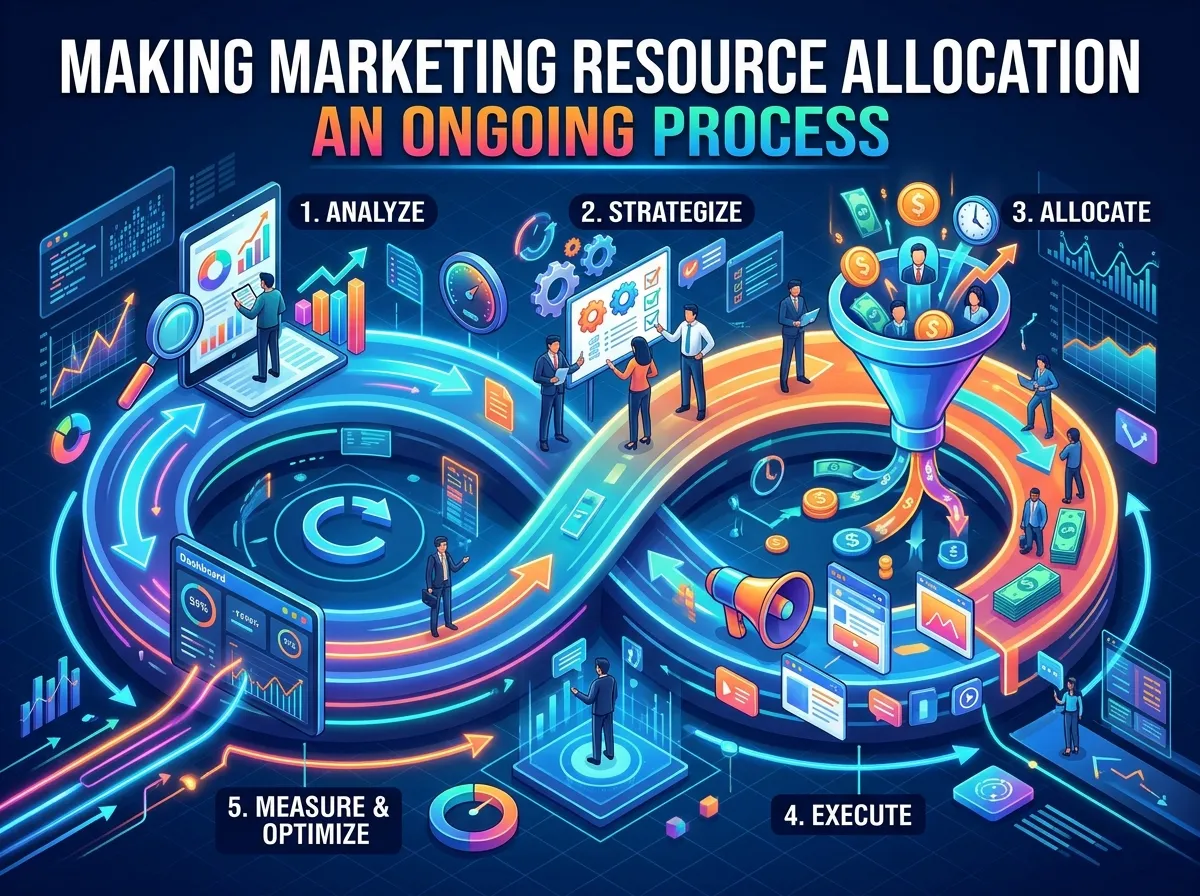
Marketing Resource Allocation should not be treated as a one-time budgeting exercise. Business priorities evolve, customer expectations change, and campaign performance rarely remains consistent throughout the year. Regular reviews allow organizations to adjust their plans according to current evidence.
Monthly or quarterly evaluations can help managers compare planned spending with actual expenses, assess employee workloads, and identify campaigns that require additional support. These reviews also provide an opportunity to examine whether existing tools and processes are still appropriate.
Teams should document why major allocation decisions were made. Recording the expected outcome, investment level, and performance results creates useful information for future planning. Over time, this helps businesses distinguish between investments that consistently create value and those that produce limited results.
The most effective approach combines financial discipline with strategic flexibility. Companies should protect the resources needed for essential marketing activities while remaining open to new opportunities. They should also recognize that successful allocation is not always about spending more. Sometimes the greatest improvement comes from changing how existing resources are used.
Conclusion
Marketing Resource Allocation helps businesses turn limited budgets, employee capabilities, technology, and time into coordinated marketing performance. By connecting investments with business goals, understanding channel contributions, managing team capacity, and using reliable performance data, organizations can make more informed decisions about where their resources belong.
The strongest allocation strategy is not necessarily the one with the largest budget or the most marketing channels. It is the one that directs the right resources toward the right priorities at the right time. When businesses regularly review their decisions and remain flexible as conditions change, they can improve efficiency, support sustainable growth, and make every marketing investment more meaningful.
Frequently Asked Questions
1. What is Marketing Resource Allocation?
Marketing Resource Allocation is the process of distributing financial budgets, employee time, technology, and other resources across marketing campaigns, channels, and business priorities to achieve specific objectives.
2. Why is marketing resource allocation important?
It helps businesses control unnecessary spending, improve team productivity, prioritize valuable activities, and ensure that marketing investments support measurable business outcomes.
3. What resources should marketing teams allocate?
Marketing teams should consider financial budgets, employee skills, working hours, marketing technology, creative capabilities, customer data, and operational support.
4. How does marketing budget allocation work?
Marketing budget allocation involves distributing available funds among marketing channels and activities according to business goals, audience needs, expected performance, and campaign requirements.
5. How can businesses optimize marketing spending?
Businesses can optimize spending by reviewing campaign performance, comparing acquisition costs, identifying inefficient investments, and directing more resources toward activities that produce meaningful results.
6. What is the difference between resource planning and resource allocation?
Resource planning identifies the resources required to complete marketing activities, while resource allocation determines how available resources are distributed among those activities.
7. How do marketing teams decide which channels deserve more investment?
Teams should examine audience behavior, campaign objectives, conversion rates, customer acquisition costs, revenue contribution, and each channel’s role in the customer journey.
8. Which tools help with marketing resource management?
Marketing resource management platforms, project management systems, analytics tools, and marketing automation software can help businesses coordinate budgets, workloads, campaigns, and performance reporting.
9. How often should marketing resources be reviewed?
Many businesses review resource allocation monthly or quarterly. However, major campaign changes, unexpected expenses, or shifts in business priorities may require earlier adjustments.
10. How can small businesses improve marketing resource allocation?
Small businesses can begin by defining clear goals, focusing on their most valuable customer segments, prioritizing effective channels, managing workloads realistically, and reviewing results before increasing spending.