

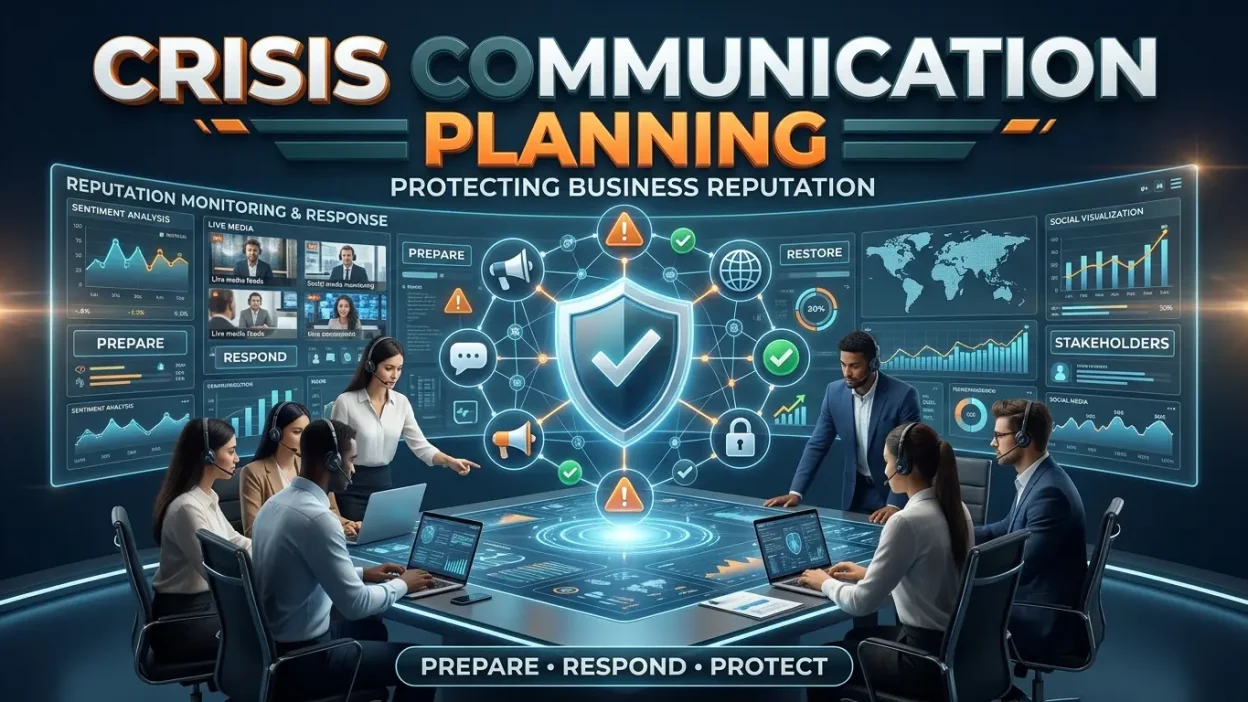
Crisis Communication Planning helps businesses prepare for unexpected incidents through clear communication strategies, defined responsibilities, and reliable response procedures. It supports coordination between departments, keeps stakeholders informed, and reduces confusion during emergencies. By combining transparency, accountability, and consistent recovery updates, organizations can protect their reputation and rebuild trust after a crisis.
A business can spend years building customer trust, developing its reputation, and establishing a strong market position. However, a single unexpected incident can challenge that progress. A product failure, data breach, service interruption, workplace accident, leadership controversy, or negative public announcement can quickly attract attention and create uncertainty among customers, employees, partners, and other stakeholders.
In these situations, the way an organization communicates can significantly influence how the crisis develops. Delayed responses, inconsistent statements, and unclear information may increase confusion, while transparent communication can help maintain confidence and demonstrate responsibility. This makes Crisis Communication Planning an essential part of responsible business management.
Crisis communication is not simply about preparing a public statement after something goes wrong. It involves understanding potential risks, identifying the people who need information, establishing communication responsibilities, and preparing a structured response that can be adapted to different situations. Businesses that prepare in advance are better positioned to communicate clearly when pressure is high.
A strong communication plan also recognizes that a crisis does not end when the initial problem is resolved. Customers may still have concerns, employees may need reassurance, and the public may expect updates about corrective actions. Effective communication must therefore continue through the response, recovery, and reputation rebuilding stages.
Why Crisis Communication Planning Matters
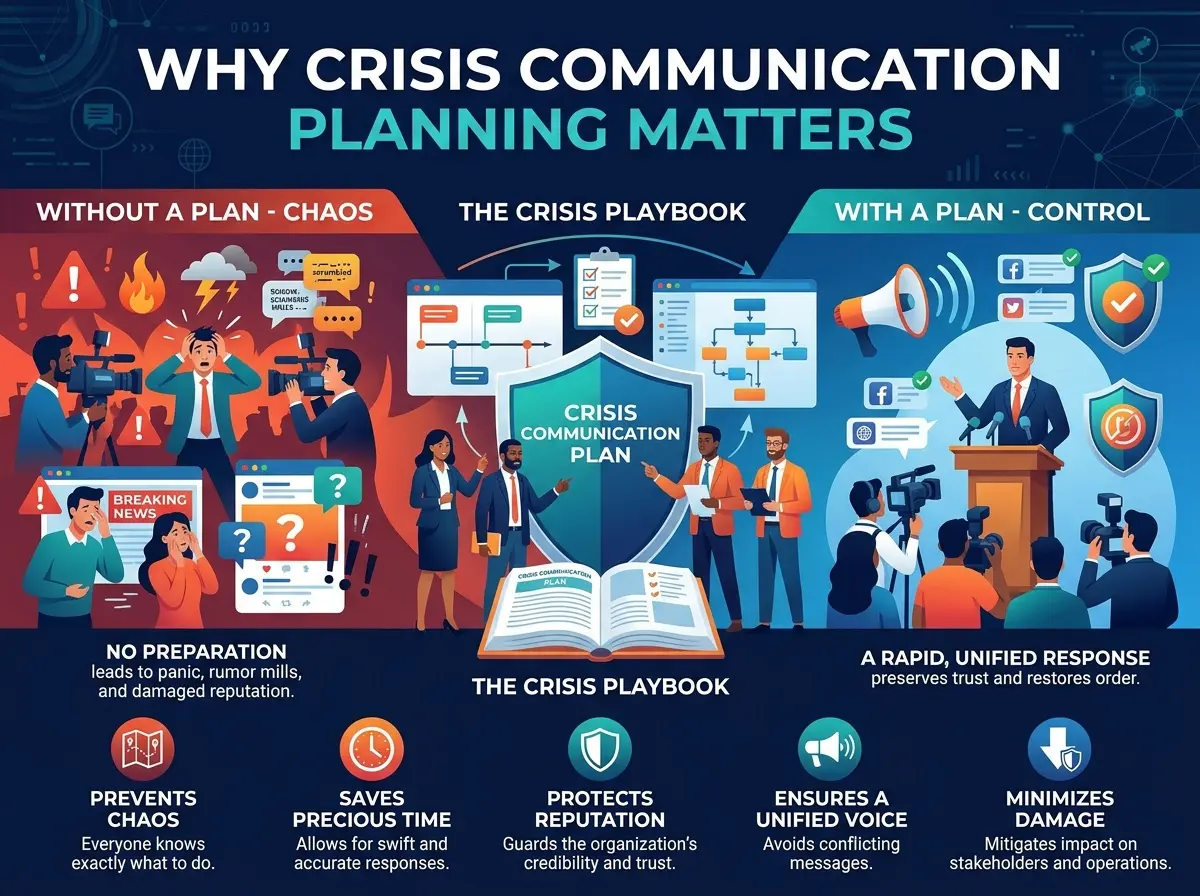
Crises rarely happen at convenient times. An organization may face a sudden operational failure, an unexpected legal issue, or a public complaint that spreads rapidly across social media. Without an established communication process, different departments may respond independently, creating conflicting information and making the situation harder to manage.
Crisis Communication Planning helps organizations reduce this uncertainty. It establishes how information should be collected, verified, approved, and shared when an incident occurs. Instead of deciding every responsibility during an emergency, teams can follow an agreed structure and focus on addressing the actual problem.
The importance of preparation extends beyond public relations. Employees need accurate information to understand workplace changes, customers want to know whether products or services are affected, and business partners may require updates about operational disruptions. Investors, regulators, and media organizations may also expect timely communication, depending on the nature of the incident.
A well-prepared organization can respond with greater consistency because its teams understand their responsibilities. It can also avoid making unsupported promises or sharing information before it has been verified.
Ultimately, communication does not replace crisis resolution. It supports the resolution process by ensuring that the people affected understand what is happening, what the organization is doing, and when they can expect further information.
Understanding the Structure of a Crisis Communication Strategy
Every crisis has different characteristics, so organizations need a communication approach that can adapt to changing circumstances. A Crisis Communication Strategy provides the overall direction for how a business communicates before, during, and after an incident.
The strategy begins with an understanding of the organization’s most significant communication risks. A manufacturing company may need to prepare for product safety concerns, while a financial services business may focus on data security, service interruptions, or regulatory issues. A retail organization may be more exposed to supply chain problems, customer complaints, and product recalls.
These differences matter because a generic response will not address every situation effectively. Businesses should consider the types of incidents that could affect their operations, customers, employees, and reputation.
A strategy should also establish the organization’s communication principles. Accuracy, transparency, consistency, empathy, and accountability provide a useful foundation. These principles help decision-makers maintain a professional tone even when an incident attracts criticism or creates public pressure.
Another important consideration is the relationship between communication and business objectives. Organizations should ensure that crisis messages reflect what the company is actually doing. If a business promises an investigation, for example, it should have a realistic process for conducting and communicating that investigation.
When communication reflects genuine action, it becomes more credible and useful to stakeholders.
Business Crisis Response Planning Begins Before an Incident
Preparation is one of the most valuable parts of crisis management. When a serious incident occurs, employees may need to make decisions quickly, and leadership teams may have limited time to organize information. A prepared response structure reduces the amount of uncertainty they face.
Business Crisis Response Planning involves identifying possible disruptions and determining how the organization will respond to their communication requirements.
Risk identification is a natural starting point. Businesses should consider incidents that could affect their operations, employees, customers, technology, finances, or public image. These may include cybersecurity incidents, service outages, workplace safety events, leadership disputes, product recalls, misinformation, or negative media coverage.
Once the potential risks are understood, organizations can evaluate their possible impact. A minor service interruption may require a customer notification, while a major data breach could involve legal teams, security specialists, senior management, affected customers, and regulatory authorities.
The communication requirements should reflect the seriousness and nature of each incident.
This preparation also connects with broader business planning. Organizations that have a clear Marketing Strategy Analysis process can better understand how communication decisions influence customer relationships, market perception, and business performance. Reviewing these factors can help leadership teams recognize where communication weaknesses may create additional risks.
Managing Information During an Emergency
When a crisis develops, accurate information becomes one of the organization’s most important resources. Rumors, incomplete reports, and assumptions can spread quickly, particularly when employees and customers are searching for answers.
Emergency Communication Management focuses on organizing information and delivering relevant updates to the people who need them.
The first priority should be understanding what has happened. Teams need to identify the incident, determine which operations or stakeholders are affected, and establish what information has been confirmed. If the situation is still developing, the organization should clearly distinguish verified facts from details that remain under investigation.
This distinction helps prevent inaccurate statements. A company should not speculate about the cause of an incident or provide a definite resolution time when the available evidence does not support that claim.
Communication channels also need to be appropriate for the situation. A critical internal safety announcement may require direct employee alerts, while a widespread service disruption may need updates through the company website, email, and social media. Media inquiries may require a designated spokesperson who can communicate the organization’s verified position.
The timing of updates matters as well. Silence can create frustration when stakeholders expect information, but frequent updates without meaningful details can also reduce confidence. Businesses should establish realistic update intervals and communicate when more information is expected.
The Role of Corporate Crisis Management
Communication is most effective when it operates alongside the wider crisis management process. Corporate Crisis Management brings together leadership, operational teams, legal specialists, human resources, public relations, and other relevant departments to coordinate the organization’s response.
For example, if a company experiences a data security incident, the technical team may investigate the cause and contain the problem. Legal specialists may assess reporting obligations, while customer service teams prepare to answer affected users. Communication professionals then work with these departments to explain the verified situation clearly.
This coordination is essential because public statements must reflect operational reality. A communications team should not announce that a problem has been resolved if technical specialists are still investigating it.
Senior leadership also has an important role. Executives may need to approve major announcements, communicate organizational decisions, and demonstrate accountability. However, approval processes should be designed carefully so that urgent messages are not delayed unnecessarily.
Corporate crisis management works best when decision-making responsibilities are understood before an incident occurs. This allows different teams to concentrate on their areas of expertise while maintaining a shared understanding of the situation.
Building a Practical Crisis Response Framework
A Crisis Response Framework gives businesses a structured way to organize their actions as an incident develops. It does not need to be complicated, but it should make responsibilities, priorities, and communication decisions clear.
The framework generally begins with detection and assessment. Organizations identify the incident, collect available information, and determine its potential impact. The response team then activates the appropriate level of crisis management based on the seriousness of the situation.
The next stage involves coordination. Relevant departments share verified information, leadership establishes priorities, and communication responsibilities are assigned. The organization prepares an initial statement that acknowledges the situation and explains what is currently known.
As the crisis develops, the framework supports regular updates. Messages may change as investigations progress, new information becomes available, or operational conditions improve. The organization should explain important developments without creating unnecessary confusion.
Recovery follows the immediate response. Businesses communicate corrective actions, provide relevant updates, and address outstanding stakeholder concerns. Once the incident has been resolved, the organization reviews the response to identify weaknesses and improve its preparation.
The value of this framework lies in its flexibility. A small customer service issue does not require the same response as a major safety emergency. The structure should allow businesses to scale their communication activities according to the situation.
Communicating With Different Stakeholders

Not everyone affected by a crisis needs the same information. Employees may want to understand workplace safety and operational changes, while customers may be more concerned about service availability, product quality, or personal information.
A Stakeholder Communication Strategy helps organizations identify these different needs and deliver messages that are relevant to each audience.
Employees should generally receive clear internal communication before they are expected to answer questions from customers or external contacts. They need to know what has happened, what they should communicate, and where to direct questions they cannot answer.
Customers require practical information. If a product is affected, the organization should explain which products are involved and what steps customers should take. If a service is unavailable, updates should clarify the current situation and provide realistic information about restoration.
Business partners and suppliers may need details about operational changes, delivery schedules, or contractual impacts. Investors and regulators may require information appropriate to their responsibilities and applicable reporting requirements.
Media communication requires additional preparation. Journalists may ask direct questions about the cause, impact, responsibility, and expected consequences of an incident. A designated spokesperson should be prepared to provide accurate answers while avoiding speculation.
Messages should be consistent in their core facts, but their level of detail and format can vary according to the audience.
Protecting Reputation Through Responsible Communication
A crisis can create lasting consequences for how people perceive an organization. Even when a business resolves the immediate issue, customers may continue to question its reliability, transparency, or ability to manage risk.
Reputation Risk Management helps organizations identify and reduce threats to public confidence. Crisis communication is an important part of this process because the organization’s response can influence whether stakeholders view it as responsible and trustworthy.
One of the most important factors is accountability. If a business has made a mistake, avoiding responsibility or shifting blame may damage its credibility further. Acknowledging verified problems and explaining corrective action can demonstrate that the organization takes the situation seriously.
Transparency is equally important. Businesses should share relevant information without exposing confidential details, compromising investigations, or making unsupported claims. Being transparent does not mean publishing every internal discussion. It means providing stakeholders with accurate information that helps them understand the situation.
Organizations should also monitor how the crisis is being discussed. Customer feedback, media reports, social media conversations, and direct inquiries can reveal misunderstandings or emerging concerns. These insights can help communication teams decide what needs clarification.
Reputation is not restored through a single announcement. It develops through consistent behavior, visible improvements, and reliable communication over time.
Establishing Clear Crisis Communication Protocols
A crisis response becomes difficult when employees are unsure who can speak on behalf of the organization or which information can be shared externally. Crisis Communication Protocols reduce this confusion by defining the procedures that teams should follow.
These protocols should identify the people responsible for activating the communication response, approving public statements, coordinating internal updates, and handling media inquiries. They should also explain how employees report incidents and how information moves between departments.
A clear approval process is particularly important. Messages involving legal matters, safety concerns, customer data, or regulatory issues may require specialist review. However, approval procedures should not become so complicated that they prevent the organization from acknowledging a developing incident promptly.
Templates can help teams prepare initial statements, customer notifications, internal announcements, and media responses. These materials should provide a starting point rather than fixed language that must be used in every situation.
Businesses should also establish rules for social media communication. Employees need to understand whether they can comment publicly, which accounts are authorized to issue official updates, and how they should report inaccurate information.
The protocols should be accessible to relevant employees and reviewed regularly. A communication plan that exists only in an outdated document may provide little practical value when a real emergency occurs.
The Importance of Public Relations During a Crisis
Public attention can increase quickly when an incident affects customers, employees, communities, or business operations. Media reports and online discussions may shape public understanding before an organization has completed its investigation.
Public Relations Crisis Management focuses on communicating with external audiences while protecting accuracy and maintaining trust.
A company should begin by acknowledging the issue when appropriate and explaining what it is doing to understand the situation. If facts are still being confirmed, the organization can provide a brief holding statement rather than remaining completely silent.
Spokespeople should communicate with clarity and empathy. Technical language, defensive statements, or overly promotional messages can make a response appear disconnected from the concerns of affected people.
Organizations should also avoid treating every negative comment as a public relations threat. Some criticism may highlight genuine problems that need to be addressed. Listening carefully can help businesses understand the concerns behind public reactions and improve their response.
The objective is not to control every conversation or eliminate criticism. It is to provide reliable information, correct misunderstandings, and demonstrate that the organization is taking appropriate action.
Crisis Recovery Communication and Rebuilding Trust
The end of an immediate incident does not necessarily mean the end of a crisis. Customers may still be waiting for refunds, employees may need information about operational changes, and business partners may want reassurance about future reliability.
Crisis Recovery Communication keeps stakeholders informed as the organization moves from immediate response toward normal operations.
At this stage, businesses should explain what has changed, which corrective actions have been completed, and whether any further improvements are planned. If a product has been recalled, customers may need updates about replacement or refund arrangements. If a service interruption has occurred, users may want confirmation that normal operations have resumed.
Recovery communication should be specific rather than overly reassuring. Statements such as “everything is back to normal” may be insufficient if customers are still experiencing problems.
Businesses should also communicate what they have learned. Explaining improvements to internal processes, safety measures, employee training, or technology systems can demonstrate a commitment to preventing similar incidents.
Long-term trust depends on whether these commitments are followed by meaningful action. Communication can explain progress, but the organization’s behavior ultimately determines whether confidence returns.
How Data Privacy Supports Crisis Communication
Some of the most serious communication challenges involve customer information. A suspected data breach, unauthorized access incident, or privacy-related complaint can create immediate concerns about security and organizational responsibility.
Businesses need to coordinate communication with their security, legal, and privacy teams. They should determine what information is affected, which individuals may be at risk, and what notifications may be required under applicable laws and regulations.
Messages should explain the known facts and any recommended actions for affected individuals. Organizations should avoid minimizing the incident or making security guarantees that cannot be supported.
Privacy considerations are also important when collecting information during the response. Customer details, employee records, and investigation materials should be handled through appropriate access controls and secure communication channels.
A broader understanding of Marketing Data Privacy can help businesses recognize why responsible information handling is closely connected to customer confidence. During a crisis, protecting personal information and communicating accurately about its use are both essential to maintaining trust.
Preparing for Communication Across Different Markets
Organizations operating in multiple regions face additional communication challenges. Language differences, cultural expectations, local regulations, and media environments can influence how a crisis message is received.
A statement that sounds appropriate in one market may appear unclear or insensitive in another. Businesses should therefore consider local audiences when preparing their communication materials.
This is particularly important for international companies that serve customers across different countries. Their central crisis team may coordinate the overall response, while regional teams adapt relevant information to local requirements.
A thoughtful Global Marketing Localization approach can help organizations communicate more effectively across markets by considering language, cultural context, and local audience expectations.
Localization should not change the verified facts of a crisis. Instead, it ensures that essential information is understandable and relevant to the people receiving it.
Turning Crisis Communication Into a Long-Term Business Capability
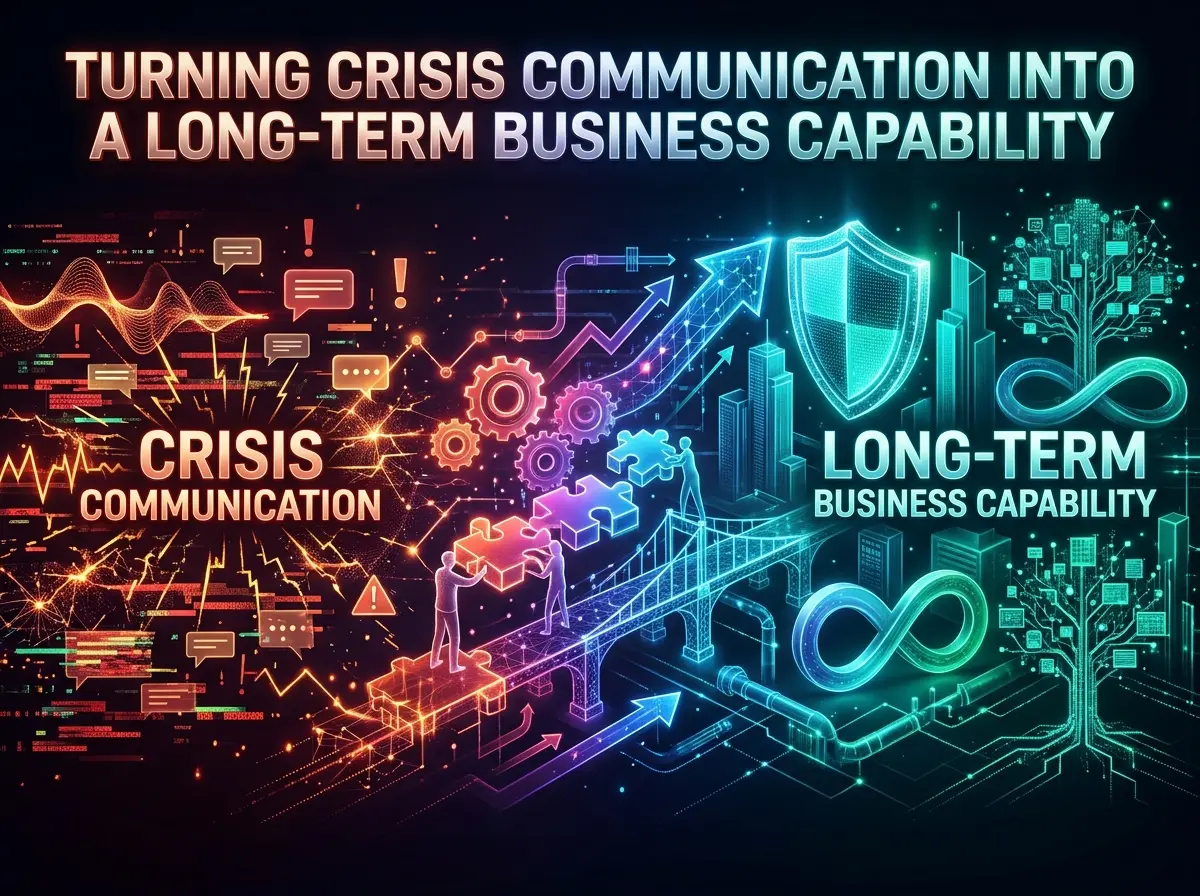
The strongest crisis communication plans are not treated as documents that are prepared once and forgotten. They become part of an organization’s ongoing risk management and operational planning.
Regular exercises can reveal whether employees understand their responsibilities and whether approval procedures work under pressure. Simulated incidents can also help businesses test their communication channels, spokesperson preparation, and internal coordination.
After an actual crisis or practice exercise, organizations should review what worked and what needs improvement. Delayed approvals, unclear responsibilities, inconsistent messages, or missing stakeholder information can all indicate areas that require attention.
The plan should also evolve as the business changes. New products, technologies, locations, leadership structures, and communication platforms may create risks that were not considered in an earlier version.
Ultimately, Crisis Communication Planning is about building the ability to respond responsibly when circumstances become uncertain. Businesses cannot prevent every crisis, but they can prepare to communicate with accuracy, empathy, and consistency. That preparation can reduce confusion, support effective decision-making, and help protect the relationships that matter most to the organization.
Conclusion
Crisis Communication Planning gives businesses a structured way to manage information and maintain stakeholder confidence during unexpected situations. By identifying risks, assigning communication responsibilities, preparing protocols, and coordinating messages across departments, organizations can respond more effectively when challenges arise.
A successful approach goes beyond issuing public statements. It involves understanding stakeholder concerns, protecting sensitive information, taking responsibility, and communicating meaningful progress throughout recovery. When these practices are integrated into wider business management, crisis communication becomes an important capability for protecting reputation and supporting long-term organizational resilience.
Frequently Asked Questions
1. What is Crisis Communication Planning?
Crisis Communication Planning is the process of preparing how an organization will share information before, during, and after an unexpected incident. It includes identifying risks, assigning responsibilities, selecting communication channels, and preparing response procedures.
2. Why is crisis communication important for businesses?
It helps businesses provide accurate information, reduce confusion, respond to stakeholder concerns, and protect their reputation when unexpected problems occur.
3. What should a crisis communication strategy include?
A crisis communication strategy should include risk identification, communication responsibilities, stakeholder groups, approved channels, spokesperson arrangements, response procedures, and recovery communication plans.
4. Who is responsible for managing crisis communication?
Responsibility is usually shared between senior leadership, public relations, communications, legal, human resources, and relevant operational teams. A designated crisis leader or response team should coordinate the overall process.
5. What are the main stages of crisis communication?
The main stages generally include preparation, incident assessment, initial response, stakeholder updates, recovery communication, and post-crisis evaluation.
6. How can businesses protect their reputation during a crisis?
Businesses can protect their reputation by acknowledging verified problems, communicating transparently, avoiding speculation, taking responsibility where appropriate, and providing regular updates about corrective actions.
7. What are crisis communication protocols?
Crisis communication protocols are established procedures that explain how incidents are reported, who approves messages, which channels are used, and who is authorized to communicate on behalf of the organization.
8. How often should a crisis communication plan be updated?
A plan should be reviewed regularly and whenever significant business changes occur. It should also be updated after crisis simulations or real incidents to address weaknesses and improve response procedures.
9. How does social media affect crisis communication?
Social media can spread information and public reactions rapidly. Businesses need to monitor relevant conversations, publish verified updates through official accounts, and correct important misunderstandings without spreading unconfirmed information.
10. What happens after a crisis has been resolved?
Organizations should continue communicating about corrective actions, operational improvements, and outstanding stakeholder concerns. They should also evaluate their response and update their crisis communication plan based on lessons learned.