

Automation Mistakes quietly drain time, damage trust, and block scalable growth, especially when teams automate without strategy, clean data, or customer context. Avoiding them helps businesses build stronger systems, smarter workflows, and more reliable results.
Growth teams often chase speed, but speed without structure creates fragility. Many organizations adopt tools, launch workflows, and celebrate early wins, only to discover that their systems are creating confusion behind the scenes. That is why Automation Mistakes matter so much in modern business. They rarely show up as dramatic failures at first. Instead, they appear as small delays, weak personalization, poor handoffs, and declining engagement. Over time, those small issues compound into lost revenue and wasted effort.
The challenge is not automation itself. The challenge is how businesses use it. When leaders rush into workflows without understanding customer needs, team capacity, or funnel logic, Automation Mistakes become inevitable. The same technology that should create clarity starts producing noise. Instead of improving performance, it reduces trust. Instead of saving time, it creates more work. Instead of increasing business growth, it limits it.
This is especially important in Marketing Automation, where timing, relevance, and segmentation shape the customer experience. Automation Mistakes can turn a useful sequence into a frustrating one. A poorly designed sequence can feel intrusive, while a smart one can guide prospects naturally. The difference usually comes down to discipline. Automation Mistakes are often less about software and more about strategy, ownership, and execution.
Businesses that understand this early gain an advantage. They do not treat automation as a shortcut. They treat it as a system that must be designed carefully, reviewed often, and aligned with real business goals. That mindset turns Business Automation into a growth engine instead of a hidden liability.
Why these mistakes matter
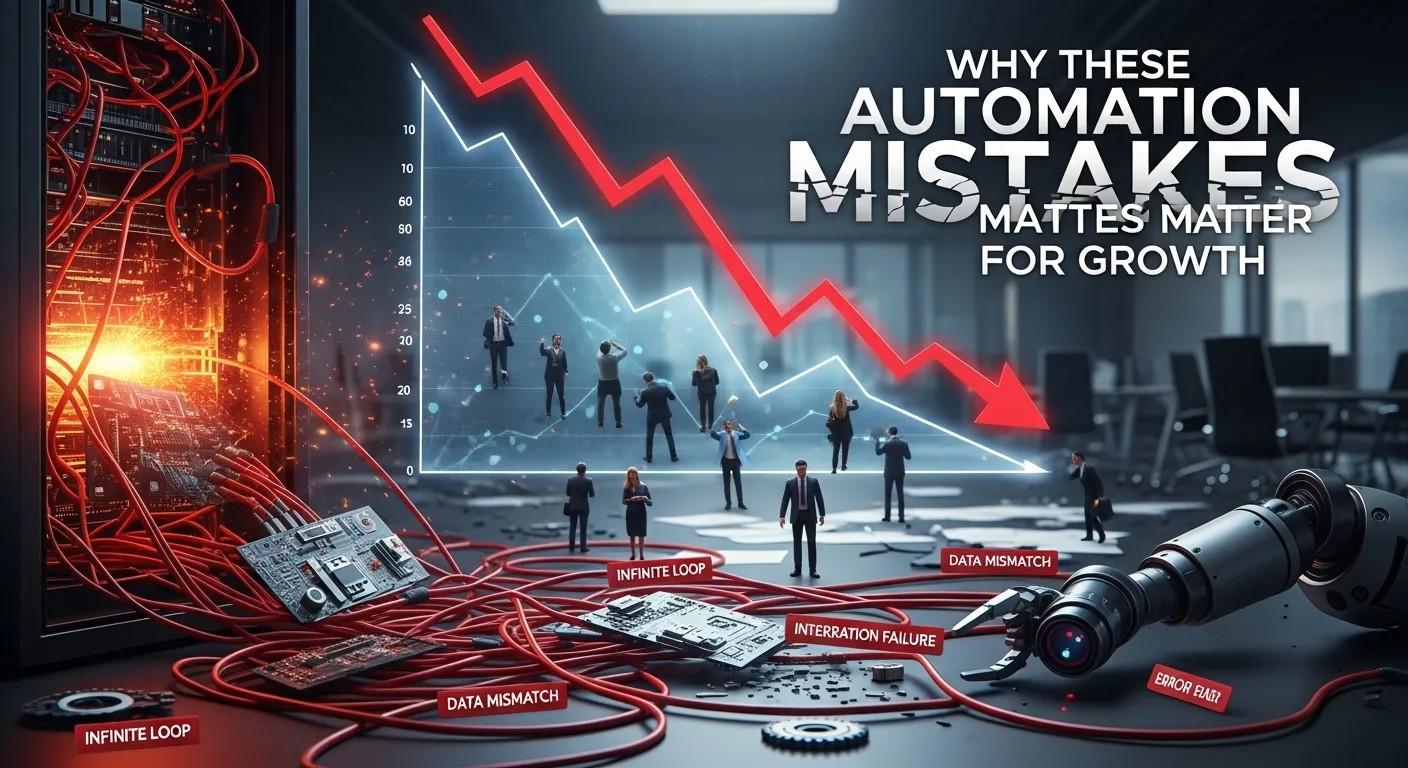
Automation Mistakes affect more than metrics. They shape how people perceive the brand. A prospect who receives irrelevant messages may unsubscribe. A customer who gets the wrong onboarding sequence may lose confidence. A sales team that cannot trust the data may delay follow-up. These are not isolated problems. They are signs that Automation Mistakes are breaking the customer journey.
1. Automating Before Defining the Goal
One of the most common Automation Mistakes is starting with tools instead of outcomes. Many businesses buy a Marketing Automation Platform before they define what they want it to accomplish. That creates confusion from the beginning because the system is built around features, not business logic.
A better approach is to identify one clear goal first. Maybe the business wants more qualified leads, faster follow-up, or stronger retention. Once the goal is clear, automation can support it. Without that clarity, Automation Mistakes become likely because the workflow has no direction.
Human psychology plays a role here. Teams feel productive when they launch something quickly, even if the system is poorly designed. That feeling can hide the real problem. A sequence may be running, but if it is not tied to a measurable objective, it is only activity, not progress.
Businesses that avoid this early Automation Mistakes problem usually begin with a journey map. They ask what the customer needs, what the team needs, and what the outcome should be. That simple discipline saves time later.
A practical fix
Write the goal in one sentence before building anything. Then connect each workflow step to that goal. If a step does not support it, remove it. This mindset prevents unnecessary Automation Mistakes and keeps the system focused.
2. Treating Data Quality as Optional
Poor data is one of the fastest ways to create Automation Mistakes. If records are incomplete, duplicated, or outdated, then every automated action built on that data becomes less reliable. A message sent to the wrong segment, a lead scored with missing context, or a customer tagged incorrectly can all damage performance.
This issue is common because data cleanup feels less exciting than automation design. Teams want to launch campaigns, not organize fields. But Business Automation only works well when the underlying records are trustworthy. Without clean inputs, the system produces weak outputs.
Automation Mistakes caused by bad data often appear as personalisation problems. A person may receive an offer that does not match their stage. A customer may be targeted after already converting. A prospect may be routed to the wrong team. These errors hurt credibility.
B2B Marketing Automation depends even more heavily on data quality because buying committees are complex and journeys are longer. If firmographic or behavioral data is wrong, the outreach becomes less relevant. That is why B2B Brands Automation Is Essential for Growth only when the data layer is strong enough to support it.
A practical fix
Set data ownership, create field standards, and schedule regular cleanup. Do not wait until problems appear. Preventive maintenance reduces Automation Mistakes before they spread.
3. Over-Automating the Entire Customer Journey
Automation should support the customer journey, not replace every human interaction. Yet many teams make Automation Mistakes by trying to automate everything. They build too many sequences, too many triggers, and too many logic branches. The result is a system that feels robotic and overwhelming.
People do not want to feel processed. They want to feel understood. When every message is automatic and every touchpoint feels scripted, trust declines. This is one of the most damaging Automation Mistakes because it affects perception, not just performance. A brand may technically be efficient, but emotionally it feels cold.
The best systems use automation selectively. Automation Mistakes shrink when teams prioritize clarity over volume. Repetitive tasks, timely reminders, and structured follow-ups are ideal. Relationship moments, nuanced objections, and sensitive conversations still need a human touch. Strong Business Automation is not about removing people. It is about freeing them to do higher-value work.
Automation Mistakes often happen when teams confuse efficiency with effectiveness. A workflow that saves time but annoys customers is not a win. The real goal is balance.
A practical fix
Audit each sequence and ask whether a human should own part of it. If yes, keep that interaction personal. That simple test prevents many Automation Mistakes.
4. Ignoring Segmentation and Relevance
Generic messaging is another major source of Automation Mistakes. When all leads get the same content, the system fails to reflect real differences in intent, timing, and interest. Segmentation exists to solve this problem, but many businesses underuse it.
A person who downloaded a beginner guide should not get the same follow-up as someone who visited the pricing page three times. A new customer should not receive the same sequence as a dormant prospect. When automation ignores these distinctions, engagement drops.
This is where Marketing Automation becomes powerful when used correctly. Segmentation allows the brand to respond differently based on what people actually do. That is how businesses create relevance at scale. Without it, Automation Mistakes make the brand appear lazy or disconnected.
Psychologically, relevance matters because people notice when a message reflects their situation. They are more likely to open, read, and act when the content feels timely. Poor segmentation destroys that effect.
A practical fix
Build segments by stage, behavior, and intent. Review them regularly. If the segments are too broad, split them. If they are too narrow, simplify them. This helps reduce Automation Mistakes and strengthens engagement.
5. Letting Sales and Marketing Work in Silos

One of the most damaging Automation Mistakes happens when marketing and sales do not align. Marketing may generate leads, while sales complains about quality. Sales may want faster handoff, while marketing focuses on engagement. If both teams operate from different definitions, the automation system becomes fragmented.
Automation works best when the funnel is shared. The lead scoring logic, follow-up timing, and qualification criteria should all be agreed upon. Otherwise, Automation Mistakes multiply through inconsistent messages and poor routing.
B2B teams feel this problem strongly because their deal cycles involve many steps. A disconnected system can cause delays at exactly the moment when speed matters most. That is why B2B Marketing Automation Strategy must be built with collaboration, not just technology.
The truth is simple: people buy from teams that feel coordinated. When the customer sees continuity, trust rises. When the process feels broken, hesitation grows.
A practical fix
Create one service-level agreement between marketing and sales. Define lead quality, response time, and handoff steps. This reduces Automation Mistakes and improves accountability.
6. Failing to Test Before Launch
Another common source of Automation Mistakes is skipping testing. Teams often assume the workflow will function as intended because it looks correct on paper. In reality, broken links, misfired triggers, bad timing, and confusing copy can all slip through.
Testing matters because automation operates at scale. One small error can affect hundreds or thousands of contacts. That makes launch quality extremely important. A system that works for one person in a test environment may fail under real-world conditions. Automation Mistakes in this stage are often preventable.
Testing should include content accuracy, trigger logic, segmentation, lead routing, and fallback behavior. It should also include mobile rendering and timing checks. Many teams rush because they want to show progress, but that urgency creates avoidable damage.
A thoughtful Testing process protects both brand trust and team confidence. When staff know the system has been checked properly, they use it more effectively.
A practical fix
Run a pre-launch checklist every time. Verify data, links, fields, and logic before release. This habit lowers Automation Mistakes and improves consistency.
7. Measuring the Wrong Metrics
Many teams report open rates and clicks while ignoring revenue impact. That is one of the biggest Automation Mistakes in performance evaluation. Vanity metrics can look impressive, but they do not tell the full story. A campaign that gets attention but fails to create pipeline is not really working.
A better measurement approach focuses on business outcomes. Conversion rate, qualified leads, sales velocity, retention, and customer lifetime value matter far more. Teams must Measure Marketing Automation ROI Properly to know whether automation is driving real growth or just activity.
This is especially important when leadership asks for proof. If the team cannot connect automation to outcomes, future investment becomes harder to justify. Automation Mistakes in reporting often create the false impression that a system is successful when it is only busy.
Metrics should also be tied to lifecycle stage. A nurture sequence may not close deals directly, but it may improve readiness. That value should still be measured. The key is to connect outputs to outcomes as clearly as possible.
A practical fix
Use a scorecard that includes pipeline and retention metrics, not just engagement. That helps spot Automation Mistakes earlier and supports better decisions.
8. Using the Wrong Platform for the Job
Not every tool fits every business model. Selecting a Marketing Automation Platform without checking compatibility can lead to structural Automation Mistakes later. Some platforms are excellent for email workflows but weak in reporting. Others offer advanced segmentation but are too complex for the team to maintain.
The issue is not simply feature count. It is fit. A platform should match the company’s process, team size, technical ability, and growth stage. Otherwise, Automation Mistakes emerge as the team struggles with adoption, integration, and maintenance.
Many businesses also underestimate implementation effort. A powerful tool can still fail if nobody knows how to use it properly. That is why platform choice should be tied to execution capacity, not just vendor promises.
A practical fix
Choose the platform after defining workflow needs, reporting requirements, and team skill level. This reduces avoidable Automation Mistakes and improves adoption.
9. Forgetting the Customer Experience
Automation is often built from the company’s perspective, not the customer’s. That leads to Automation Mistakes because the sequence may be logical internally but frustrating externally. A prospect may receive too many emails. A customer may be pushed into the wrong renewal path. A lead may be asked to repeat information already shared.
Good automation should feel helpful, not intrusive. That means pacing matters, message tone matters, and context matters. When teams ignore the experience on the receiving end, trust erodes quickly. Business growth depends on how people feel during the journey, not just on internal efficiency.
Human psychology teaches a useful lesson here: people respond better when they feel respected. Relevant timing, concise messages, and clear next steps all reduce resistance. These qualities should guide every workflow.
A practical fix
Read each sequence as if you were the customer. If it feels repetitive, confusing, or pushy, revise it. This is one of the simplest ways to prevent Automation Mistakes.
10. Never Reviewing or Improving the System
Automation is not a set-it-and-forget-it solution. Yet many teams create workflows and leave them untouched for months. That creates stale logic, outdated offers, and missed opportunities. It is one of the most expensive Automation Mistakes because it allows small issues to accumulate silently.
Markets change. Buyer expectations change. Product positioning changes. A workflow that worked last quarter may perform poorly now. Business Automation must therefore be reviewed regularly, not only when something breaks.
This is where learning loops matter. Teams should look for drop-off points, low-converting segments, and surprising behavior patterns. Those insights can reveal where the workflow needs improvement. A mature system is not one that never changes. It is one that gets better through feedback.
A practical fix
Set monthly or quarterly reviews for every major workflow. Remove outdated steps, update content, and test new variations. Consistent review keeps Automation Mistakes from returning and keeps performance moving upward.
Common Automation Risks
| Mistake | What it causes | Better approach |
|---|---|---|
| Weak goal setting | Confused workflows | Define one clear outcome |
| Poor data quality | Wrong targeting | Clean records regularly |
| Over-automation | Cold customer experience | Keep human touch where needed |
| Weak segmentation | Irrelevant messages | Segment by behavior and stage |
| Team silos | Poor handoffs | Sales and marketing alignment |
| No testing | Broken workflows | Use pre-launch checks |
| Wrong metrics | False success | Measure outcomes and ROI |
| Bad platform fit | Low adoption | Match tools to capacity |
| Customer-first blind spot | Frustration | Review from user perspective |
| No optimization | Stale performance | Review workflows regularly |
How to Build Smarter Automation Habits
Avoiding Automation Mistakes is not only about fixing problems after they appear. It is about building habits that make mistakes less likely in the first place. That starts with simple governance. Someone should own the workflow. Someone should approve the data. Someone should review the results. Without ownership, systems drift.
It also helps to document the logic behind each workflow. When people understand why something exists, they are more likely to improve it instead of breaking it. Documentation is one of the least glamorous parts of automation, but it prevents future Automation Mistakes and speeds up training.
Another important habit is to keep customer intent central. Every workflow should answer a real customer need. If a message, trigger, or sequence does not improve the journey, it probably does not belong. That principle keeps automation useful rather than excessive.
Finally, teams should treat feedback as an asset. Complaints, unsubscribes, low engagement, and sales objections all contain useful information. When used well, that feedback helps reduce Automation Mistakes and sharpen the system over time.
Why Businesses Grow Faster When They Fix the System
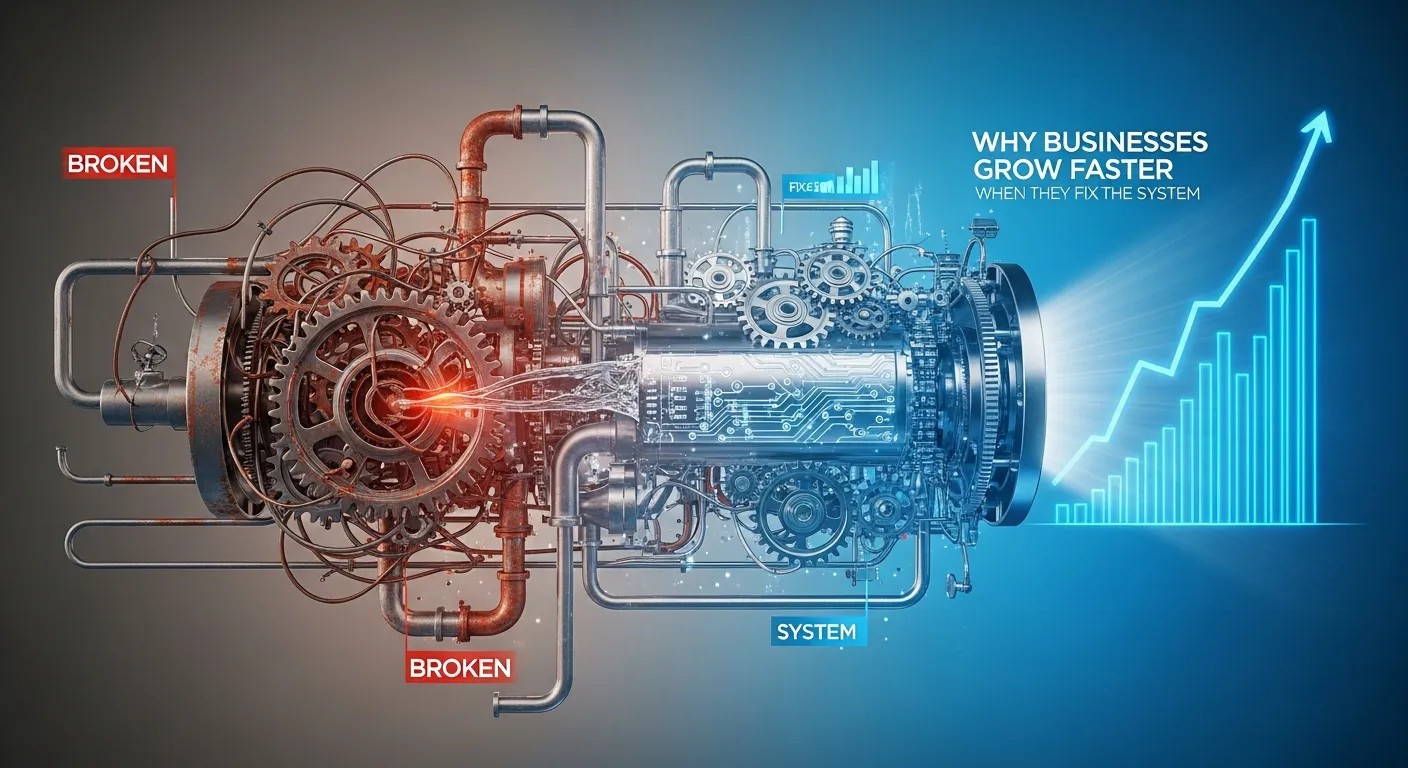
Growth is often framed as a problem of acquiring more traffic or closing more deals. In reality, a large part of growth comes from reducing friction. That is where fixing Automation Mistakes becomes so powerful. Better workflows save time. Better segmentation improves relevance. Better testing reduces waste. Better measurement improves confidence.
When businesses reduce Automation Mistakes, they also reduce stress. Teams stop wasting energy on manual cleanup, repeated corrections, and unnecessary confusion. They start trusting the system more. That trust opens the door to smarter experimentation and more ambitious scaling.
This is why B2B Brands Automation Is Essential for Growth is not just a slogan. It reflects a practical reality: companies that automate with discipline can respond faster, personalize more accurately, and convert more consistently. But that advantage only exists when the underlying system is healthy.
Conclusion
Automation can accelerate growth, but only when it is designed with care. The biggest risk is not using technology. The biggest risk is building systems that confuse customers, waste time, and hide weak strategy behind busy activity. By avoiding Automation Mistakes, businesses create workflows that support trust, clarity, and measurable performance. Strong automation is not about doing more for the sake of doing more. It is about doing the right things, in the right order, for the right people. When teams choose discipline over haste, automation becomes a true growth asset instead of a silent blocker.
Frequently Asked Questions (FAQ)
What are Automation Mistakes in business?
Automation Mistakes are errors in strategy, setup, segmentation, testing, or measurement that reduce the effectiveness of automated workflows and customer communication.
Why do Automation Mistakes happen so often?
They happen because teams often rush to launch tools without clear goals, clean data, or proper process design.
How can Marketing Automation create Automation Mistakes?
Marketing Automation can create Automation Mistakes when messaging is too generic, timing is wrong, or customer segments are not defined well.
What is the biggest Automation Mistakes companies make?
One of the biggest Automation Mistakes is automating without a clear business objective. That usually leads to low-impact workflows.
How do I Measure Marketing Automation ROI Properly?
Track revenue-related metrics such as pipeline, conversions, retention, and lifetime value rather than relying only on opens or clicks.
Is Business Automation risky for small teams?
Business Automation is not risky when built carefully. The risk comes from poor setup, weak ownership, and lack of review. Automation Mistakes are usually a process problem before they become a technology problem.
Why is B2B Marketing Automation harder than B2C?
B2B Marketing Automation is harder because buying cycles are longer, more people are involved, and personalization must reflect different decision stages.
How does a Marketing Automation Platform affect performance?
A Marketing Automation Platform affects performance by shaping how workflows are built, tracked, and optimized. The wrong choice can multiply Automation Mistakes quickly.
How can teams prevent Automation Mistakes long term?
Teams can prevent Automation Mistakes by setting clear goals, cleaning data, testing workflows, aligning sales and marketing, and reviewing performance regularly. Consistency is what keeps Automation Mistakes from returning.
Can fixing Automation Mistakes improve business growth?
Yes. Reducing Automation Mistakes improves efficiency, customer experience, conversion optimization enhance quality, and overall business growth.