

Website lead capture works best when it feels helpful, timely, and respectful, turning anonymous visitors into willing contacts without pressure, friction, or damage to trust.
Website Lead Capture is not about forcing people into a form. It is about helping the right visitor take the next small step at the right moment. When people arrive on a website, they usually bring one of three things: curiosity, a problem, or a decision in progress. The job of Website Lead Capture is to respond to that intent with clarity, value, and calm guidance.
Many businesses still treat Website Lead Capture like a numbers game. They push pop-ups too early, ask for too much information, and interrupt the reading flow before trust has time to form. That approach can reduce conversions in the short term and quietly harm brand perception in the long term. A better approach respects human psychology: visitors want control, relevance, and evidence that the offer is worth their attention.
This is especially important when brand trust matters. Website Lead Capture should never feel manipulative, because intrusive tactics can hurt Online Reputation Management and make people less likely to return, recommend, or buy. The best systems feel natural, useful, and well-timed. They capture interest without stealing attention.
In this guide, you will learn how to build Website Lead Capture that supports the user experience, improves conversion quality, and aligns with ethical marketing. You will also see where businesses go wrong, how to measure performance, and how to use gentle persuasion without crossing the line.
Why Website Lead Capture Works Better When It Feels Human
Website Lead Capture succeeds when it respects attention. Visitors do not land on a page hoping to be chased. They want answers, confidence, and an easy next step. If your approach feels like a demand, users resist. If it feels like a service, users respond.
Human psychology explains this clearly. People are more willing to share information when they understand the benefit, feel in control, and trust the source. Website Lead Capture should therefore be built around three simple ideas: relevance, timing, and fairness. Relevance means the offer matches the page or the user’s intent. Timing means the invitation appears after value has been delivered. Fairness means the exchange is balanced and transparent.
When brands ignore these principles, they usually rely on pressure. They show aggressive pop-ups immediately after arrival, hide the close button, or ask for phone numbers before proving value. Those tactics may increase form impressions, but they often reduce the quality of leads. Worse, they create irritation that can spread through reviews, social comments, and word of mouth.
A better model for Website Lead Capture is to behave like a helpful advisor. Instead of saying, “Give me your email,” the site says, “Here is something useful if you would like to continue.” That small shift changes the emotional response. The visitor feels invited, not cornered.
The Psychology Behind Gentle Conversion

Website Lead Capture is most effective when it aligns with how people actually make decisions. Most visitors do not convert instantly. They move through stages: awareness, interest, evaluation, and action. Forcing a hard ask at the awareness stage usually fails. Supporting them through the evaluation stage usually works better.
One of the strongest psychological triggers in Website Lead Capture is reciprocity. When a visitor receives real value first, they are more likely to respond in return. That value can be a guide, checklist, comparison chart, pricing estimate, calculator, or useful template. The key is that the offer must solve a real problem, not just collect data.
Another important factor is cognitive load. The more effort you require, the fewer people finish. A long form, unclear promise, or distracting layout creates mental resistance. Website Lead Capture should reduce friction, not add to it. Ask only for the information you genuinely need at the current stage.
Trust also matters. Users scan for signs of legitimacy before they convert. Clear branding, visible privacy language, predictable design, and a calm tone all reduce anxiety. A visitor may not consciously analyze these cues, but the brain notices them immediately. Website Lead Capture becomes easier when the page feels stable, honest, and professionally designed.
Website Lead Capture Strategy That Respects the Visitor
A strong Website Lead Capture strategy starts with intent mapping. Not every visitor wants the same thing. Someone reading a blog post has a different mindset from someone comparing pricing or visiting a product page. The offer should change based on that context.
For example, a blog reader may respond well to a downloadable checklist. A pricing-page visitor may prefer a consultation, demo, or ROI calculator. A returning visitor may be ready for a softer request because familiarity lowers resistance. Website Lead Capture should follow the journey instead of forcing the same form everywhere.
The best strategy also uses progressive disclosure. Rather than demanding everything at once, you can ask for one small step now and more later. This respects the user’s comfort level and makes the exchange feel easier. In many cases, Website Lead Capture works better when you request only an email address first and gather additional details later after trust is established.
A practical Website Lead Capture strategy should also include page-level relevance. A lead magnet about email marketing should appear on email-related content, not on unrelated pages. Relevance increases conversion and decreases annoyance. The more closely the offer matches the user’s current problem, the less intrusive it feels.
Common Mistakes That Turn Visitors Away
Many teams sabotage Website Lead Capture by focusing too much on volume and too little on experience. One of the biggest problems is interruption without context. A pop-up that appears the second a page loads sends a clear message: the company cares more about capturing data than serving the visitor.
Another common issue is asking for too much too soon. If a casual visitor is forced to complete a long form before understanding the value, they often leave. Website Lead Capture should be proportional to the trust level. The higher the ask, the higher the proof required.
Poor mobile design is another major problem. A lead form that looks fine on desktop may feel cramped and frustrating on a phone. Since many users browse on mobile, Website Lead Capture must be tested for thumb-friendly spacing, readable text, and easy dismiss actions.
A related mistake is vague value proposition. If the visitor cannot immediately understand what they will get, conversion drops. A strong promise should be specific, immediate, and believable. “Get a free audit template” is clearer than “Join our community.” The more concrete the benefit, the more effective the Website Lead Capture.
Finally, too many marketers forget that trust is cumulative. Every awkward form, confusing message, or misleading CTA weakens confidence. Even one bad interaction can damage future conversions and the wider brand image. That is why Website Lead Capture should be designed with long-term reputation in mind, not just short-term numbers.
A Practical Framework for Non-Intrusive Lead Capture
Website Lead Capture works best when the page follows a simple framework. First, earn attention with useful content. Second, offer a relevant next step. Third, make the action easy. Fourth, reassure the visitor. Fifth, follow through with something valuable after the submission.
Here is a practical comparison of intrusive and respectful lead capture approaches:
| Element | Intrusive Approach | Respectful Approach |
|---|---|---|
| Timing | Appears immediately | Appears after context is established |
| Message | Pushy or vague | Clear and specific |
| Form Length | Too many fields | Minimum necessary fields |
| Close Option | Hidden or hard to find | Visible and easy |
| Value | Weak incentive | Strong, practical benefit |
| Tone | Sales-heavy | Helpful and calm |
| User Control | Low | High |
This framework supports Website Lead Capture without creating unnecessary pressure. It gives visitors a reason to engage while preserving their sense of control.
How to Build Trust Before Asking for Information
Trust is the currency of Website Lead Capture. Without trust, forms become barriers. With trust, forms become invitations. That means the website must prove its usefulness before it asks for contact details.
One way to build trust is through content quality. Helpful articles, transparent explanations, and real examples show competence. Another way is through social proof. Testimonials, case studies, usage stats, and recognizable clients reduce uncertainty. Website Lead Capture becomes more effective when visitors see that others have benefited already.
Design also influences trust. Clean layouts, consistent typography, and readable contrast create a calm experience. A cluttered page can make users suspicious, even if the offer is good. The same is true for overly aggressive copy. Calm confidence usually converts better than exaggerated urgency.
Another trust-building tool is privacy clarity. Tell users what happens after submission. Say whether they will receive a guide, follow-up email, demo invitation, or newsletter. Website Lead Capture should never feel like a trap. The visitor should know exactly what they are getting and what they are agreeing to.
Content Offers That Feel Useful, Not Pushy

The best Website Lead Capture offers are genuinely useful. Instead of asking people to “subscribe for updates,” give them something tied to an immediate need. When the offer solves a real problem, the opt-in feels like progress instead of friction.
Useful offers can include:
A downloadable checklist for a task the visitor is trying to complete.
A calculator that helps estimate cost, savings, or ROI.
A comparison sheet that simplifies a confusing decision.
A short guide that removes uncertainty.
A template that saves time.
Each of these supports Website Lead Capture because each one gives something concrete. The user does not feel exploited; they feel assisted. That is the difference between conversion and annoyance.
The offer should also match the stage of intent. Early-stage visitors usually prefer educational resources. Mid-stage visitors often want comparison tools or deeper guides. Late-stage visitors may be ready for consultations, quotes, or demos. Website Lead Capture should mirror that progression instead of treating every visitor alike.
Form Design That Reduces Friction
Form design has a huge effect on Website Lead Capture. Even good offers fail when the form feels difficult, confusing, or too demanding. Every field creates a decision point. Every extra click creates drop-off risk.
The simplest forms usually perform best. Ask only for what you need to start the relationship. In many cases, an email address is enough. If more information is needed later, request it after the visitor has already received value. Website Lead Capture should feel like a gradual conversation, not an interrogation.
Label clarity matters too. Users should never wonder what to enter. Avoid clever wording that creates confusion. Use straightforward labels, logical order, and visible error messages. Mobile users especially benefit from large input areas and short forms.
CTA text should be precise. “Get the guide” usually works better than “Submit.” The button should describe the outcome, not the mechanism. Website Lead Capture improves when the CTA reflects the actual promise.
Timing and Behavior Triggers
Timing is one of the most overlooked parts of Website Lead Capture. A strong message at the wrong moment still feels intrusive. A modest message at the right moment can feel helpful. That is why behavior-based triggers often outperform blanket pop-ups.
For example, you can wait until a visitor has scrolled a meaningful distance, spent enough time on a page, or shown exit intent. These signals suggest actual engagement. Website Lead Capture then appears as a response to behavior, not as a random interruption.
However, triggers must still be used carefully. Too many repeated prompts can create fatigue. A visitor who closes a form should not immediately see the same form again. Respecting dismissal is part of respectful design. Website Lead Capture should feel adaptive, not stubborn.
You can also vary the offer by page type. Someone on a blog post about strategy may respond to a downloadable framework. Someone on a service page may prefer a consultation. This context-sensitive approach makes Website Lead Capture feel more intelligent and less disruptive.
Email Nurture After Capture
Website Lead Capture does not end when the form is submitted. The follow-up experience is just as important. If the first email is irrelevant or overly promotional, trust drops fast. If the first email delivers on the promise, confidence rises.
A good follow-up sequence should reinforce the original value. Send the promised resource quickly. Explain what to expect next. Offer a useful next step, but do not force a sale immediately. The goal is to deepen trust, not to pressure the new subscriber.
This stage is also where online reputation can strengthen or weaken. A respectful follow-up reinforces the feeling that the brand is reliable. A spammy sequence suggests the opposite. Website Lead Capture should therefore be supported by messaging that continues the same ethical tone used on the site.
Consistency matters. If the page promised education, the emails should educate. If the page promised a tool, the emails should expand the tool’s value. Users notice when the experience matches the promise. Website Lead Capture succeeds more often when the journey feels coherent from first click to first email.
Website Lead Capture and Brand Reputation
Website Lead Capture is closely connected to how a brand is perceived. Visitors do not separate conversion tactics from brand character. If a site feels pushy, the brand feels pushy. If it feels helpful, the brand feels helpful.
That is why intrusive tactics can hurt Online Reputation Management. Even if they produce short-term leads, they may create negative associations that reduce referrals, repeat visits, and organic advocacy. Website Lead Capture should strengthen reputation by making the visitor feel respected.
Reputation grows when a brand behaves predictably and ethically. That means no misleading claims, no deceptive urgency, and no hidden consent language. It also means respecting privacy and delivering the promised value. A trustworthy capture experience often creates a stronger brand memory than aggressive conversion tricks.
When users trust the process, they are more likely to recommend the site to others. They may even return with higher intent later. Website Lead Capture is therefore not just a conversion tactic; it is a brand trust system.
Ethical Persuasion Without Pressure
Persuasion is not the same as manipulation. Ethical Website Lead Capture uses persuasion to clarify value, not to override choice. The visitor should understand the offer, see the benefit, and decide freely.
Ethical persuasion includes helpful framing. You can explain what the resource is, who it is for, and why it matters. You can also use gentle urgency when it is real, such as limited seats for a live session or a deadline for a report. What you should avoid is fake scarcity or exaggerated fear language.
Transparency also matters. Website Lead Capture should make consent obvious. Users should know whether they are joining a newsletter, downloading a file, or booking a conversation. Hidden motives weaken trust. Clear motives build it.
A practical rule is this: every conversion element should answer the question, “Would this still feel fair if I were the visitor?” If the answer is no, the element probably needs revision. Website Lead Capture becomes more sustainable when it aligns with fairness.
Metrics That Matter More Than Raw Signups
Many teams measure Website Lead Capture by signups alone. That is not enough. A large list of uninterested contacts can perform worse than a smaller list of high-intent leads. The better question is whether the capture process produces useful relationships.
Track conversion rate, yes, but also quality metrics. Look at email engagement, demo booking rates, lead-to-opportunity conversion, and eventual revenue. Website Lead Capture should be evaluated by downstream performance, not just form completion.
Another important metric is abandonment. If many users start the process but do not finish, friction may be too high. Look at page scroll depth, popup dismissal rate, and mobile drop-off. These signals reveal where the experience feels intrusive or unclear.
The most meaningful question is whether the captured lead actually wanted the offer. Website Lead Capture performs better when the audience is properly matched and the promise is specific. A small, interested audience often outperforms a large, indifferent one.
How to Measure Marketing Automation ROI
To understand the business value of Website Lead Capture, you need to measure marketing automation ROI carefully. Start by tracking the full path from capture to revenue. That includes acquisition cost, email engagement, lead scoring, sales qualification, and closed deals.
A useful method is to compare captured leads against a baseline. Ask how many of those contacts became active prospects, how many moved into the pipeline, and how many generated measurable revenue. Website Lead Capture can look successful on the surface while producing weak downstream results, so the full funnel matters.
You should also measure time saved by automation. A good system reduces manual work, speeds up response time, and improves consistency. That operational value should be included when estimating return on investment. Website Lead Capture becomes more valuable when it feeds an automation system that nurtures leads efficiently and reliably.
Do not ignore attribution quality. Some leads may convert after multiple touchpoints, not just one form submission. Make sure your reporting reflects the real journey, not an oversimplified last-click story. Website Lead Capture is strongest when it connects cleanly with the rest of your automation stack.
Where Automation Goes Wrong
Automation is useful, but bad automation can damage trust quickly. One of the most common problems is over-messaging. If a new lead receives too many emails too fast, the experience feels mechanical and exhausting. Website Lead Capture should feed a human-feeling journey, not a spam machine.
Another mistake is irrelevant segmentation. If every subscriber gets the same sequence, the content feels generic. Visitors expect the promise they responded to to be honored. That is why segmentation should follow page intent, source, or interest area.
Automation Mistakes can also create timing errors. A form submission followed by a delayed or broken response breaks confidence. Website Lead Capture should be paired with reliable, well-tested delivery. The first impression after conversion is often the most important one.
Systems should be checked for broken links, duplicate triggers, dead-end paths, and conflicting sequences. These issues seem technical, but they influence perception. A polished automation flow reinforces professionalism. A messy one makes the brand look careless.
Customer Referral Programs That Complement Lead Capture
Website Lead Capture becomes stronger when it sits alongside referral thinking. People who are already satisfied can become active promoters, and referred visitors often arrive with higher trust. That combination can improve conversion rates without increasing pressure.
Customer Referral Programs work well because they borrow credibility from existing relationships. A recommendation from a friend or colleague usually feels safer than an ad. When a referral lands on your site, your Website Lead Capture efforts can be much gentler because the visitor starts with more trust.
A smart approach is to make the referral experience easy and rewarding, but not overly aggressive. The goal is to encourage natural sharing and genuine enthusiasm. A referral system should not feel like a trick to extract more contacts. It should feel like a fair exchange of value.
Referral traffic can also help you identify which offers feel strongest. If certain pages perform better after referrals, that may show which messages resonate most. Website Lead Capture improves when it is informed by real-world trust signals.
Referral Marketing Ethics in Practice
Referral Marketing Ethics matters because trust can be easily abused. If people feel manipulated into promoting something they do not fully support, the referral system loses credibility. Ethical referral marketing keeps the relationship honest.
That means the offer should be clear, the incentive should be fair, and the audience should understand what they are endorsing. Website Lead Capture benefits from this ethical mindset because it creates a consistent brand experience. The same trust that supports referrals also supports conversion.
You should also be careful not to pressure users into sharing their contacts without consent. Referral requests should be optional and transparent. A respectful approach protects both the brand and the audience. Ethical behavior is not just a moral choice; it is a conversion advantage.
When referrals are handled well, they reinforce the reputation of the business. That reputation makes Website Lead Capture easier because new visitors begin with less skepticism. Ethics and performance are not opposites; they often support each other.
Simple Optimization Checklist
Before launching or revising Website Lead Capture, review the essentials below.
| Area | Questions to Ask |
|---|---|
| Offer | Is the value immediate and relevant? |
| Timing | Does the prompt appear at the right moment? |
| Friction | Is the form as short as possible? |
| Trust | Does the page look and feel credible? |
| Mobile | Is the experience easy on small screens? |
| Follow-up | Does the email deliver the promise? |
| Measurement | Are you tracking lead quality, not just volume? |
This checklist keeps Website Lead Capture aligned with user experience and business goals.
Building Long-Term Trust Through Consistency
Consistency is one of the most underrated assets in Website Lead Capture. People trust patterns. When your site, email follow-up, and content all communicate the same helpful tone, users become more comfortable taking the next step.
Consistency also reduces confusion. If one page feels educational and the next feels aggressively sales-driven, the experience becomes disjointed. Website Lead Capture works best when the whole brand behaves predictably. Visitors should feel they are in good hands from the first interaction onward.
Long-term trust is especially important in competitive markets. Users often compare several brands before making a decision. A site that feels calmer and more respectful may win even if another site is louder. Website Lead Capture is not only about attracting attention; it is about earning confidence.
This is where patient optimization wins. Improve one part at a time. Refine wording, simplify forms, test timing, and observe behavior. Small improvements compound. Website Lead Capture becomes more powerful when it is treated as a trust-building system, not a quick hack.
Practical Examples of Non-Intrusive Lead Capture
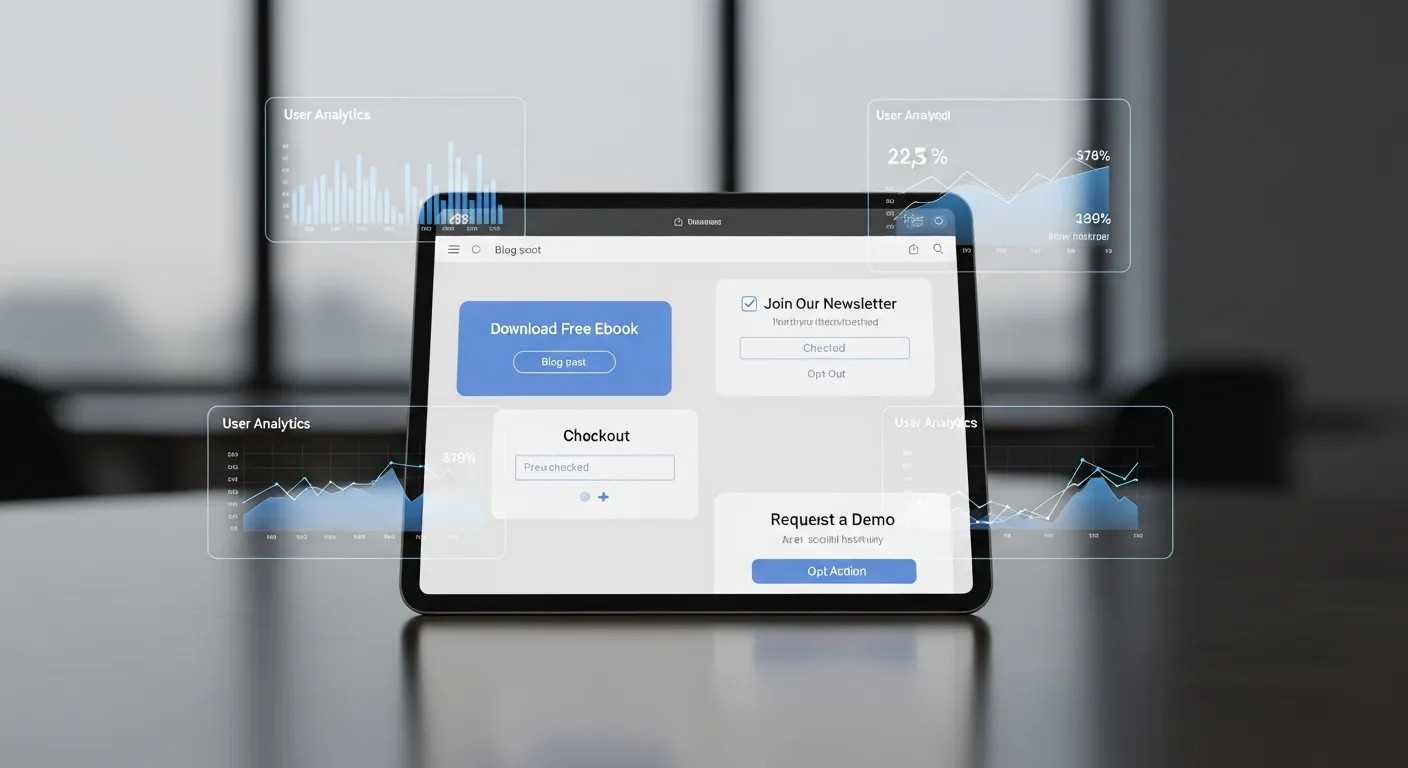
A blog post about email strategy can end with a downloadable planning worksheet. A product page can offer a size guide or buyer checklist. A service page can provide a short self-assessment tool. These are all examples of Website Lead Capture that support the user rather than interrupt them.
Another useful pattern is the inline content upgrade. Instead of forcing a pop-up, place the offer naturally inside or after relevant content. This works well because the visitor can choose without feeling blocked. Website Lead Capture often improves when the invitation feels embedded in the reading flow.
You can also use a delayed slide-in instead of an immediate modal. That gives the reader space to engage with the content first. If the offer is relevant, many users will welcome it. If it is not, they can ignore it without frustration.
The same principle applies to exit intent. When the visitor appears ready to leave, a helpful reminder or bonus resource may be appropriate. Website Lead Capture should match behavior, not just page type. The more natural the invitation feels, the less intrusive it becomes.
When to Ask for More Information
One of the best ways to make Website Lead Capture less intrusive is to ask for details only when the relationship justifies it. Early in the journey, a simple email capture may be enough. Later, once trust is established, you can request company size, role, budget, or timeline.
This gradual approach reflects how people prefer to share information. They do not want to fill out a long questionnaire before they know whether the offer is valuable. Website Lead Capture should respect that hesitation.
Progressive profiling can be especially effective in B2B settings. Each interaction can gather one additional piece of useful data. Over time, you learn more without overwhelming the visitor. The experience stays light while the data quality improves.
The same idea applies to forms for consultations or demos. Start with the minimum. Add more only when the next step truly needs it. Website Lead Capture should feel like a conversation that deepens naturally.
Conclusion
Website Lead Capture works best when it protects the visitor’s attention, offers real value, and builds trust before asking for a commitment. The most effective systems are not the loudest ones; they are the ones that feel helpful, fair, and easy to engage with. When you align timing, relevance, and honesty, you create a smoother path from curiosity to conversion. That approach strengthens lead quality, supports online reputation, and reduces friction across the funnel. Use Website Lead Capture as a relationship-building tool, and it will perform better over time. Respectful design, clear offers, and thoughtful follow-up turn interest into action without making people feel pushed.
Frequently Asked questions (FAQ)
1. What is the best way to improve Website Lead Capture?
The best way is to reduce friction, improve relevance, and make the offer genuinely useful. Website Lead Capture performs better when the timing and message match visitor intent.
2. How many fields should a lead form have?
Usually as few as possible. For many cases, an email address is enough at first. Website Lead Capture should ask only for information that is truly needed right away.
3. Are pop-ups bad for Website Lead Capture?
Not always. They become a problem when they appear too early, block content, or feel hard to close. Website Lead Capture can use pop-ups respectfully when timing and relevance are strong.
4. How does Website Lead Capture affect trust?
It can increase trust when it is transparent and helpful. It can damage trust when it feels pushy or misleading. Website Lead Capture should always feel fair to the visitor.
5. What kind of offer converts best?
Offers that solve an immediate problem usually convert best. Checklists, templates, guides, and calculators often work well for Website Lead Capture because they feel practical.
6. How can I reduce intrusive behavior on mobile?
Use short forms, clear spacing, readable text, and easy dismissal. Mobile-friendly Website Lead Capture should never feel cramped or difficult to close.
7. How do I know if my lead capture is working?
Track not just signups, but lead quality, engagement, and revenue outcomes. Website Lead Capture should be judged by downstream results, not only form completions.
8. What role does follow-up email play?
A major one. Good follow-up confirms the promise and builds trust. Website Lead Capture is stronger when the first email is relevant and timely.
9. Can referral traffic improve lead capture?
Yes. Referral traffic often arrives with more trust already in place. Website Lead Capture can convert better when visitors come from Customer Referral Programs or strong recommendations.
10. How do ethics connect with lead capture?
Ethics protect trust and support long-term performance. Clear consent, honest messaging, and fair incentives make Website Lead Capture more sustainable and more effective.