
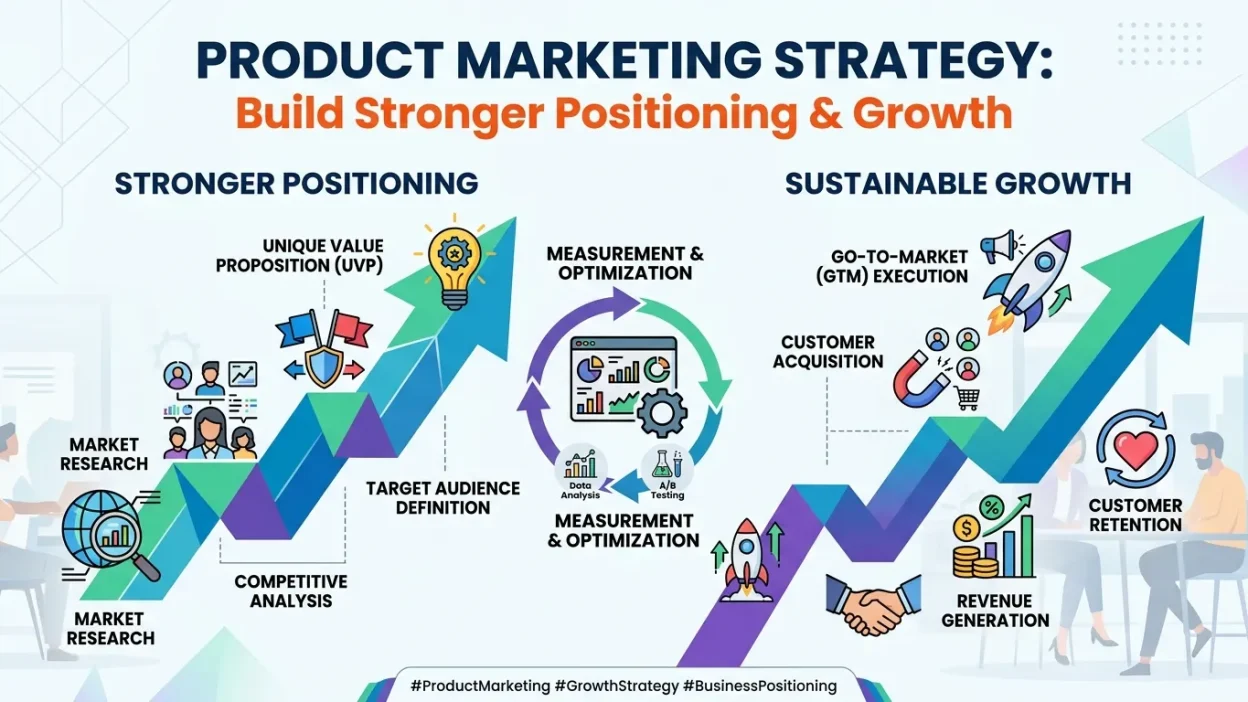
A strong product marketing strategy connects a product with the right audience through research, positioning, messaging, promotion, and consistent communication. By understanding customer needs and market opportunities, businesses can create more relevant campaigns, support successful launches, improve product adoption, and build sustainable growth.
Creating a great product is only one part of building a successful business. Even a well-designed product can struggle if customers do not understand its value, cannot see how it solves their problems, or do not know why they should choose it over competing options. This is where a strong product marketing strategy becomes important.
Product marketing connects the product, customer, and market. It helps businesses understand what customers need, identify the right audience, communicate the product’s value, and create marketing campaigns that encourage awareness and adoption.
Unlike general marketing, product marketing focuses closely on the product and its position in the market. It considers how a product should be presented, who should buy it, what message should be communicated, and how marketing activities can support the product throughout its lifecycle.
When these elements work together, businesses can create a clearer path from product development to customer interest, purchase, adoption, and long-term loyalty.
What Is a Product Marketing Strategy?
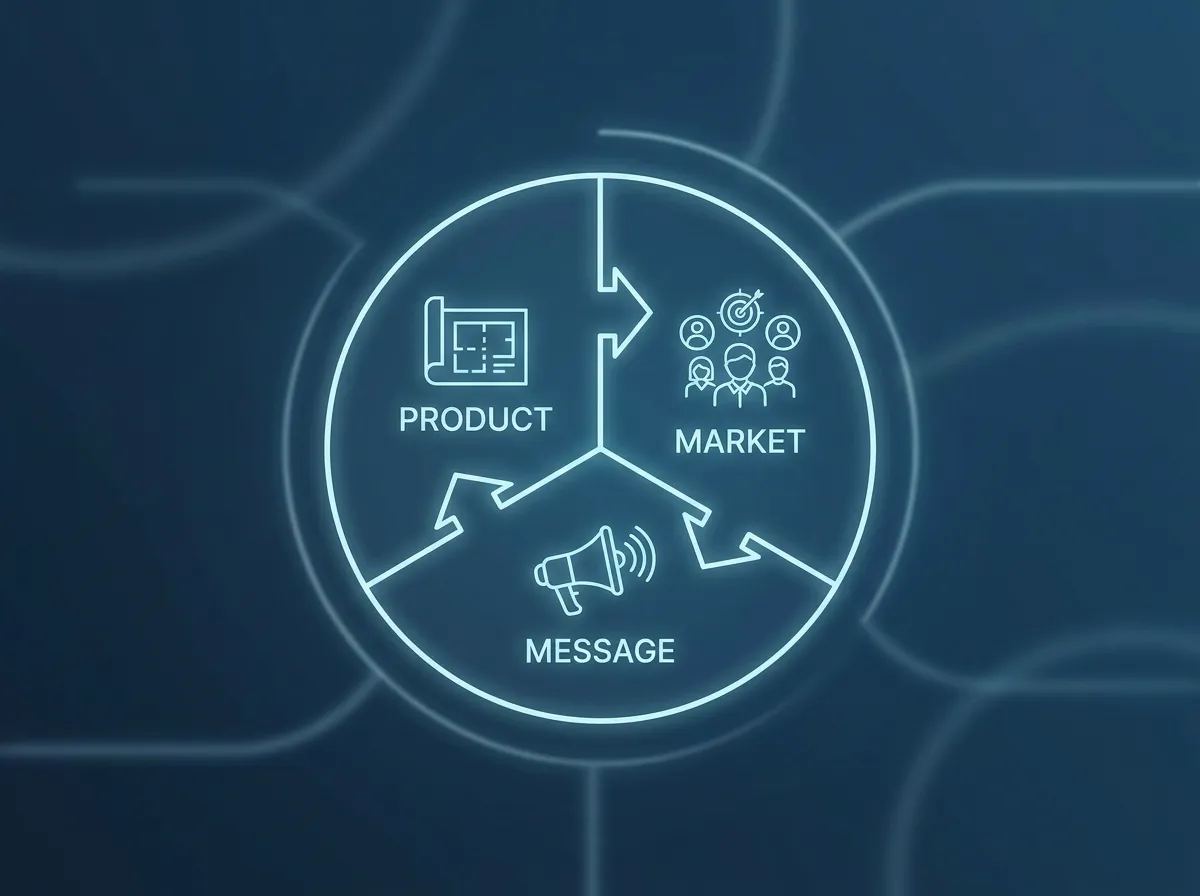
A product marketing strategy is a structured approach to bringing a product to the right customers with the right positioning and messaging. It connects market research, customer insights, product positioning, promotion, sales support, and marketing communication.
The strategy begins with understanding the market. Businesses need to know what customers want, what problems they experience, what alternatives already exist, and where the product can provide meaningful value.
From there, marketers can determine how the product should be positioned and how its benefits should be communicated. The strategy also influences the channels used to promote the product and the type of content created around it.
A successful strategy does not treat marketing as something that happens only when a product launches. Product marketing can support a product before launch, during market introduction, and throughout its lifecycle as customer needs and competitive conditions change.
Product Marketing Strategy Development
Product marketing strategy development starts by connecting business goals with customer needs. The company needs to understand what it wants the product to achieve and which customers can benefit most from it.
Market conditions should be examined before major marketing decisions are made. Customer demand, competitor products, pricing, market trends, and existing alternatives can all influence how a product should be presented.
Product marketers also need to understand the product itself. Its features, benefits, limitations, differentiators, and use cases should be clear. This knowledge allows marketers to move beyond generic promotional language and communicate the specific value the product provides.
The strongest strategies are built around customer problems rather than product features alone. Customers generally want to know how a product can make their lives easier, solve a challenge, save time, reduce costs, improve results, or provide another meaningful benefit.
Creating a Product Marketing Plan
A product marketing plan turns the overall strategy into a clear marketing direction. It brings together audience research, positioning, messaging, promotional activities, content, channels, and performance objectives.
The plan should reflect the stage of the product. A new product may require greater emphasis on awareness and education, while an established product may focus more heavily on differentiation, customer retention, expansion, or increased adoption.
A strong plan also considers how marketing and sales teams work together. Sales teams need clear information about the product’s value, target customers, competitive advantages, and common objections. Marketing can support this process through useful content, product demonstrations, customer stories, and clear messaging.
Communication should remain consistent across these activities. A company’s approach to Marketing Communication can provide a useful foundation for ensuring that product messages remain clear and connected across different customer touchpoints.
Product Positioning Strategy
A product positioning strategy determines how a product should be perceived by its target customers compared with competing solutions. Positioning answers an important question: why should customers choose this product instead of another available option?
Effective positioning usually focuses on a meaningful difference. That difference might involve quality, affordability, convenience, innovation, performance, specialization, customer support, or another benefit that matters to the intended audience.
Positioning should not be based only on what the company wants to say about its product. It should reflect what customers actually value. A product may have dozens of features, but only a few may be important enough to influence purchasing decisions.
Clear positioning also makes marketing easier. Once the business understands the product’s market position, it becomes easier to create advertising, website content, sales materials, social media campaigns, and other communications around a consistent central idea.
Understanding the Product Target Audience
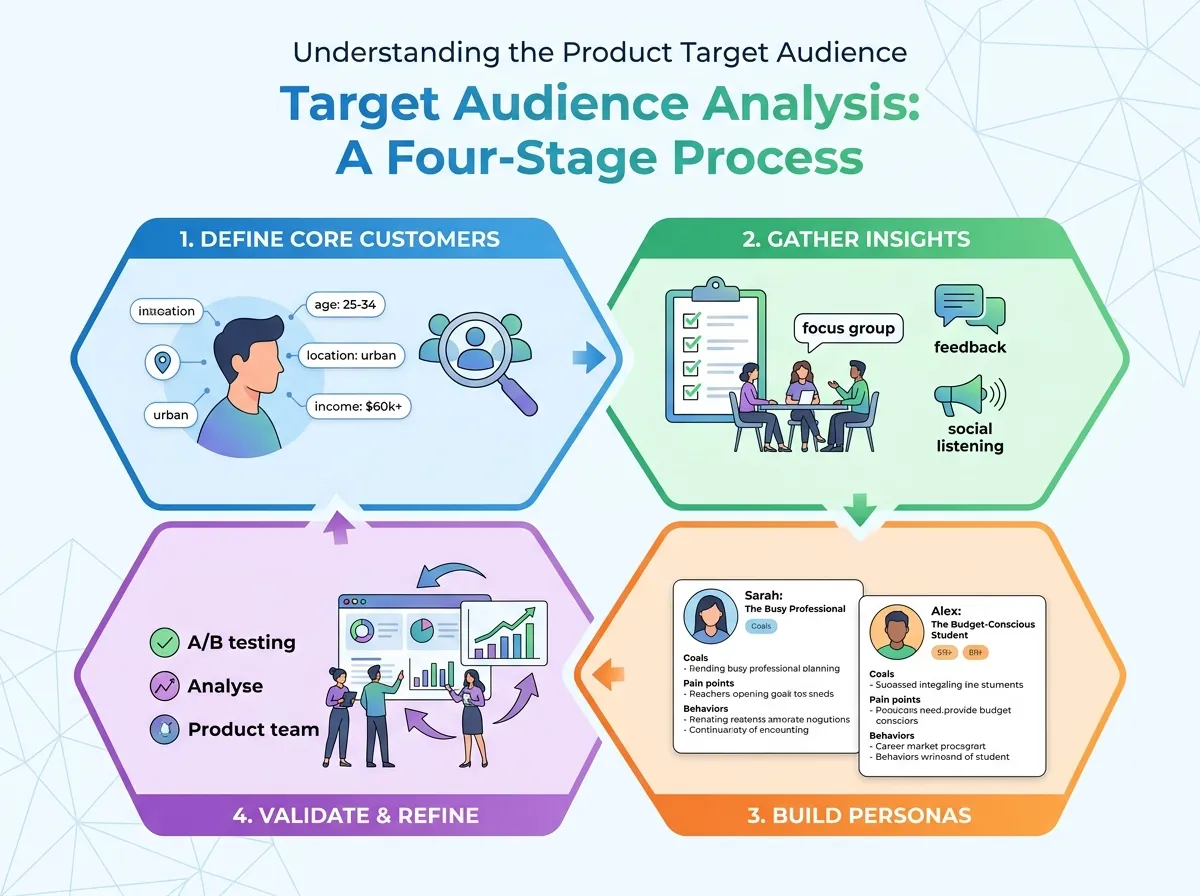
Identifying the product target audience is one of the most important parts of product marketing. A product cannot be effectively marketed without understanding who is most likely to need and purchase it.
Audience research can include demographics, location, industry, job role, purchasing behavior, interests, challenges, goals, and preferences. For B2B products, factors such as company size, decision-making authority, budget, and business objectives may also be important.
However, identifying the audience is not simply about collecting demographic information. Marketers need to understand why customers buy. Their motivations, frustrations, expectations, and desired outcomes can provide valuable insight into how the product should be presented.
A clear target audience allows businesses to create more relevant marketing and avoid spending resources on people who are unlikely to become customers.
Product Market Research
Product market research helps businesses understand the environment in which a product will compete. It provides insights into customers, competitors, demand, pricing, market trends, and potential opportunities.
Customer research can reveal what people like about existing solutions and where those solutions fall short. Reviews and customer feedback can be particularly useful because they often reveal problems that customers experience after purchasing competing products.
Competitor research is equally important. Businesses can examine competitor positioning, pricing, features, messaging, content, and customer reviews to identify areas where their own product can stand apart.
Market research should continue after launch. Customer expectations can change, new competitors can appear, and products can evolve. Ongoing research helps marketers keep their strategy relevant rather than relying entirely on information collected before launch.
Product Launch Marketing Strategy
A product launch marketing strategy builds awareness and interest around a new product while helping potential customers understand its value. The effectiveness of a launch often depends on how well the audience has been prepared before the product becomes available.
Pre-launch communication can introduce the problem the product addresses, educate the audience about its benefits, and build anticipation. Launch messaging can then provide clearer information about the product, its value, and how customers can access it.
The launch itself may use multiple channels, including email, social media, search marketing, content marketing, public relations, partnerships, advertising, and events.
For organizations connected to education and training, product marketing may also overlap with enrollment and audience acquisition. Businesses interested in this area can explore Higher Education Enrollment Marketing for additional perspective on communicating value to prospective audiences.
A successful launch should not be viewed as the end of product marketing. Post-launch communication is important for answering customer questions, encouraging adoption, collecting feedback, and maintaining momentum.
Product Marketing Tactics
Effective product marketing tactics depend on the product, audience, industry, and marketing objective. Content marketing can educate customers and demonstrate expertise, while email marketing can nurture interested prospects.
Product demonstrations can make complex features easier to understand. Case studies can show how real customers use a product to solve problems. Social media can create awareness and engagement, while paid advertising can help businesses reach specific audiences.
Free trials, product samples, webinars, comparison content, customer testimonials, and educational resources can also support product discovery and adoption.
The best tactics are not necessarily the ones that generate the most immediate attention. They are the tactics that help customers understand the product and move naturally toward a purchasing decision.
Product Promotion Strategy
A product promotion strategy determines how a business communicates its product and encourages customers to take action. Promotion can involve paid, owned, and earned channels depending on the business model and audience.
The promotional message should focus on customer value rather than simply listing features. Customers need to understand what makes the product useful and why it is relevant to their particular situation.
Promotional content should also reflect the stage of the customer journey. Someone discovering a product for the first time may need educational information, while someone comparing solutions may want detailed product differences, pricing, reviews, or demonstrations.
Consistency across channels helps reinforce the product’s position. When website messaging, advertising, email, sales content, and social media all communicate a similar value proposition, customers can develop a clearer understanding of the product.
Product Messaging Strategy
A product messaging strategy defines the language and ideas used to communicate a product’s value. It provides consistency while allowing marketing teams to adapt messages to different channels and customer segments.
Strong product messaging usually explains the customer’s problem, the product’s solution, the key benefits, and the reason the product is different from alternatives.
Simple language is particularly important. Customers should not need to understand complicated internal terminology to recognize the value of a product.
Messaging can also be adapted to different audiences. One customer segment may care most about affordability, while another may prioritize performance or convenience. The central product position can remain consistent while individual benefits are emphasized differently.
Product Marketing Campaign
A product marketing campaign brings the strategy, positioning, messaging, creative content, and promotional channels together around a specific objective.
Campaigns can support product launches, new features, seasonal promotions, market expansion, customer acquisition, or product adoption. A campaign should have a clear purpose so that its performance can be evaluated against meaningful business outcomes.
Creative content should reinforce the product’s core value. Images, videos, landing pages, advertisements, emails, and social posts should all contribute to the same overall customer understanding.
Campaign performance can then provide valuable insights. Engagement, leads, conversions, sales, customer acquisition costs, and product adoption can help marketers determine what is working and where improvements may be necessary.
The Role of Communication in Product Marketing
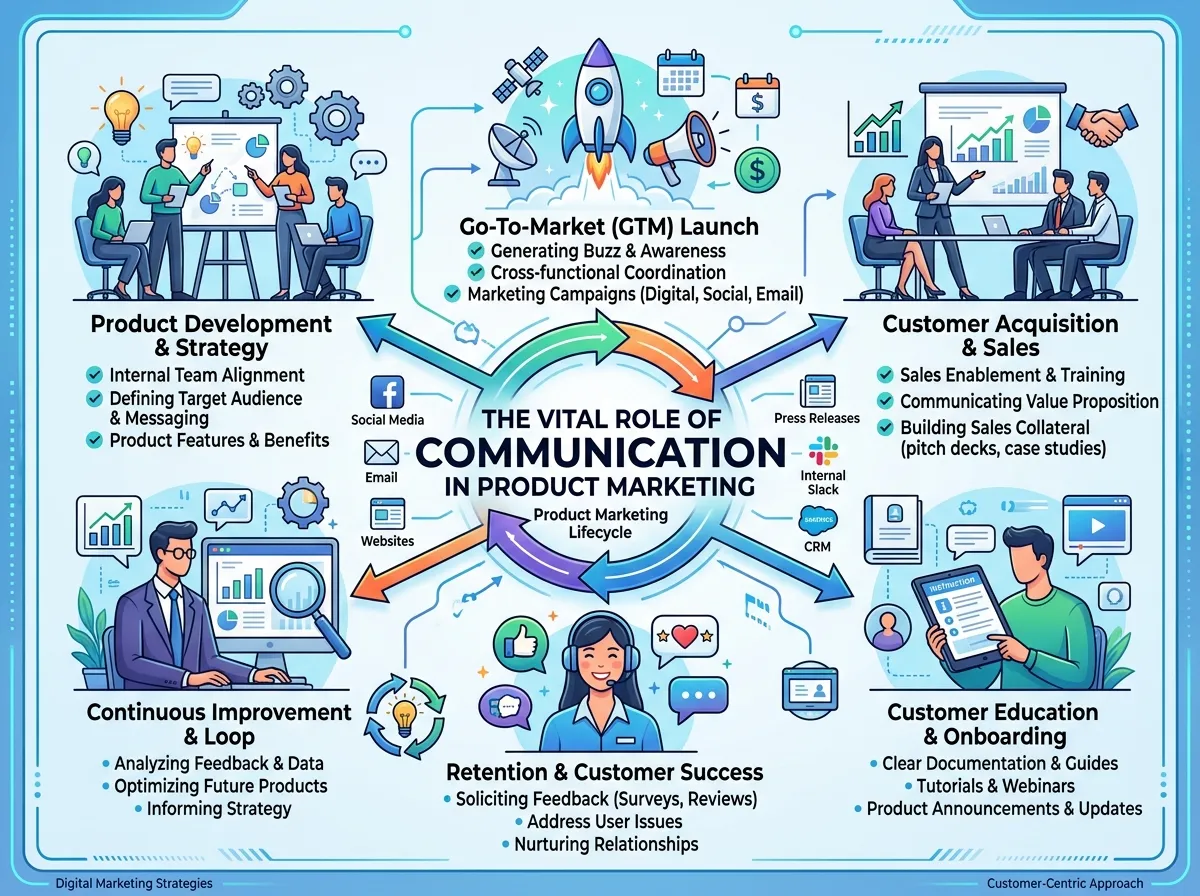
Communication influences how customers understand and remember a product. Strong product marketing therefore requires more than promotional content. It requires clear communication throughout the customer journey.
Different audiences may also respond to different communication formats. Some customers prefer detailed written information, while others may learn more effectively through videos, demonstrations, webinars, or interactive experiences.
Education can be especially important for products that are complex or unfamiliar. Providing useful information before asking customers to purchase can reduce uncertainty and help them make better decisions.
Organizations looking to build deeper expertise in communication can also consider resources such as Marketing Communications Master’s Programs, which highlight the broader strategic role communication can play in marketing and business.
Building Product Adoption and Long-Term Growth
Product marketing continues after a customer makes a purchase. Adoption is important because customers need to understand how to get value from the product.
Onboarding content, educational resources, customer support, product updates, and personalized communication can help customers become more comfortable with a product.
Customer feedback can also guide future marketing decisions. If customers repeatedly struggle to understand a feature, the problem may be related to messaging, education, product design, or all three.
Community can further strengthen product relationships. For products serving audiences with shared interests or experiences, community-focused communication can increase engagement and create a stronger sense of connection. Concepts such as Intergenerational Community Building demonstrate how shared experiences and relationships can contribute to stronger communities, an idea that can also inform customer engagement.
Measuring Product Marketing Performance
Measuring product marketing performance allows businesses to understand whether their strategy is contributing to meaningful results. Different products require different metrics, but common indicators include website traffic, qualified leads, conversion rates, sales, customer acquisition costs, product adoption, retention, and customer lifetime value.
Brand awareness and engagement can also be important, particularly for newly launched products. A campaign that increases product searches, content engagement, and qualified interest may be building a foundation for future sales.
Customer feedback should complement performance data. Numbers can show what happened, while customer insights can help explain why it happened.
Continuous evaluation allows product marketers to improve positioning, messaging, targeting, and promotional activities as new information becomes available.
Common Challenges in Product Marketing
One of the biggest challenges in product marketing is focusing too heavily on features. Features are important, but customers generally care about the outcomes those features create.
Another challenge is inconsistent messaging. When different teams describe the product in different ways, customers may become confused about its value or purpose.
Poor audience research can also create problems. A campaign may be creative and well executed but still perform poorly if it reaches people who have little interest in the product.
Finally, businesses sometimes stop product marketing after launch. Continued communication, education, customer feedback, and optimization are essential for maintaining product momentum over time.
Conclusion
A successful product marketing strategy connects a product with the customers who can benefit most from it. It brings together product market research, audience understanding, positioning, messaging, promotion, campaigns, and ongoing customer communication.
From developing a product marketing plan to creating a product launch marketing strategy, every stage should focus on customer value and market relevance. Clear positioning and consistent messaging can make products easier to understand, while effective promotion can increase awareness and adoption.
Product marketing is also an ongoing process. As markets, competitors, products, and customer expectations change, businesses need to evaluate their strategies and adapt. By combining research, communication, creativity, and performance analysis, companies can create stronger product relationships and support sustainable growth.
Frequently Asked Questions
1. What is a product marketing strategy?
A product marketing strategy is an approach for positioning, promoting, and communicating a product to the customers most likely to benefit from it. It connects market research, audience understanding, product positioning, messaging, promotion, and performance measurement.
2. Why is product marketing important?
Product marketing helps customers understand what a product does, why it matters, and how it differs from competing options. It can improve awareness, generate demand, support product launches, increase adoption, and strengthen long-term customer relationships.
3. What should a product marketing plan include?
A product marketing plan can include the target audience, market research, product positioning, messaging, promotional channels, content strategy, campaign objectives, launch activities, sales support, and performance metrics. The exact components depend on the product and business goals.
4. How do you identify a product target audience?
A product target audience can be identified by researching customer needs, behaviors, demographics, purchasing patterns, challenges, motivations, and preferences. Businesses can also analyze existing customers and competitors to determine which groups are the strongest fit for the product.
5. What is product positioning?
Product positioning describes how a product should be perceived by its target customers compared with competing solutions. Effective positioning highlights a meaningful benefit or difference that matters to the intended audience.
6. What is a product launch marketing strategy?
A product launch marketing strategy is a plan for creating awareness, interest, and demand around a new product. It can include pre-launch education, launch campaigns, email marketing, advertising, content, social media, partnerships, events, and post-launch customer engagement.
7. What are effective product marketing tactics?
Effective product marketing tactics can include content marketing, product demonstrations, email campaigns, customer testimonials, case studies, webinars, paid advertising, social media marketing, free trials, educational resources, and comparison content. The right tactics depend on the product and audience.
8. Why is product messaging important?
Product messaging explains the product’s value in language customers can understand. Clear messaging helps customers recognize the problem being solved, understand the benefits, and see why the product may be a better choice than competing alternatives.
9. How can businesses measure product marketing success?
Businesses can measure product marketing through metrics such as qualified leads, conversions, sales, customer acquisition costs, product adoption, retention, engagement, website activity, and customer lifetime value. Customer feedback can provide additional insight into campaign effectiveness.
10. Does product marketing continue after a product launch?
Yes. Product marketing should continue after launch to support adoption, customer education, retention, new feature promotion, market expansion, and ongoing positioning. Customer feedback and performance data can also help marketers improve the strategy over time.